

Irish Roadtrip: Your Complete Guide for 2026
Ireland's enchanting landscapes, rugged coastlines, and charming villages create the perfect backdrop for an unforgettable driving adventure. An irish roadtrip offers travelers the freedom to explore at their own pace, discovering both famous landmarks and hidden treasures tucked away in the countryside. From the dramatic cliffs of the Atlantic coast to the rolling green hills of the interior, Ireland's compact size makes it ideal for road exploration, with most destinations accessible within a few hours' drive. Whether you're seeking ancient castles, traditional pubs, or breathtaking natural scenery, a self-drive journey through the Emerald Isle promises memories that will last a lifetime.
Planning Your Irish Roadtrip Route
Selecting the right route is fundamental to creating a memorable irish roadtrip experience. Ireland offers several world-renowned scenic drives, each showcasing different aspects of the country's natural beauty and cultural heritage.
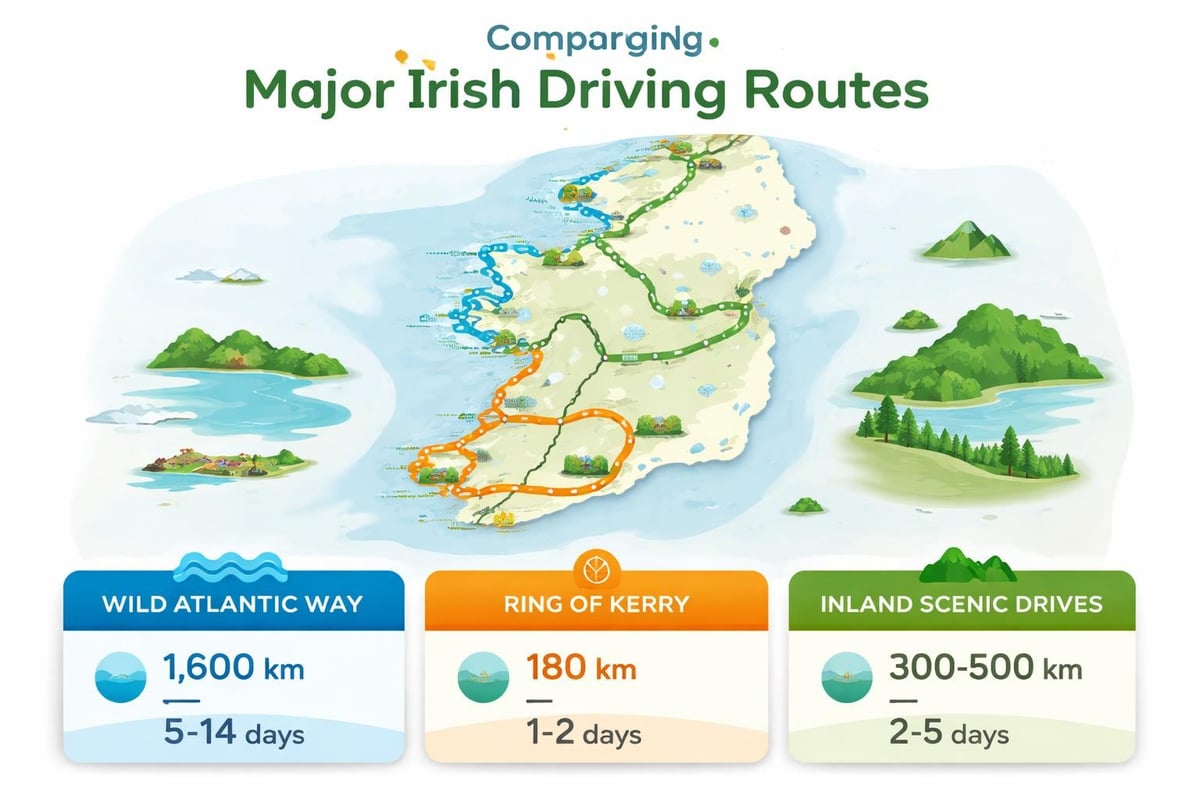
The Wild Atlantic Way stands as one of the world's longest coastal touring routes, stretching 2,500 kilometers along Ireland's western seaboard. This spectacular drive takes you from County Donegal in the north to County Cork in the south, passing through nine counties and offering stunning ocean views, dramatic cliffs, and charming coastal villages. The route typically requires seven to ten days to complete at a comfortable pace, though many travelers choose to explore specific sections based on their interests and schedule.
Southern Routes and Circular Drives
The Ring of Kerry presents a 179-kilometer circular route through County Kerry, renowned for its combination of coastal scenery, mountain passes, and historic sites. This drive can be completed in a single day, though spending two or three days allows for deeper exploration of the region's attractions.
Key stops along the Ring of Kerry include:
- Killarney National Park with its ancient oak forests
- Ladies View offering panoramic mountain vistas
- Moll's Gap providing breathtaking coastal perspectives
- Skellig Ring, a quieter alternative route with authentic fishing villages
- Valentia Island featuring historic slate quarries and lighthouses
For travelers seeking less crowded alternatives, the Beara Way offers equally stunning scenery with fewer tourists. This 206-kilometer route around the Beara Peninsula showcases rugged mountains, pristine beaches, and traditional Irish culture. The drive crosses from County Cork into County Kerry, offering a more authentic glimpse of rural Irish life.
Essential Preparation for Your Journey
Proper preparation transforms a good irish roadtrip into an exceptional one. Understanding Ireland's unique driving conditions, rental requirements, and seasonal considerations ensures a smooth and enjoyable experience.
Driving Logistics and Requirements
Ireland drives on the left side of the road, which requires adjustment for visitors from countries with right-hand traffic. Most rental cars feature manual transmissions, though automatic vehicles are available at higher rates. International visitors need a valid driver's license, and those from outside the EU should carry an International Driving Permit alongside their home country license.
Rental car considerations:
| Factor | Recommendation | Reason |
|---|---|---|
| Vehicle Size | Compact or mid-size | Narrow rural roads and tight village streets |
| Insurance | Comprehensive coverage | Peace of mind on unfamiliar roads |
| Fuel Type | Diesel for long trips | Better fuel economy on extended drives |
| GPS Navigation | Essential | Rural areas have limited signage |
Roads in Ireland range from modern motorways to single-track country lanes. The N-roads (national routes) and M-roads (motorways) are well-maintained, while R-roads (regional routes) and L-roads (local routes) can be narrow with limited passing opportunities. Many rural roads lack center line markings, and stone walls or hedgerows often line the edges, requiring careful attention and reduced speeds.
Seasonal Timing and Weather Considerations
Ireland's temperate maritime climate brings mild temperatures year-round but also frequent rainfall. The best months for an irish roadtrip typically fall between May and September, when days are longest and weather is most favorable. Summer months (June through August) offer the warmest temperatures but also attract peak tourist crowds and higher accommodation prices.
Spring (April and May) and early autumn (September) provide excellent alternatives, with fewer visitors, competitive rates, and pleasant weather. Winter roadtrips are possible but require flexibility due to shorter daylight hours and increased rainfall. Regardless of season, pack layers and waterproof clothing, as Irish weather can change rapidly throughout the day.
Must-Visit Destinations Along Your Route
An irish roadtrip succeeds when it balances famous landmarks with authentic local experiences. Strategic planning allows you to experience Ireland's diverse attractions without feeling rushed.
Coastal Wonders and Natural Attractions
The Cliffs of Moher rank among Ireland's most visited natural attractions, rising 214 meters above the Atlantic Ocean. Located in County Clare along the Wild Atlantic Way, these dramatic cliffs extend for eight kilometers and offer spectacular views on clear days. Arrive early morning or late afternoon to avoid peak crowds and experience the cliffs in optimal lighting conditions.
Connemara National Park in County Galway showcases Ireland's wild beauty with its mountains, bogs, heaths, and grasslands. The park offers numerous walking trails ranging from easy lakeside strolls to challenging mountain hikes. The landscape inspired numerous Irish writers and artists, and the area maintains strong connections to traditional Irish language and culture.
Top natural attractions by region:
- Northwest: Slieve League Cliffs (higher than Cliffs of Moher), Glenveagh National Park
- West: The Burren limestone landscape, Aran Islands
- Southwest: Skellig Michael (ancient monastery), Dingle Peninsula beaches
- Southeast: Copper Coast UNESCO Geopark, Hook Peninsula lighthouse
- East: Wicklow Mountains, Powerscourt Waterfall
Cultural and Historic Sites
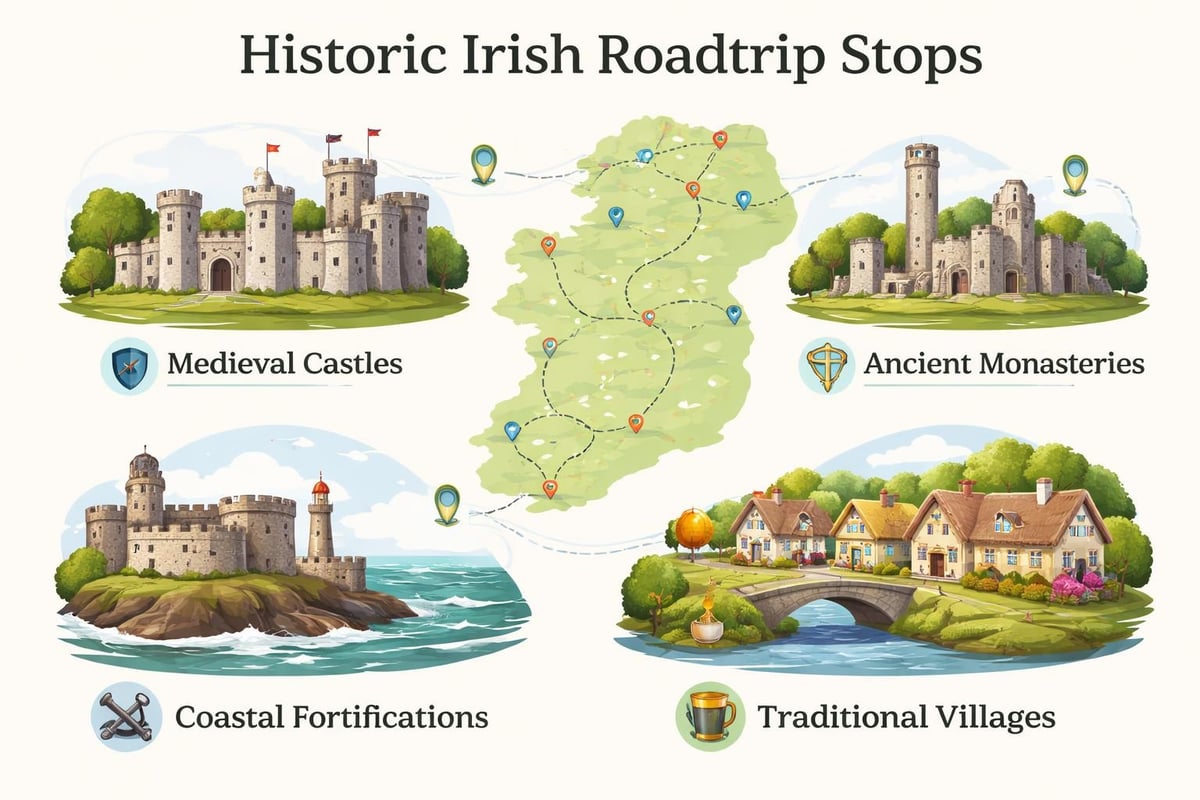
Ireland's rich history comes alive through its castles, monasteries, and ancient sites. The Rock of Cashel in County Tipperary features a spectacular group of medieval buildings perched on a limestone outcrop. This former seat of the Kings of Munster includes a round tower, high cross, Romanesque chapel, and Gothic cathedral, all dating from the 12th and 13th centuries.
Trinity College Dublin houses the Book of Kells, an illuminated manuscript created by Celtic monks around 800 AD. While Dublin deserves at least two days of exploration, many roadtrips begin or end in the capital city, making it a natural inclusion in your itinerary.
Authentic Irish Experiences Beyond Tourist Hotspots
The most memorable irish roadtrip moments often occur away from major attractions, in small towns and rural areas where traditional Irish culture thrives. These authentic experiences provide deeper connections to Ireland's heritage and contemporary life.
Traditional Music and Local Gatherings
Traditional Irish music sessions, known as "trad sessions," occur regularly in pubs throughout the country. Unlike performances, these informal gatherings bring together local musicians who play traditional tunes on fiddles, tin whistles, bodhráns (drums), and other instruments. Towns like Doolin, Dingle, Ennis, and Westport host renowned sessions, but smaller villages often offer equally authentic experiences with fewer tourists.
Research session schedules before arrival, as many occur on specific weeknight evenings rather than weekends. The atmosphere is relaxed and welcoming, with locals and visitors alike enjoying the music alongside pints of Guinness or Irish whiskey. Many musicians appreciate respectful listeners who understand session etiquette, such as avoiding conversation during tunes and refraining from requests.
Hidden Gems and Local Recommendations
The detailed self-drive guide highlights fourteen notable stops that many tourists overlook. These include charming market towns, artisan food producers, craft workshops, and scenic viewpoints known primarily to locals. Building flexibility into your itinerary allows you to follow local recommendations and explore unexpected discoveries.
Farmers' markets occur throughout Ireland, typically on weekend mornings in town centers. These markets showcase local produce, artisan cheeses, fresh seafood, baked goods, and handmade crafts. Engaging with vendors provides insights into regional specialties and often leads to recommendations for nearby attractions or dining establishments.
Accommodation Strategies for Road Travelers
Successful irish roadtrip planning requires balancing structure with flexibility in your accommodation approach. Ireland offers diverse lodging options suited to different travel styles and budgets.
Types of Accommodation
| Accommodation Type | Price Range | Best For | Booking Approach |
|---|---|---|---|
| B&Bs | €80-150 per night | Authentic local experience, breakfast included | Book 1-2 nights ahead |
| Hotels | €100-300 per night | Amenities, consistent quality | Reserve key cities in advance |
| Self-catering cottages | €500-1500 per week | Longer stays, families | Book months ahead |
| Hostels | €25-60 per night | Budget travelers, solo adventurers | Flexible booking |
Bed and breakfast establishments represent quintessential Irish hospitality, with hosts often providing insider knowledge about local attractions, dining recommendations, and hidden gems. These family-run accommodations typically include full Irish breakfast (eggs, bacon, sausages, black pudding, tomatoes, toast) and personal service that hotels cannot match. Many B&Bs occupy historic buildings or scenic rural locations, adding character to your stay.
For travelers following the coastal routes, booking accommodations in advance for peak season (July and August) is essential, as popular towns along the Ring of Kerry and Wild Atlantic Way fill quickly. During shoulder seasons, maintaining flexibility allows you to extend stays in places you love or move on from areas that don't capture your interest.
Strategic Base Towns
Rather than changing accommodations nightly, consider establishing base towns for multi-night stays. This approach reduces packing and unpacking while allowing day trips to surrounding areas. Ideal base towns offer good dining options, evening entertainment, and central locations for exploring nearby attractions.
Recommended base towns by region:
- Galway for exploring Connemara, the Burren, and Aran Islands
- Killarney for Ring of Kerry and Dingle Peninsula
- Dingle for authentic atmosphere and western Kerry
- Westport for County Mayo and northern Wild Atlantic Way
- Kenmare for both Ring of Kerry and Ring of Beara
Practical Tips for Driving in Ireland
Navigating Irish roads requires specific knowledge beyond general driving skills. Understanding local customs, road conditions, and practical considerations prevents stress and enhances safety throughout your irish roadtrip.
Navigation and Road Conditions
While GPS systems and smartphone apps provide excellent navigation, understanding Irish road signage prevents confusion. Distance signs display kilometers, though older signs occasionally show miles. Town names appear in both Irish (Gaelic) and English, with Irish sometimes appearing first or exclusively in Gaeltacht (Irish-speaking) regions.
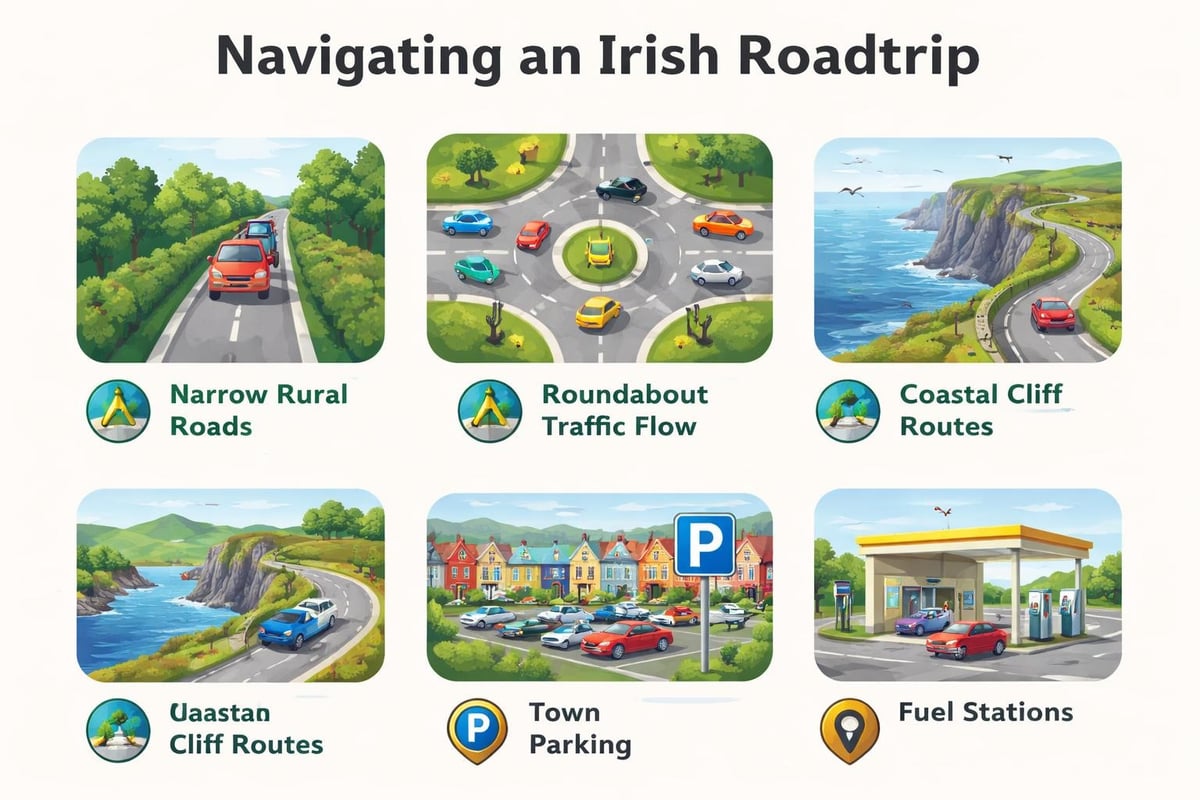
Rural roads often lack shoulders or breakdown lanes, with drainage ditches, stone walls, or thick hedgerows immediately adjacent to the pavement. When meeting oncoming traffic on narrow roads, one vehicle typically pulls into a wider section or gateway to allow passage. Irish drivers generally exhibit patience and courtesy in these situations, using hand waves to acknowledge cooperation.
Common road challenges and solutions:
- Narrow bridges: Approach slowly and yield to traffic already crossing
- Roundabouts: Yield to traffic from the right (clockwise flow)
- Speed cameras: Common on motorways and national routes (strictly enforced)
- Livestock: Common in rural areas (slow down and wait for passage)
- Parking: Town centers often require pay-and-display tickets
Fuel stations appear regularly along major routes but become sparse in remote areas. Fill up when the tank reaches half-full in rural regions, as the next station might be 30 or 40 kilometers away. Most stations accept credit cards, though carrying some cash proves useful for small purchases or unstaffed locations.
Food and Dining Experiences
Irish cuisine has evolved dramatically in recent years, with traditional dishes complemented by innovative contemporary cooking that showcases local ingredients. An irish roadtrip provides opportunities to experience this culinary transformation across different regions.
Traditional Irish Fare
Classic Irish dishes include Irish stew (lamb or mutton with potatoes, carrots, and onions), seafood chowder, fish and chips, boxty (potato pancakes), and coddle (Dublin specialty of sausages and bacon with potatoes). Coastal areas excel in fresh seafood, particularly oysters, mussels, crab, and salmon. County Cork and County Galway are renowned for their seafood restaurants and traditional dishes.
The full Irish breakfast remains a staple of B&B stays and provides substantial fuel for a day of driving and exploring. Beyond the traditional components, regional variations include white pudding, potato bread, and locally made sausages. Quality varies significantly, with the best establishments using locally sourced ingredients and preparing everything fresh to order.
Modern Irish Dining Scene
Ireland's food renaissance centers on farm-to-table cooking, artisan producers, and creative chefs who reinterpret traditional recipes. The comprehensive road trip itineraries often highlight restaurants that showcase this new Irish cuisine, from Michelin-starred establishments to casual bistros.
Farmers' markets and food festivals occur throughout the year, celebrating everything from oysters to chocolate to apple harvest. Visiting these events adds cultural depth to your journey while supporting local producers. Many artisan producers offer tours and tastings, including cheese makers, whiskey distilleries, craft breweries, and chocolate workshops.
Budget Management and Cost Considerations
Understanding costs and implementing smart budget strategies ensures your irish roadtrip remains financially sustainable without sacrificing essential experiences.
Typical Expenses
Ireland's costs rank above European averages but below Scandinavia and Switzerland. Daily budgets vary significantly based on accommodation choices, dining preferences, and activity selections.
| Expense Category | Budget Range | Mid-Range | Luxury |
|---|---|---|---|
| Accommodation | €30-60 | €100-150 | €200+ |
| Meals | €25-40 | €50-80 | €100+ |
| Car rental | €30-50/day | €50-80/day | €100+/day |
| Fuel | €40-60/day | €60-80/day | €80+/day |
| Attractions | €10-20 | €20-40 | €50+ |
Fuel costs represent a significant expense, with diesel typically costing €1.50-1.80 per liter in 2026. A fuel-efficient car averaging 5.5 liters per 100 kilometers costs approximately €50-60 in fuel for a 500-kilometer day. Planning routes efficiently and avoiding backtracking reduces these costs.
Money-Saving Strategies
Effective budget management techniques:
- Purchase Heritage Ireland cards for unlimited access to major historic sites
- Eat main meals at lunch when restaurants offer better value than dinner
- Shop at supermarkets (Supervalu, Tesco, Dunnes) for picnic supplies and breakfast items
- Visit free attractions like beaches, hiking trails, and small towns
- Book accommodations with kitchen facilities for self-catering options
- Travel during shoulder seasons (April-May, September-October) for lower rates
Many of Ireland's most spectacular attractions cost nothing to visit. Coastal drives, mountain viewpoints, beaches, and walking trails provide memorable experiences without admission fees. Balancing paid attractions with free natural beauty maintains budget flexibility while ensuring diverse experiences.
Photography and Documentation
Capturing your irish roadtrip through photography preserves memories while sharing Ireland's beauty with others. Understanding optimal timing, locations, and techniques enhances your visual documentation.
Best Photography Locations and Timing
Ireland's changeable weather creates dramatic lighting conditions ideal for photography. Overcast skies produce soft, even light perfect for landscapes, while breaks in clouds create dramatic sunbeams and rainbows. The "golden hour" shortly after sunrise or before sunset provides warm, directional light that enhances textures and colors in landscapes.
Coastal locations like the Cliffs of Moher, Slea Head Drive, and Malin Head offer spectacular vistas but require patience for optimal conditions. Visit popular sites multiple times if possible, as conditions change dramatically throughout the day. Early morning visits typically offer better light and fewer crowds than midday.
Essential photography locations:
- Skellig Michael (permit required, weather dependent)
- Kylemore Abbey and Victorian gardens
- Dunluce Castle ruins on coastal cliffs
- Gap of Dunloe mountain pass
- Giant's Causeway (Northern Ireland extension)
Respecting Privacy and Property
Irish people generally welcome photography but appreciate respectful behavior. Always ask permission before photographing individuals, private property, or commercial establishments. Many attractions prohibit photography inside historic buildings or museums to protect artifacts and respect other visitors.
Social media sharing has increased pressure on some locations, leading to overcrowding and environmental damage. Practice responsible tourism by staying on marked paths, respecting private property, and avoiding sensitive areas during breeding seasons or weather conditions.
Extending Your Journey Beyond the Republic
While the Republic of Ireland offers endless exploration opportunities, extending your irish roadtrip into Northern Ireland adds another dimension to your journey. The border between the Republic and Northern Ireland remains open and unmarked, allowing seamless travel between the two regions.
Northern Ireland Highlights
The Causeway Coastal Route ranks among the world's most scenic drives, connecting Belfast to Derry/Londonderry along the northern coast. Highlights include the Giant's Causeway (UNESCO World Heritage site), Carrick-a-Rede rope bridge, Dark Hedges beech tree tunnel, and Dunluce Castle ruins. Belfast itself offers excellent museums, including Titanic Belfast and Ulster Museum, along with vibrant food and arts scenes.
Rental car insurance requires specific coverage for cross-border travel. Verify with your rental company that your policy covers both the Republic and Northern Ireland. Currency changes from euros to British pounds sterling, though many border-area businesses accept both. Mobile phone coverage may incur roaming charges depending on your carrier.
Combining Routes for Extended Adventures
The Wild Atlantic Way connects naturally with the Causeway Coastal Route for a comprehensive Irish island circumnavigation. This extended journey typically requires three to four weeks for thorough exploration. Alternatively, focus on specific regions based on your interests, whether coastal scenery, historic sites, outdoor activities, or cultural experiences.
For travelers interested in exploring multiple destinations beyond Ireland, comprehensive resources like Awesome Travel Guides provide detailed information for planning extended European adventures. The company's digital guides offer practical insights similar to the detailed recommendations beneficial for irish roadtrip planning.
Resources and Additional Planning Tools
Successful irish roadtrip planning relies on quality information sources that provide accurate, current details about routes, attractions, accommodations, and practical considerations.
Digital Planning Resources
Mobile apps enhance navigation and discovery throughout your journey. Google Maps provides reliable routing, though downloading offline maps for rural areas proves valuable when cellular coverage weakens. Apps like Park4Night identify parking areas and overnight stops, while Glympse allows sharing your location with family back home.
Weather apps deserve daily consultation, as conditions change rapidly. Met Éireann (Irish Meteorological Service) provides detailed local forecasts more accurate than international weather services. Checking forecasts helps optimize daily routes and activities based on conditions.
The pre-trip checklist available from Awesome Travel Guides ensures you remember essential preparation steps before departure. Similarly, their packing guide helps organize clothing and equipment appropriate for Ireland's variable weather.
Guidebooks and Local Information
While digital resources offer convenience, printed guidebooks provide curated information and suggested itineraries valuable for initial planning. Local tourist information offices throughout Ireland offer free maps, brochures, and current event information. Staff members provide insider knowledge about lesser-known attractions and upcoming festivals or events.
Tourism Ireland's official website maintains current information about attractions, events, and travel requirements. Regional tourism websites (Fáilte Ireland, Discover Ireland) offer detailed area-specific content. Many attractions maintain active social media accounts with real-time updates about opening hours, special events, and current conditions.
For travelers planning comprehensive Irish exploration, The Awesome Guide to Ireland provides detailed destination information, practical tips, and insider recommendations that enhance any irish roadtrip experience. Digital format allows easy access throughout your journey without carrying heavy printed materials.
Safety and Emergency Preparedness
While Ireland ranks as a safe destination with excellent infrastructure, proper preparation for potential issues ensures peace of mind throughout your irish roadtrip.
Vehicle Safety and Breakdown Procedures
Most rental agreements include roadside assistance coverage. Save the emergency number in your phone and keep the rental agreement accessible. In breakdown situations, move the vehicle to the safest possible location, activate hazard lights, and contact the assistance number. Irish roads often lack wide shoulders, making some breakdown locations potentially hazardous.
Emergency contact numbers:
- Emergency services (police, fire, ambulance): 999 or 112
- Non-emergency police (Gardaí): Local station numbers
- Rental car assistance: Listed in your agreement
- Embassy/consulate: Research before departure
Weather-related hazards include fog, heavy rain, and occasional ice or snow in winter. Reduce speed in poor visibility and use headlights as required by law. Coastal roads can become impassable during severe storms, with waves occasionally crossing roadways. Monitor weather forecasts and adjust plans accordingly.
Health and Personal Safety
Ireland's healthcare system provides excellent emergency services. EU citizens with European Health Insurance Cards receive treatment at reduced cost, while other visitors should maintain comprehensive travel insurance. Pharmacies (chemists) in larger towns can address minor health issues and provide over-the-counter medications.
Personal safety risks in Ireland remain low, with violent crime rare in tourist areas. Standard precautions apply: secure valuables in accommodations, avoid leaving items visible in parked cars, and remain aware of surroundings in unfamiliar areas. Rural areas and small towns typically exhibit even lower crime rates than cities.
The Travel Safety Handbook from Awesome Travel Guides provides comprehensive safety guidance applicable to Irish travel and worldwide destinations. Understanding general travel safety principles enhances confidence and preparedness throughout your journey.
An irish roadtrip combines spectacular scenery, rich culture, and the freedom to explore at your own pace, creating one of Europe's most rewarding travel experiences. From coastal drives to cultural immersion, proper planning transforms a good journey into an unforgettable adventure. Whether you're seeking detailed destination information, practical travel tips, or comprehensive planning resources, Awesome Travel Guides provides the tools you need to explore Ireland with confidence and discover authentic local experiences that create lasting memories.