

Travel to Ireland and Scotland: The Essential Guide 2026
Imagine lush green hills rolling into the distance, ancient castles perched atop misty cliffs, and the lively hum of music drifting from cozy pubs. This is the promise of your journey as you prepare to travel to ireland and scotland in 2026.
Whether you dream of exploring storied cities, uncovering hidden gems, or tasting local delicacies, this essential guide is your trusted companion. We will walk you through must-see destinations, the best times to visit, transportation options, food experiences, and tailored itineraries.
Get ready for authentic adventures that go beyond the ordinary. Use this guide to craft your perfect itinerary and unlock the magic of Ireland and Scotland.
Planning Your Trip: When, Where, and How
A seamless travel to ireland and scotland in 2026 begins with careful planning. From the best months to visit and vital entry requirements to budgeting, accommodation, and packing, every detail matters. Let’s break down the essentials for a smooth adventure.
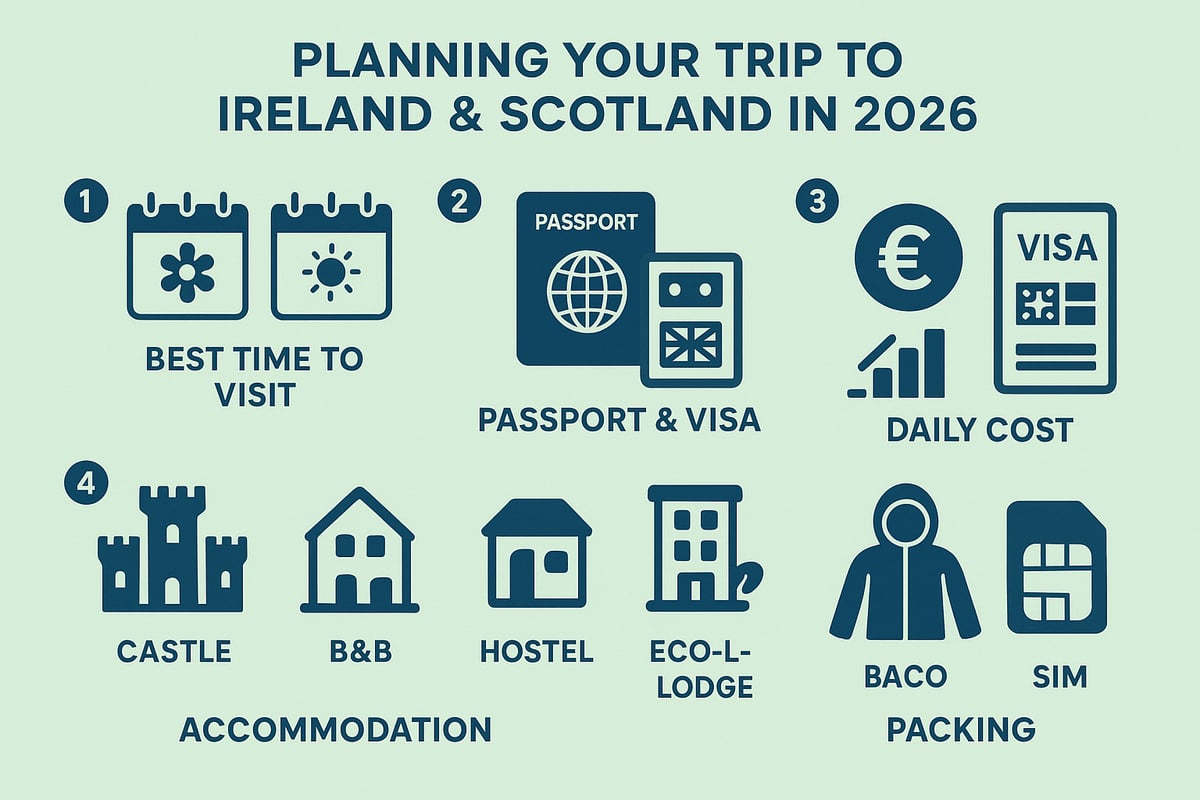
Best Time to Visit in 2026
Choosing the right season for your travel to ireland and scotland shapes your experience. Spring (April to June) brings mild weather, blooming cherry blossoms in Dublin, and fewer crowds. Summer months, especially July and August, offer long daylight hours and vibrant festivals like St. Patrick’s Day in Ireland or the Edinburgh Festival in Scotland.
Consider traveling in the shoulder months, such as May or September, to enjoy pleasant weather and avoid peak prices. Watch for 2026-specific events, like the Highland Games, and plan ahead for special celebrations. Each season promises unique landscapes and local traditions to enrich your journey.
Entry Requirements and Visas
Before you travel to ireland and scotland, check that your passport is valid for at least six months beyond your trip. Most visitors from the US, Canada, and Australia do not need visas for short stays, but Brexit has changed entry protocols between the UK, Ireland, and the EU.
Ireland remains part of the EU, while Scotland follows UK rules. EU travelers can use Schengen regulations for Ireland, but will need an Electronic Travel Authorization (ETA) for entry to the UK, including Scotland. Stay updated on any COVID-19 health documentation required in 2026, and review government sites for the latest guidance.
Budgeting and Currency Tips
Smart budgeting makes travel to ireland and scotland more enjoyable. Ireland uses the Euro, while Scotland uses the Pound Sterling. Expect average daily costs of €100–€150 in Ireland and £90–£140 in Scotland, covering accommodation, meals, and transport.
Save money with city passes, such as the Dublin Pass, or memberships like the National Trust for Scotland. Booking attractions and accommodations in advance often unlocks discounts. For more budgeting strategies tailored for Scotland, review these Scotland travel tips for first-timers.
Accommodation Options
Accommodation during your travel to ireland and scotland ranges from luxury hotels and boutique B&Bs to hostels and rural cottages. Booking platforms like Booking.com and Airbnb offer flexible cancellation policies, which is helpful for changing plans.
For a unique experience, consider staying in a castle such as Ashford Castle in Ireland or an eco-pod on the Isle of Skye in Scotland. Lighthouse stays and countryside lodges are also available for those seeking an authentic atmosphere. Always check reviews and cancellation terms before confirming your booking.
Essential Packing List and Travel Insurance
Weather in Ireland and Scotland is famously unpredictable, so pack layered clothing and waterproof boots for your travel to ireland and scotland. Bring a universal adapter, as the plug types differ, and consider a local SIM card for affordable mobile data.
Travel insurance is strongly recommended, covering medical emergencies, trip cancellations, and outdoor activities like hiking or cycling. Remember to pack for the experiences you plan, from city strolls to rural adventures. A well-prepared bag ensures comfort and confidence on every leg of your journey.
Top Destinations & Must-See Attractions
Embarking on travel to ireland and scotland in 2026 means immersing yourself in breathtaking scenery, vibrant cities, and centuries-old culture. Whether you crave dramatic coastlines, storied castles, or lively urban centers, both countries deliver unforgettable sights and experiences. Let’s explore the must-see attractions that make travel to ireland and scotland truly remarkable.
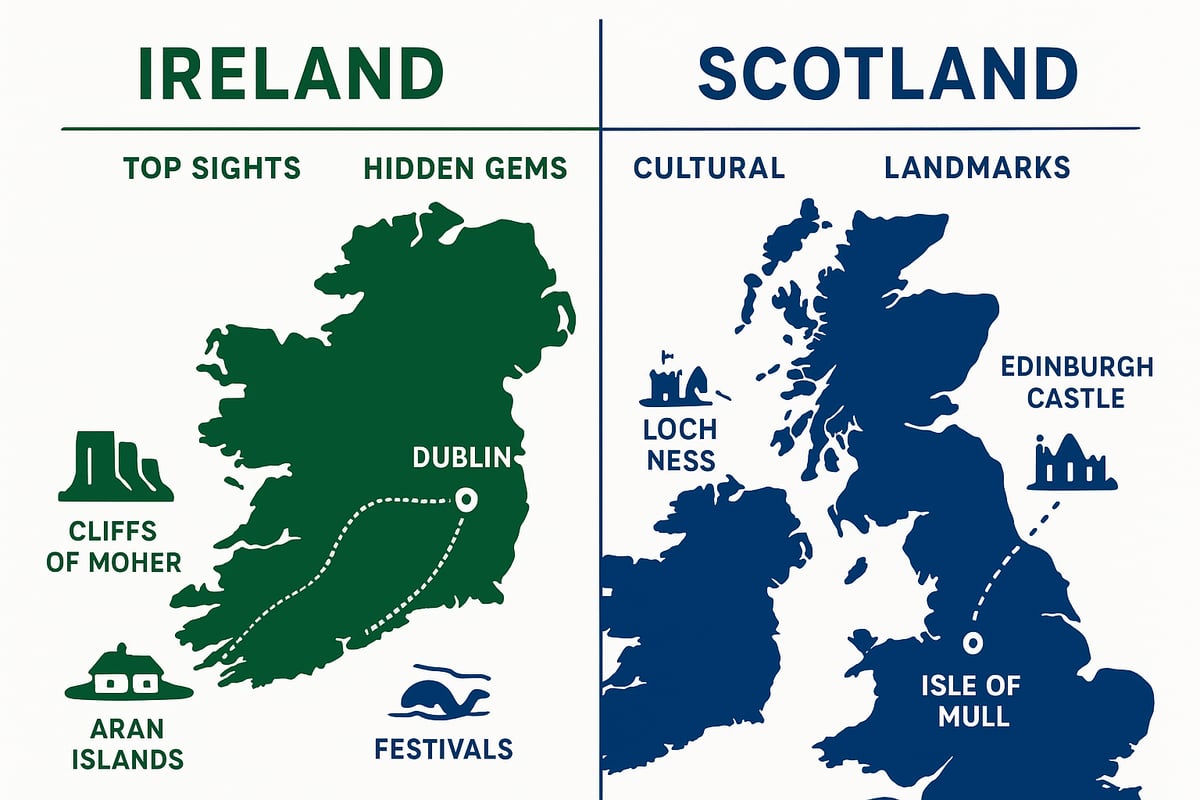
Ireland’s Highlights
Ireland dazzles visitors with its harmonious blend of ancient history, natural beauty, and lively urban energy. When you travel to ireland and scotland, the Emerald Isle offers a wealth of essential stops:
- Dublin: Tour Trinity College and the Book of Kells, sip a pint at the Guinness Storehouse, and experience the nightlife in Temple Bar.
- Wild Atlantic Way: Follow this legendary coastal route to see the Cliffs of Moher, the scenic Ring of Kerry, and the colorful Dingle Peninsula.
- Historical Sites: Step back in time at Newgrange’s prehistoric tomb, the majestic Rock of Cashel, and the poignant Kilmainham Gaol.
- Northern Ireland: Marvel at the basalt columns of Giant’s Causeway and explore Belfast’s Titanic Quarter.
Many of Ireland’s sites are UNESCO World Heritage treasures or featured in iconic TV shows like Game of Thrones. Travel to ireland and scotland lets you witness ancient sites and modern culture side by side. Don’t miss cherry blossom season in Dublin’s parks or the vibrant energy of a traditional music session in Galway.
Scotland’s Highlights
Scotland’s landscapes and heritage captivate all who embark on travel to ireland and scotland. The country’s cities, highlands, and islands brim with must-see attractions:
- Edinburgh: Wander the Royal Mile, admire the imposing Edinburgh Castle, and hike up Arthur’s Seat for panoramic views.
- Scottish Highlands: Discover Glencoe’s dramatic valleys, search for Nessie at Loch Ness, and explore the rugged Isle of Skye.
- Glasgow: Experience the Kelvingrove Art Gallery, thriving music venues, and the city’s dynamic creative atmosphere.
- Castles & Distilleries: Visit Eilean Donan Castle and follow the Speyside whisky trail through picturesque countryside.
For a deeper dive into the best places to visit in Scotland, see this curated Best places to visit in Scotland guide.
Scotland’s famous filming locations bring Outlander and Harry Potter to life, while the North Coast 500 route offers one of Europe’s most scenic drives. When you travel to ireland and scotland, these Scottish highlights promise adventure, history, and a sense of wonder.
Off-the-Beaten-Path Gems
For those who wish to venture beyond the usual route during their travel to ireland and scotland, hidden gems await in both countries:
- Ireland: Trek the towering Slieve League Cliffs, cycle the windswept Aran Islands, or wander the charming port town of Cobh.
- Scotland: Explore the mystical Orkney Islands, wildlife-rich Isle of Mull, and the wild beauty of Cairngorms National Park.
- Unique Experiences: Visit Gaelic-speaking villages, uncover ancient stone circles, and seek out Dark Sky Parks for exceptional stargazing.
Travel to ireland and scotland offers more than postcard sights; it invites you to connect with local traditions, discover artisan crafts, and find serenity at hidden waterfalls. Stargazing in a remote park or hearing Gaelic spoken in a village pub adds authentic stories to your journey.
Whether you’re drawn to iconic landmarks or secret corners, travel to ireland and scotland in 2026 promises a tapestry of unforgettable destinations and experiences.
Getting Around: Transportation and Connectivity
Exploring the best ways to travel to ireland and scotland can elevate your entire journey. With so many landscapes, cities, and rural gems to discover, understanding your transport options ensures a smooth and memorable adventure. Whether you prefer swift connections or scenic routes, planning ahead helps maximize your time and experiences.
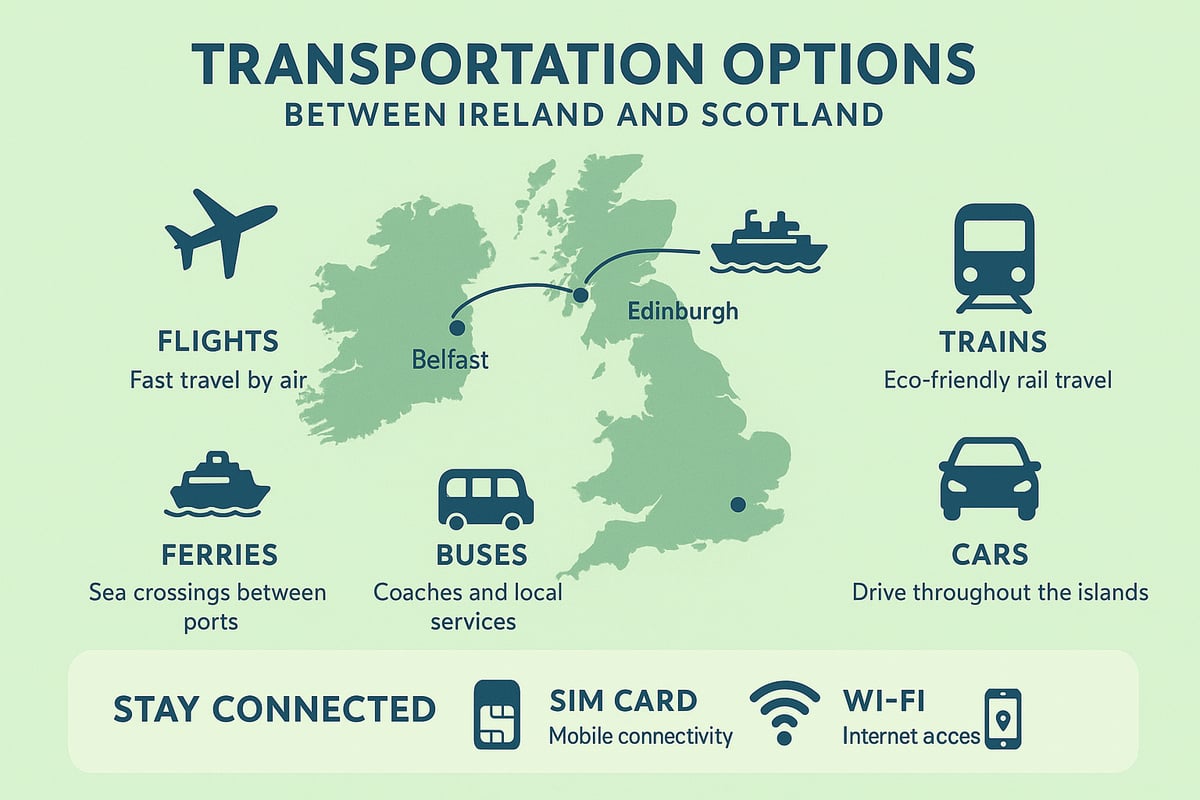
Navigating Between and Within Countries
Travel to ireland and scotland is straightforward thanks to a range of cross-border options. Direct flights connect major cities such as Dublin and Edinburgh in just over an hour, while ferries like the Belfast to Glasgow route provide a scenic sea journey. Train services, though not directly linking the two countries, make for easy connections once you arrive, with hubs in cities like Belfast and Glasgow.
For those seeking adventure, consider combining multiple modes of transport. Scenic detours, such as a ferry crossing followed by a train ride through the Highlands, offer breathtaking views and memorable moments. Whether you opt for speed or scenery, planning your connections in advance is key to a stress-free trip.
Public Transport and Car Rentals
Efficient train and bus networks make it easy to travel to ireland and scotland’s top destinations. In Ireland, Irish Rail and Bus Éireann connect cities and rural areas, while Scotland’s ScotRail and Citylink cover urban and remote regions alike. Renting a car offers flexibility, especially for exploring the Wild Atlantic Way or Scotland’s North Coast 500.
Driving requires a valid license and comfort with left-side driving, particularly on narrow rural roads. Consider local etiquette, such as yielding to livestock or slowing for single-track lanes. For insights on average trips and transportation habits, review Personal Travel Statistics Scotland 2024 to better plan your journey.
Sustainable Travel Options
Embracing sustainable travel to ireland and scotland is easier than ever. Both countries invest in eco-friendly transport, making it simple to choose greener ways to get around. Electric trains connect major cities, while bike hire schemes and walking tours are popular in urban centers and scenic countryside.
Many tour operators and accommodations are Green Tourism accredited, supporting carbon offset programs and local conservation. Prioritize public transport, carpooling, or even electric vehicle rentals to minimize your impact. Sustainable travel not only benefits the environment but also enriches your connection with local culture and landscapes.
Staying Connected
Reliable connectivity is vital for anyone planning to travel to ireland and scotland. SIM cards and eSIM options are widely available at airports and city centers, ensuring affordable mobile data throughout your trip. Free Wi-Fi is common in hotels, cafes, and many transport hubs.
Download navigation apps like TFI Journey Planner for Ireland or Traveline Scotland for seamless route planning. Save emergency numbers and consider offline maps for rural adventures. Staying connected empowers you to adapt plans on the go and discover hidden gems with confidence.
Culture, Food, and Local Experiences
Embracing the vibrant culture and local flavors is essential when you travel to ireland and scotland. These lands are celebrated for their spirited festivals, rich traditions, legendary cuisine, and opportunities to connect with welcoming locals.
Festivals, Music, and Traditions
Festivals are at the heart of every journey when you travel to ireland and scotland. In Ireland, St. Patrick’s Day fills the streets with parades and music in March, while the Fleadh Cheoil celebrates traditional Irish tunes each summer. Scotland’s calendar is equally lively, with the Edinburgh Fringe Festival attracting artists worldwide and Hogmanay ringing in the New Year with ceilidhs and fireworks.
Experience Gaelic culture at local events, from Highland Games with caber tossing to village fairs featuring bagpipes and dance. Joining a traditional music session in a cozy pub or attending a Gaelic language event offers an authentic taste of Celtic heritage.
Culinary Adventures
Sampling local flavors is a highlight of any travel to ireland and scotland itinerary. Ireland’s hearty fare includes Irish stew and soda bread, while seafood shines at the Galway Oyster Festival. Scotland tempts with haggis, smoked salmon, and world-renowned Scotch whisky. Food markets in cities like Dublin and Edinburgh provide fresh, regional produce, and many restaurants offer farm-to-table menus.
For those eager to explore more, consider venturing along the Wild Atlantic Way for coastal cuisine and hidden gems, as described in Must-see spots on Ireland's Wild Atlantic Way.
Pubs, Nightlife, and Social Etiquette
No travel to ireland and scotland is complete without experiencing legendary pubs and local nightlife. Dublin’s Temple Bar and Edinburgh’s Sheep Heid Inn are iconic, offering live folk music, hearty meals, and a lively atmosphere. Enjoy a whiskey tasting or join in a ceilidh dance night for a memorable evening.
When ordering drinks, it is polite to take turns buying rounds. Tipping is customary, usually around 10 percent for good service. Engage with locals, and you will find that humor and friendliness are central to the pub culture.
Arts, Literature, and Film Locations
The creative legacy of these countries is a cornerstone for anyone who wants to travel to ireland and scotland. Ireland’s capital honors writers like James Joyce and W.B. Yeats through literary pub crawls and museums. Scotland celebrates Robert Burns and Sir Walter Scott with festivals and historic sites.
Film and TV fans can visit iconic locations, such as Game of Thrones sets in Northern Ireland or the Glenfinnan Viaduct in Scotland, made famous by Harry Potter. Outlander enthusiasts can trace filming spots along the Highlands and castles.
Meeting Locals and Authentic Experiences
Immersing yourself in community life is a rewarding part of travel to ireland and scotland. Join guided community tours, volunteer on a rural farm, or participate in artisan workshops such as Harris Tweed weaving. Sports fans can attend a hurling match or watch a Gaelic football game for a true local experience.
Storytelling nights and village homestays provide deeper connections. Whether you are exploring bustling cities or tranquil countryside, these encounters will enrich your journey with unforgettable memories.
Sample Itineraries for Every Traveler
Planning your travel to ireland and scotland is made easier with a well-crafted itinerary. Whether you crave history, adventure, family fun, or immersive local experiences, these sample routes will help you make the most of your journey.
Classic 10-Day Ireland & Scotland Tour
For those experiencing travel to ireland and scotland for the first time, the classic 10-day itinerary covers iconic highlights at a relaxed pace.
Sample Breakdown:
| Day | Destination | Highlights |
|---|---|---|
| 1-2 | Dublin | Trinity College, Temple Bar, Guinness |
| 3-4 | Galway & West Coast | Cliffs of Moher, Dingle Peninsula |
| 5 | Belfast | Titanic Quarter, Giant’s Causeway |
| 6-7 | Edinburgh | Castle, Royal Mile, Arthur’s Seat |
| 8-9 | Highlands | Loch Ness, Glencoe, scenic rail journeys |
| 10 | Glasgow | Kelvingrove Art Gallery, music scene |
Advance bookings for trains and accommodations are recommended, especially during busy periods. For tips on avoiding common pitfalls, see Common mistakes tourists make in Ireland.
Adventure and Nature-Focused Itinerary
Outdoor enthusiasts will find travel to ireland and scotland a paradise of rugged landscapes and thrilling activities. This route spotlights hiking, cycling, and wildlife.
- Hike the Ring of Kerry and explore Killarney National Park.
- Cycle the Great Western Greenway from Westport.
- Kayak along the Causeway Coast near Giant’s Causeway.
- Trek the Isle of Skye’s Quiraing and Fairy Pools.
- Spot dolphins on a wildlife cruise off the Scottish West Coast.
Pack layered clothing and waterproof gear for changing conditions. Each stop offers unique trails and opportunities to explore nature up close.
History and Culture Lovers’ Route
If your travel to ireland and scotland is driven by a passion for heritage and the arts, this itinerary weaves through ancient sites and cultural treasures.
- Marvel at Newgrange’s prehistoric passage tomb.
- Visit Kilmainham Gaol and the Rock of Cashel.
- Explore Stirling and Edinburgh Castles.
- Immerse in the literary legacy of Dublin and the poetry of Burns in Scotland.
- Attend a traditional music session or a Burns Night celebration.
Plan time to linger in museums and at local events for deeper cultural immersion.
Family-Friendly Journey
Travel to ireland and scotland with children is both fun and educational. This family-focused itinerary balances interactive attractions and outdoor play.
- Visit Dublin Zoo and the National Leprechaun Museum.
- Cruise Loch Ness searching for Nessie.
- Explore the Glasgow Science Centre’s hands-on exhibits.
- Enjoy picnics in Phoenix Park and the Cairngorms.
- Try a family cycling tour along the Waterford Greenway.
Choose family-friendly accommodations and look for discounts or free admission for kids at major sights.
Slow Travel and Local Immersion
For travelers seeking connection, slow travel to ireland and scotland offers deeper engagement with local communities and traditions.
- Stay in a Connemara homestay or rural cottage.
- Shop at Galway’s Saturday market and sample artisan foods.
- Participate in a Harris Tweed weaving workshop in the Scottish Isles.
- Join a village storytelling night or Gaelic sports match.
- Volunteer on a working farm for a true taste of rural life.
This approach allows time to savor each destination and build authentic memories.
Insider Tips and Resources for a Seamless Trip
Even the most seasoned globetrotters benefit from a few expert tips when planning travel to ireland and scotland. Use these resources and insider insights to ensure your journey is smooth, safe, and truly memorable.
Essential Safety and Health Advice
For travel to ireland and scotland, preparation is key to peace of mind. Carry emergency contact numbers for Ireland’s 112 and Scotland’s 999 services, and research how to access healthcare in both countries. EU travelers can use the European Health Insurance Card in Ireland, while NHS Scotland provides accessible emergency care.
Stay informed about travel advisories and local health recommendations. Food and water are generally safe, but always check for updates before departure. Respect local laws and customs, and consider registering your trip with your country’s embassy.
For an understanding of recent tourism trends and safety considerations, consult the Inbound Tourism Statistics for Ireland 2024, which provide valuable data on visitor numbers and travel patterns.
Navigating Language and Local Etiquette
Communication enriches travel to ireland and scotland, so learning a few local phrases goes a long way. In Ireland, “Sláinte” means “cheers,” while in Scotland, “Ceud mìle fàilte” means “a hundred thousand welcomes.” Practice polite greetings and always thank service staff.
Cultural etiquette emphasizes friendliness and respect for personal space. Tipping is appreciated but not mandatory, usually 10-15% in restaurants. Queue patiently, and avoid controversial topics in casual conversation.
Humor is part of daily life, but be mindful of regional differences. A little effort to adapt to local customs will open doors to authentic experiences.
Recommended Apps, Maps, and Digital Tools
Digital tools make travel to ireland and scotland easier than ever. Download navigation apps like TFI Journey Planner for Ireland and Traveline Scotland for public transport. Use Rome2Rio for comparing routes, and keep offline maps handy for rural adventures.
For up-to-date tourism data and planning insights, the International Tourism Performance in Scotland 2024 offers a comprehensive look at visitor trends, helping you plan smarter.
Consider translation apps for Gaelic or Scots phrases, and itinerary planners for organizing bookings. Staying connected is simple with local SIM cards or eSIMs.
Explore with Confidence Using Awesome Travel Guides
To truly master travel to ireland and scotland, invest in a trusted resource like Awesome Travel Guides. These digital guides are packed with local insights, hidden gems, and step-by-step itineraries for every type of traveler.
Accessible on any device, they empower you to avoid tourist pitfalls and explore at your own pace. Whether you seek cultural immersion or outdoor adventure, these guides ensure your 2026 trip is seamless and unforgettable.
Thousands of travelers rely on Awesome Travel Guides for practical advice and authentic experiences. Make it your digital companion for a journey filled with confidence and discovery.
As you plan your 2026 adventure through the emerald landscapes of Ireland and the rugged beauty of Scotland, having the right resources truly makes all the difference. With so many must-see sights, unique cultural experiences, and hidden gems along the way, it's helpful to have a guide you can trust and access anytime. I recommend checking out these digital travel guides—they're packed with local insights, curated itineraries, and practical tips. Whether you're traveling solo, with family, or with friends, you can explore with confidence and make every moment count. Ready to start planning? Explore Guides