

Germany Travel Guide: Essential Tips for 2026
Germany stands as one of Europe's most compelling destinations, offering travelers an exceptional blend of historical significance, cultural richness, and modern innovation. From the fairy-tale castles of Bavaria to the vibrant urban energy of Berlin, this Central European powerhouse delivers experiences that resonate with first-time visitors and seasoned explorers alike. This comprehensive germany travel guide provides the essential information you need to navigate the country's diverse regions, understand local customs, and discover both iconic landmarks and hidden treasures that make German travel truly unforgettable.
Understanding Germany's Regional Diversity
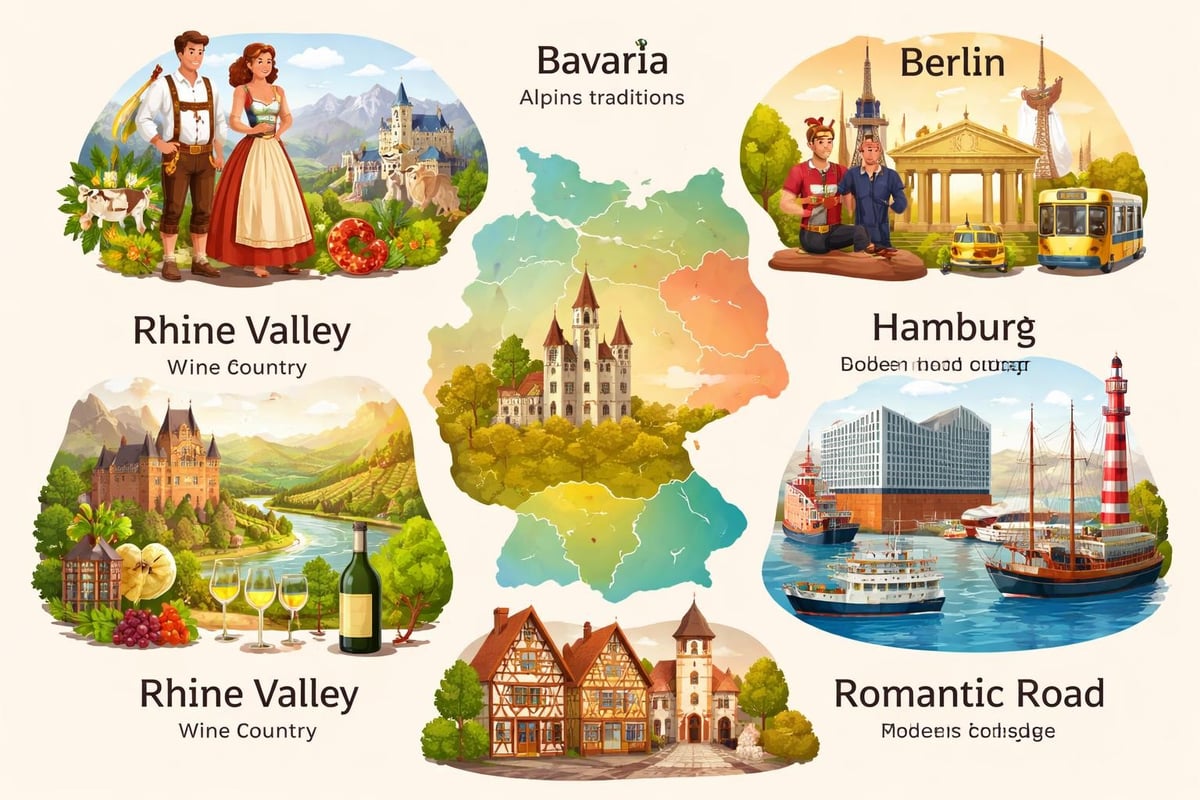
Germany comprises sixteen federal states, each with distinct characteristics that shape the travel experience. Bavaria captivates visitors with Alpine scenery and traditional culture, while cosmopolitan Berlin represents cutting-edge art and nightlife. The Rhine Valley enchants with vineyard-covered hillsides and medieval castles, whereas Hamburg offers maritime heritage and sophisticated urban culture.
Major Destinations Worth Exploring
Berlin commands attention as Germany's capital and cultural epicenter. The city's turbulent 20th-century history manifests in landmarks like the Brandenburg Gate, remnants of the Berlin Wall, and the moving Memorial to the Murdered Jews of Europe. Beyond historical sites, Berlin thrives as a contemporary art hub with world-class museums on Museum Island and a legendary electronic music scene.
Munich serves as Bavaria's capital and gateway to Alpine adventures. The city balances tradition with modernity, hosting the world-famous Oktoberfest while maintaining innovative technology sectors. Visitors appreciate the English Garden, one of the world's largest urban parks, alongside baroque architecture and proximity to Neuschwanstein Castle.
Hamburg ranks as Germany's second-largest city and Europe's third-largest port. The Speicherstadt warehouse district, now a UNESCO World Heritage site, showcases stunning red-brick architecture, while the futuristic Elbphilharmonie concert hall represents contemporary design excellence.
The Romantic Road connects charming medieval towns through southern Germany, offering a 220-mile journey past half-timbered houses, Gothic churches, and Renaissance town squares. This route epitomizes the storybook Germany many travelers envision.
Transportation and Getting Around
Germany's transportation infrastructure sets global standards for efficiency and connectivity. The Deutsche Bahn railway network connects major cities with high-speed ICE trains reaching speeds of 200 mph, making intercity travel both comfortable and environmentally conscious. Deutsche Welle provides a comprehensive guide on traveling in Germany, including detailed transportation options.
Travel Passes and Ticketing Options
| Pass Type | Coverage | Best For | Approximate Cost |
|---|---|---|---|
| German Rail Pass | Nationwide trains | Extended multi-city trips | $250-400 (varies by duration) |
| Regional Passes | State-specific travel | Deep exploration of one region | $25-50 per day |
| City Day Tickets | Local public transport | Urban exploration | $7-15 |
| Deutschland-Ticket | Nationwide local transport | Budget travelers, residents | €49 monthly |
The Deutschland-Ticket revolutionized German travel in 2023 and remains an exceptional value in 2026, offering unlimited access to regional trains, buses, trams, and metro systems throughout the country for a flat monthly fee.
Driving considerations include well-maintained autobahns with sections lacking speed limits, though many areas now implement restrictions. Car rental requires an international driving permit for non-EU visitors, and parking in city centers can be expensive and challenging.
Urban transportation systems operate with remarkable efficiency across German cities. Most destinations feature integrated networks combining U-Bahn (subway), S-Bahn (suburban rail), trams, and buses. Tickets typically require validation before boarding, and spot checks enforce compliance with substantial fines for fare evasion.
Cultural Etiquette and Practical Considerations
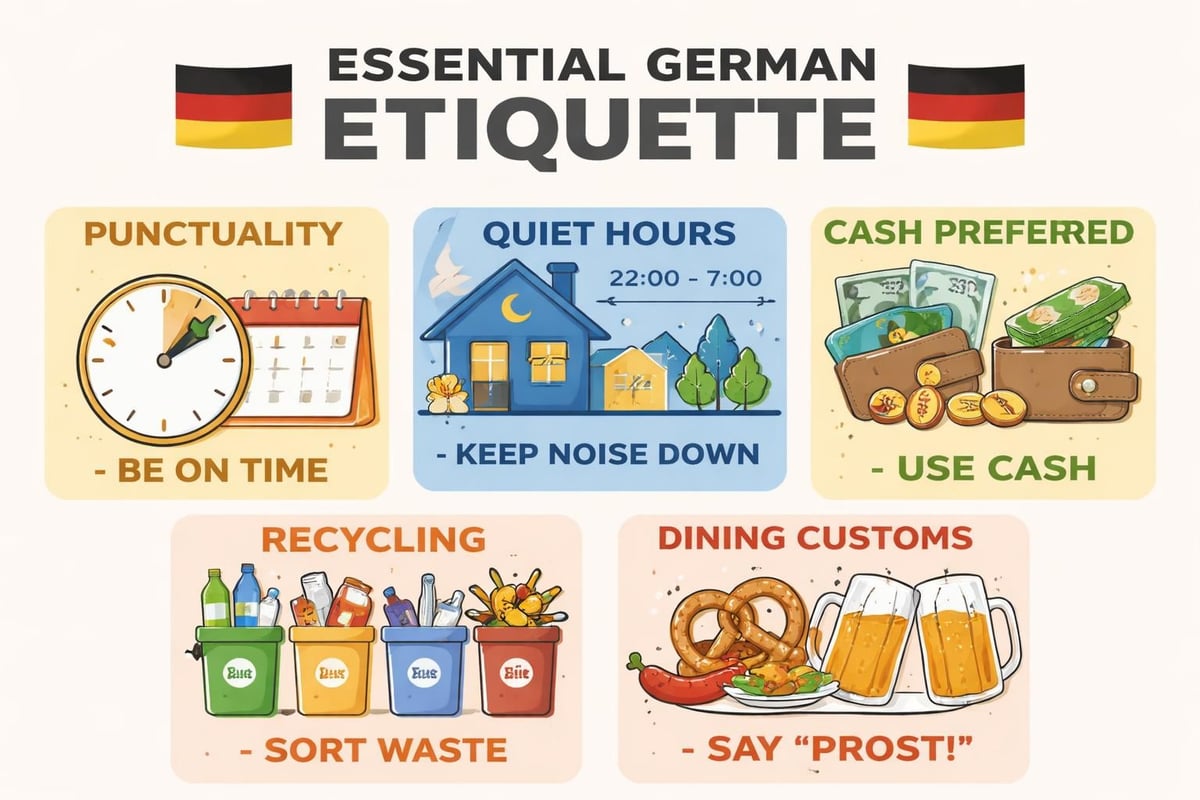
Understanding German cultural norms enhances travel experiences and demonstrates respect for local customs. Germans value punctuality highly-arriving even five minutes late for appointments is considered discourtful. Direct communication represents the norm, with Germans appreciating honesty over diplomatic ambiguity.
Essential Cultural Tips
- Greetings matter: Handshakes remain standard for business and formal situations, with close friends exchanging cheek kisses
- Quiet hours ("Ruhezeit"): Residential areas enforce silence from 10 PM to 6 AM and Sunday afternoons
- Cash remains king: Despite Germany's economic development, many establishments still prefer cash over cards
- Recycling responsibility: Germans take waste separation seriously, with specific bins for different materials
- Table manners: Wait for the host to say "Guten Appetit" before eating, and keep hands visible on the table
Language considerations show that while English proficiency is widespread in major cities and tourist areas, learning basic German phrases demonstrates respect and facilitates interactions in smaller towns. Germans appreciate visitors attempting their language, even imperfectly.
Seasonal Planning and Weather Patterns
Germany experiences four distinct seasons that dramatically influence travel experiences. Understanding seasonal variations helps travelers pack appropriately and time visits to specific attractions optimally.
Seasonal Breakdown
Spring (March-May) brings moderate temperatures, blooming gardens, and fewer crowds than summer. Easter markets showcase regional traditions, while asparagus season ("Spargelzeit") dominates menus from April through June.
Summer (June-August) represents peak tourist season with the warmest weather and longest daylight hours. Outdoor festivals proliferate, beer gardens overflow with locals and visitors, and Alpine hiking trails become accessible. Advance booking becomes essential for popular destinations.
Fall (September-November) offers comfortable temperatures, spectacular autumn foliage, and wine festivals throughout the Rhine and Moselle valleys. Oktoberfest, actually held primarily in September, attracts millions to Munich.
Winter (December-February) transforms Germany into a wonderland of Christmas markets, the country's most enchanting seasonal attraction. Markets operate from late November through December, offering handcrafted gifts, mulled wine, and regional specialties. Ski resorts in Bavaria and the Black Forest attract winter sports enthusiasts.
Culinary Experiences Beyond Stereotypes
German cuisine extends far beyond bratwurst and sauerkraut, though regional sausage varieties number in the hundreds. Modern German dining encompasses both traditional comfort food and innovative contemporary cuisine that has earned international acclaim.
Regional Specialties to Sample
- Bavaria: Weisswurst (white sausage), pretzels, roast pork with dumplings, apple strudel
- Berlin: Currywurst, döner kebab (Turkish influence), Berliner Pfannkuchen (jelly doughnuts)
- Swabia: Spätzle (egg noodles), Maultaschen (filled pasta pockets), Zwiebelrostbraten (onion roast beef)
- Rhineland: Sauerbraten (marinated pot roast), potato pancakes, Reibekuchen
- Hamburg: Fish sandwiches, labskaus (corned beef hash), rote grütze (berry dessert)
Germany's beer culture represents an integral part of social life, with the Reinheitsgebot (Beer Purity Law of 1516) still influencing brewing practices. The country produces over 1,500 breweries creating thousands of beer varieties, from light Pilsners to dark Schwarzbier, wheat-based Weissbier to smoky Rauchbier.
Wine regions along the Rhine, Moselle, and in Franconia produce exceptional Rieslings and other varieties often overlooked by international markets. Wine taverns ("Weinstuben") in these regions offer tastings and meals paired with local vintages. For those planning broader European adventures, exploring travel tips can provide additional insights for neighboring countries.
Accommodation Options Across Price Points
Germany offers diverse lodging options suitable for every budget and travel style. Advance booking becomes increasingly important during peak seasons and major events, particularly for Christmas markets and Oktoberfest.
| Accommodation Type | Price Range (per night) | Characteristics | Best For |
|---|---|---|---|
| Hostels | €15-35 | Shared rooms, social atmosphere | Budget travelers, solo adventurers |
| Pensions/Guesthouses | €40-80 | Family-run, breakfast included | Authentic local experiences |
| Mid-Range Hotels | €80-150 | Standard amenities, central locations | Comfortable conventional travel |
| Boutique Hotels | €150-300 | Design-focused, unique character | Special occasions, style-conscious visitors |
| Luxury Properties | €300+ | Five-star service, premium locations | Indulgent experiences |
Alternative accommodation includes farmstays in rural areas, castle hotels offering historical immersion, and apartment rentals ideal for families or extended stays. The sharing economy provides options through platforms, though regulations vary by city with some implementing strict short-term rental laws.
Traditional German hospitality shines through "Zimmer frei" signs indicating rooms available in private homes, particularly common in smaller towns and rural areas. These budget-friendly options often include breakfast and opportunities for cultural exchange with hosts.
Must-Visit Historical and Cultural Sites
Germany's complex history manifests in extraordinary architectural and cultural landmarks spanning Roman ruins to Cold War memorials. This germany travel guide highlights essential sites that provide context for understanding German identity and European history.
UNESCO World Heritage Sites
Germany boasts 51 UNESCO World Heritage sites, reflecting its cultural and historical significance. Rick Steves' travel guide provides insights into Germany's top destinations, covering many of these remarkable locations.
Cologne Cathedral represents Gothic architecture's pinnacle, with twin spires dominating the skyline since medieval times. Construction began in 1248 and continued intermittently for over 600 years, finally completing in 1880.
Wartburg Castle near Eisenach served as Martin Luther's refuge while translating the New Testament into German, fundamentally shaping the Protestant Reformation and standardizing the German language.
Bamberg preserves one of Europe's largest intact historical city centers, with medieval and baroque architecture creating an atmospheric time capsule.
Sanssouci Palace in Potsdam showcases Prussian royal grandeur, with Frederick the Great's summer residence set amid elaborate terraced gardens demonstrating rococo design principles.
The Berlin Museum Island concentrates five world-class museums on a single UNESCO-protected island, housing collections ranging from ancient Egyptian artifacts to 19th-century European art.
Navigating Festivals and Events
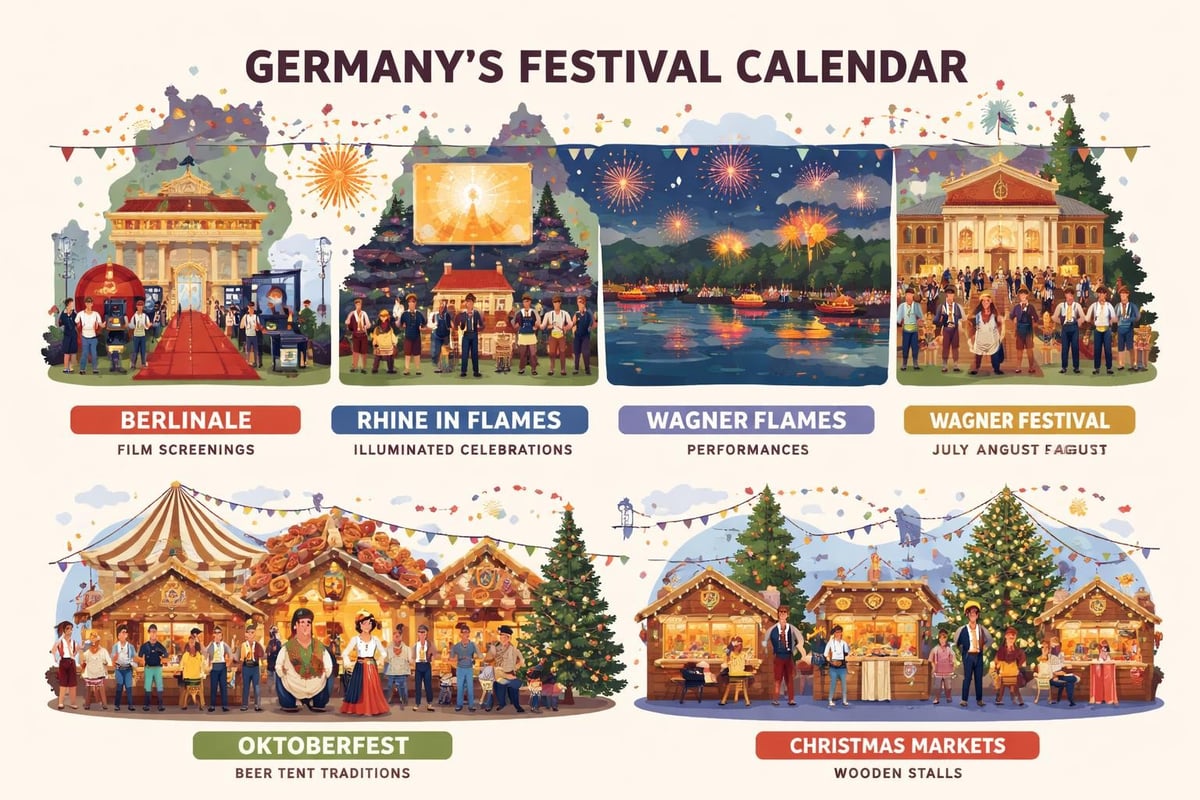
Germany's festival calendar extends throughout the year, celebrating everything from beer and wine to film and music. Timing visits to coincide with events adds memorable dimensions to travel experiences, though accommodation booking well in advance becomes essential.
Notable Annual Events
- Berlinale (February): One of the world's leading film festivals attracting international cinema
- Rhine in Flames (May-September): Illuminated boat parades and fireworks along the Rhine Valley
- Wagner Festival Bayreuth (July-August): Opera performances in the composer's purpose-built theater
- Oktoberfest Munich (September-October): The world's largest folk festival with six million annual visitors
- Christmas Markets (November-December): Traditional markets in virtually every German city
Regional wine festivals throughout late summer and autumn celebrate grape harvests in wine-producing areas, offering tastings, traditional music, and fireworks. These smaller events provide authentic cultural experiences without overwhelming crowds.
Budget Planning and Money Matters
Germany ranks among Western Europe's moderately priced destinations, more affordable than Switzerland or Scandinavia but costlier than Eastern European neighbors. Strategic planning helps travelers maximize experiences while managing expenses effectively.
Daily Budget Estimates
Budget travel: €50-80 per day covers hostel accommodation, supermarket meals, public transportation, and free attractions. Student discounts reduce museum entrance fees significantly.
Mid-range travel: €120-200 per day allows comfortable hotels, restaurant dining, entrance fees, and occasional taxis or guided tours.
Luxury travel: €300+ per day provides premium hotels, fine dining, private tours, and first-class rail travel.
Cash remains essential despite Germany's economic sophistication, with many restaurants, bakeries, and smaller shops accepting only cash or imposing minimum amounts for card payments. ATMs (Geldautomat) are widespread, though foreign transaction fees may apply depending on your bank.
Tipping practices differ from American standards. Restaurant service charges are included in prices, but rounding up or adding 5-10% for good service is customary. Simply state the total amount you wish to pay when giving cash rather than leaving money on the table.
Museum passes offer substantial savings in major cities. Berlin's Museum Pass provides three consecutive days of access to over 30 museums for approximately €35, while similar options exist for Munich and other destinations. Many museums offer free or reduced admission on specific days or times.
Practical Safety and Health Information
Germany maintains high safety standards with low crime rates compared to many international destinations. Standard precautions apply in crowded tourist areas and nightlife districts where pickpocketing occasionally occurs, but violent crime against tourists remains rare.
Health and Emergency Services
Emergency services respond to 112 throughout the European Union for police, fire, and ambulance. Germany's healthcare system ranks among the world's best, with English-speaking doctors available in major cities.
Travel insurance becomes essential for non-EU visitors, as medical treatment costs for uninsured patients can be substantial. EU citizens should carry the European Health Insurance Card (EHIC) for access to state healthcare.
Pharmacies (Apotheken) stock prescription and over-the-counter medications, with trained pharmacists providing consultation. After-hours emergency pharmacies operate on rotation, with locations posted at every pharmacy.
Water safety: Tap water is safe to drink throughout Germany and often superior in quality to bottled alternatives. Restaurants typically serve bottled water unless tap water is specifically requested.
For comprehensive planning tools and additional destination guides, visit Awesome Travel Guides for resources covering Germany and beyond. Similar detailed guides exist for other European destinations, including resources for Scotland travel and England.
Sustainable and Responsible Travel Practices
Germany leads European sustainability efforts, making eco-conscious travel straightforward and often more economical than conventional alternatives. The country's commitment to environmental protection creates infrastructure supporting responsible tourism.
Green Travel Strategies
Public transportation generates significantly lower carbon emissions than driving, with Germany's extensive rail network offering comfortable, efficient alternatives to flying or renting cars for intercity travel. Bicycle infrastructure in cities like Munich, Freiburg, and Münster provides safe, enjoyable cycling experiences.
Sustainable accommodation options include numerous eco-certified hotels and guesthouses emphasizing energy efficiency, local sourcing, and waste reduction. The German Sustainable Tourism Certification (TourCert) identifies properties meeting environmental standards.
Supporting local businesses strengthens regional economies and reduces environmental impact. Farmers' markets, regional products labeled with quality seals, and family-owned restaurants offer authentic experiences while benefiting local communities.
Seasonal and local eating aligns with German food culture, where seasonal menus and regional specialties dominate traditional cuisine. This approach reduces transportation emissions while connecting travelers to place-based food traditions.
Germany's comprehensive recycling system extends to public spaces with color-coded bins separating paper, packaging, and general waste. Participating in these systems, even as a visitor, demonstrates environmental responsibility.
Hidden Gems Beyond Tourist Hotlines
While iconic destinations deserve their popularity, this germany travel guide encourages exploring lesser-known locations offering authentic experiences without overwhelming crowds. Secondary cities and rural regions reveal Germany's diversity and provide opportunities for meaningful cultural interaction.
Bamberg combines UNESCO-protected architecture with exceptional beer culture, hosting nine breweries within city limits and surrounding regions producing distinctive smoked beers.
Lübeck preserves Hanseatic trading heritage through brick Gothic architecture and the famous Holstentor gate, while nearby Baltic beaches attract summer visitors to Travemünde.
Heidelberg captivates with romantic castle ruins overlooking the Neckar River, a historic university founded in 1386, and a picturesque old town that inspired German Romantic poets and artists.
Saxon Switzerland National Park near Dresden offers dramatic sandstone formations, challenging hiking trails, and the spectacular Bastei Bridge providing panoramic Elbe Valley views.
Quedlinburg transports visitors to medieval Germany with over 2,000 half-timbered houses spanning six centuries, recognized as one of Europe's largest preserved historical town centers.
The Moselle Valley provides quieter alternatives to the Rhine, with steep vineyard slopes, Roman history in Trier (Germany's oldest city), and charming wine villages like Bernkastel-Kues offering tastings and river cruises.
Digital Resources and Connectivity
Modern travelers rely on digital tools for navigation, translation, and real-time information. Germany's excellent internet infrastructure and widespread WiFi availability support connected travel, though understanding local connectivity options optimizes experiences.
Mobile coverage blankets Germany through multiple carriers, with EU visitors benefiting from roaming-free policies since 2017. Non-EU travelers should research international plans or purchase local SIM cards for extended stays, available at airports, electronics stores, and supermarkets.
WiFi availability extends to most hotels, many restaurants and cafes, and public spaces in major cities. Train stations and some ICE trains offer free WiFi, though connection quality varies.
Essential apps for Germany travel include:
- DB Navigator for train schedules and booking
- Google Maps or Maps.me for navigation
- DeepL or Google Translate for language assistance
- Too Good To Go for discounted surplus restaurant food
- GoEuro/Omio for comparing transportation options
For visitors seeking comprehensive digital resources beyond apps, platforms like Awesome Travel Guides provide downloadable content accessible offline, ensuring information availability regardless of connectivity. Understanding how to download your guide before departure ensures seamless access to essential travel information.
Germany delivers exceptional travel experiences combining historical depth, cultural richness, natural beauty, and modern innovation across diverse regions and seasons. This germany travel guide provides the foundational knowledge to navigate transportation, understand cultural expectations, discover both famous landmarks and hidden treasures, and travel sustainably throughout this fascinating country. Whether you're planning your first visit or returning to explore deeper, Awesome Travel Guides offers comprehensive digital resources packed with insider tips and detailed information to transform your German adventure into an unforgettable journey filled with authentic experiences and confident exploration.