

Greece Vacation Guide: Complete Travel Planning for 2026
Greece stands as one of the world's most captivating destinations, offering an extraordinary blend of ancient history, stunning Mediterranean landscapes, pristine beaches, and vibrant cultural experiences. Whether you're drawn to the iconic white-washed buildings of Santorini, the archaeological wonders of Athens, or the turquoise waters of the Aegean Sea, planning a successful trip requires careful consideration of timing, budgeting, and itinerary design. This greece vacation guide provides you with the essential knowledge to transform your Mediterranean dreams into an unforgettable reality, helping you navigate everything from choosing the right islands to understanding local customs and maximizing your travel budget.
Understanding Greece's Geography and Regions
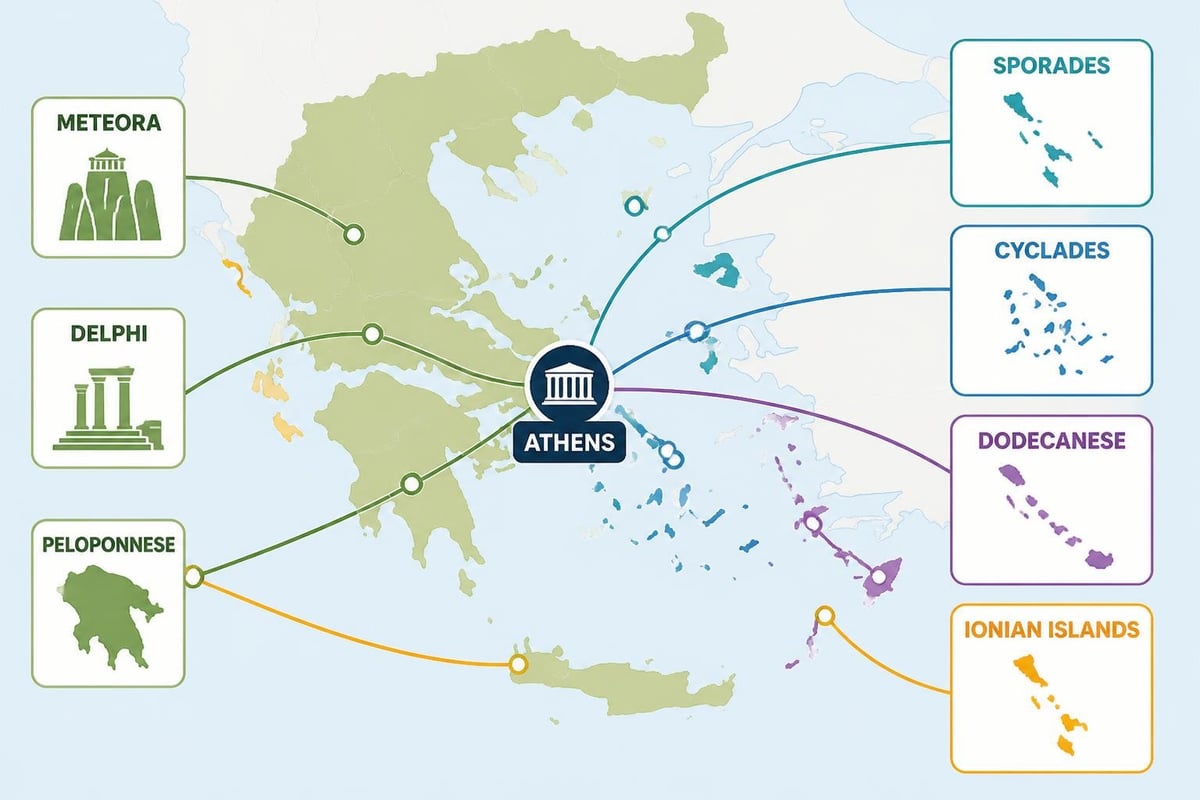
Greece comprises a diverse landscape that extends far beyond its famous islands. The mainland offers historical treasures in Athens, Thessaloniki, and Delphi, while the Peloponnese peninsula showcases ancient Sparta, Olympia, and medieval Monemvasia. Understanding the country's geographical layout is fundamental to creating an efficient travel plan.
The Greek islands are divided into distinct clusters, each with unique characteristics:
- Cyclades Islands: Santorini, Mykonos, Paros, Naxos - famous for white architecture and dramatic cliffs
- Ionian Islands: Corfu, Zakynthos, Kefalonia - known for lush vegetation and Venetian influence
- Dodecanese Islands: Rhodes, Kos, Patmos - offering medieval history and diverse landscapes
- Sporades Islands: Skiathos, Skopelos, Alonissos - featuring pine forests and secluded beaches
- Crete: Greece's largest island with distinct culture, cuisine, and archaeological sites
Most travelers combine Athens with 2-3 islands to experience both ancient history and island relaxation. The comprehensive planning approach helps you identify which regions align with your interests and available time.
Mainland Greece Highlights
Athens deserves at least two full days for exploring the Acropolis, Ancient Agora, Plaka neighborhood, and National Archaeological Museum. The city serves as the gateway for most international visitors and provides crucial historical context for understanding Greek civilization.
Beyond Athens, Meteora's cliff-top monasteries, Delphi's oracle sanctuary, and Thessaloniki's Byzantine heritage offer compelling reasons to explore the mainland. The Peloponnese rewards travelers with Mycenae, Epidaurus, Nafplio's charming harbor, and the dramatic Mani Peninsula.
Choosing the Best Time to Visit Greece
Timing significantly impacts your greece vacation guide experience, affecting everything from weather conditions to crowd levels and pricing. Greece experiences a Mediterranean climate with hot, dry summers and mild, wet winters.
| Season | Temperature | Crowds | Prices | Best For |
|---|---|---|---|---|
| Spring (Apr-May) | 60-75°F | Moderate | Mid-range | Hiking, sightseeing, wildflowers |
| Summer (Jun-Aug) | 80-95°F | Heavy | High | Beach activities, island hopping |
| Fall (Sep-Oct) | 70-80°F | Moderate | Mid-range | Swimming, festivals, comfortable exploration |
| Winter (Nov-Mar) | 50-60°F | Light | Low | City tours, skiing, budget travel |
Peak season (July-August) brings the warmest weather but also the largest crowds and highest prices. Popular islands like Santorini and Mykonos become particularly congested, with ferry schedules at maximum capacity.
Shoulder Season Advantages
April through early June and September through October represent the sweet spot for many travelers. The weather remains excellent for both sightseeing and swimming, while accommodation prices drop significantly compared to peak summer. Many consider late September ideal, as the sea reaches its warmest temperatures while tourist numbers decline.
Winter travel suits budget-conscious visitors and those focused on mainland attractions. Most island hotels close from November through March, but Athens, Thessaloniki, and mainland destinations remain fully operational with dramatically reduced prices.
Budget Planning for Your Greece Vacation
Creating a realistic budget forms the foundation of effective trip planning. Greece offers options for every budget level, from backpacker hostels to luxury resorts, but understanding cost categories helps prevent overspending.
Daily budget ranges (per person, including accommodation):
- Budget travel: $50-80 (hostels, street food, public transport, free attractions)
- Mid-range comfort: $120-180 (3-star hotels, taverna meals, inter-island ferries, museum tickets)
- Luxury experience: $250-400+ (boutique hotels, fine dining, private transfers, premium tours)
Major Expense Categories
Accommodation typically consumes 30-40% of your total budget. Athens offers abundant budget options, while popular islands command premium rates during peak season. Booking 3-4 months in advance secures better rates and availability for summer travel.
Transportation costs vary based on island choices. Ferry tickets between islands range from $25-70 depending on distance and vessel type. Domestic flights save time but cost more, typically $60-120 per flight. The detailed country overview provides valuable insights into Greece's transportation infrastructure and associated costs.
Food expenses remain relatively affordable. Budget $10-15 for casual taverna meals, $20-30 for mid-range restaurants, and $40+ for upscale dining. Shopping at local markets for breakfast supplies and snacks reduces daily food costs significantly.
Essential Greece Vacation Itineraries
Structuring your days maximizes experience quality while maintaining realistic pacing. Most visitors to Greece spend 7-14 days, with one week representing the minimum for a satisfying first visit.
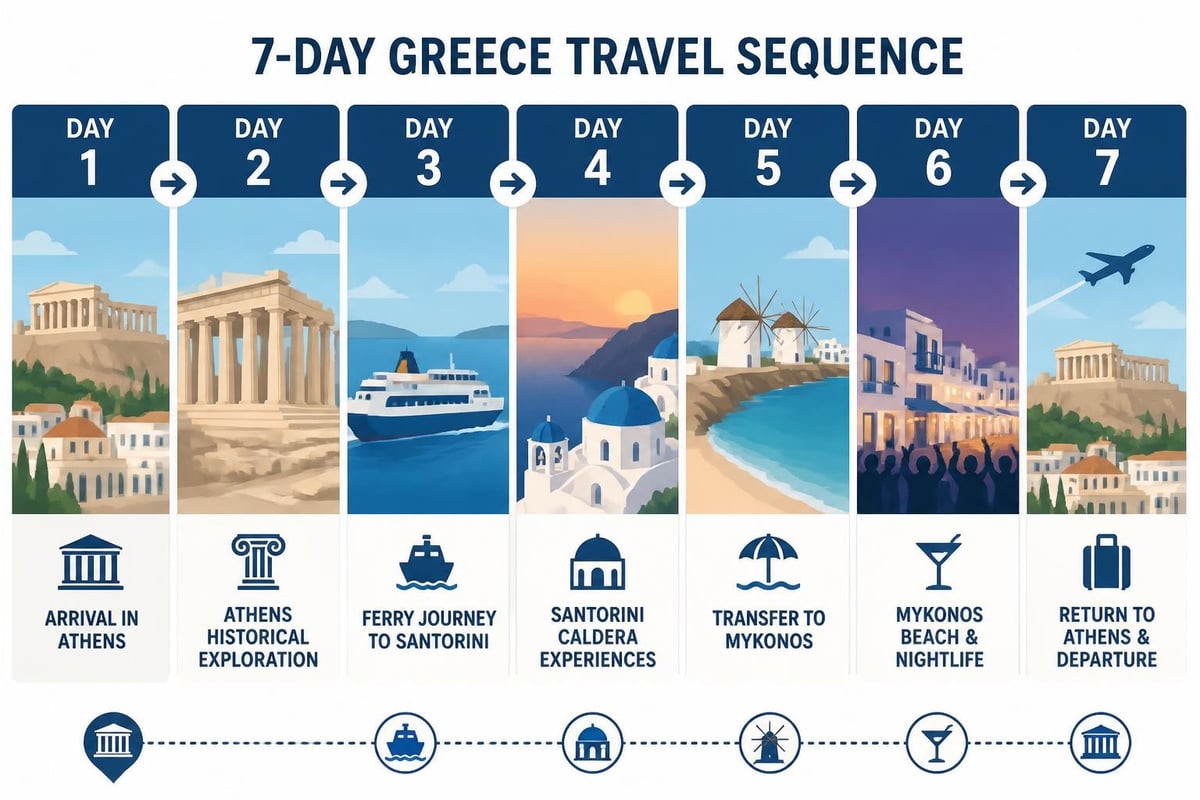
Classic 7-Day Greece Itinerary
- Days 1-2: Athens - Acropolis, Ancient Agora, National Archaeological Museum, Plaka neighborhood exploration
- Days 3-4: Santorini - Oia sunset, wine tasting, caldera views, Akrotiri archaeological site
- Days 5-6: Mykonos - Beach clubs, Little Venice, windmills, day trip to Delos
- Day 7: Return to Athens - Last-minute shopping, departure
This compressed schedule follows the recommended 7-day structure that balances mainland culture with island beauty. However, this pace requires early morning ferry departures and efficient time management.
Extended 10-14 Day Options
Additional time allows deeper exploration and reduced rushing. Consider adding Crete for 3-4 days (Heraklion, Knossos Palace, Chania, Samaria Gorge) or exploring less-touristed islands like Naxos, Paros, or Milos. Ten days permits a comfortable three-island itinerary with Athens, while two weeks accommodates mainland excursions to Meteora or Delphi.
The flexibility to spend 3-4 nights per destination transforms the experience from rushed sightseeing to genuine cultural immersion. You'll have time for leisurely dinners, unexpected discoveries, and adapting plans based on weather or personal preferences.
Navigating Transportation in Greece
Transportation planning determines itinerary feasibility and daily schedules. Greece offers multiple transportation options, each with distinct advantages and considerations.
Ferry travel dominates inter-island transportation. High-speed ferries reduce travel time but cost more than conventional vessels. Book tickets online 1-2 weeks in advance during peak season, or purchase at port agencies for shoulder season travel. Ferry schedules reduce significantly outside May-October.
Domestic flights through Aegean Airlines and Sky Express connect Athens with major islands in 45-60 minutes. Flights make sense for distant islands like Crete, Rhodes, or Santorini when time is limited, but budget carriers' baggage fees can increase total costs.
Getting Around Individual Destinations
Athens features an efficient metro system connecting the airport to downtown in 40 minutes. The metro, buses, and trams cover most tourist areas affordably. Purchase a multi-day pass for unlimited rides if staying several days.
On islands, rental cars or ATVs provide maximum flexibility for exploring remote beaches and mountain villages. Car rental costs $30-50 daily depending on season and vehicle type. Smaller islands like Santorini work well with ATVs ($20-30 daily), while larger islands like Crete benefit from full-size cars.
Public buses serve main routes on larger islands but operate on limited schedules. Taxis are readily available but relatively expensive. Many visitors combine rental vehicles for day trips with walking or taxis for evening outings to avoid parking challenges in town centers.
Top Destinations and Experiences
This greece vacation guide wouldn't be complete without highlighting must-visit destinations and signature experiences that define Greek travel.
Athens and Historical Sites
The Acropolis Museum showcases archaeological treasures in climate-controlled galleries beneath the Parthenon's view. Arrive at the Acropolis when gates open at 8:00 AM to avoid midday crowds and heat. The combination ticket ($33) includes entry to seven major archaeological sites valid for five days.
Plaka and Monastiraki neighborhoods offer charming pedestrian streets, traditional tavernas, and souvenir shopping. The Ancient Agora, Roman Agora, and Temple of Olympian Zeus complete the historical circuit. Evening visits to Lycabettus Hill provide panoramic sunset views over the city.
Island Experiences Worth Prioritizing
Santorini's caldera sunset from Oia draws massive crowds but remains genuinely spectacular. Book sunset dinner reservations weeks in advance or stake out viewing spots by 6:00 PM during peak season. The less-crowded Imerovigli and Firostefani offer equally stunning views with easier access.
Mykonos balances upscale beach clubs with traditional Cycladic charm. Paradise and Super Paradise beaches host famous party scenes, while Agios Sostis and Fokos provide quieter alternatives. The archaeological site of Delos, Apollo's birthplace, makes an excellent half-day excursion.
Crete deserves special mention for its size and diversity. Heraklion's Archaeological Museum holds the world's finest Minoan collection. Chania's Venetian harbor ranks among Greece's most photogenic settings. The Samaria Gorge offers world-class hiking through a 10-mile canyon.
| Island | Best For | Days Needed | Must-See Attraction |
|---|---|---|---|
| Santorini | Romance, photography, wine | 2-3 | Caldera sunset in Oia |
| Mykonos | Nightlife, beaches, style | 2-3 | Little Venice and windmills |
| Crete | History, hiking, cuisine | 4-5 | Knossos Palace |
| Rhodes | Medieval history, beaches | 3-4 | Old Town and Lindos |
| Naxos | Authentic culture, value | 2-3 | Portara and mountain villages |
Practical Travel Tips and Cultural Insights
Successful travel extends beyond visiting landmarks to understanding local customs and practical considerations. Greek hospitality (philoxenia) forms a cornerstone of the culture, with locals often going out of their way to assist visitors.
The practical Greece travel advice covers essential aspects of planning, but several specific tips enhance your experience:
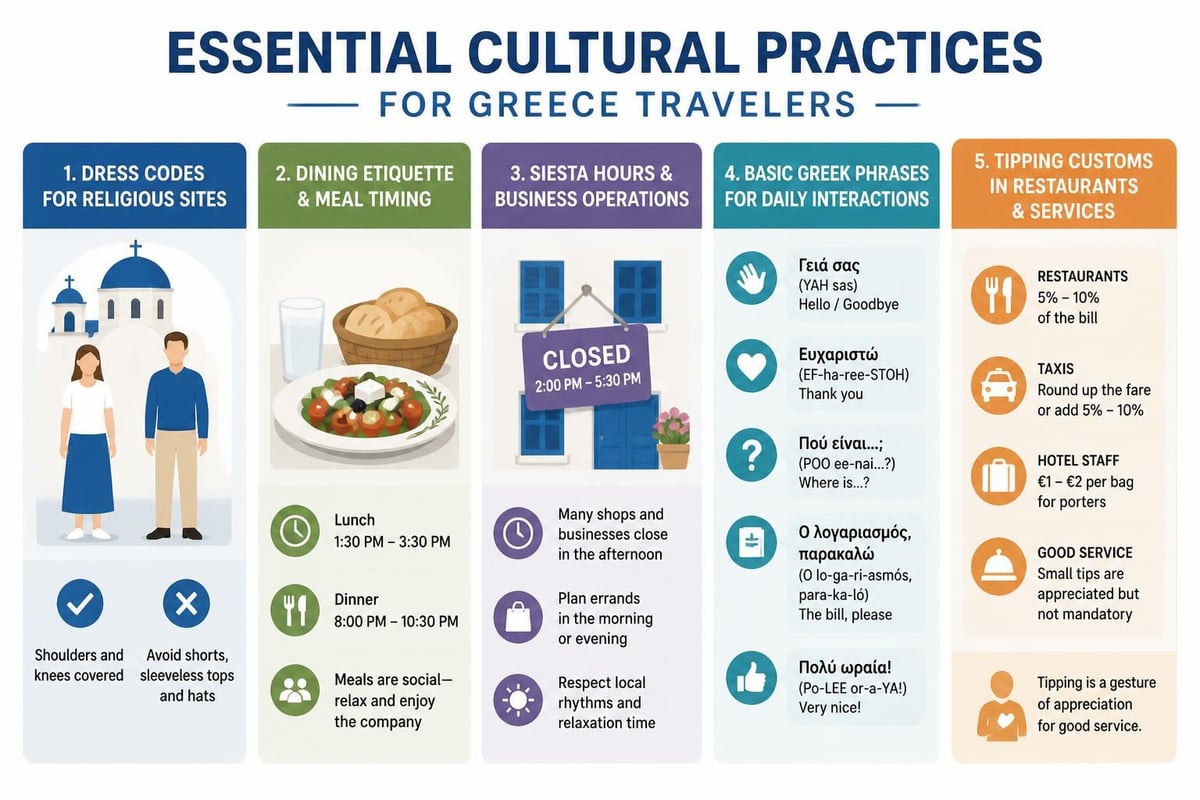
- Siesta hours (2:00-5:00 PM) close many shops and businesses, especially outside major tourist areas
- Tap water is safe in most areas but bottled water is inexpensive and widely available
- Credit cards are accepted in tourist areas but carry cash for small tavernas and villages
- Modest dress is required for monastery visits (covered shoulders and knees)
- Tipping 10% is appreciated but not mandatory, with rounding up common for casual meals
Language and Communication
English is widely spoken in tourist areas, hotels, and restaurants. Learning basic Greek phrases demonstrates respect and often elicits warm responses from locals. Essential words include "yasou" (hello/goodbye), "efharisto" (thank you), "parakalo" (please/you're welcome), and "signomi" (excuse me).
Restaurant menus in tourist areas include English translations, but traditional tavernas might feature Greek-only menus. Don't hesitate to ask for explanations or recommendations. Many taverna owners take pride in describing family recipes and local specialties.
Accommodation Strategies
Lodging choices significantly impact both budget and experience quality. Greece offers diverse accommodation types suited to different travel styles and priorities.
Hotels range from budget chains to luxury boutique properties. Cycladic cave hotels in Santorini provide unique architectural experiences with caldera views commanding premium rates ($300-800+ per night). Mid-range hotels in secondary islands offer excellent value at $80-150 per night with modern amenities.
Vacation rentals through platforms like Airbnb work well for groups or those seeking kitchen facilities. Studios and apartments cost less than hotels while providing more space and local neighborhood experiences. Weekly rentals often include significant discounts.
Location Considerations
Proximity to town centers and beaches affects both convenience and cost. Hotels with sea views or caldera positions charge 50-100% premiums over identical properties one block inland. Evaluate whether views justify the price difference based on how much time you'll spend in the room.
Island ferry schedules sometimes require early departures or late arrivals. Choosing accommodation near the port for your final night simplifies logistics and prevents rushed morning departures. Conversely, budget extra for taxis if staying in remote locations without reliable public transportation.
Food and Dining Experiences
Greek cuisine extends far beyond gyros and Greek salad, offering regional specialties and time-honored recipes worth seeking out. Eating like a local means late dinners (9:00-10:00 PM), leisurely multi-course meals, and prioritizing fresh, seasonal ingredients.
Traditional tavernas serve authentic home-style cooking at reasonable prices. Look for establishments filled with Greek families rather than tourist-heavy locations near major attractions. Menus change based on daily catches and seasonal produce.
Must-Try Greek Dishes
- Moussaka: Layered eggplant, potato, meat sauce, and béchamel
- Souvlaki: Grilled meat skewers with pita, vegetables, and tzatziki
- Spanakopita: Spinach and feta wrapped in phyllo pastry
- Fresh seafood: Grilled octopus, calamari, sea bream, or sea bass
- Horiatiki salad: Tomatoes, cucumbers, onions, olives, and feta (no lettuce)
- Baklava: Honey and nut phyllo dessert
Island specialties reflect local products and traditions. Santorini's volcanic soil produces exceptional cherry tomatoes and white eggplant. Crete features dakos (barley rusk with tomatoes and feta) and local olive oils. Each region takes pride in distinct flavors worth exploring beyond standard menu items.
Wine enthusiasts should explore Greek varieties including Assyrtiko (crisp white), Xinomavro (robust red), and sweet Vinsanto dessert wine. Many islands offer winery tours and tastings, particularly Santorini's unique volcanic vineyards.
Safety and Health Considerations
Greece ranks as one of Europe's safest destinations with low violent crime rates. Standard precautions against pickpocketing in crowded areas like Athens metro stations and tourist sites provide adequate protection for most travelers.
Medical care meets European standards in major cities and tourist islands. EU citizens should carry European Health Insurance Cards, while others need comprehensive travel insurance. Pharmacies are abundant and pharmacists can advise on minor health issues and provide some medications without prescriptions.
Summer heat poses the primary health risk. Temperatures regularly exceed 95°F (35°C) during July-August, requiring sun protection, hydration, and midday rest. Heat stroke and dehydration affect tourists unaccustomed to Mediterranean summer conditions, particularly during archaeological site visits with limited shade.
The travel safety resources provide comprehensive guidance for international travelers navigating unfamiliar destinations safely and confidently.
Money Matters and Banking
Greece uses the Euro (€), with ATMs widely available in cities and tourist areas. Notify your bank before traveling to prevent card blocks on international transactions. ATMs typically offer better exchange rates than currency exchange offices or hotel conversions.
Credit cards are accepted at hotels, restaurants, and shops in tourist areas, but many small businesses, traditional tavernas, and island shops operate cash-only. Carry sufficient euros for at least 2-3 days of expenses, particularly when visiting smaller islands or remote areas.
Tipping practices are more relaxed than American standards:
- Restaurants: 5-10% or round up the bill
- Taxis: Round up to the next euro or add €1-2
- Hotel porters: €1-2 per bag
- Tour guides: €5-10 for excellent service
Packing Essentials for Greece
Appropriate packing prevents common travel frustrations and enhances comfort throughout your trip. Summer visitors should prioritize lightweight, breathable clothing in natural fabrics that dry quickly and reflect heat.
Essential items include:
- Sun protection: High-SPF sunscreen, wide-brim hat, UV-protection sunglasses
- Comfortable walking shoes with good traction for cobblestone streets and archaeological sites
- Modest clothing for religious sites: lightweight scarf, pants or long skirt
- Swimsuit and beach towel for island hopping
- Light jacket or cardigan for air-conditioned spaces and evening breezes
- Power adapter for European outlets (Type C or F)
- Reusable water bottle to stay hydrated while reducing plastic waste
The comprehensive packing resources help travelers organize efficiently and avoid overpacking while ensuring essential items aren't forgotten.
Photography equipment deserves special consideration for Greece's extraordinary scenery. Smartphones capture excellent photos, but consider a quality camera for sunrise/sunset shots and archaeological details. Portable chargers like ultra-slim backup batteries prevent missing photo opportunities due to dead batteries.
Booking Flights and Making Reservations
International flights to Athens International Airport provide the primary entry point for most visitors. Book flights 3-6 months in advance for best rates, particularly for summer travel. Direct flights from major US cities take 10-12 hours, while connections through European hubs add 2-4 hours.
Consider positioning your return flight from Athens even if ending your trip on an island. Morning flights to Athens from islands are reliable, while island departures for international connections risk delays if ferry schedules change.
Advance Reservations vs. Spontaneity
Peak season (July-August) requires advance booking for accommodations, popular restaurants, and some attractions. Santorini and Mykonos hotels fill months ahead during summer, particularly properties with caldera views or beach proximity. Reserve accommodations at least 8-12 weeks before peak season arrival.
Shoulder season (April-May, September-October) allows more spontaneity. Booking the first 2-3 nights then arranging subsequent accommodations after arrival provides flexibility to extend stays in favorite locations or adjust plans based on weather and recommendations.
Ferry tickets between major routes rarely sell out except during peak August weekends, but advance booking guarantees preferred departure times and seating options. The Fodor's comprehensive resource offers detailed information on booking strategies and seasonal considerations.
Making the Most of Island Hopping
Island hopping represents a quintessential Greek experience but requires strategic planning to maximize enjoyment while minimizing travel stress. Ferry schedules dictate feasible combinations, with some routes operating daily while others run only 2-3 times weekly.
The most efficient routes connect islands within the same group. Cyclades islands (Santorini, Mykonos, Paros, Naxos) have frequent interconnections during summer. Traveling between different island groups often requires returning to Athens or accepting long journey times.
Recommended Island Combinations
For first-time visitors (7-10 days): Athens + Santorini + Mykonos provides iconic experiences with reliable connections. For culture enthusiasts (10-14 days): Athens + Crete + Rhodes combines history, archaeology, and diverse landscapes. For relaxation seekers (10-14 days): Athens + Paros + Naxos + Milos offers authentic island life with fewer crowds.
Limit island changes to avoid spending entire days in transit. Three islands maximum for a week allows meaningful exploration rather than rushed overnight stops. Two nights minimum per island prevents constant packing and provides recovery time from ferry journeys.
Greece offers travelers an unparalleled combination of ancient wonders, natural beauty, and warm hospitality that creates genuinely transformative vacation experiences. This greece vacation guide has equipped you with the essential knowledge to plan efficiently, budget realistically, and prioritize experiences that match your interests.
For comprehensive, digital resources packed with insider tips and detailed destination information, Awesome Travel Guides provides the perfect travel companion for your Greek adventure. Our expertly crafted guides help you discover hidden gems, navigate local customs confidently, and create authentic experiences that transform good trips into unforgettable journeys. Whether exploring the Cyclades islands or mainland archaeological treasures, the right planning resources ensure your Greece vacation exceeds every expectation.