

Guide to Italy: Essential Tips for Your Italian Adventure
Italy captivates millions of travelers annually with its unparalleled blend of history, art, cuisine, and natural beauty. From the ancient ruins of Rome to the romantic canals of Venice, from the rolling hills of Tuscany to the dramatic Amalfi Coast, this Mediterranean gem offers experiences that resonate with every type of traveler. A comprehensive guide to Italy helps you navigate the country's diverse regions, understand local customs, and maximize your time in one of the world's most beloved destinations. Whether you're planning your first visit or returning to explore deeper, understanding Italy's nuances transforms a good trip into an extraordinary adventure.
Understanding Italy's Geographic Diversity
Italy's boot-shaped peninsula stretches over 700 miles from the Alps in the north to the Mediterranean Sea in the south, encompassing dramatic geographic and cultural variations. The northern regions feature Alpine landscapes, industrial centers, and cosmopolitan cities like Milan and Turin. Central Italy boasts Renaissance treasures in Florence and Siena, while Rome stands as the eternal capital bridging ancient and modern worlds.
Southern Italy presents a different character entirely, with Naples serving as the gateway to Pompeii and the stunning Amalfi Coast. The islands of Sicily and Sardinia offer distinct cultures, cuisines, and landscapes that feel worlds apart from the mainland.
Regional Characteristics and Travel Considerations
Each Italian region maintains unique traditions, dialects, and culinary specialties. Understanding these differences enhances your appreciation and helps you plan a more focused itinerary:
- Northern Italy: Known for risotto, polenta, and butter-based sauces; home to fashion capitals and lakes region
- Central Italy: Famous for Renaissance art, wine regions (Chianti, Brunello), and olive oil production
- Southern Italy: Celebrated for tomato-based cuisine, pizza, seafood, and Greek-influenced architecture
- Islands: Offer distinct cultural identities, unique wines, and spectacular coastal scenery
The Awesome Guide to Italy provides detailed breakdowns of each region's highlights, helping you decide which areas align with your interests and available time.
Planning Your Italian Journey
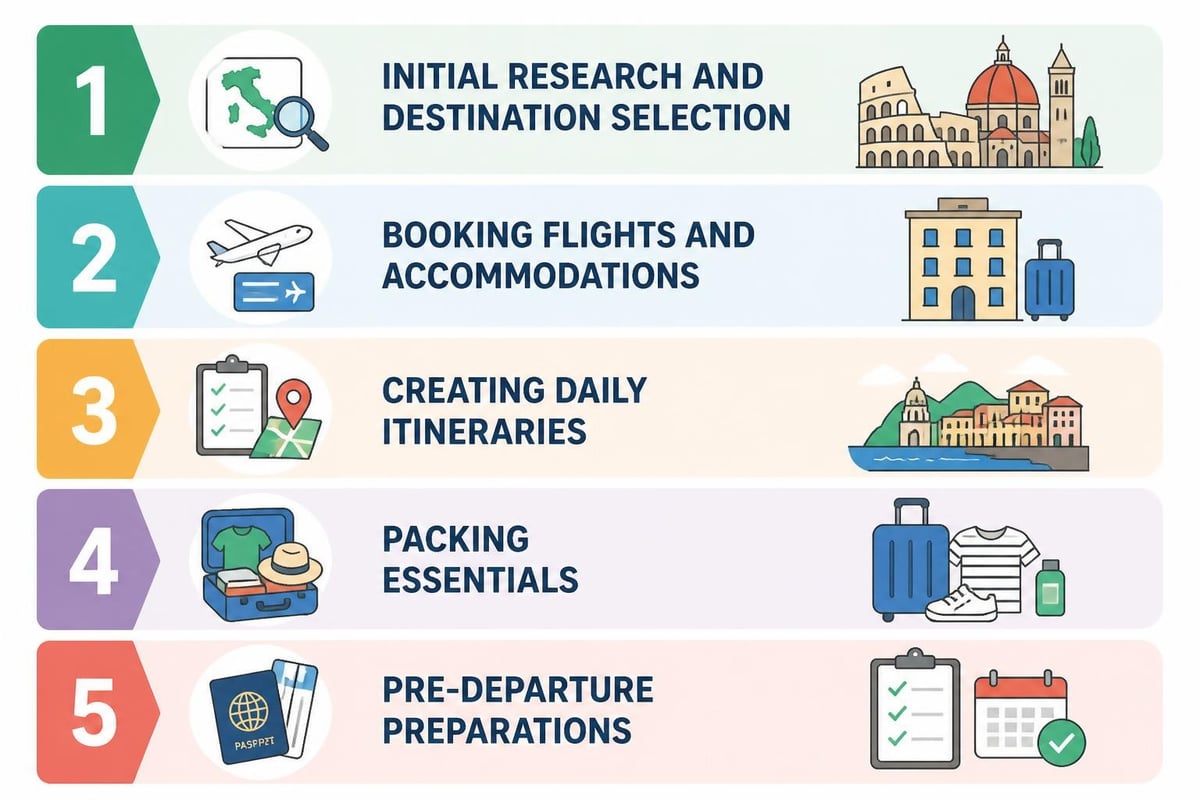
Successful travel to Italy begins with strategic planning that balances must-see attractions with spontaneous discoveries. Most first-time visitors attempt to cover too much ground, resulting in exhaustion rather than enjoyment. A well-crafted guide to Italy emphasizes quality over quantity, suggesting realistic itineraries based on trip duration.
Optimal Travel Times
Italy experiences distinct seasons that dramatically affect your experience:
| Season | Advantages | Disadvantages | Best For |
|---|---|---|---|
| Spring (April-June) | Pleasant weather, blooming landscapes, fewer crowds | Some rain, higher prices in May-June | Photography, outdoor activities |
| Summer (July-August) | Beach season, long days, festivals | Extreme heat, maximum crowds, highest prices | Coastal regions, nightlife |
| Fall (September-October) | Harvest season, mild weather, fewer tourists | Shorter days, occasional rain | Wine tours, cultural experiences |
| Winter (November-March) | Lowest prices, authentic local life, skiing | Cold weather, shorter hours, some closures | City exploration, budget travel |
The European travel planning strategies align with these seasonal considerations, helping you optimize your visit based on personal preferences.
Essential Destinations in Your Guide to Italy
No guide to italy would be complete without addressing the country's iconic destinations. While personal interests should drive your choices, certain cities offer quintessential Italian experiences that justify their popularity.
Rome: The Eternal City
Rome demands at least three to four days to appreciate its layered history spanning 2,800 years. The Colosseum, Roman Forum, and Palatine Hill transport you to ancient times, while the Vatican Museums and Sistine Chapel showcase Renaissance masterpieces. Beyond major attractions, Rome's neighborhoods each possess distinct personalities worth exploring.
The Trastevere district offers cobblestone streets, intimate trattorias, and vibrant nightlife. Testaccio provides authentic Roman cuisine away from tourist crowds. The practical travel tips from Rough Guides help you navigate Rome's public transportation and avoid common tourist pitfalls.
Florence and Tuscany
Florence serves as the Renaissance capital, housing works by Michelangelo, Botticelli, and Leonardo da Vinci. The Uffizi Gallery requires advance booking, as does climbing Brunelleschi's Dome for panoramic city views. Beyond museums, Florence's leather markets, gelato shops, and Ponte Vecchio create memorable experiences.
The surrounding Tuscan countryside beckons with vineyards, hilltop towns, and agriturismo accommodations. Siena, San Gimignano, and Montepulciano each offer medieval charm and world-class wines. Renting a car provides freedom to explore, though organized tours suit those preferring guidance.
Venice: The Floating City
Venice presents a unique urban landscape where canals replace streets and gondolas supplement taxis. St. Mark's Basilica, Doge's Palace, and Rialto Bridge constitute the primary attractions, but Venice's magic lies in wandering its labyrinthine alleys and discovering hidden squares.
Day trips to Murano (glassmaking), Burano (lace and colorful houses), and Torcello (Byzantine mosaics) extend your Venetian experience. Visit during acqua alta season (October-January) requires preparation for occasional flooding, though the phenomenon adds dramatic atmosphere.
Culinary Experiences That Define Italy
Italian cuisine represents more than sustenance; it embodies regional identity, family traditions, and cultural pride. A proper guide to italy dedicates significant attention to food culture, as meals provide insights into local life that monuments cannot match.
Regional Specialties Worth Seeking
Understanding Italy's culinary geography enhances every dining experience:
- Piedmont: White truffles, Barolo wine, vitello tonnato
- Emilia-Romagna: Parmigiano-Reggiano, prosciutto di Parma, traditional balsamic vinegar, tortellini
- Campania: Neapolitan pizza, buffalo mozzarella, limoncello, sfogliatella pastries
- Sicily: Arancini, cannoli, caponata, fresh seafood, Marsala wine
Authentic dining experiences happen in family-run trattorias and osterias rather than restaurants near major attractions. Locals eat dinner late (8:30-10:00 PM), and meals progress through multiple courses designed for sharing and conversation.
Food Markets and Cooking Classes
Local markets provide windows into daily Italian life while offering fresh products, prepared foods, and people-watching opportunities. Rome's Campo de' Fiori, Florence's Mercato Centrale, and Palermo's Ballarò Market each showcase regional abundance and culinary traditions.
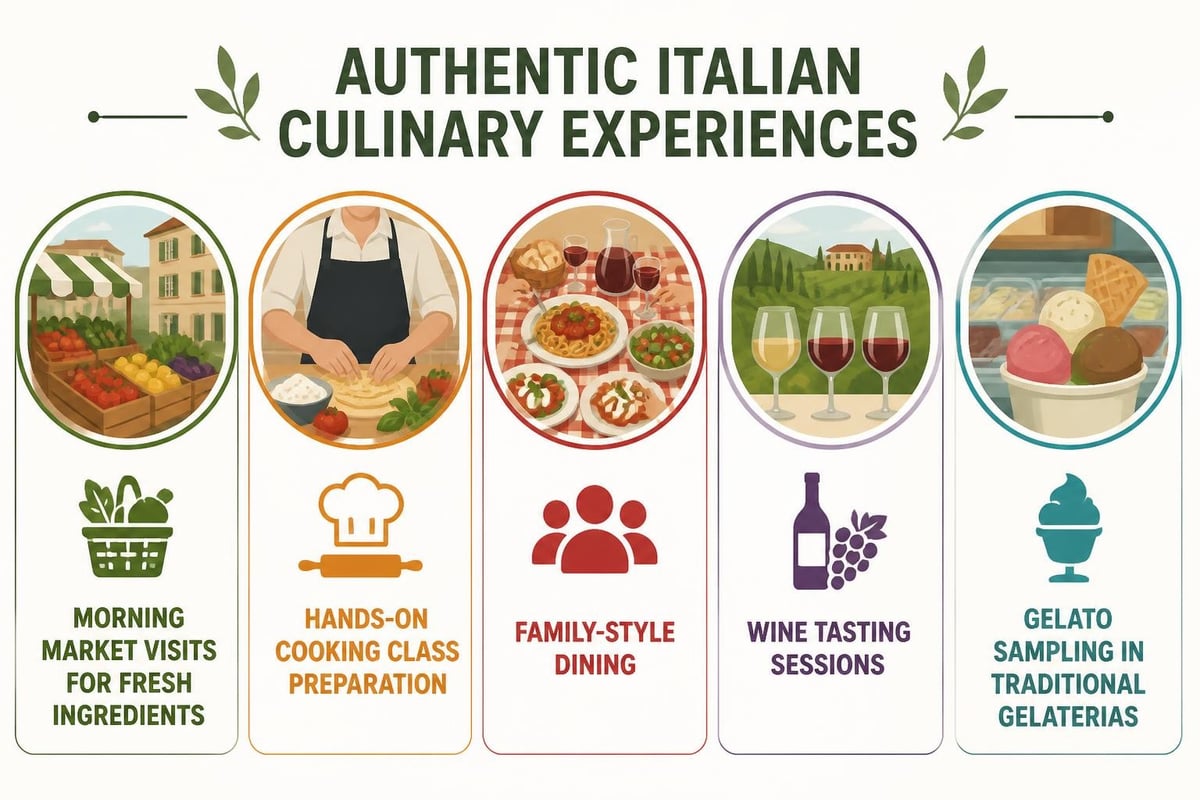
Cooking classes teach techniques while creating social connections with instructors and fellow participants. Many include market tours, wine pairings, and recipes to recreate at home. These experiences transform passive tourism into active cultural engagement.
Navigating Italian Culture and Customs
Cultural awareness elevates your Italian experience from superficial tourism to meaningful connection. Italians appreciate visitors who demonstrate respect for local customs, even when language barriers exist.
Language and Communication
While English appears in tourist areas, learning basic Italian phrases shows respect and opens doors. "Buongiorno" (good morning), "per favore" (please), "grazie" (thank you), and "scusi" (excuse me) form the foundation of polite interaction.
Italians communicate expressively, using hand gestures and animated conversation that might seem intense to outsiders. This passionate expression reflects engagement rather than anger. Direct eye contact and physical proximity during conversation signal interest and friendliness.
Dining Etiquette and Expectations
Italian dining follows unwritten rules that prevent faux pas:
- Coffee Culture: Cappuccino ends at 11:00 AM; espresso follows meals
- Bread Protocol: Used for sauce, not eaten with butter as an appetizer
- Pasta Customs: Never cut long pasta; twirl it on your fork
- Tipping Practices: Service charge (coperto) covers bread and table; small additional tips appreciated but not mandatory
- Dress Standards: Smart casual for dinner, especially in upscale restaurants
The cultural insights from Fodor's guide expand on these customs, preparing you for authentic interactions.
Transportation Throughout Italy
Efficient transportation networks connect Italian cities and regions, though options vary by location and budget. Your guide to italy should address multiple transportation methods to help you choose appropriate solutions.
Train Travel
Italy's rail system provides efficient connections between major cities. High-speed trains (Frecciarossa, Italo) link Rome, Florence, Venice, Milan, and Naples in comfortable, punctual service. Regional trains serve smaller towns at lower prices but slower speeds.
| Route | High-Speed Time | Cost Range | Frequency |
|---|---|---|---|
| Rome-Florence | 1.5 hours | €19-50 | Every 30 minutes |
| Florence-Venice | 2 hours | €25-65 | Hourly |
| Milan-Rome | 3 hours | €35-90 | Every 30 minutes |
| Rome-Naples | 1 hour | €15-45 | Every 20 minutes |
Advance booking secures lower fares, while flexible tickets cost more but allow schedule changes. The Trenitalia and Italo apps facilitate mobile ticketing and real-time updates.
Car Rentals and Driving Considerations
Renting a car suits Tuscany, Umbria, and southern Italy exploration, where public transportation serves fewer destinations. Italian drivers exhibit aggressive tendencies by American standards, and parking challenges plague historic centers. Many cities restrict vehicle access in ZTL (Zona Traffico Limitato) areas, enforced by cameras that generate automatic fines.
International driving permits supplement your license, though not legally required for EU and US drivers. Manual transmissions dominate rental fleets; request automatic transmission specifically and expect higher rates.
Accommodation Strategies
Lodging choices significantly impact your Italian experience and budget. Options range from luxury hotels to budget hostels, with unique alternatives providing authentic cultural immersion.
Accommodation Types and Considerations
- Hotels: Full service, consistent standards, higher prices in tourist areas
- Agriturismos: Working farms offering rooms and meals, ideal for countryside stays
- B&Bs: Personal attention, local insights, breakfast included
- Vacation Rentals: Space and kitchens for families, longer stays
- Convents: Budget-friendly, quiet, curfews and restrictions apply
Location determines convenience and atmosphere. Staying in historic centers provides walkable access to attractions but costs more and may involve noise. Peripheral locations offer better value but require transportation time and planning.
Practical Considerations for Travelers
Successful navigation of Italy requires attention to practical details that affect daily comfort and safety. The comprehensive off-the-beaten-path insights from BootsnAll complement mainstream advice with real-world experiences.
Money Matters and Budgeting
Italy uses the euro, with ATMs providing the best exchange rates. Credit cards work in most establishments, though small shops, markets, and some restaurants prefer cash. Notify your bank of travel dates to prevent card freezes.
Daily budget estimates vary by travel style:
- Budget: €60-100 per person (hostels, street food, free attractions, regional trains)
- Mid-Range: €150-250 per person (3-star hotels, sit-down meals, paid attractions, some high-speed trains)
- Luxury: €350+ per person (4-5 star hotels, fine dining, private tours, business-class trains)
The pre-trip checklist helps organize financial preparations alongside other travel logistics.
Safety and Health Precautions
Italy ranks among Europe's safer destinations, though pickpocketing occurs in crowded tourist areas and public transportation. Common sense precautions suffice: wear bags across your body, avoid displaying expensive items, and maintain awareness in crowds.
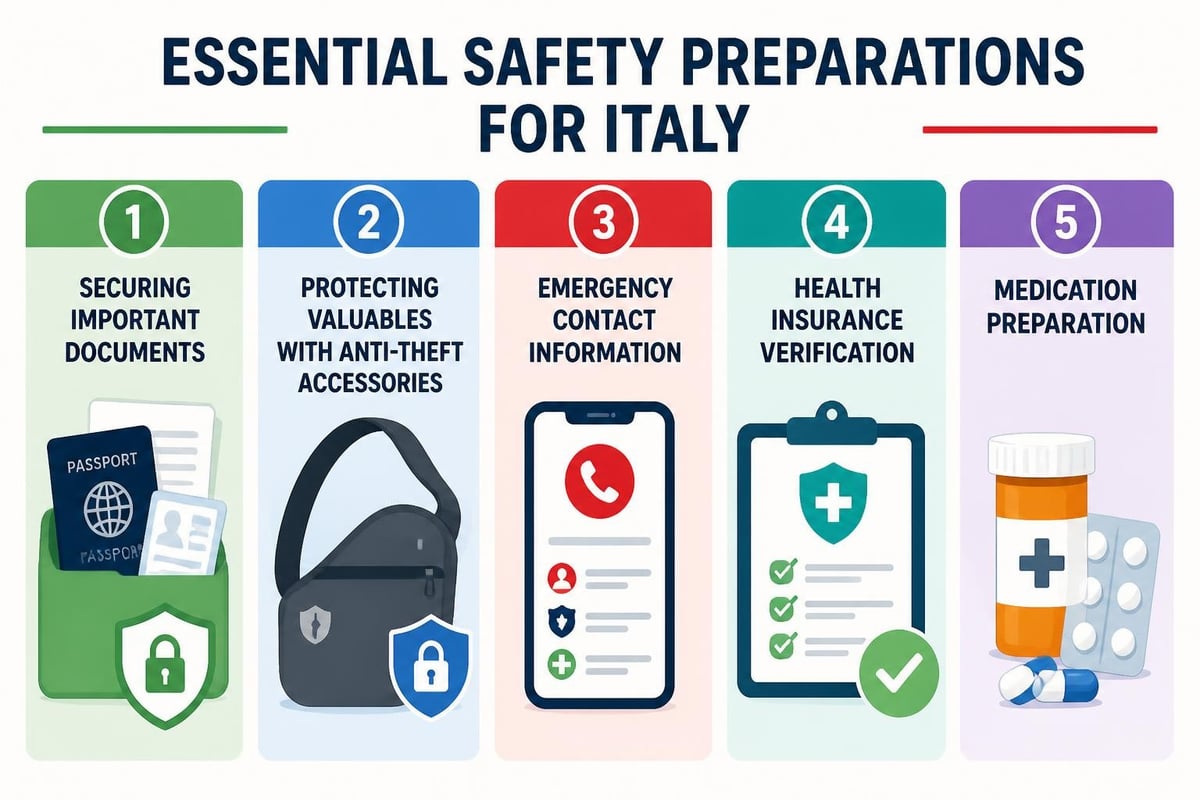
Healthcare quality meets high standards, with pharmacies handling minor ailments and providing professional advice. The European Health Insurance Card (EHIC) covers EU citizens; others should verify travel insurance includes medical coverage. Staying connected with portable chargers like the ChargeCard portable charger ensures you can access maps, translation apps, and emergency contacts throughout your journey.
Packing for Italian Adventures
Strategic packing balances preparedness with mobility, crucial for navigating cobblestone streets, train stations, and accommodation stairs. The packing guide offers detailed strategies for efficient luggage organization.
Essential Items for Italian Travel
Clothing Considerations:
- Layers for temperature variations and air-conditioned spaces
- Comfortable walking shoes (broken in before departure)
- Smart casual outfits for dinners and church visits
- Modest clothing for religious sites (covered shoulders and knees)
Technology and Accessories:
- Universal power adapter for Type C, F, and L outlets
- Portable charger for long days of sightseeing
- Phone with offline maps and translation apps downloaded
- Camera or smartphone with adequate storage
Documents and Money:
- Passport (valid six months beyond travel dates)
- Printed hotel confirmations and important reservations
- Credit cards, debit card, and emergency cash
- Travel insurance documentation
Extending Your European Adventure
Italy's central location makes it an excellent base for exploring neighboring countries. Many travelers combine Italian visits with nearby destinations, creating comprehensive European itineraries. The Awesome Guide to France, Awesome Guide to Spain, and Awesome Guide to Greece provide complementary resources for multi-country trips.
Budget airlines and high-speed trains connect Italy to France, Switzerland, Austria, Slovenia, and beyond. Weekend trips from Italian bases allow you to experience multiple cultures while maintaining a stable accommodation base for luggage storage.
Seasonal Events and Festivals
Italy's festival calendar reflects religious traditions, historical commemorations, and regional pride. Timing your visit to coincide with specific events adds memorable dimensions to your experience.
Notable Annual Events:
- Carnevale di Venezia (February): Elaborate masks, costumes, and celebrations before Lent
- Palio di Siena (July and August): Historic horse race around Piazza del Campo
- Verona Opera Festival (June-August): Open-air performances in Roman amphitheater
- Festa della Repubblica (June 2): National holiday with celebrations nationwide
- Settimana Santa (Holy Week): Easter processions, particularly impressive in Sicily and southern Italy
Festival periods attract larger crowds and higher prices but provide unique cultural experiences unavailable during other times. The detailed destination recommendations from Condé Nast Traveler highlight timing considerations for optimal experiences.
Making the Most of Museum Visits
Italy houses more UNESCO World Heritage Sites than any other country, with museums showcasing millennia of artistic achievement. Strategic planning maximizes your cultural experiences while minimizing frustration.
Booking and Timing Strategies
Major museums require advance reservations, particularly the Uffizi Gallery, Accademia Gallery (David), Vatican Museums, and Borghese Gallery. Booking weeks ahead ensures preferred time slots and avoids sold-out disappointments.
Early morning visits (opening time) and late afternoon entries (final admission hours) encounter smaller crowds. Mid-morning through early afternoon sees maximum congestion, especially at world-famous attractions.
Many museums close Mondays, with notable exceptions. Sunday mornings often feature free admission to state museums, creating massive crowds that outweigh financial savings. The firsthand experiences from Full Suitcase include practical timing recommendations based on real visits.
Hidden Gems Beyond Tourist Trails
While iconic destinations merit their reputations, Italy's true character emerges in lesser-known locations where authentic local life continues undisturbed by mass tourism. A comprehensive guide to italy balances famous attractions with discoveries that create personal connections.
Underrated Destinations Worth Exploring
- Matera: Ancient cave dwellings (sassi) create otherworldly landscapes in Basilicata
- Bologna: Medieval towers, porticoed streets, and exceptional food without Venice's crowds
- Orvieto: Hilltop Umbrian town with stunning cathedral and underground tunnels
- Lecce: Baroque architecture and beaches in Puglia, the "Florence of the South"
- Cinque Terre: Five colorful coastal villages connected by hiking trails (though increasingly popular)
These destinations offer authentic experiences, reasonable prices, and opportunities to interact with Italians going about daily life rather than serving tourists.
Digital Resources and Connectivity
Staying connected enhances navigation, translation, reservations, and sharing experiences. Modern travelers rely on smartphones for multiple functions that previously required guidebooks, phrasebooks, and paper maps.
Essential Apps for Italian Travel:
- Google Maps: Offline maps, public transit directions, restaurant reviews
- Trenitalia/Italo: Train schedules, mobile tickets, real-time updates
- Google Translate: Camera translation for menus and signs, conversation mode
- XE Currency: Real-time exchange rates for budget tracking
- TheFork: Restaurant reservations with reviews and sometimes discounts
European SIM cards or international phone plans provide data access without excessive roaming charges. Many accommodations, cafes, and public spaces offer WiFi, though security concerns suggest using VPNs for sensitive transactions.
Exploring Italy rewards travelers with unforgettable experiences that blend history, culture, cuisine, and natural beauty in ways few destinations can match. Whether you're navigating Rome's ancient streets, savoring Tuscan wines, or discovering hidden coastal villages, preparation and cultural awareness transform good trips into extraordinary adventures. Awesome Travel Guides provides comprehensive digital resources designed to enhance every aspect of your Italian journey, offering insider tips, detailed itineraries, and practical advice that helps you travel with confidence and discover authentic local experiences that create lasting memories.