

Guided Trips to Germany: Your Complete Planning Guide
Germany stands as one of Europe's most captivating destinations, blending medieval charm with modern sophistication, fairytale castles with cutting-edge architecture, and centuries-old traditions with contemporary culture. For travelers seeking to maximize their experience while minimizing the stress of independent planning, guided trips to Germany offer an exceptional solution. These professionally organized journeys provide expert insights, seamless logistics, and access to experiences that might otherwise remain hidden, making them ideal for both first-time visitors and seasoned travelers looking to explore Germany's depths with confidence and ease.
Understanding the Appeal of Guided Tours in Germany
Guided trips to Germany eliminate the complexity of navigating a foreign country while ensuring you experience the very best each region offers. Professional tour operators handle everything from accommodation bookings to transportation logistics, allowing you to focus entirely on immersing yourself in German culture, history, and cuisine.
The value proposition extends beyond simple convenience. Expert guides bring destinations to life with historical context, cultural insights, and local knowledge that transforms ordinary sightseeing into meaningful experiences. When exploring complex sites like Berlin's divided history or Munich's beer culture, having a knowledgeable guide makes the difference between merely seeing locations and truly understanding them.
Types of Guided Travel Experiences Available
Germany offers diverse guided tour options tailored to different travel styles, interests, and budgets. Understanding these variations helps you select the perfect match for your preferences.
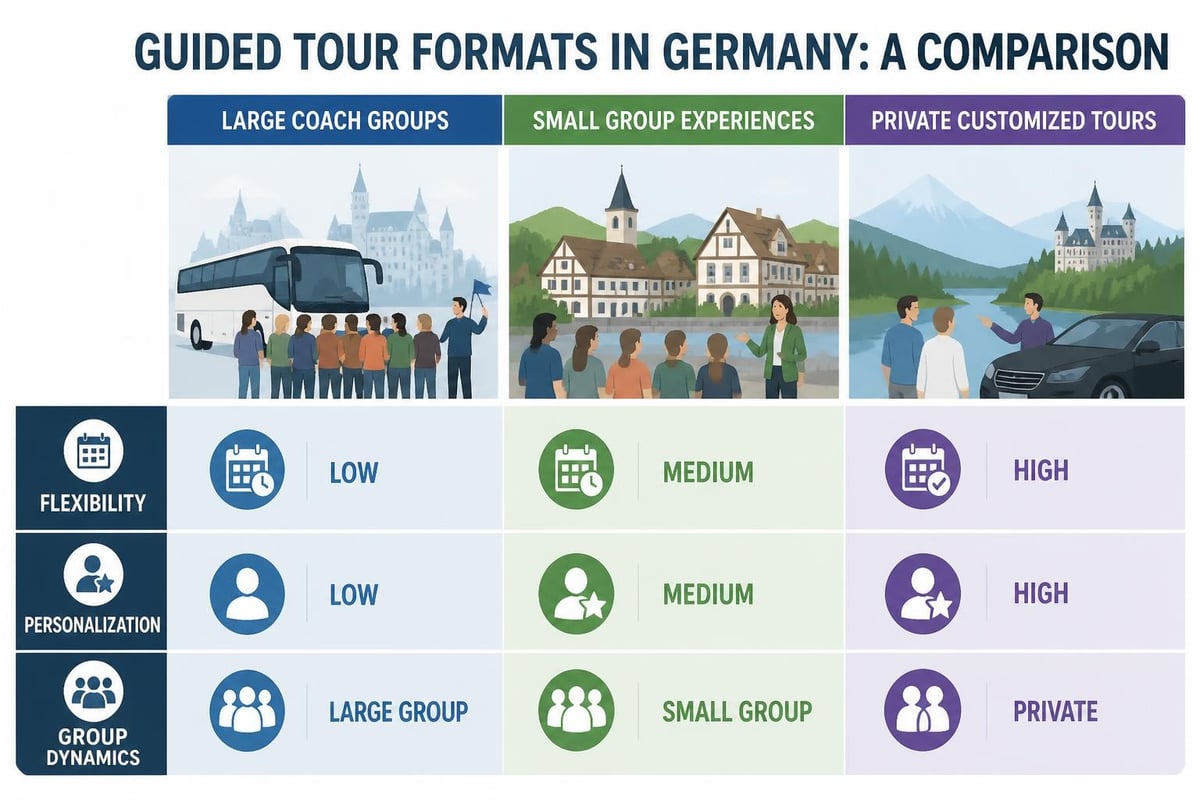
Fully escorted coach tours represent the traditional approach, featuring groups of 20-50 travelers moving together through predetermined itineraries. These tours excel at covering significant ground efficiently, often visiting multiple cities across Germany within a single trip. TourRadar's fully guided options showcase the variety available in this category, from budget-friendly adventures to premium experiences.
Small group tours typically accommodate 8-16 participants, offering more intimate experiences and flexibility. These tours can access locations larger coaches cannot reach, enjoy more personalized interactions with guides, and adapt more readily to group interests. The smaller format creates camaraderie among travelers while maintaining professional organization.
Private guided tours provide the ultimate customization, allowing travelers to design their ideal Germany experience with dedicated guides. While representing a higher investment, private tours offer complete flexibility in pacing, destinations, and activities. For those considering luxury options, Tauck's guided tours in Germany demonstrate how premium experiences incorporate exclusive access and exceptional service.
Specialized theme tours focus on specific interests such as World War II history, Christmas markets, Rhine Valley wine tasting, or Bavarian hiking. These niche offerings attract like-minded travelers and provide deeper exploration of particular subjects than general tours can offer.
Popular Destinations and Regional Highlights
Germany's regions each possess distinct characteristics, and guided trips to Germany typically focus on one region or combine complementary areas for comprehensive experiences.
Bavaria and the Romantic South
Bavaria dominates many tour itineraries with its quintessentially German imagery. Munich serves as the regional hub, offering world-class museums, beer gardens, and the famous Viktualienmarkt. Guided tours here typically include brewery visits, explorations of the Residenz palace, and day trips to nearby attractions.
The Romantic Road presents one of Germany's most scenic routes, connecting medieval towns and castles through picturesque countryside. Guided tours excel here by navigating the winding roads while participants enjoy views of half-timbered houses, vineyard-covered hills, and imposing fortresses. Key stops include Rothenburg ob der Tauber, Dinkelsbühl, and Füssen's Neuschwanstein Castle.
The Rhine Valley and Western Germany
The Rhine River Valley combines natural beauty with historical significance, featuring castle-dotted hillsides, terraced vineyards, and charming riverside villages. Guided river cruises offer unique perspectives on this UNESCO World Heritage landscape, while land-based tours allow exploration of wine cellars, medieval fortresses, and the legendary Lorelei Rock.
Cologne and its magnificent Gothic cathedral anchor the northern Rhine, while farther south, Heidelberg's romantic castle ruins and student culture attract travelers seeking both history and vibrant contemporary life. Lonely Planet's Germany guide provides additional context on these western regions and their cultural significance.
Berlin and Eastern Germany
Germany's capital represents essential inclusion in most comprehensive guided trips to Germany. The city's complex history as the divided Cold War epicenter creates powerful emotional experiences when explored with knowledgeable guides who witnessed the changes firsthand. The Berlin Wall remnants, Checkpoint Charlie, and the Brandenburg Gate all carry greater meaning with proper historical context.
Beyond Berlin, eastern Germany offers Dresden's reconstructed baroque splendor, Leipzig's musical heritage, and the Saxon Switzerland National Park's dramatic sandstone formations. These destinations appear less frequently in shorter tours but reward those who venture beyond standard routes.
| Region | Signature Attractions | Best Season | Typical Tour Duration |
|---|---|---|---|
| Bavaria | Neuschwanstein, Munich, Romantic Road | May-September | 5-7 days |
| Rhine Valley | River castles, wine villages, Cologne | April-October | 3-5 days |
| Berlin & East | Historical sites, museums, Dresden | Year-round | 4-6 days |
| Black Forest | Nature trails, cuckoo clocks, spa towns | June-September | 3-4 days |
Practical Considerations for Booking
Selecting the right guided tour requires evaluating several factors beyond destination preferences. Budget naturally influences options, with daily costs ranging from approximately $150 for budget group tours to over $500 for luxury private experiences. These prices typically include accommodation, most meals, transportation, entrance fees, and guide services.
Timing Your German Adventure
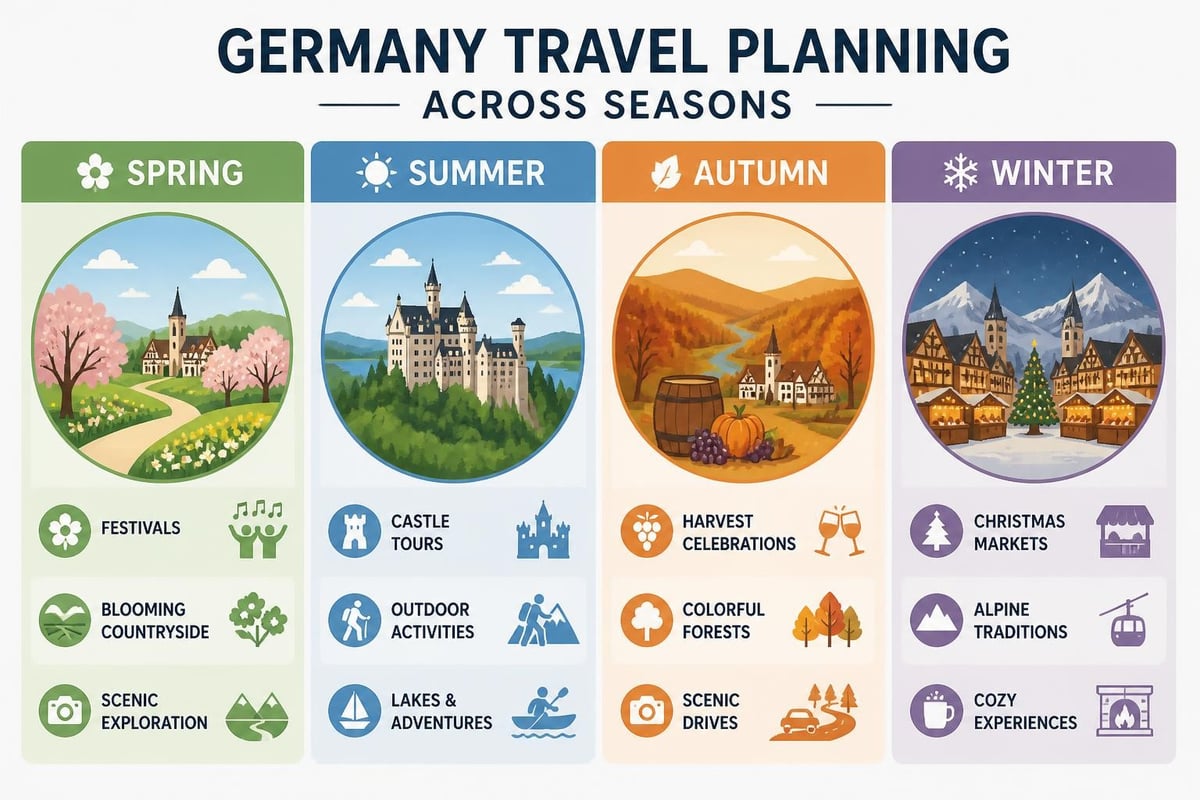
Seasonality significantly impacts both experience quality and pricing. Summer (June through August) offers the warmest weather and longest daylight hours but brings peak crowds and maximum prices. Many guided trips to Germany during this period require booking six months or more in advance.
Shoulder seasons (April-May and September-October) present ideal conditions for many travelers, combining pleasant weather with smaller crowds and moderate pricing. Spring brings blooming landscapes, while autumn delivers harvest festivals and stunning foliage, particularly in wine regions.
Winter guided tours focus heavily on Christmas markets, which operate from late November through December. These specialized tours access festive traditions that define German winter culture, from Nuremberg's world-famous Christkindlesmarkt to smaller regional celebrations. January through March sees the lowest prices and smallest crowds but limited daylight and cold temperatures.
Tour Duration and Pacing
The optimal tour length depends on available vacation time and desired depth of exploration. Weekend city breaks (3-4 days) provide introductions to single destinations like Berlin or Munich. Week-long tours (7-10 days) allow comprehensive regional exploration or multi-city combinations. Extended tours (14+ days) enable cross-country journeys covering diverse regions.
Consider your preferred travel pace when evaluating itineraries. Some tours pack activities tightly, visiting multiple sites daily with early starts and late returns. Others build in leisure time for independent exploration, relaxation, or optional activities. Review daily schedules carefully to ensure alignment with your energy levels and interests.
Maximizing Your Guided Tour Experience
Preparation enhances any travel experience, but certain strategies specifically benefit those taking guided trips to Germany. Researching destinations before departure allows you to make informed choices when guides offer options and helps you appreciate historical and cultural context more deeply.
Pre-Trip Preparation Strategies
Language basics prove valuable even on fully guided tours. Learning essential German phrases demonstrates respect and facilitates interactions during free time. Most guides speak excellent English, but fellow travelers may represent diverse nationalities with varying language skills.
Understanding German customs prevents unintentional faux pas. Germans value punctuality, so arriving on time for tour departures shows consideration for guides and fellow travelers. Quiet behavior in public spaces, particularly public transportation, reflects local norms. Cash remains important despite Germany's modern economy, as many smaller establishments and markets don't accept cards.
Packing appropriately for Germany's variable weather ensures comfort throughout your journey. Layered clothing accommodates temperature fluctuations, while comfortable walking shoes prove essential as tours typically involve significant walking on cobblestone streets and uneven surfaces. Planning resources from Rough Guides offer comprehensive preparation advice covering everything from visa requirements to health considerations.
Enhancing Your On-Tour Experience
Active participation transforms good tours into exceptional ones. Ask questions during presentations, engage with local people during market visits, and share your interests with guides who often adjust commentary based on group enthusiasm for particular topics.
Free time deserves thoughtful planning rather than aimless wandering. Guides typically provide recommendations for restaurants, shops, and attractions during unscheduled periods. Having backup plans accounts for weather changes or unexpected closures.
Document your journey through photos, journaling, or both. Tours move quickly between locations, making it easy to blur memories without intentional recording. Many travelers find that brief daily notes help preserve specific details, stories, and impressions that fade surprisingly quickly after returning home.
Specialized Interest Tours
Thematic guided trips to Germany cater to specific passions, providing deeper immersion than general tours can achieve. These specialized experiences connect you with fellow enthusiasts while accessing expertise that elevates the subject matter.
Historical and Cultural Deep Dives
World War II and Cold War history tours examine Germany's twentieth-century transformation through preserved sites, museums, and expert historical analysis. These sobering but important journeys visit concentration camp memorials, resistance landmarks, and divided Berlin locations while contextualizing how modern Germany emerged from its complex past.
Music enthusiasts find specialized tours celebrating Germany's extraordinary musical heritage. Leipzig tours explore Bach's legacy, while Bayreuth focuses on Wagner's festival tradition. Classical music tours often include concert tickets, behind-the-scenes opera house access, and visits to composer museums and historic performance venues.
Art and architecture tours trace styles from Romanesque churches through Gothic cathedrals, baroque palaces, and Bauhaus modernism. Germany's exceptional museum collections, particularly Berlin's Museum Island, provide world-class artistic experiences enhanced by expert interpretation.
Active and Outdoor Adventures
Hiking tours in regions like the Black Forest, Bavarian Alps, and Saxon Switzerland combine physical activity with stunning natural landscapes. These active guided trips to Germany typically grade trails by difficulty and include rest days in spa towns where wellness traditions run deep.
Cycling tours follow dedicated bike paths along rivers like the Rhine, Main, and Danube, or traverse countryside routes connecting medieval towns. E-bikes have revolutionized cycling tours, making longer distances and hilly terrain accessible to broader fitness levels while maintaining the intimate pace that reveals details missed from vehicles.
Wine region tours concentrate on areas like the Mosel Valley, Rheingau, and Baden, combining vineyard visits with tastings, winemaker meetings, and gourmet meals pairing regional wines with local cuisine. These tours reveal Germany's underappreciated wine culture beyond its famous beer traditions.
Independent Exploration Enhanced by Digital Resources
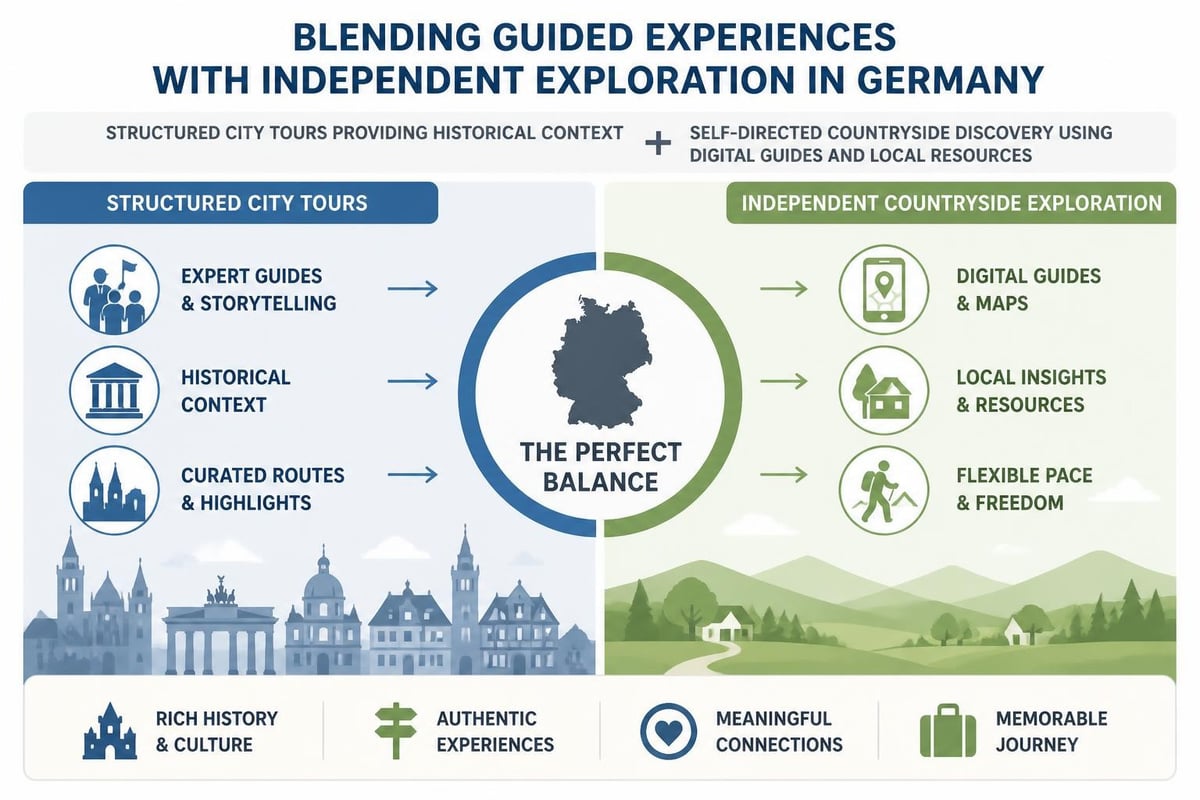
While guided trips to Germany provide structured experiences with professional support, many travelers prefer independent exploration augmented by comprehensive digital resources. Modern technology enables confident self-guided travel while retaining the insider knowledge that traditionally required professional guides.
Digital travel guides offer several advantages for independent travelers. They provide instant access to current information, can be updated in real-time as situations change, and allow unlimited consultation without carrying heavy printed materials. When exploring diverse regions, comprehensive digital guides from Awesome Travel Guides deliver the local insights and practical tips that transform standard tourism into authentic experiences.
The hybrid approach combines guided tours for complex historical sites or specialized experiences with independent exploration supported by quality digital resources. This strategy maximizes both the efficiency of professional guidance and the freedom of self-directed discovery.
Building Your Own Itinerary
Self-planned trips benefit from studying successful guided tour itineraries to understand logical routing, appropriate pacing, and complementary destination combinations. Sample itineraries from Rough Guides demonstrate proven patterns for 7, 10, and 14-day trips that balance major attractions with hidden gems.
Transportation connections significantly influence independent itinerary success. Germany's exceptional rail network makes inter-city travel straightforward, but understanding regional variations in train frequency, reservation requirements, and multi-day pass options requires research. Rural areas and smaller towns may necessitate car rentals for practical access.
| Planning Element | Guided Tour | Independent with Digital Guide |
|---|---|---|
| Logistics Handling | Tour operator manages everything | Traveler books and coordinates |
| Flexibility | Fixed itinerary | Complete adaptability |
| Local Knowledge | Professional guide expertise | Comprehensive digital resources |
| Social Experience | Built-in travel companions | Meet locals and other travelers |
| Cost | Higher per-day rate | Variable, often lower total |
| Stress Level | Minimal planning burden | Requires advance preparation |
Regional Food and Culinary Experiences
German cuisine extends far beyond stereotypical sausages and sauerkraut, though these traditional foods certainly merit attention when prepared properly. Regional variations reflect Germany's federal structure, with each area maintaining distinct culinary traditions worth exploring.
Traditional Dishes and Regional Specialties
Bavaria's hearty cuisine includes Schweinshaxe (roasted pork knuckle), Spätzle (egg noodles), and countless Wurst varieties, best enjoyed in traditional beer gardens with locally brewed beverages. Guided food tours in Munich access authentic establishments while explaining the cultural context surrounding beer purity laws and brewing traditions.
The Rhineland favors lighter fare with river fish preparations, potato dishes like Himmel und Erde (heaven and earth), and Sauerbraten (marinated pot roast). Wine accompanies meals here rather than beer, reflecting the region's viticultural heritage.
Northern Germany features seafood prominently, with herring preparations, fish sandwiches at harbor markets, and hearty stews reflecting maritime influences. Berlin's diverse food scene blends traditional dishes with international influences, creating innovative fusions and vibrant food markets.
Many guided trips to Germany incorporate culinary experiences as central elements, from market tours with cooking classes to multi-course meals at historic restaurants. These food-focused activities provide cultural insights while satisfying appetites with memorable flavors.
Transportation and Accessibility
Germany's infrastructure excellence facilitates smooth travel whether joining organized tours or exploring independently. Understanding transportation options helps you evaluate tour inclusions and plan any independent extensions.
Getting Around German Cities and Regions
Major cities feature comprehensive public transportation networks combining U-Bahn (subway), S-Bahn (suburban trains), trams, and buses. Many guided city tours utilize public transport, providing orientation to systems you might use during free time. Day passes offer unlimited travel within zones and represent excellent value when making multiple journeys.
Inter-city travel relies primarily on Deutsche Bahn's extensive rail network. ICE (InterCity Express) high-speed trains connect major cities rapidly and comfortably, while regional trains serve smaller destinations. Tour packages typically include all transportation, but understanding the system helps during independent time.
Accessibility has improved significantly across German tourism infrastructure, with modern hotels, museums, and transportation offering wheelchair access and assistance services. When booking guided trips to Germany with mobility considerations, communicate needs clearly with operators to ensure appropriate accommodations and vehicle selections.
Cultural Etiquette and Social Norms
Understanding German cultural expectations enhances interactions and demonstrates respect for local customs. While Germans generally show tolerance for foreign visitors' inadvertent mistakes, awareness of basic etiquette improves experiences for everyone.
Social Interactions and Public Behavior
Germans typically maintain more formal interaction styles than Americans, particularly with strangers and in professional contexts. Using titles (Herr, Frau) with surnames shows proper respect until invited to use first names. Direct communication style sometimes surprises visitors from cultures favoring indirect expression, but Germans view straightforwardness as honest rather than rude.
Punctuality matters significantly in German culture. Arriving late to tour departures inconveniences guides and fellow travelers, potentially delaying entire groups. Build buffer time into personal schedules to account for unexpected delays.
Quiet zones on trains and public speaking volume generally stay lower than in many other countries. Phone conversations in public spaces use subdued tones, and loud conversations draw negative attention. These norms reflect respect for shared spaces rather than unfriendliness.
Sunday closures affect shopping and many services, with most stores closed for the weekly rest day. This tradition means guided tours schedule shopping time strategically, and independent travelers must plan accordingly to avoid disappointed arrival at closed shops or restaurants.
Budget Planning and Cost Considerations
Financial planning for guided trips to Germany requires understanding various cost components beyond the tour price itself. Comprehensive budgeting prevents unexpected expenses and allows you to make informed choices about tour levels and included amenities.
Understanding Tour Pricing Structures
Tour costs typically bundle accommodation, transportation between destinations, most meals, entrance fees, and guide services. However, definitions of "most meals" vary considerably. Some tours include only breakfasts, while others add lunches or dinners. Review inclusions carefully when comparing options, as seemingly lower prices may exclude significant expenses covered by more comprehensive packages.
Single supplements charge solo travelers additional fees for private room occupancy, often adding 30-50% to the base price. Some operators offer single room guarantees without supplements or roommate matching services to split double occupancy costs. These options significantly impact total expenses for individual travelers.
Tipping represents an expected additional cost. Tour guides and drivers typically receive gratuities at trip conclusion, with suggested amounts around $5-10 per person per day for guides and $3-5 for drivers. Restaurant tips in Germany generally round up bills or add 5-10% for good service, notably less than American norms.
Personal expenses during free time, optional excursions not included in base packages, souvenirs, and additional beverages at meals add variable amounts depending on individual preferences and spending habits. Budget an additional $30-50 daily for these discretionary expenses when evaluating total trip costs.
Value Optimization Strategies
Booking timing influences pricing significantly. Early reservations (six months or more in advance) often secure early-bird discounts, while last-minute deals occasionally appear for tours with unsold capacity. However, relying on last-minute availability risks missing preferred departure dates or having limited choices.
Shoulder season travel reduces costs substantially while maintaining pleasant conditions. April-May and September-October tours typically cost 15-30% less than peak summer departures while offering smaller crowds and comparable weather in many regions.
Package comparisons should evaluate total value rather than focusing solely on price. Tours including more meals, better-located hotels, and comprehensive entrance fees may deliver superior overall value despite higher base costs than seemingly cheaper alternatives requiring numerous additional purchases.
Exploring Germany through guided tours or independent travel enhanced by quality resources opens this fascinating country's layers of history, culture, and natural beauty. Whether you choose the convenience and expertise of professionally organized guided trips to Germany or prefer the flexibility of self-directed exploration, proper planning and reliable information ensure rewarding experiences. For travelers seeking comprehensive digital guides packed with insider tips and hidden gems, Awesome Travel Guides provides the essential companion for confident, authentic German adventures that transform ordinary trips into extraordinary journeys.