

8 Essential Italy Travel Tips for an Unforgettable 2026 Adventure
Italy’s captivating blend of ancient wonders, vibrant culture, and breathtaking landscapes has long enchanted travelers. In 2026, with new events and revived traditions, there’s no better time for your italy travel plans.
This article is designed to equip you with 8 essential italy travel tips that promise an unforgettable adventure. By following these expert insights, you’ll avoid common missteps, enjoy richer experiences, and discover the authentic heart of Italy.
From mastering cultural etiquette to building a smart itinerary, these strategies will help you make the most of every moment. Ready to unlock the secrets to a flawless trip? Read on and let your Italian journey begin.
Understanding Italian Culture and Etiquette
Traveling to Italy is not just about ticking off landmarks; it's about immersing yourself in a rich tapestry of tradition, style, and social nuance. For any italy travel adventure, understanding Italian culture and etiquette is critical to unlocking deeper, more genuine experiences.
Embracing Italian Culture: The Foundation of Memorable italy travel
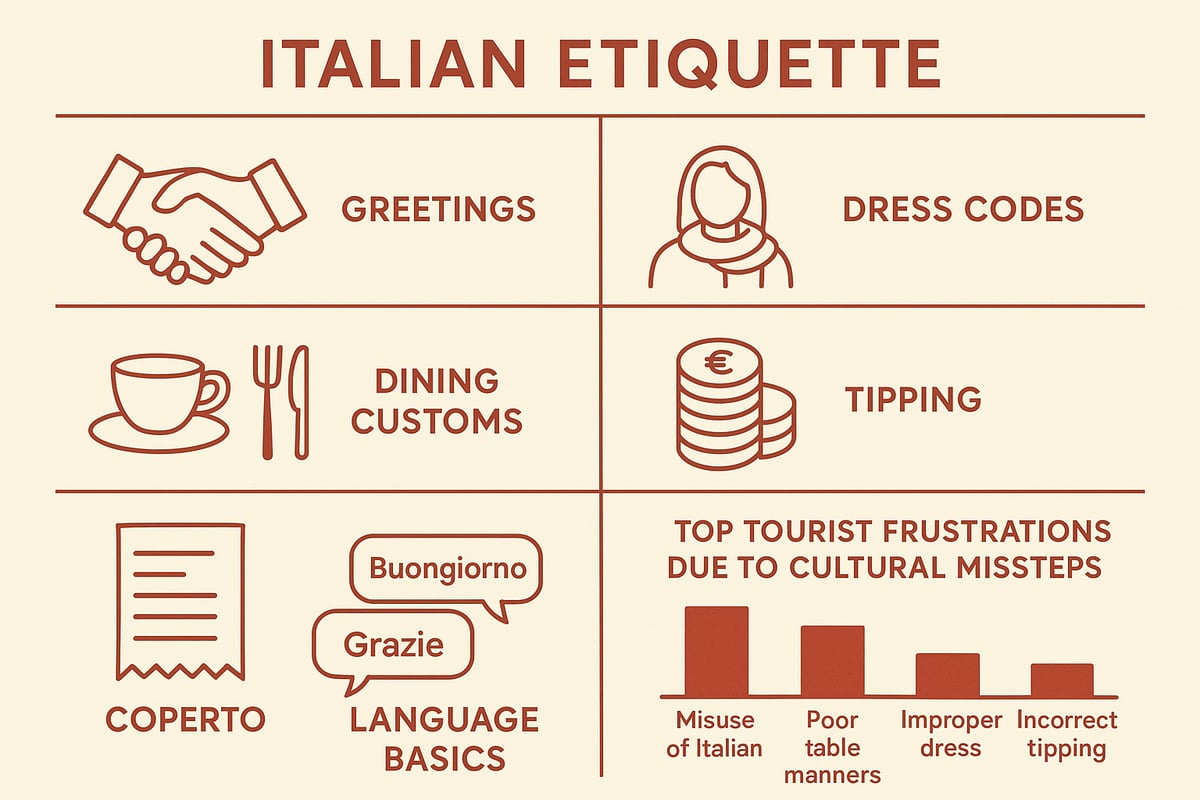
Cultural awareness is the cornerstone of respectful and rewarding italy travel. Italians take great pride in their heritage, so showing understanding and curiosity can open countless doors. A simple “buongiorno” (good morning) or “buonasera” (good evening) goes a long way in daily interactions.
When greeting, a handshake is standard, often accompanied by eye contact and a warm smile. In informal settings, friends may exchange cheek kisses, usually starting from the left. Dressing well is also a sign of respect. Avoid overly casual attire, especially in churches or fine restaurants, as Italians tend to dress smartly even in everyday settings.
The Art of Italian Dining Etiquette
Dining is at the heart of italy travel. Meals are social events, so take your time and savor each course. You’ll notice that service is intentionally slow-paced, designed for conversation and enjoyment rather than speed. Embrace this rhythm—it’s part of the cultural experience.
Manners matter at the table. Wait for everyone to be served before starting your meal. Never ask for cheese on seafood dishes, and always use “per favore” (please) and “grazie” (thank you) when speaking with staff. If you want to blend in, order coffee like a local: cappuccino is for breakfast, while espresso is enjoyed throughout the day.
Understanding Tipping and Coperto Charges
Tipping in Italy is more subtle than in some countries. Most restaurants include a service charge, but leaving small change or rounding up the bill is appreciated. Don’t feel pressured to tip large amounts; gestures matter more than percentages.
Be aware of the “coperto,” a cover charge that appears on most restaurant bills. This fee covers bread and table settings and is separate from service. Sitting at a café table usually costs more than standing at the bar, especially in busy city centers. Understanding these nuances will help you manage your italy travel budget and avoid surprises.
The Power of Language: Unlocking Authentic Encounters
Learning a few Italian phrases can transform your italy travel experience. Even basic greetings or polite expressions can break the ice with locals and show genuine respect. Phrases like “Scusi” (excuse me), “Posso avere…” (may I have…), and “Dov’è il bagno?” (where is the bathroom?) will serve you well.
Regional differences abound, so don’t be surprised if you hear dialects or unique customs in places like Naples or Venice. Addressing staff with “Signore” or “Signora” is seen as polite. Adapting to these subtleties enhances every interaction on your journey.
Avoiding Common Pitfalls: Real-Life Scenarios and Data
According to travel experts, cultural missteps are among the top sources of frustration for visitors during italy travel. Misunderstanding dining customs, dress codes, or payment practices can create awkward moments or missed opportunities. For example, ordering a cappuccino after lunch often marks you as a tourist.
If you’re unsure about etiquette, consult resources like the Travel FAQ and quick tips to prepare for common situations. With the right awareness and a little effort, your italy travel will be smoother, more enjoyable, and filled with authentic moments.
8 Essential Italy Travel Tips for an Unforgettable 2026 Adventure
Italy travel in 2026 promises to be more exciting and rewarding than ever, but maximizing your adventure requires insider knowledge. Below, discover the eight essential tips that will help you navigate, savor, and experience the authentic heart of Italy. Each tip is designed to help you avoid common pitfalls and make the most of your italy travel journey.
1. Tip: Book Major Attractions and Accommodations Well in Advance
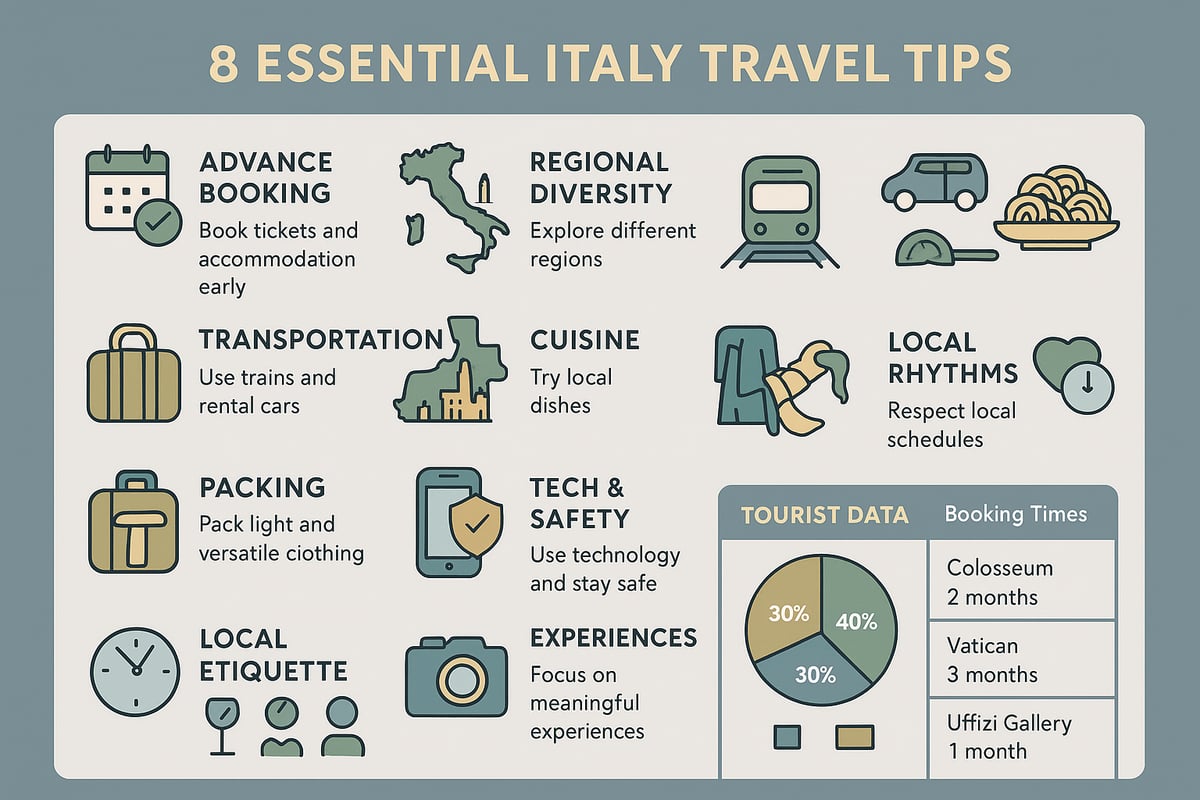
Planning your italy travel itinerary should always begin with securing reservations for the most sought-after attractions. Iconic sites like the Colosseum, Uffizi Gallery, and Vatican Museums are in high demand, especially as italy travel rebounds and visitor numbers surge in 2026.
Most major attractions now operate on timed-entry tickets, and popular dates fill up weeks or even months ahead. Central accommodations in cities like Florence and Venice also book out quickly, particularly during spring and summer. Booking directly through official websites not only guarantees your spot but also helps you avoid scams and inflated prices.
Consider this comparison table for booking timelines:
| Attraction | Recommended Booking Lead Time |
|---|---|
| Colosseum (Rome) | 2-3 months |
| Uffizi Gallery (Florence) | 1-2 months |
| St. Mark’s Basilica (Venice) | 1-2 months |
Stay flexible with your dates if possible. If your first choice is sold out, try visiting during shoulder seasons or less busy times of day. Centrally located hotels or guesthouses reduce transit time and place you close to the action, making your italy travel smoother and more enjoyable.
Data shows over 60% of Italy’s top attractions reach full capacity in the summer, so plan ahead for a stress-free experience.
2. Tip: Embrace Regional Diversity—Travel Beyond Rome, Florence, and Venice
While Rome, Florence, and Venice are must-sees, true italy travel magic happens when you explore beyond the famous trio. Each region boasts its own unique culture, cuisine, dialect, and scenery. For example, Puglia’s whitewashed villages, Sicily’s ancient ruins, and the Dolomites’ alpine vistas offer experiences unlike anywhere else.
Lesser-known destinations reward curious travelers with local festivals, family-run trattorias, and traditions untouched by mass tourism. Think truffle hunting in Piedmont, wine tasting in Umbria, or hiking the colorful trails of Cinque Terre.
Here are some ideas to diversify your italy travel plan:
- Attend a local festival, such as Siena’s Palio or Alba’s truffle fair.
- Explore small towns like Matera, Lecce, or Orvieto.
- Discover regional specialties: Sicilian cannoli, Ligurian pesto, or Neapolitan pizza.
Tourism data reveals that visits to secondary regions grew by 30% as travelers sought more authentic italy travel experiences. Venture off the beaten path to connect with the real Italy.
3. Tip: Master Italian Transportation—Trains, Buses, and Driving
Efficient italy travel depends on navigating the country’s transport network with confidence. Italy’s trains are fast, frequent, and connect almost every major city. High-speed services like Frecciarossa make quick work of long distances, while regional trains reach picturesque towns.
When using Trenitalia or Italo, always reserve tickets for high-speed routes and validate paper tickets at station machines before boarding. Local buses and trams are great for city and rural exploration, but check schedules carefully—service can be sparse in remote areas.
Driving offers freedom in regions like Tuscany or the Amalfi Coast, but be aware of ZTL (limited traffic) zones in city centers. Parking can be a challenge, and fines for entering restricted areas are common.
A helpful breakdown:
| Transport Mode | Best For | Watch Out For |
|---|---|---|
| Train | City-to-city travel | Validation, seat reservations |
| Bus | Rural/small town access | Infrequent schedules |
| Car | Countryside, remote areas | ZTL zones, parking |
According to recent data, 80% of visitors use trains for intercity italy travel, but confusion about ZTL fines is a common problem. Plan ahead for seamless mobility.
4. Tip: Savor Authentic Italian Cuisine—Eat Like a Local
One of the greatest joys of italy travel is the food, but to experience genuine flavors, eat as locals do. Italian cuisine is deeply regional and seasonal. Menus change regularly, reflecting what’s fresh and available.
Avoid tourist traps by choosing restaurants filled with Italians, daily chalkboard specials, and menus in Italian without photos. Authentic meals follow a structure: antipasto (starter), primo (pasta or risotto), secondo (meat or fish), contorno (side), and dolce (dessert).
Key dining tips for italy travel:
- Lunch is typically from 12:30 to 2:30 pm; dinner from 7:30 pm onwards.
- Many restaurants close between lunch and dinner.
- Try aperitivo in Milan, street food in Palermo, or a cozy trattoria in Bologna.
Data shows that over 75% of travelers consider food the highlight of their italy travel, but many miss authentic experiences by choosing poorly. Follow locals’ lead for unforgettable meals.
5. Tip: Pack Strategically for Italy’s Climate and Style
Italy travel spans diverse climates, from the Alpine north to sun-soaked Sicily. Packing smartly ensures comfort and respect for local customs. Weather varies widely: bring layers for spring and fall, and prepare for hot summers or chilly mountain evenings.
Comfortable walking shoes are essential, as cobblestone streets and historic sites require lots of walking. When visiting churches or religious sites, dress modestly by covering shoulders and knees—a scarf or shawl is handy for this.
Packing checklist for italy travel:
- Lightweight layers for variable weather.
- Scarf or shawl for churches.
- Rain jacket for Venice or mountain regions.
- Sun hat and sunscreen for southern Italy.
A recent survey found that 40% of tourists felt unprepared for Italy’s climate. Plan your wardrobe with style and practicality in mind.
6. Tip: Stay Connected and Safe—Tech, Money, and Health Essentials
Modern italy travel requires staying connected and safeguarding your wellbeing. Consider purchasing an Italian SIM card or eSIM for reliable data and navigation. Wi-Fi is common in hotels and cafes, but coverage may be patchy in rural areas.
Contactless payments are widely accepted, but always carry some euros for small businesses or markets. Use ATMs attached to banks for the best rates, and avoid currency exchange booths with high fees.
Don’t overlook travel insurance, which covers health emergencies and unexpected events. Be vigilant in crowded tourist areas, where pickpockets operate, and know local emergency numbers (112 for police, ambulance, and fire).
Tech and safety tips for italy travel:
- Download translation and navigation apps.
- Carry a universal power adapter.
- Keep digital copies of passports and key documents.
Digital connectivity is a top priority for 70% of international visitors, making these steps essential for smooth italy travel.
7. Tip: Respect Local Rhythms—Timing Your Visits and Siesta Culture
Italy travel means adapting to the country’s unique daily rhythms. Many shops and attractions close midday for riposo, or siesta, especially in smaller towns. Plan sightseeing for mornings or late afternoons, and use siesta hours to relax at a café or stroll through quiet piazzas.
Museums and popular sites are less crowded early in the day. Late dinners are the norm, with restaurants opening after 7:30 pm. Embrace a slower pace by scheduling rest days and avoiding overpacked itineraries.
Ways to align with local rhythms during your italy travel:
- Visit markets and bakeries early.
- Enjoy quiet afternoons in public gardens.
- Take evening walks and sample gelato after sunset.
Data shows 55% of tourists are caught off guard by midday closures. Adapting to local schedules will deepen your italy travel experience.
8. Tip: Prioritize Experiences Over Checklists—Create Meaningful Memories
The most rewarding italy travel stories come from immersive, personal experiences rather than simply checking off famous sights. Seek out local workshops, food tours, cooking classes, and community events to connect with Italian culture on a deeper level.
Consider joining a pasta-making class in Rome, learning to row a gondola in Venice, or chatting with vendors at a bustling market. Allow time for spontaneous exploration, getting lost in winding alleys, or pausing to watch daily life unfold.
Research confirms that travelers who focus on experiences report greater satisfaction and lasting memories. To help you make the most of your italy travel, check out Maximizing your travel experience for strategies to enrich your journey.
Remember, it’s the moments of connection and discovery that define your italy travel adventure.
Navigating Italy in 2026: What’s New and What to Expect
Italy travel in 2026 is set to be more exciting and dynamic than ever before. With a record number of international visitors expected, travelers will discover a country that blends rich tradition with modern convenience.
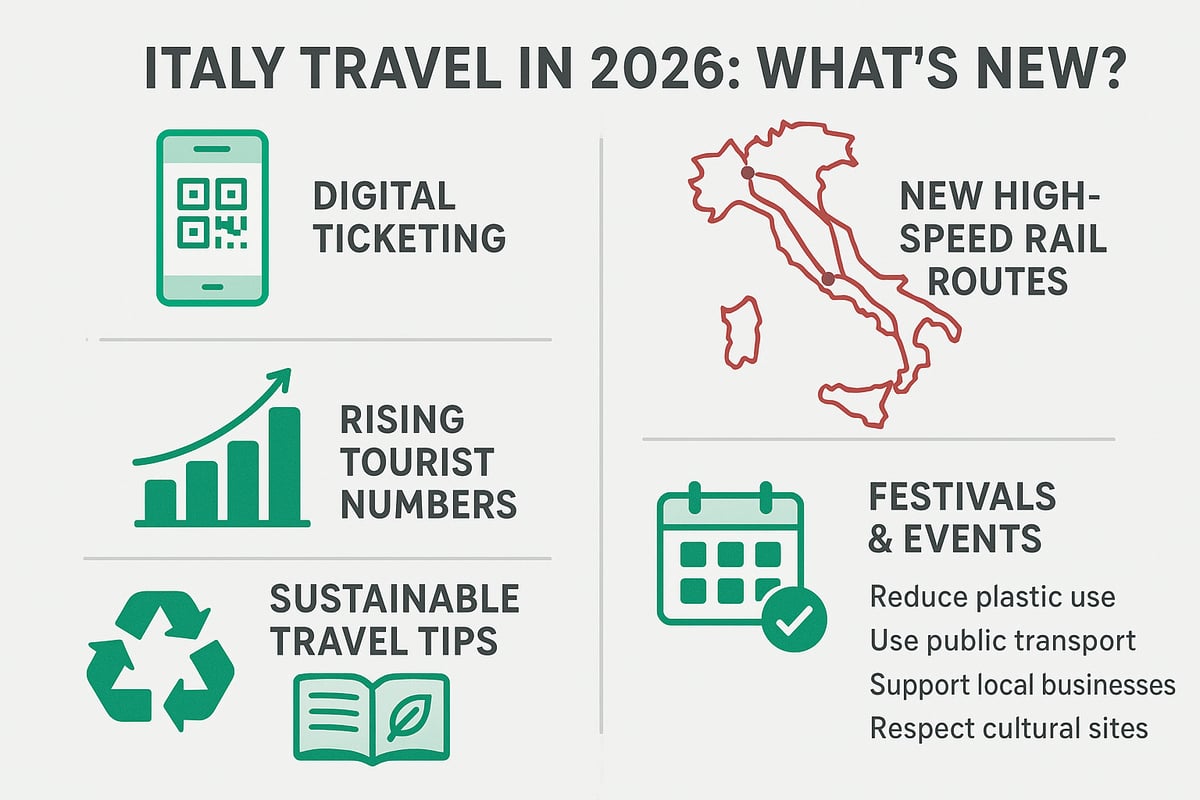
Italy is investing heavily in its tourism sector. Major cities like Milan and Rome are unveiling new attractions and renovating historical sites. The high-speed rail network is expanding, making it easier to reach both classic destinations and hidden gems. According to Italy's 2025 tourism trends, visitor numbers are rising steadily, and digital ticketing for top sights is now the norm. Timed entries are common at museums, and many attractions require advance reservations, so planning ahead is crucial for a smooth italy travel experience.
Cultural events are also taking center stage. In 2026, Italy will host major art biennales, music festivals, and sporting events, drawing crowds from around the world. Cities like Venice are introducing new tourist management measures to protect their heritage while welcoming guests. Milan continues to transform with innovative public spaces and exhibitions, ensuring every italy travel itinerary is full of fresh discoveries.
Health and safety remain a priority. Enhanced protocols, including contactless payments and improved sanitation, are standard across hotels, restaurants, and attractions. Travelers should expect to use apps for everything from museum entry to restaurant bookings, making technology an essential companion for italy travel in 2026.
Sustainability is at the heart of the new travel landscape. Italy is encouraging visitors to adopt eco-friendly habits, such as using digital guides, choosing green accommodations, and supporting local businesses. For practical advice on reducing your carbon footprint, see eco-friendly travel with digital guides. These steps help preserve Italy’s beauty for future generations and make every italy travel adventure more meaningful.
Whether you are drawn by historic sites, vibrant festivals, or the promise of sustainable exploration, Italy in 2026 offers endless possibilities. By staying informed about new trends and embracing these changes, you will ensure your italy travel journey is both rewarding and responsible.
Frequently Asked Questions About Traveling to Italy
Planning italy travel raises many questions for first-timers and seasoned explorers alike. Here are answers to some of the most common concerns:
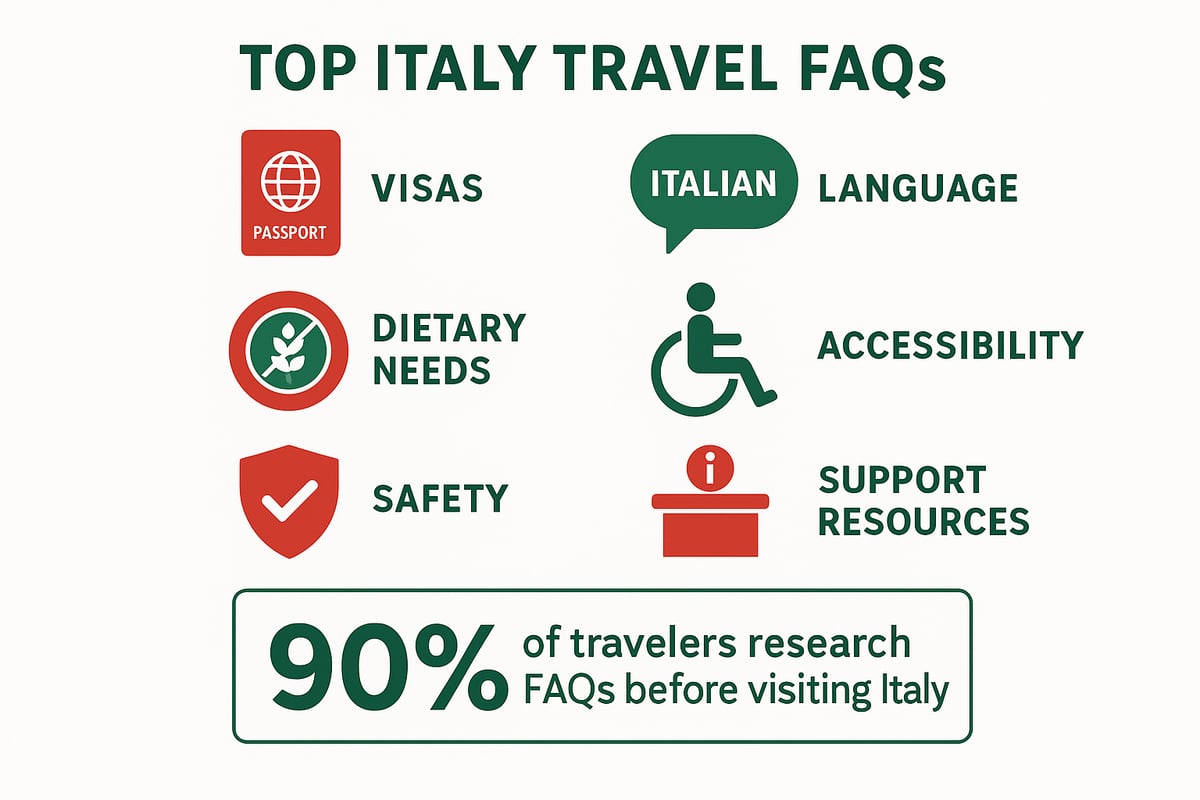
- Visas: Most visitors from the US, Canada, UK, and Australia do not need a visa for stays under 90 days.
- Language Barriers: English is widely spoken in tourist areas, but learning a few Italian phrases is helpful.
- Dietary Restrictions: Gluten-free and vegetarian options are available in most cities. Ask for “senza glutine” or “vegetariano” when ordering.
- Accessibility: Major cities offer accessible public transport, but cobblestone streets can pose challenges.
- Safety: Emergency number is 112. Watch out for pickpockets in crowded spots.
Solo travelers, families, and LGBTQ+ visitors will find welcoming communities and resources across Italy. For affordable and efficient trip planning, check out this How to plan a budget-friendly adventure guide.
Over 90% of travelers research FAQs before their italy travel, so take time to prepare and consult official tourism websites for up-to-date support.
As you start planning your Italian adventure for 2026, remember that the right insights can make all the difference—whether it’s learning a few local phrases, uncovering hidden gems beyond the big cities, or navigating transport like a pro. If you’re eager to dive deeper and travel with confidence, you don’t have to do it alone. I recommend taking a look at our thoughtfully crafted digital guides—they’re packed with practical tips, cultural know-how, and curated recommendations to help you experience Italy authentically. Ready to make your journey truly unforgettable? Explore Guides