

Rough Guide Italy: Your Essential Travel Companion
Italy remains one of the world's most captivating destinations, drawing millions of travelers each year to its Renaissance cities, rolling vineyards, dramatic coastlines, and ancient ruins. Whether you're planning your first visit or returning to explore deeper, a rough guide Italy approach helps you navigate this diverse country with confidence. From the alpine lakes of the north to the sun-drenched beaches of Sicily, understanding Italy's regional differences, seasonal nuances, and cultural expectations transforms a simple vacation into an authentic Italian experience that resonates long after you return home.
Understanding Italy's Diverse Regions
Italy's geography creates dramatically different experiences depending on where you travel. The country stretches nearly 760 miles from north to south, encompassing Alpine mountains, fertile plains, volcanic islands, and Mediterranean coastlines.
Northern Italy's Cultural Powerhouses
Northern Italy showcases economic prosperity, historical art treasures, and sophisticated urban culture. Milan serves as the financial capital and fashion epicenter, while Venice mesmerizes visitors with its canal-laced architecture and artistic heritage. The Lake District, including Como and Garda, offers Alpine scenery and elegant resort towns that have attracted European aristocracy for centuries.
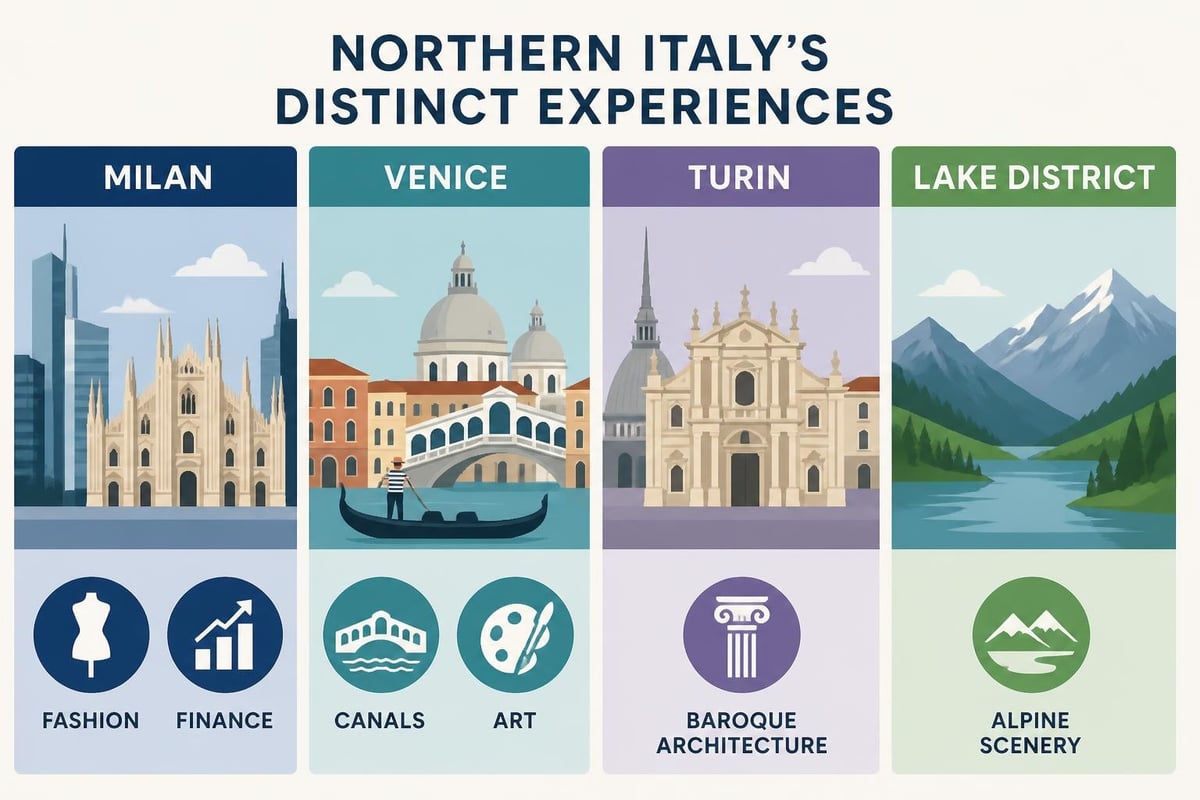
Key northern destinations include:
- Turin with its baroque architecture and automotive history
- Verona, Shakespeare's romantic backdrop
- Bologna, the culinary capital with medieval towers
- The Dolomites for world-class skiing and hiking
The diverse regions of Italy each offer distinct cultural identities, dialects, and culinary traditions that reflect centuries of independent city-state governance before unification in 1861.
Central Italy's Renaissance Heart
Central Italy embodies the classical Italian experience most travelers envision. Tuscany's cypress-lined hills, vineyard estates, and Renaissance cities define this region's appeal. Florence remains the artistic nucleus, housing works by Michelangelo, Botticelli, and Leonardo da Vinci within walking distance of each other.
Rome deserves extended exploration beyond its ancient monuments. The Eternal City layers nearly three millennia of history, from the Colosseum and Roman Forum through baroque fountains and modern neighborhoods. Budget at least four to five days to appreciate Rome's depth without exhausting yourself.
Umbria provides Tuscany's charm without the crowds, featuring medieval hilltop towns like Assisi and Orvieto. The region's truffle festivals and wine routes offer authentic experiences at lower prices than its more famous neighbor.
Southern Italy and the Islands
Southern Italy presents a different pace and perspective. Naples buzzes with raw energy, serving as the gateway to Pompeii, the Amalfi Coast, and Capri. The city's historic center, a UNESCO World Heritage site, reveals layers of Greek, Roman, and Spanish influence.
Puglia has emerged as a sophisticated alternative to overcrowded Tuscan destinations. The region's trulli houses, baroque cities like Lecce, and pristine Adriatic beaches attract travelers seeking authentic southern Italian culture.
| Region | Best For | Peak Season | Budget Level |
|---|---|---|---|
| Northern Italy | Art, fashion, lakes | June-September | High |
| Tuscany | Wine, Renaissance art | May-October | High |
| Rome/Lazio | Ancient history | April-June, Sept-Oct | Medium-High |
| Southern Italy | Authentic culture, beaches | July-August | Medium |
| Sicily | History, cuisine, diversity | May-June, September | Low-Medium |
Sicily and Sardinia function almost as separate countries, with distinct histories, cuisines, and landscapes. Sicily's Greek temples, Norman cathedrals, and active volcanoes create an island of extraordinary contrasts worth at least a week of exploration.
Timing Your Italian Adventure
Understanding when to visit fundamentally shapes your rough guide Italy experience. Each season presents distinct advantages and challenges that influence everything from accommodation costs to crowd levels at major attractions.
Seasonal Considerations
Spring (April-May) ranks as the optimal time for most travelers. Temperatures hover comfortably in the 60s and 70s Fahrenheit, wildflowers bloom across the countryside, and tourist numbers remain manageable. Easter week brings crowds and higher prices, but the shoulder periods before and after offer excellent value.
Summer (June-August) delivers guaranteed sunshine but intense heat, especially in southern regions where temperatures regularly exceed 95°F. Major cities empty as Italians escape to coastal areas during August, closing many local businesses for annual vacations. Popular destinations like the Amalfi Coast, Cinque Terre, and Venice experience overwhelming crowds.
Fall (September-October) rivals spring for ideal conditions. Harvest season brings wine festivals, truffle fairs, and agricultural celebrations throughout rural areas. September still feels summery with fewer tourists, while October introduces cooler temperatures and occasional rain.
Winter (November-March) opens Italy to budget travelers and culture enthusiasts. Museums, galleries, and restaurants operate without crowds, though many coastal towns essentially close. Rome and Florence remain vibrant year-round, while northern cities offer Christmas markets and skiing in nearby Alps.
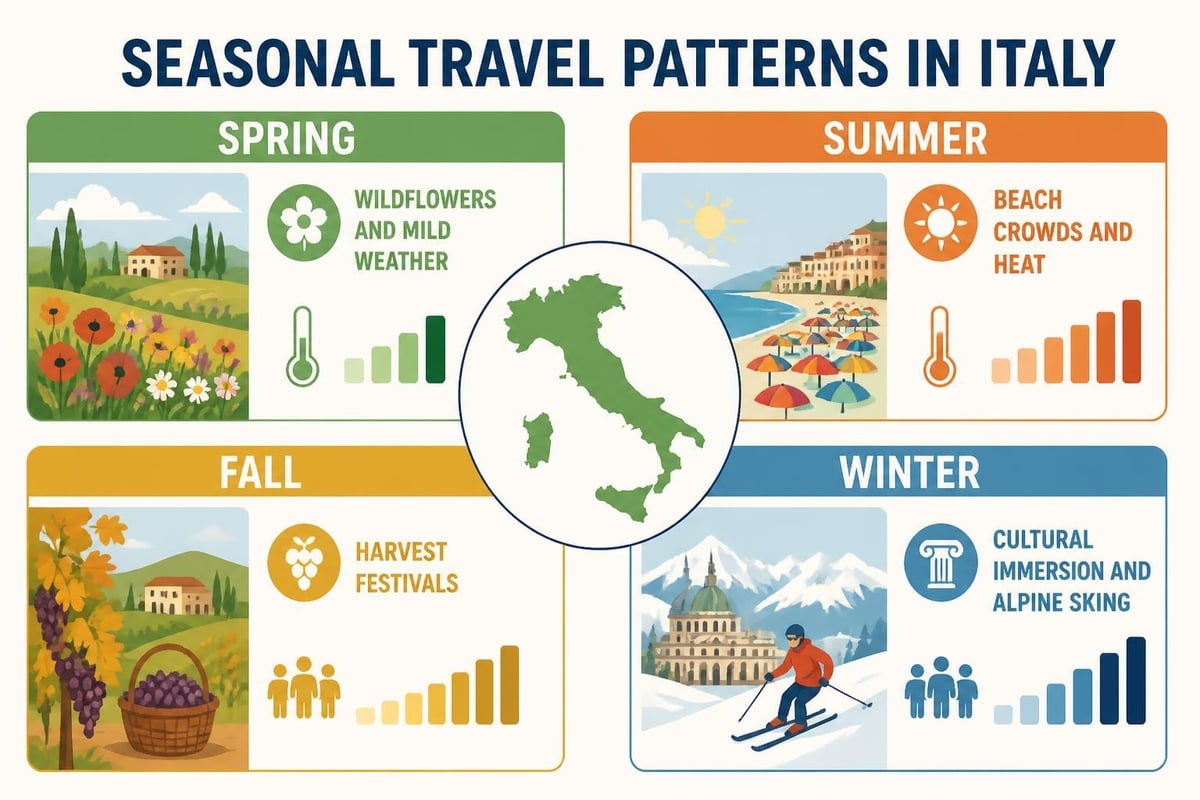
Understanding optimal travel times helps you align your interests with seasonal advantages. Art lovers thrive in winter's uncrowded museums, while outdoor enthusiasts need summer's long daylight hours for hiking and beach activities.
Navigating Transportation Networks
Italy's transportation infrastructure connects even remote villages through an extensive network of trains, buses, and regional flights. Your rough guide Italy transportation strategy depends on your itinerary and travel style.
Rail Travel Excellence
Trenitalia and Italo operate high-speed trains connecting major cities with remarkable efficiency. Rome to Florence takes just 90 minutes, while Milan to Venice requires only 2.5 hours. Book high-speed trains in advance for significant discounts, especially during peak summer months.
Regional trains serve smaller towns and countryside destinations at lower speeds and prices. These slower services rarely require reservations, allowing flexible exploration. However, strikes (scioperi) occasionally disrupt service, typically announced several days in advance.
Train travel tips:
- Validate regional train tickets in yellow machines before boarding
- First-class upgrades cost little more but provide guaranteed seating
- Purchase rail passes only if making numerous long-distance trips
- Download Trenitalia and Italo apps for real-time scheduling
- Major stations offer left-luggage services for day trips
Driving Considerations
Renting a car opens access to Tuscany's vineyard roads, Umbrian hilltowns, and Puglia's coastal villages that trains cannot reach. However, Italian driving presents challenges for unprepared visitors. Cities implement Limited Traffic Zones (ZTL) that fine unauthorized vehicles hundreds of euros per entry. Parking in historic centers ranges from difficult to impossible.
Highway tolls add significant costs to long-distance driving. The A1 Autostrada from Milan to Naples costs approximately €45 in tolls alone. Manual transmissions dominate rental fleets, with automatic vehicles commanding premium rates and limited availability.
International Driving Permits complement your regular license but check specific rental company requirements. Insurance coverage through credit cards often excludes Italy, necessitating additional rental company insurance that substantially increases daily rates.
Embracing Italian Culinary Culture
Italian cuisine extends far beyond pizza and pasta, representing centuries of regional tradition, seasonal ingredients, and family recipes passed through generations. Your rough guide Italy food experiences should embrace local specialties rather than seeking familiar dishes everywhere.
Regional Culinary Identities
Each region maintains fierce pride in local products and preparations. Emilia-Romagna produces Parmigiano-Reggiano cheese, Prosciutto di Parma, and traditional balsamic vinegar. Piedmont celebrates truffles, hazelnuts, and Barolo wines. Sicilian cuisine blends Arabic, Spanish, and Italian influences through dishes like arancini and caponata.
Seasonal eating remains fundamental to authentic Italian dining. Spring brings artichokes, fava beans, and asparagus. Summer features tomatoes, eggplant, and zucchini flowers. Fall introduces mushrooms, chestnuts, and game meats. Winter embraces hearty soups, root vegetables, and preserved ingredients.
Dining Etiquette and Expectations
Italian meal structure follows traditional patterns that differ from American dining conventions. Breakfast (colazione) consists of cappuccino and pastry, never substantial. Lunch (pranzo) traditionally served as the main meal, though modern work schedules have reduced its importance in cities. Dinner (cena) rarely begins before 8 PM, often extending past 10 PM in southern regions.
Understanding restaurant categories:
- Ristorante: Formal dining with full menu and higher prices
- Trattoria: Casual, family-run establishments with regional specialties
- Osteria: Traditional tavern-style dining, often simple and authentic
- Enoteca: Wine bar with accompanying light dishes
- Pizzeria: Focused pizza menu, best for dinner rather than lunch
Tipping expectations differ significantly from American standards. Service charges (coperto) appear as separate line items, typically €2-4 per person for bread and table settings. Additional tipping remains optional, with locals leaving small change or rounding up bills rather than calculating percentages.
The expert insights on Italian dining reveal that afternoon coffee culture follows strict protocols. Cappuccino belongs exclusively to morning hours, while espresso suits any time. Ordering cappuccino after lunch marks you as a tourist and may draw polite confusion from waitstaff.
Cultural Nuances and Practical Wisdom
Successful travel in Italy requires understanding cultural expectations, social norms, and practical realities that differ from other European destinations. Your rough guide Italy cultural preparation prevents misunderstandings and enriches interactions with locals.
Dress Codes and Appearance
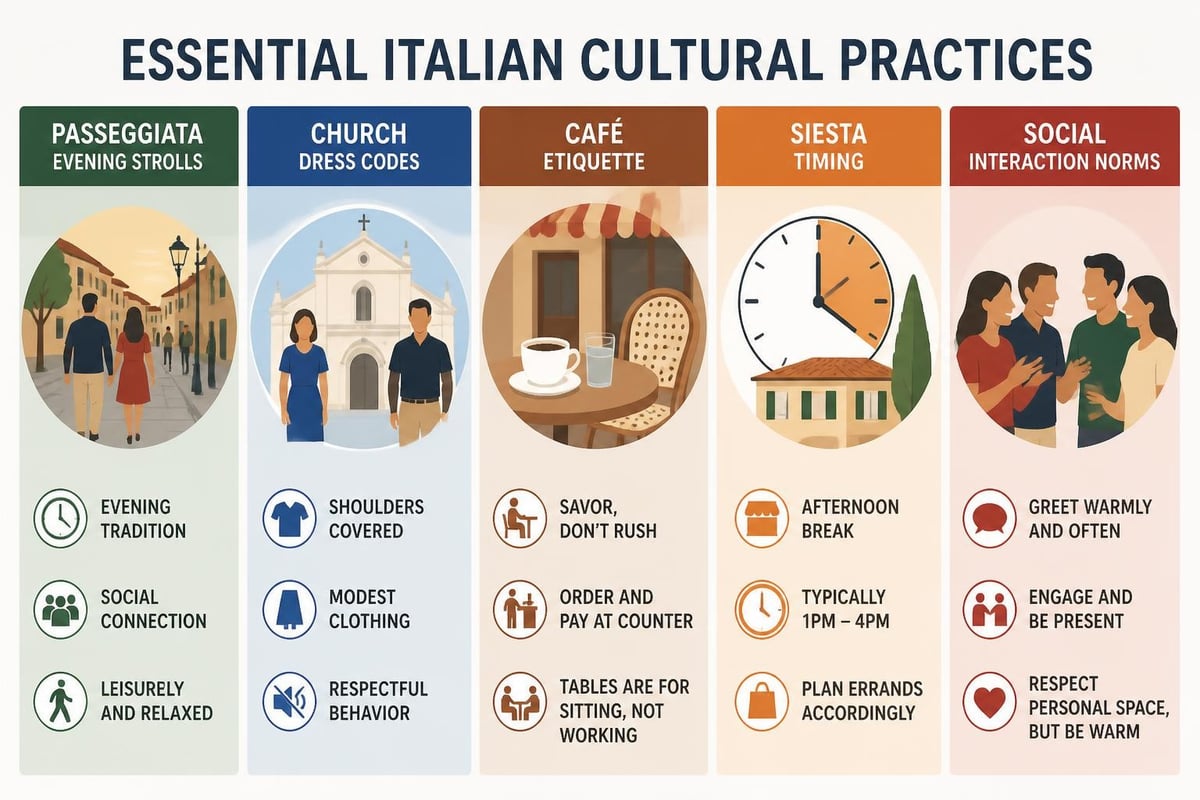
Italians maintain higher standards for public appearance than many visitors expect. Athletic wear, flip-flops, and beachwear belong exclusively in appropriate contexts, never for city exploration or dining. Churches enforce strict dress codes requiring covered shoulders and knees, sometimes providing disposable coverings but often denying entry entirely.
Evening passeggiata (stroll) represents a social ritual where communities gather in town centers, parks, and piazzas. Participating in this tradition offers authentic cultural immersion, though dressing appropriately shows respect for local customs.
Siesta Scheduling
Many businesses, especially in smaller towns and southern regions, close for several hours during afternoon. Banks, shops, and offices often shutter from 1 PM to 4 PM, reopening until 7 or 8 PM. Museums and major attractions maintain continuous hours, but restaurants may close between lunch and dinner service.
Planning daily activities around siesta hours prevents frustration. Use afternoon downtime for museum visits, rest at accommodations, or leisurely meals. Shopping and banking require morning or late afternoon scheduling.
Communication and Language
English proficiency varies dramatically across Italy. Major tourist centers offer widespread English support in hotels, restaurants, and attractions. Rural areas and southern regions require basic Italian phrases for routine interactions. Locals appreciate even minimal attempts at Italian, responding with patience and assistance.
Essential Italian phrases:
- Buongiorno (good morning/day) and Buonasera (good evening) as greetings
- Per favore (please) and Grazie (thank you)
- Scusi (excuse me) for getting attention or apologizing
- Il conto, per favore (the bill, please) when finishing meals
- Parla inglese? (Do you speak English?)
Before embarking on your Italian adventure, consulting a comprehensive pre-trip checklist ensures you've addressed all necessary preparations, from documentation to packing essentials.
Maximizing Value and Managing Budgets
Italy accommodates various budget levels, from backpacker hostels to luxury resorts. Strategic planning stretches resources while maintaining quality experiences that define memorable trips.
Accommodation Strategies
Hotel prices fluctuate dramatically by season, location, and booking timing. Rome, Florence, and Venice command premium rates year-round, particularly in city centers near major attractions. Booking accommodations in residential neighborhoods provides authentic experiences at lower costs, with excellent public transportation connecting you to tourist areas.
Agriturismi (farm stays) throughout Tuscany, Umbria, and rural regions offer exceptional value, combining comfortable lodging with home-cooked meals featuring farm products. These working agricultural properties provide insight into rural Italian life unavailable in cities.
| Budget Level | Daily Cost (2026) | Accommodation Type | Dining Style |
|---|---|---|---|
| Budget | $60-100 | Hostels, basic hotels | Picnic lunches, casual trattorias |
| Mid-range | $150-250 | 3-star hotels, B&Bs | Mix of casual and nice restaurants |
| Comfortable | $300-450 | 4-star hotels, boutique properties | Quality restaurants, wine tastings |
| Luxury | $500+ | 5-star hotels, villas | Fine dining, exclusive experiences |
Smart Spending Tactics
Museum passes and city cards provide value only with strategic planning. The Roma Pass covers admission to two attractions plus unlimited public transportation for three days, but calculating actual savings requires comparing pass cost against individual tickets for your specific itinerary.
Free museum days and extended evening hours offer budget-friendly access to major attractions. Rome's state museums open free on the first Sunday of each month, though crowds increase substantially. Many cities extend hours one evening weekly, sometimes with reduced admission.
Supermarket meals and picnic provisions dramatically reduce food costs. Italy's supermarkets stock excellent cheeses, cured meats, fresh bread, and local wines at a fraction of restaurant prices. Public parks, riverside locations, and scenic viewpoints become dining rooms for memorable budget-friendly meals.
Planning a comprehensive trip benefits from reviewing how to plan the perfect Italian dream trip, which offers valuable insights applicable to travelers of all ages.
Essential Practical Information
Successful rough guide Italy preparation addresses practical concerns before departure, ensuring smooth experiences from arrival through departure.
Documentation and Entry Requirements
U.S. citizens require passports valid for at least three months beyond departure dates for stays up to 90 days within a 180-day period under the Schengen Agreement. The European Travel Information and Authorization System (ETIAS) launches in 2026, requiring advance online authorization costing €7 for stays up to 90 days.
Travel insurance covering medical emergencies, trip cancellation, and lost luggage provides essential protection. European healthcare costs can surprise American travelers accustomed to insurance-negotiated rates. A travel safety handbook helps you understand risk mitigation strategies for various travel scenarios.
Money Matters
Italy uses the euro, with credit cards widely accepted in cities but less common in rural areas and small family-run establishments. Carrying €50-100 in cash covers emergencies, small purchases, and businesses preferring cash transactions.
ATMs (Bancomat) provide the best exchange rates, though home banks often charge foreign transaction fees. Notify credit card companies of travel dates to prevent fraud alerts from blocking legitimate purchases. Chip-and-PIN technology dominates Italian payment systems, though signature still works for most transactions.
Connectivity and Communication
Major Italian mobile carriers include TIM, Vodafone, and Wind Tre, offering prepaid SIM cards with data packages for unlocked phones. Tourist SIMs providing 20-30GB data for two weeks typically cost €20-30, far cheaper than international roaming charges from U.S. carriers.
WiFi appears in most hotels, many restaurants, and public spaces, though connection quality varies significantly. Downloading offline maps, translation apps, and travel guides before trips ensures functionality without constant connectivity. The Awesome Guide to Italy offers comprehensive digital resources accessible offline throughout your journey.
Safety and Health Considerations
Italy ranks as a safe destination with low violent crime rates, though pickpocketing and bag snatching target tourists in crowded areas. Rome's Termini Station, Milan's metro, and Venice's vaporetti attract skilled thieves working teams to distract and steal from inattentive visitors.
Safety best practices:
- Use lockable crossbody bags for valuables
- Avoid displaying expensive jewelry, watches, or electronics
- Keep passport copies separate from originals
- Remain vigilant in crowded tourist areas and public transportation
- Secure accommodations with in-room safes for documents and excess cash
Pharmacies (farmacie) identified by green crosses provide professional health advice and over-the-counter medications for minor ailments. Italian pharmacists offer knowledgeable guidance, often speaking English in tourist areas.
Tap water throughout Italy meets high safety standards, safe for drinking despite local preferences for bottled water. Carrying reusable water bottles reduces plastic waste and saves money, with public fountains (nasoni) throughout Rome and other cities providing free drinking water.
Beyond the Tourist Trail
Authentic rough guide Italy experiences often emerge away from famous landmarks in small towns, local markets, and regional celebrations that reveal contemporary Italian life.
Festival and Event Timing
Italy's calendar overflows with festivals celebrating saints, harvests, historical events, and local products. Venice Carnival transforms the city each February with elaborate masks and costumes. Siena's Palio horse race in July and August draws passionate crowds to the medieval center. Alba's truffle festival in October celebrates Piedmont's prized white truffles.
Smaller celebrations often provide more authentic experiences than major tourist events. Village sagre (food festivals) dedicated to specific products like chestnuts, mushrooms, or local wines welcome visitors into community traditions with generous tastings and reasonable prices.
Hidden Gem Destinations
While Rome, Florence, and Venice deserve their fame, lesser-known destinations offer comparable beauty without overwhelming crowds. Matera's ancient cave dwellings earned UNESCO recognition and European Capital of Culture designation. Lecce showcases extraordinary baroque architecture in Puglia's warm south. Mantua's Renaissance palaces and lakeside setting remain relatively undiscovered by international tourists.
Exploring additional European destinations through comprehensive digital guides helps you plan multi-country itineraries that contextualize Italy within broader European travel patterns. Neighboring destinations like France, Greece, and Spain complement Italian experiences when time permits extended trips.
Sustainable Travel Practices
Mass tourism strains Italy's infrastructure, environment, and local communities, particularly in Venice, the Amalfi Coast, and Cinque Terre. Responsible travelers mitigate their impact through conscious choices supporting sustainable tourism.
Visit popular destinations during shoulder seasons when tourism pressure decreases. Choose locally-owned accommodations, restaurants, and tour operators rather than international chains. Support traditional craftspeople by purchasing authentic regional products instead of imported souvenirs.
Public transportation, walking, and cycling reduce environmental impact while providing more intimate destination experiences than driving. Many Italian cities restrict vehicle access in historic centers, making car-free exploration necessary rather than optional.
Reviewing comprehensive cultural insights about Italy deepens understanding of regional differences and contemporary challenges facing this beloved destination.
Packing for Italian Adventures
Strategic packing balances preparedness with mobility, essential for navigating cobblestone streets, train stations, and accommodations without elevators. Your rough guide Italy packing approach should prioritize versatility and quality over quantity.
Essential Items
Comfortable walking shoes rank as the single most important packing decision. Italian cities demand extensive walking over uneven surfaces, stairs, and hills. Quality shoes broken in before departure prevent blisters and fatigue that ruin otherwise perfect days.
Clothing considerations:
- Lightweight layers adapting to temperature fluctuations
- Modest options meeting church dress codes
- Dark colors hiding inevitable travel wear
- Quick-dry fabrics for hand washing in sinks
- One dressy outfit for upscale dining
A comprehensive packing guide ensures you remember essential items while avoiding overpacking that creates unnecessary burden throughout your travels.
Technical and Practical Gear
European electrical outlets require adapters for American devices, though most phone and laptop chargers accept 110-240V requiring only plug adapters rather than voltage converters. A portable charger keeps devices operational during long sightseeing days when outlet access proves limited.
TSA-compliant toiletry organization through products like The Pouch streamlines security procedures and prevents liquid spills in luggage. Quality travel accessories justify their cost through reliability and convenience across multiple trips.
Documenting your journey through photography creates lasting memories, and understanding composition, lighting, and storytelling transforms snapshots into compelling images. A travel photography guide helps you capture Italy's beauty professionally regardless of camera equipment.
Italy rewards thoughtful preparation with experiences that exceed expectations, from Renaissance masterpieces and ancient ruins to contemporary cuisine and warm hospitality. Understanding regional differences, seasonal patterns, and cultural nuances transforms generic tourism into authentic connection with one of the world's most captivating destinations. Whether you're exploring for the first time or returning to deepen your appreciation, Awesome Travel Guides provides the comprehensive resources, insider tips, and practical wisdom you need to navigate Italy with confidence and create unforgettable memories that inspire future adventures.