

Scotland Guide: Essential Tips for Your Scottish Adventure
Scotland captivates travelers with its dramatic landscapes, ancient castles, vibrant cities, and rich cultural heritage. From the misty Highlands to the cosmopolitan streets of Edinburgh and Glasgow, this compact nation offers diverse experiences that resonate with history enthusiasts, outdoor adventurers, and culture seekers alike. A comprehensive scotland guide helps you navigate the complexities of planning a Scottish journey, ensuring you don't miss the hidden gems alongside the famous attractions. Whether you're drawn to whisky distilleries, medieval fortresses, or remote islands, understanding Scotland's geography, culture, and practical logistics transforms a good trip into an unforgettable adventure.
Understanding Scotland's Geographic Regions
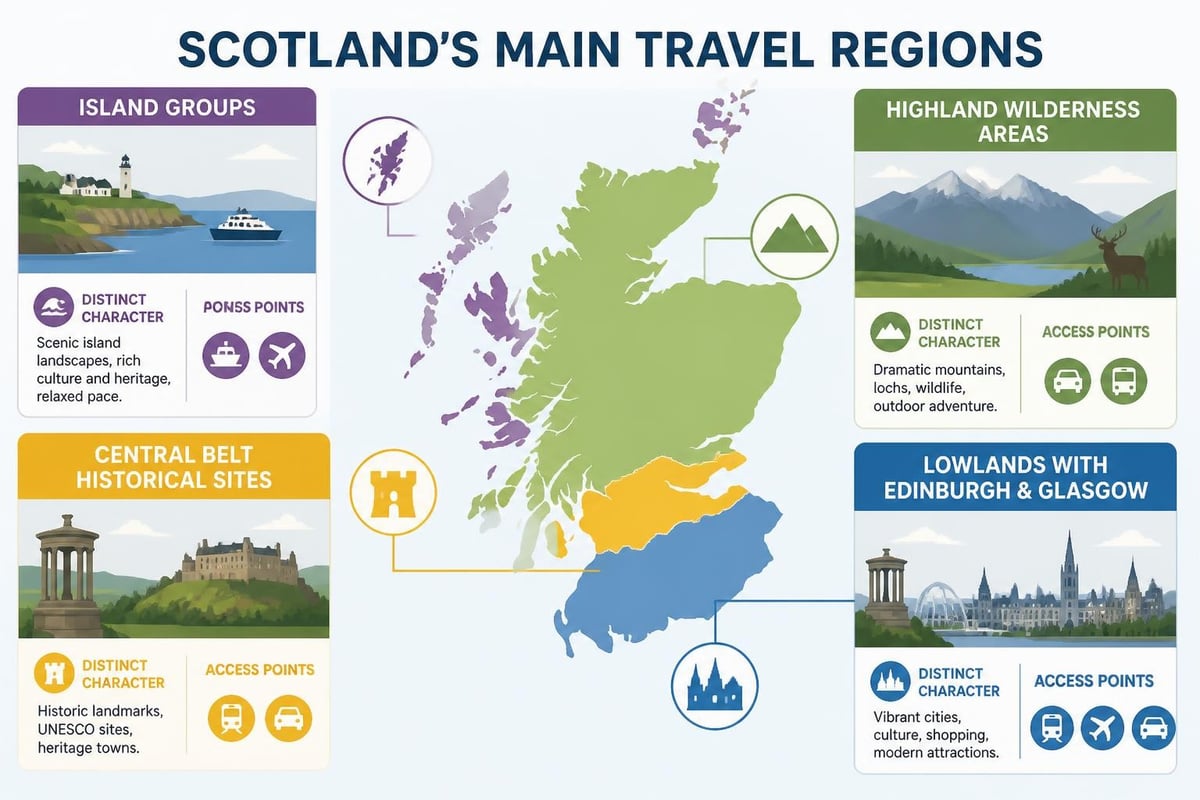
Scotland divides naturally into distinct regions, each offering unique characteristics and attractions. The Lowlands, encompassing Edinburgh, Glasgow, and the Borders, blend urban sophistication with rolling countryside. Central Scotland serves as the historical heartland, where many pivotal battles shaped the nation's identity. The Highlands represent the Scotland of popular imagination, with towering mountains, deep lochs, and sparse populations creating an atmosphere of wild beauty.
The island groups add another dimension to any scotland guide. The Inner and Outer Hebrides off the west coast feature pristine beaches, Gaelic culture, and archaeological treasures. Orkney and Shetland in the north showcase Norse heritage and remarkable prehistoric sites. Skye, the most accessible major island, combines dramatic geology with excellent hiking and photography opportunities.
Planning Your Scottish Itinerary
Time allocation depends on your interests and travel pace:
- One week: Focus on a single region or combine Edinburgh with the Highlands
- Two weeks: Cover multiple regions including island visits
- Three weeks: Comprehensive exploration including remote areas and in-depth cultural experiences
The seasons dramatically affect your experience. Summer (June through August) offers long daylight hours and the best weather probability, but attracts peak crowds and premium prices. Spring and autumn provide moderate conditions with fewer tourists. Winter brings short days and challenging weather, yet delivers atmospheric moods and excellent value.
Transportation infrastructure varies considerably across Scotland. Cities offer excellent public transit, while rural Highlands and islands require careful planning. Public transport options include trains connecting major cities, buses reaching smaller towns, and ferries serving island communities. Renting a vehicle provides maximum flexibility for exploring remote areas, though driving on single-track roads requires patience and proper etiquette.
Edinburgh and Glasgow: Scotland's Urban Centers
Edinburgh, the capital, presents a perfect introduction to Scottish history and culture. The Royal Mile connects Edinburgh Castle to Holyrood Palace, threading through the medieval Old Town where narrow closes and underground vaults whisper tales of centuries past. The Georgian New Town showcases elegant 18th-century urban planning. During August, the Edinburgh Festival transforms the city into the world's largest arts celebration.
Glasgow offers a contrasting urban experience centered on Victorian architecture, world-class museums, and thriving music scenes. The Kelvingrove Art Gallery and Museum, Riverside Museum, and Gallery of Modern Art provide free admission to exceptional collections. Glasgow's West End neighborhood buzzes with independent shops, cafes, and the University of Glasgow's stunning campus.
| City | Best For | Essential Attractions | Ideal Duration |
|---|---|---|---|
| Edinburgh | History, festivals, architecture | Castle, Royal Mile, Arthur's Seat | 3-4 days |
| Glasgow | Museums, music, dining | Kelvingrove, Riverside Museum, West End | 2-3 days |
| Stirling | Medieval history | Stirling Castle, Wallace Monument | 1 day |
| St Andrews | Golf, university history | Old Course, cathedral ruins, beaches | 1-2 days |
Both cities serve as excellent bases for day trips to surrounding attractions, making them valuable anchors in any scotland guide itinerary.
Highland Adventures and Natural Wonders
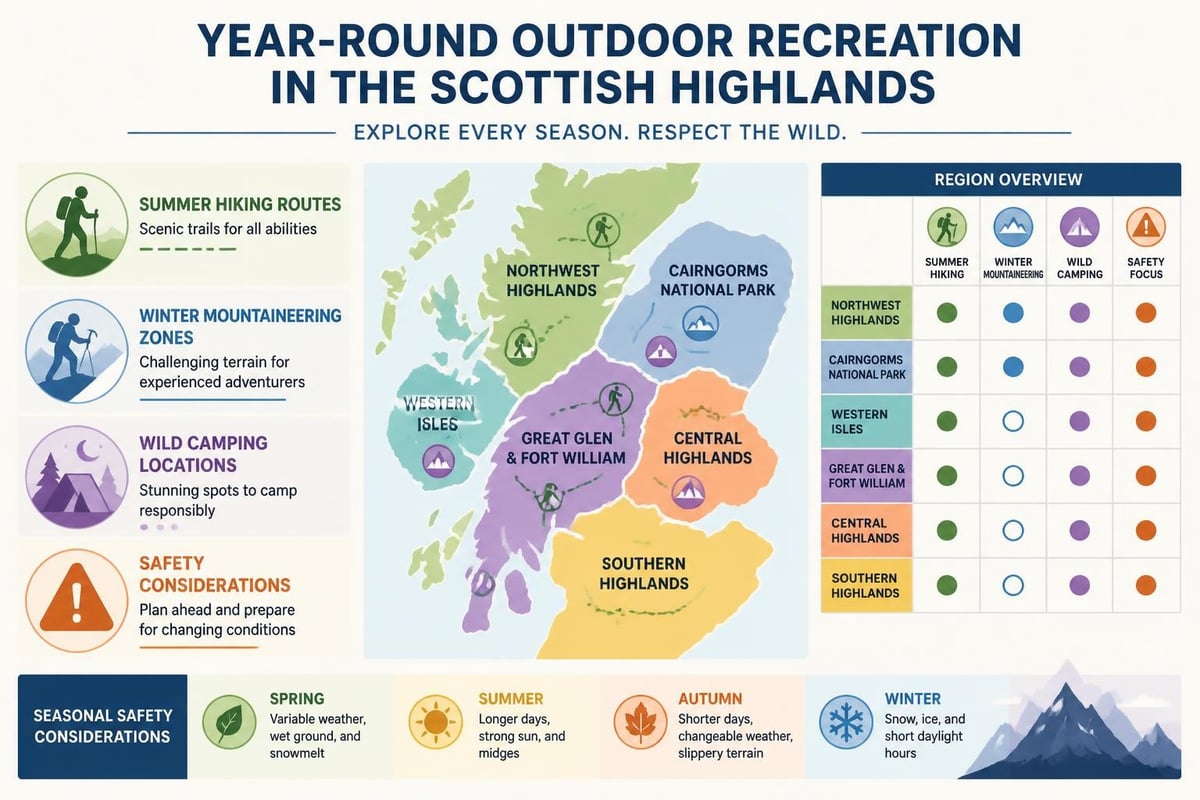
The Scottish Highlands deliver the landscapes that define the nation's romantic image. Fort William sits beneath Ben Nevis, Britain's highest peak, attracting climbers and hikers year-round. The Great Glen, home to Loch Ness, cuts through the Highlands from Fort William to Inverness, offering stunning scenery regardless of monster sightings.
Glen Coe stands among Scotland's most dramatic valleys, where towering peaks and tragic history create an atmosphere of sublime beauty. The North Coast 500 route loops through the far north, showcasing coastal cliffs, sandy beaches, and remote mountains across 516 miles of spectacular driving.
Outdoor Access and Responsibilities
Scotland's outdoor access rights permit walking, cycling, and wild camping on most land and water, provided you act responsibly. This unique legal framework, enshrined in the Land Reform Act, grants far greater freedoms than most countries offer. The Scottish Outdoor Access Code outlines three key principles:
- Respect the interests of other people
- Care for the environment
- Take responsibility for your own actions
Wild camping requires leaving no trace, camping away from buildings and roads, and moving on after one or two nights in the same spot. During lambing season (April through May), extra care near livestock becomes essential.
Essential outdoor gear for Highland exploration:
- Waterproof jacket and trousers (rain arrives frequently and suddenly)
- Layered clothing system for rapid weather changes
- Sturdy hiking boots with ankle support
- Map, compass, and charged phone (signal often absent)
- Emergency shelter and first aid supplies
Island Experiences Worth the Journey
The Isle of Skye represents Scotland's most popular island destination, accessible via bridge from Kyle of Lochalsh. The Cuillin mountains challenge serious climbers, while the Old Man of Storr, Quiraing, and Fairy Pools attract photographers and casual hikers. Portree serves as the main base, though accommodations fill rapidly during summer months.
The Outer Hebrides chain stretches along Scotland's western edge, preserving Gaelic language and traditional crofting communities. Lewis and Harris (technically one island despite the dual name) feature standing stones at Callanish, pristine beaches at Luskentyre, and Harris Tweed production in traditional cottages. Ferry services from Ullapool and Skye provide access, with internal causeways connecting several islands.
Orkney's archaeological richness rivals anywhere in Europe. The Neolithic sites at Skara Brae, Ring of Brodgar, and Maeshowe predate the Egyptian pyramids. Scapa Flow's maritime history as a World War naval base attracts diving enthusiasts to explore sunken German warships. Ferries run from Scrabster and John o'Groats on the mainland.
Cultural Heritage and Historical Context
Understanding Scotland's layered history enriches every castle visit and museum experience. The timeline of Scottish history reveals how Celtic tribes, Roman incursions, Pictish kingdoms, Viking settlements, and eventual union with England shaped the nation. The Wars of Independence in the 13th and 14th centuries created enduring symbols of Scottish identity, from William Wallace to Robert the Bruce.
The Jacobite risings of the 18th century, culminating in the Battle of Culloden in 1746, marked a turning point. The subsequent Highland Clearances forcibly removed tenant farmers to make way for sheep, devastating Gaelic culture and depopulating vast areas. Modern Scotland balances preservation of heritage with contemporary creativity.
Scottish culture extends far beyond tartan and bagpipes, though both remain important symbols. Traditional music thrives in folk sessions across the country, where fiddles, accordions, and Gaelic songs create welcoming atmospheres in pubs and community halls. Scotland's literary tradition produced Robert Burns, Sir Walter Scott, Robert Louis Stevenson, and contemporary authors like Ian Rankin and Ali Smith.
Experiencing Authentic Scottish Culture
Traditional events and festivals throughout the year:
- Highland Games (summer) featuring athletic competitions, pipe bands, and dancing
- Burns Night (January 25) celebrating Scotland's national poet with haggis and whisky
- Hogmanay (December 31) offering spectacular New Year celebrations, especially in Edinburgh
- Celtic Connections (January) presenting traditional and contemporary Celtic music in Glasgow
Whisky distilleries welcome visitors across Scotland, from Speyside's concentration of famous names to Islay's peaty malts and island distilleries on Skye, Orkney, and other remote locations. Tours typically include production process explanations and tastings, requiring advance booking at popular distilleries.
Practical Travel Essentials
Scotland uses the British pound sterling, though Scottish banks issue their own notes that occasionally confuse English shopkeepers despite being legal tender throughout the UK. ATMs appear frequently in cities and towns, but remote areas may lack banking facilities for miles. Credit and debit cards work universally in established businesses, though small vendors and rural locations sometimes operate cash-only.
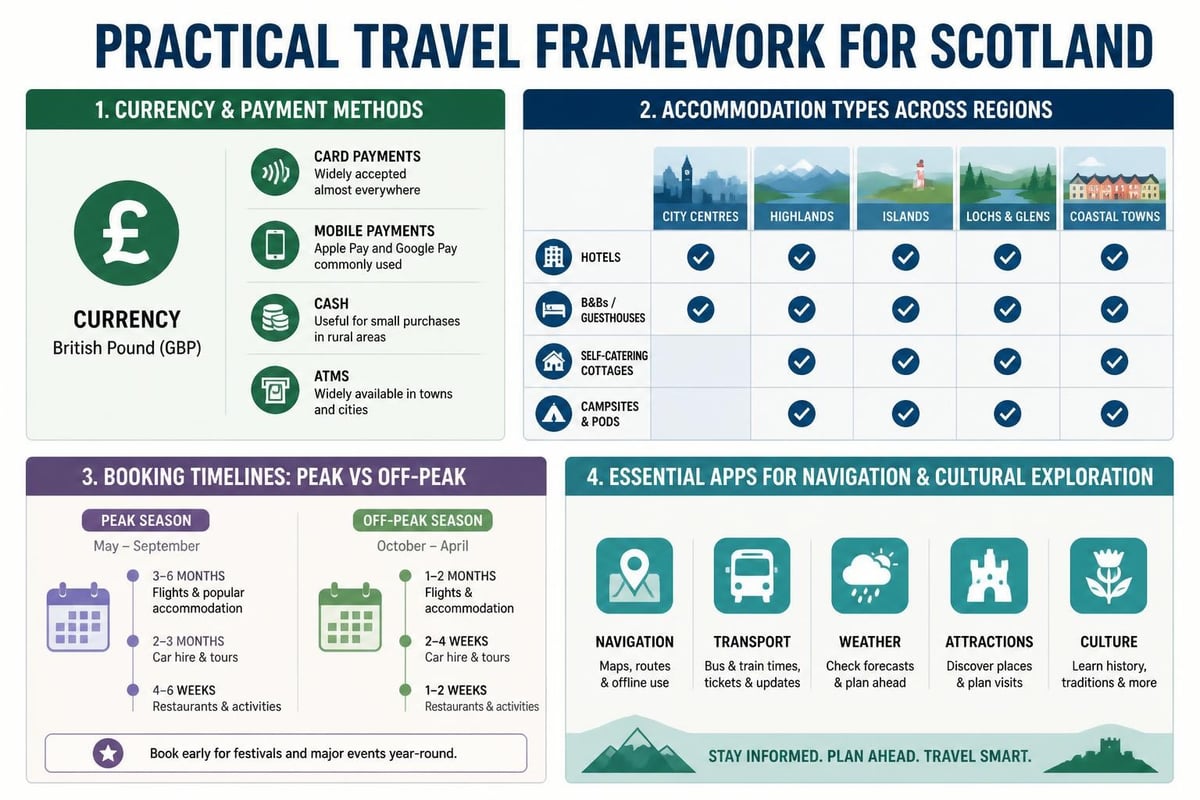
Accommodation options span all budgets and preferences:
| Type | Price Range | Best For | Booking Advice |
|---|---|---|---|
| Hostels | £15-35/night | Solo travelers, budget-conscious | Book summer stays 2-3 months ahead |
| B&Bs | £60-120/night | Personal touch, breakfast included | Direct booking often better than platforms |
| Hotels | £80-250/night | Full services, city centers | Loyalty programs offer good value |
| Self-catering | £400-1200/week | Families, longer stays | Book 6-12 months for peak season |
Mobile phone coverage reaches most populated areas, but Highland glens and remote islands frequently lack signal. Download offline maps before venturing into wilderness areas. Wi-Fi appears standard in accommodations, though speeds vary considerably outside cities.
Weather unpredictability defines Scottish travel. Locals embrace the saying "there's no such thing as bad weather, only inappropriate clothing." Pack layers, waterproofs, and prepare for four seasons potentially occurring in a single day. Summer temperatures rarely exceed 70°F (20°C), while winter can bring snow to higher elevations though coastal areas remain surprisingly mild.
Our comprehensive scotland guide provides detailed neighborhood breakdowns, restaurant recommendations, and day-by-day itineraries that help you maximize your time. Digital formats allow updates reflecting current conditions, seasonal changes, and newly discovered gems that traditional guidebooks miss.
Food and Drink Discoveries
Scottish cuisine has evolved dramatically beyond stereotypes of deep-fried foods and heavy stews. Edinburgh and Glasgow feature Michelin-starred restaurants showcasing local ingredients like Argyll seafood, Highland venison, and Ayrshire vegetables. Traditional dishes remain worth trying: haggis deserves a chance despite its ingredients, while Cullen skink (smoked haddock soup) and cranachan (raspberry dessert with whisky and oats) demonstrate Scottish comfort food at its finest.
Farmers markets and food festivals celebrate Scotland's produce renaissance. The emphasis on provenance and seasonality means menus change frequently, reflecting what's fresh and local. Vegetarian and vegan options have expanded considerably, with dedicated restaurants in cities and most establishments offering plant-based alternatives.
Scotland's craft beer scene rivals its whisky heritage in enthusiasm and quality. Breweries like BrewDog, Innis & Gunn, and Williams Brothers export internationally, while small operations throughout the country experiment with local ingredients and traditional styles. Gin distilleries have proliferated recently, offering tours and tastings alongside their whisky counterparts.
Beyond the Tourist Trail
While Edinburgh Castle and Loch Ness deserve their fame, Scotland rewards travelers who venture beyond headline attractions. The policies supporting arts, culture, and heritage ensure even small communities maintain museums, galleries, and cultural centers showcasing local stories.
Hidden gems worth seeking out:
- Dunrobin Castle's fairy-tale architecture and falconry displays in Sutherland
- The Kelpies sculptures near Falkirk, celebrating Scotland's industrial heritage
- Fingal's Cave on Staffa, inspiring Mendelssohn's famous overture
- The Italian Chapel on Orkney, created by prisoners of war from salvaged materials
- Plockton's palm trees and harbor views on the west coast
Smaller islands like Jura, Mull, and Arran offer authentic experiences without Skye's crowds. Each maintains distinct character, from Jura's wilderness and single distillery to Mull's wildlife-watching opportunities and Arran's "Scotland in miniature" landscapes.
Walking trails throughout Scotland provide intimate access to landscapes. The West Highland Way between Glasgow and Fort William ranks among Britain's most popular long-distance paths, while the Great Glen Way and Speyside Way offer alternatives. Shorter trails around individual lochs, glens, and coastal areas suit day hikers of varying abilities.
Those seeking additional UK destinations can easily combine Scotland with England, Wales, or Ireland on extended trips. The proximity of major airports and train connections makes multi-country itineraries straightforward to arrange.
Maximizing Your Scottish Journey
A successful scotland guide helps travelers balance famous attractions with personal discoveries, structured plans with spontaneous detours, and packed schedules with relaxed exploration. Scotland's compact size means dramatic landscape changes occur within short distances, allowing varied experiences even on brief visits.
Photography enthusiasts find endless opportunities, though rapidly changing light requires patience and flexibility. The extended summer twilight creates magical "golden hours," while winter's dramatic weather produces moody atmospheres. Respect private property and ask permission before photographing people, especially in small communities.
Learning a few Gaelic words enhances appreciation for Scotland's linguistic heritage, though English predominates everywhere. Place names often describe landscape features: "glen" means valley, "loch" indicates lake, "ben" signifies mountain, and "kyle" refers to a strait. Understanding these elements helps decipher maps and appreciate geographic relationships.
For those planning their Scottish adventure, having a reliable resource makes all the difference. Check our frequently asked questions for answers to common planning queries, or explore how to download your guide for offline access during your travels.
Scotland's combination of natural beauty, historical depth, and cultural richness creates journeys that resonate long after you've returned home. Whether you're exploring for the first time or returning to discover new corners, proper planning ensures you experience the best this remarkable nation offers. Awesome Travel Guides provides comprehensive digital resources packed with insider tips, detailed itineraries, and constantly updated information to help you navigate Scotland with confidence and discover authentic experiences beyond the typical tourist path.