

Scotland Ireland Trips: Your Complete Planning Guide
Planning scotland ireland trips offers travelers an extraordinary opportunity to experience two of Europe's most captivating destinations in a single journey. These neighboring Celtic nations share cultural connections while maintaining distinct identities, making them perfect companions for an extended adventure. With rugged coastlines, medieval castles, vibrant cities, and warm hospitality defining both countries, combining Scotland and Ireland creates an unforgettable exploration of British and Irish heritage. Understanding how to navigate between these destinations, what to prioritize, and how to maximize your time ensures a seamless experience that captures the essence of both nations.
Understanding the Appeal of Combined Scotland Ireland Adventures
Scotland ireland trips have surged in popularity among travelers seeking comprehensive Celtic experiences. Both destinations offer dramatically different landscapes within relatively compact territories, allowing visitors to transition from bustling cities to remote wilderness within hours.
Cultural Connections and Distinct Identities
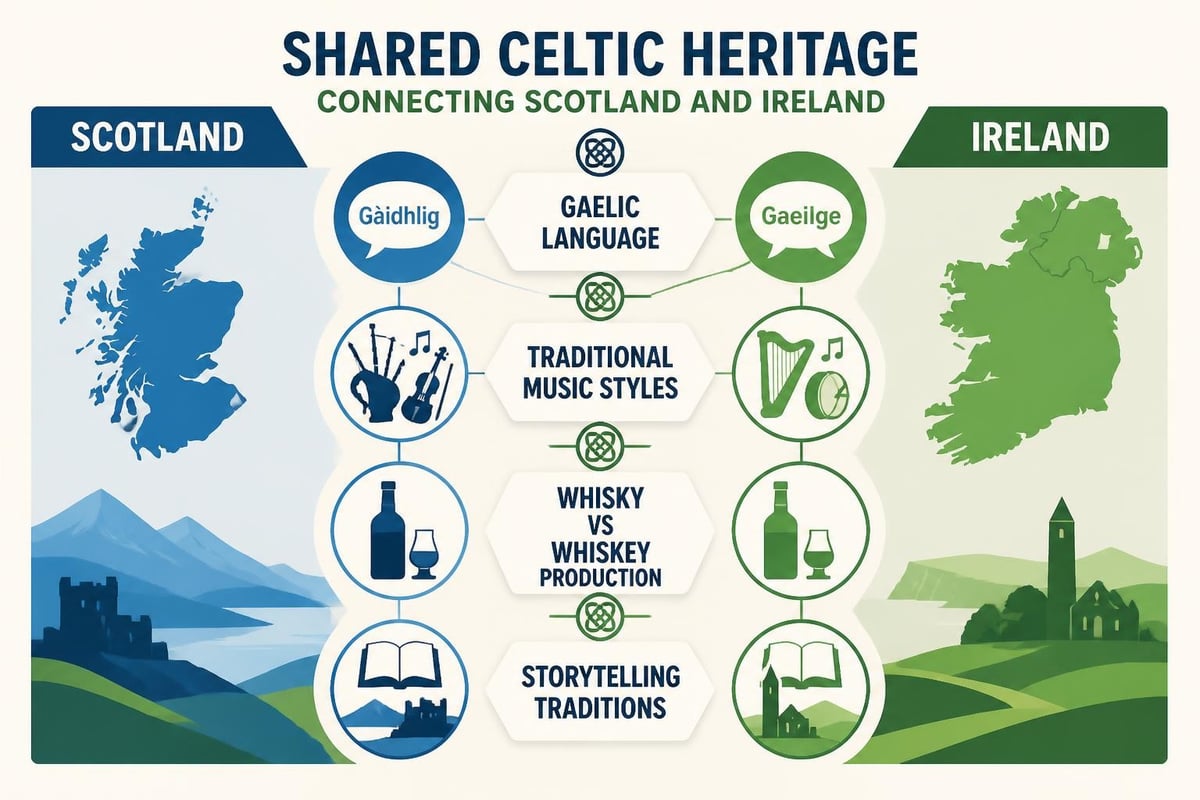
The shared Gaelic heritage between Scotland and Ireland creates fascinating cultural parallels. Traditional music, dance, and storytelling traditions echo across both nations, yet each maintains unique characteristics. Scottish bagpipes contrast with Irish fiddles, while whisky production methods differ significantly from Irish whiskey crafting techniques.
Key cultural similarities include:
- Celtic language roots and historical ties
- Strong literary traditions featuring renowned authors
- Emphasis on communal gathering in pubs and social spaces
- Rich folklore and mythological storytelling
When comparing the overall experience, travelers often find Scotland and Ireland offer distinct vibes that complement rather than duplicate each other. Scotland tends toward dramatic, mountainous terrain with a more reserved cultural atmosphere, while Ireland presents rolling green hills with notoriously gregarious locals.
Planning Your Scotland Ireland Trip Itinerary
Determining Optimal Trip Duration
Most scotland ireland trips require a minimum of ten to fourteen days to experience both countries meaningfully. Rushing through either destination diminishes the experience, as travel between regions takes longer than maps suggest due to narrow roads and frequent photo opportunities.
| Trip Duration | Coverage Potential | Recommended Pace |
|---|---|---|
| 7-8 days | One country highlights only | Fast-paced, major cities |
| 10-12 days | Both countries, key regions | Moderate, balanced approach |
| 14-16 days | Comprehensive exploration | Relaxed, includes remote areas |
| 18+ days | In-depth regional discovery | Leisurely, authentic experiences |
The detailed 10-day Scotland-Ireland itinerary provides an excellent framework for travelers with limited time. This approach focuses on essential highlights while maintaining reasonable daily distances.
Choosing Your Route Direction
Scotland ireland trips work equally well in either direction, though practical considerations influence the optimal flow. Starting in Dublin offers easier international access for most travelers, with abundant transatlantic flight options. Conversely, beginning in Edinburgh allows you to conclude in Ireland, potentially extending your trip with easier connections to continental Europe.
Northern route considerations:
- Dublin to Belfast to Glasgow to Edinburgh
- Emphasizes urban cultural experiences first
- Builds toward Highland wilderness finale
- Requires ferry or flight across Irish Sea
Southern route alternatives:
- Edinburgh to Glasgow to Belfast to Dublin
- Begins with dramatic Scottish landscapes
- Transitions to Irish coastal beauty
- Concludes in vibrant Dublin atmosphere
Transportation Between Scotland and Ireland
Ferry Services Connecting Both Nations
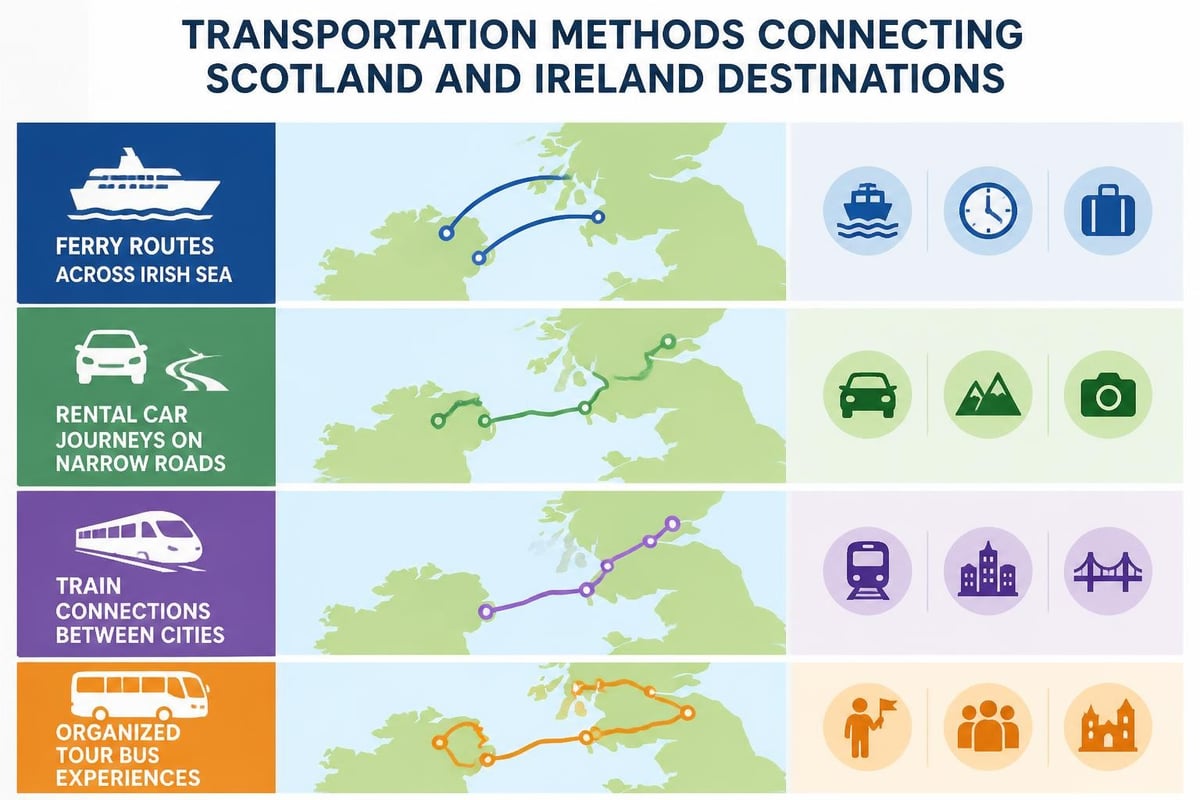
Ferry travel between Scotland and Ireland provides scenic, cost-effective transportation for scotland ireland trips. Multiple routes operate year-round, though schedules vary seasonally. The journey typically takes two to three hours for the shortest crossings, with longer routes offering overnight cabin options.
Primary ferry routes include:
- Cairnryan (Scotland) to Belfast (Northern Ireland)
- Cairnryan to Larne (Northern Ireland)
- Troon (Scotland) to Larne (limited seasonal service)
The official guidance on traveling to Scotland from Ireland covers current schedules, pricing structures, and booking recommendations. Ferry travel allows you to transport rental vehicles between countries, though one-way rental fees often make this prohibitively expensive.
Flight Options for Quick Transitions
Budget airlines operate frequent flights between major Scottish and Irish cities, typically completing journeys in under ninety minutes. Edinburgh and Glasgow both connect to Dublin, Cork, and Belfast multiple times daily.
Flight advantages:
- Dramatically faster than ferry transit
- Often competitively priced with advance booking
- No vehicle transport complications
- More flexible scheduling options
Flight disadvantages:
- Airport transit time reduces speed advantage
- Baggage restrictions limit packing flexibility
- Misses scenic coastal journey experience
- Environmental impact considerations
Regional Highlights Worth Prioritizing
Essential Scottish Destinations
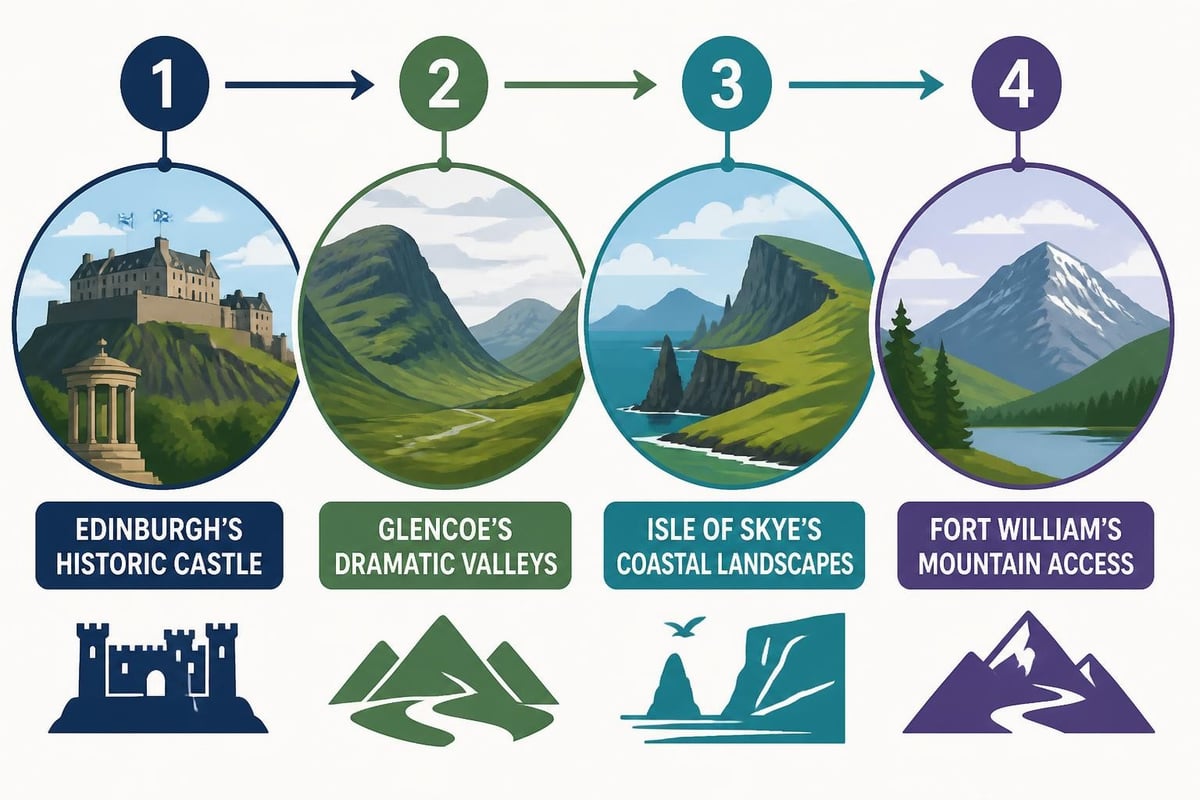
Scotland's regional diversity demands strategic selection for scotland ireland trips with limited timeframes. Edinburgh anchors most itineraries with its dramatic castle, Royal Mile, and cultural festivals. The capital combines medieval Old Town charm with elegant Georgian New Town architecture.
Beyond Edinburgh, the Scottish Highlands deliver the dramatic landscapes most travelers envision. Fort William, Glencoe, and the Isle of Skye showcase mountains, lochs, and coastal scenery that define Scottish imagery. The comprehensive guide to Scotland's regions helps travelers understand the distinctive character of each area.
Glasgow provides urban contrast with world-class museums, innovative dining scenes, and vibrant nightlife. Often overshadowed by Edinburgh, Scotland's largest city rewards visitors with authentic local culture and exceptional Victorian architecture. For additional planning resources, explore The Awesome Guide to Scotland for insider tips on hidden gems.
Must-See Irish Experiences
Ireland's compact size allows comprehensive exploration during scotland ireland trips. Dublin serves as the cultural and historical heart, featuring Trinity College, Temple Bar, and numerous literary landmarks. The city's pub culture offers authentic social experiences that define Irish hospitality.
The Wild Atlantic Way along Ireland's western coast provides spectacular scenery rivaling Scotland's Highlands. The Cliffs of Moher, Ring of Kerry, and Dingle Peninsula showcase Ireland's dramatic coastal beauty. These regions require dedicated time, as narrow roads and frequent viewpoints extend travel durations significantly.
Northern Ireland adds complexity to scotland ireland trips through different currency, political history, and cultural dynamics. Belfast's Titanic Museum and the Giant's Causeway UNESCO site rank among the island's premier attractions. Understanding the region's recent history enriches the travel experience while respecting local sensitivities.
Timing Your Scotland Ireland Journey
Seasonal Considerations for Optimal Experiences
Scotland ireland trips encounter variable weather regardless of season, though summer months offer the most reliable conditions. June through August provide longest daylight hours, warmest temperatures, and fullest festival calendars. However, these months also bring peak crowds and premium pricing.
Seasonal breakdown:
| Season | Advantages | Challenges |
|---|---|---|
| Spring (March-May) | Fewer crowds, blooming landscapes, moderate prices | Unpredictable weather, some attractions closed |
| Summer (June-August) | Longest days, warmest weather, all attractions open | Peak crowds, highest prices, festival competition |
| Fall (September-November) | Beautiful foliage, thinning crowds, lower prices | Shortening days, increasing rain, cooler temperatures |
| Winter (December-February) | Lowest prices, festive atmosphere, snow-capped peaks | Very short days, many attractions closed, harsh weather |
When comparing Scotland versus Ireland for seasonal travel, both countries experience similar patterns. However, Ireland's lower latitude generally provides slightly milder winter conditions, while Scotland offers more dramatic seasonal landscape transformations.
Festival and Event Planning
Both nations host world-renowned festivals that can anchor scotland ireland trips around specific dates. Edinburgh's Festival Fringe in August represents the world's largest arts festival, though accommodation becomes scarce and expensive. St. Patrick's Day celebrations throughout Ireland in March offer cultural immersion but require advance planning.
Practical Logistics for Cross-Country Travel
Currency and Financial Preparation
Scotland uses the British pound sterling (GBP), while the Republic of Ireland uses the euro (EUR). Northern Ireland also uses GBP, creating a three-currency situation for comprehensive scotland ireland trips. Credit cards work throughout both countries, though smaller establishments and rural areas may prefer cash.
Budget allocation varies significantly based on travel style and seasonal timing. Accommodation represents the largest expense category, with mid-range hotels averaging £80-150 per night in Scotland and €90-160 in Ireland. Transportation, dining, and attraction fees consume similar proportions in both countries.
Accommodation Strategies
Scotland ireland trips benefit from diverse accommodation options ranging from luxury hotels to budget hostels. Booking platforms offer competitive pricing, though direct hotel bookings sometimes provide better rates and flexibility.
Accommodation types to consider:
- Historic castles converted to luxury hotels
- Traditional B&Bs offering local hospitality
- Self-catering cottages for extended stays
- Budget-friendly hostel chains in major cities
- Rural farmhouse accommodations for authentic experiences
Early booking proves essential during peak summer months and festival periods. Flexibility in dates and locations can yield significant savings, particularly when using accommodation as a base for day trips rather than constantly relocating.
Driving Versus Public Transportation
Self-Drive Advantages and Challenges
Renting vehicles provides maximum flexibility for scotland ireland trips, particularly when exploring rural regions with limited public transit. Both countries drive on the left side of the road, requiring adjustment for visitors from right-side driving nations.
Self-drive benefits:
- Complete schedule independence
- Access to remote attractions
- Ability to explore at personal pace
- Cost-effective for groups sharing vehicle
Self-drive challenges:
- Left-side driving adjustment period
- Narrow rural roads requiring confident driving
- Parking limitations in city centers
- High fuel costs compared to North America
Comprehensive insurance coverage proves essential, as narrow stone walls and sheep-filled roads create unique hazards. Most rental companies impose age restrictions and require valid licenses held for minimum periods.
Public Transportation Networks
Scotland and Ireland both maintain functional public transportation systems connecting major destinations. Trains provide comfortable travel between cities, while buses extend networks to smaller towns and tourist attractions.
The comprehensive information on reaching Scotland includes details on train networks, bus routes, and connection logistics. Similarly, Ireland's Bus Éireann and Irish Rail networks cover most tourist-relevant destinations, though schedules may be infrequent in rural areas.
Organized tours offer another option for scotland ireland trips, particularly for travelers preferring guided experiences. Multi-day tour companies handle all logistics while providing cultural context and historical information. However, these structured itineraries sacrifice flexibility and independent exploration opportunities.
Culinary Experiences Across Both Nations
Traditional Foods and Modern Innovations
Scotland ireland trips offer exceptional culinary experiences blending traditional recipes with contemporary innovations. Scottish cuisine features haggis, smoked salmon, and Aberdeen Angus beef as signature items. Modern Scottish restaurants have earned Michelin recognition while maintaining connections to local ingredients and heritage recipes.
Irish cuisine emphasizes hearty stews, fresh seafood, and artisanal cheese production. The farm-to-table movement thrives throughout Ireland, with restaurants showcasing seasonal, locally-sourced ingredients. Traditional Irish breakfasts provide substantial fuel for day-long explorations.
Must-try culinary experiences:
- Fresh oysters along the Irish Atlantic coast
- Traditional fish and chips in Scottish seaside towns
- Afternoon tea in elegant hotel settings
- Craft brewery tours in both countries
- Whisky distillery tastings with expert guides
Whisky and Whiskey Trail Opportunities
Distillery visits represent highlights of many scotland ireland trips, though production philosophies differ significantly. Scottish whisky typically undergoes double distillation in copper pot stills, creating diverse flavor profiles across regions. Irish whiskey usually involves triple distillation, producing smoother, lighter spirits.
Scotland's whisky regions include Speyside, Highlands, Islay, and Lowlands, each offering distinctive characteristics. Islay's peated whiskies contrast dramatically with Speyside's fruity expressions. Ireland concentrates production around Dublin, Cork, and Northern Ireland, with historic brands experiencing renaissance alongside craft distilleries.
Packing Essentials for Variable Conditions
Clothing Strategies for Unpredictable Weather
Scotland ireland trips require versatile packing approaches accommodating rapid weather changes. Layering systems prove essential, as conditions can shift from sunshine to rain within minutes. Waterproof outer layers and comfortable walking shoes rank as non-negotiable items.
Packing checklist priorities:
- Waterproof jacket with breathable fabric
- Comfortable waterproof walking boots
- Quick-dry clothing layers
- Warm fleece or wool sweater
- Compact umbrella (though often ineffective in wind)
- Sun protection despite frequent clouds
The detailed packing guide from Awesome Travel Guides provides comprehensive checklists tailored to specific seasons and travel styles. Efficient packing becomes particularly important when using public transportation or budget airlines with strict baggage limitations.
Maximizing Your Scotland Ireland Trip Experience
Photography Opportunities and Considerations
Both Scotland and Ireland offer spectacular photography opportunities requiring minimal technical expertise. Dramatic landscapes, colorful villages, and atmospheric weather conditions create naturally photogenic environments. However, protecting camera equipment from moisture proves essential in these damp climates.
Photography tips for success:
- Carry waterproof camera bags or covers
- Bring extra batteries as cold depletes charge rapidly
- Shoot during golden hour for optimal lighting
- Include foreground elements in landscape compositions
- Respect private property and photography restrictions
Understanding basic composition principles enhances results, though smartphone cameras now capture impressive images in automatic modes. The travel photography guide offers detailed instruction for elevating your visual storytelling throughout your journey.
Cultural Etiquette and Local Customs
Successfully navigating scotland ireland trips requires understanding subtle cultural differences between both nations. While sharing many similarities, Scottish and Irish customs diverge in specific situations. Tipping practices, pub etiquette, and social interactions follow different unwritten rules.
In Scotland, pub culture emphasizes buying rounds for your group rather than individual drinks. Service charges often appear on restaurant bills, making additional tipping optional rather than expected. Irish establishments follow similar patterns, though tipping expectations trend slightly higher in Dublin's tourist-heavy areas.
Both nations value polite conversation and may find American directness somewhat abrupt. Taking time for pleasantries before business discussions demonstrates respect for local communication styles. Political topics, particularly regarding Northern Ireland's complex history, require sensitivity and awareness.
Budgeting for Scotland Ireland Adventures
Cost Comparison Between Destinations
Financial planning for scotland ireland trips benefits from understanding relative costs between destinations. Generally, Scotland trends slightly more expensive than Ireland for accommodation and dining, though regional variations exist. Edinburgh and Dublin represent the costliest cities in their respective countries.
Average daily budget estimates (2026):
| Budget Level | Scotland (GBP) | Ireland (EUR) | Included Services |
|---|---|---|---|
| Budget | £50-80 | €55-90 | Hostels, self-catering, public transit |
| Mid-range | £120-200 | €130-220 | Hotels, restaurant meals, rental car |
| Luxury | £300+ | €330+ | Premium hotels, fine dining, private tours |
Exchange rates fluctuate constantly, impacting real costs for international travelers. Monitoring rates and exchanging currency strategically can yield meaningful savings across extended trips.
Money-Saving Strategies Without Sacrificing Experience
Scotland ireland trips accommodate various budget levels through strategic planning and prioritization. Advance booking consistently delivers lower prices for accommodation, transportation, and attractions. Off-season travel dramatically reduces costs while offering authentic local experiences without tourist crowds.
Self-catering accommodations with kitchen facilities allow budget allocation toward experiences rather than restaurant meals. Local supermarkets stock quality ingredients at reasonable prices, and preparing occasional meals reduces dining expenses significantly. However, experiencing local cuisine remains essential to cultural understanding, requiring balanced approaches.
Many exceptional attractions throughout both countries offer free admission. Museums, galleries, and natural sites provide world-class experiences without entry fees. Strategic planning allows expensive paid attractions to complement free experiences rather than dominating itineraries.
Digital Resources and Planning Tools
Leveraging Technology for Seamless Travel
Modern scotland ireland trips benefit enormously from digital planning tools and resources. Comprehensive digital guides provide detailed information accessible offline, eliminating data roaming concerns while maintaining instant access to recommendations. The Awesome Guide to Ireland offers expertly curated insights covering everything from major attractions to hidden local favorites.
Navigation applications have revolutionized independent travel, though downloading offline maps proves essential in areas with limited connectivity. The Scottish Highlands and rural Ireland frequently lack reliable cellular signals, making pre-downloaded resources critical for successful exploration.
Booking platforms, review sites, and travel forums provide valuable planning information, though filtering advice requires discernment. Recent, detailed reviews offer more reliable guidance than generic descriptions or outdated recommendations. Cross-referencing multiple sources helps identify consistent patterns and authentic experiences.
Scotland ireland trips combine two exceptional destinations into single journeys filled with dramatic landscapes, rich cultural heritage, and unforgettable experiences. Successful planning requires understanding transportation logistics, seasonal considerations, and regional highlights while maintaining flexibility for spontaneous discoveries. Whether you're drawn to ancient castles, coastal scenery, vibrant cities, or traditional music sessions, these Celtic nations deliver authentic experiences at every turn. Let Awesome Travel Guides enhance your planning with comprehensive digital resources designed to help you discover hidden gems and navigate both countries with confidence, ensuring your scotland ireland trip becomes the adventure of a lifetime.