

Essential Tips England: Your Complete Travel Guide
Planning a trip to England requires more than just booking flights and accommodations. Whether you're visiting historic cities, exploring the countryside, or immersing yourself in local culture, having the right tips England travelers rely on can transform your journey from ordinary to extraordinary. This comprehensive guide provides essential insights to help you navigate England with confidence, avoid common mistakes, and discover authentic experiences that make your visit truly memorable.
Understanding England's Transportation Network
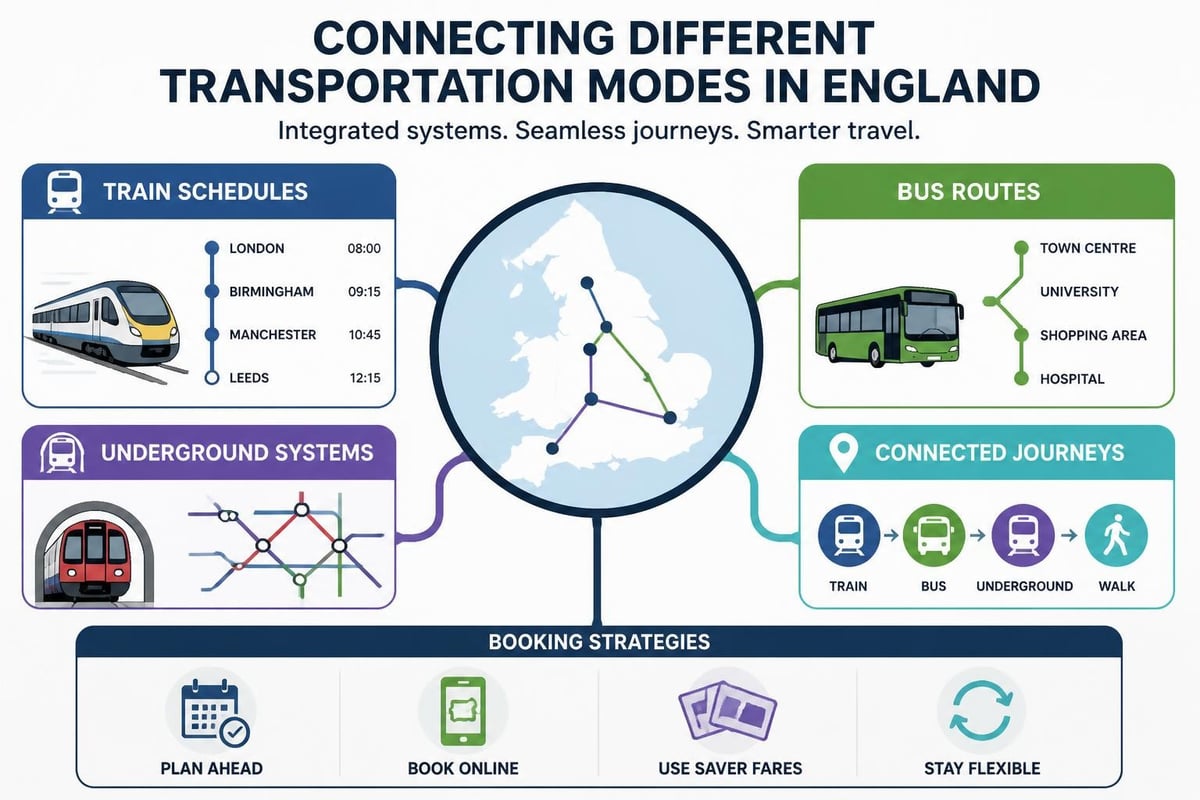
Navigating England's transportation system efficiently is crucial for maximizing your travel experience. The country offers an extensive network of trains, buses, and underground services that connect major cities and remote villages alike.
Train Travel Essentials
England's rail network is one of the most comprehensive in Europe, making trains the preferred choice for intercity travel. Booking tickets in advance can save you up to 70% compared to same-day purchases, with off-peak fares offering the best value for money.
Key train travel strategies include:
- Purchase a railcard if you're traveling extensively (16-25, senior, or two-together cards)
- Book tickets 12 weeks in advance for maximum savings
- Use split-ticketing to reduce costs on longer journeys
- Download train company apps for real-time updates and mobile tickets
The comprehensive travel advice from Road Scholar emphasizes the importance of understanding peak versus off-peak travel times, as prices fluctuate significantly throughout the day.
London Underground and Bus Systems
London's iconic Underground (the Tube) is the fastest way to navigate the capital. An Oyster card or contactless payment card is essential, offering capped daily fares that prevent overspending. The daily cap for zones 1-2 is £8.50 in 2026, making unlimited travel affordable.
| Transport Option | Best For | Average Cost | Tips England Travelers Should Know |
|---|---|---|---|
| Oyster Card | Frequent London travel | £7 deposit, pay-as-you-go | Automatic daily capping, refundable deposit |
| Contactless Card | Occasional visitors | No deposit | Same fares as Oyster, no card management |
| Day Travelcard | Tourist attractions | £15-20 | Unlimited travel, works on most transport |
| National Rail Pass | Multi-city trips | £200-500 | Advance booking essential, flexible routes |
Mastering Cultural Etiquette and Social Norms
Understanding English cultural norms is among the most valuable tips England visitors can learn before arrival. The British are known for their politeness, queue discipline, and subtle communication style.
Queue Culture and Public Behavior
Queuing is practically a national sport in England. Whether waiting for a bus, entering a shop, or ordering at a pub, forming an orderly line is expected and strictly observed. Cutting in line is considered one of the worst social faux pas.
Essential etiquette guidelines:
- Always say "please" and "thank you" in every transaction
- Apologize even when something isn't your fault (it's cultural)
- Respect personal space on public transport
- Keep voices down in public places
- Wait to be seated in restaurants unless signs indicate otherwise
The cultural insights from Lonely Planet highlight that understanding these unwritten rules helps travelers blend in and receive warmer welcomes from locals.
Pub Etiquette and Dining Customs
English pubs are social institutions with their own set of rules. You order and pay at the bar rather than waiting for table service in most traditional pubs. Tipping isn't mandatory but rounding up or adding 10-15% for exceptional service is appreciated.
When dining out, restaurant bills typically include a service charge. Check before adding an additional tip. The standard tipping rate is 10-15% when service isn't included, though it's less obligatory than in the United States.
Weather Preparation and Seasonal Considerations
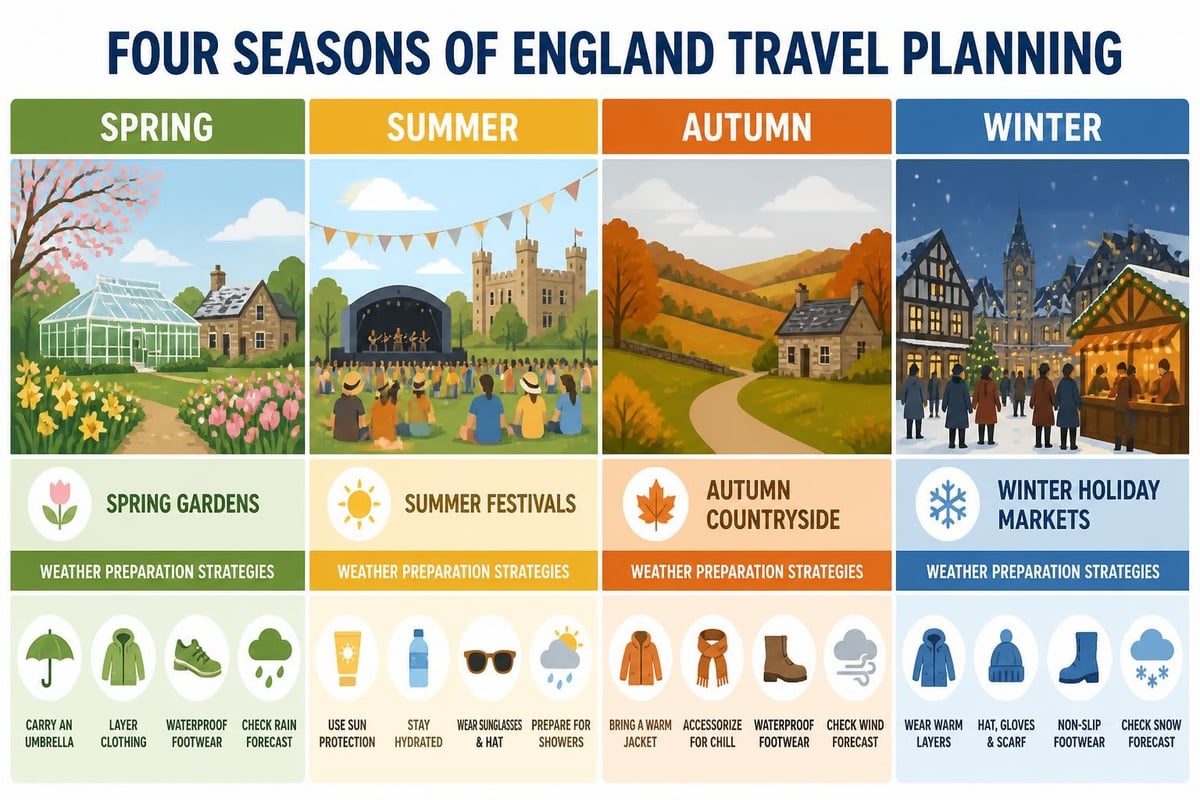
England's weather is famously unpredictable, making proper preparation one of the most practical tips England travelers need. The maritime climate means mild temperatures year-round but frequent rain and sudden changes.
Packing for English Weather
Layering is the golden rule for England. Temperatures rarely reach extremes, but conditions can shift from sunshine to rain within hours. A waterproof jacket should be in your bag regardless of the forecast.
Essential weather-appropriate items:
- Waterproof jacket with hood (breathable fabric preferred)
- Comfortable walking shoes with good traction
- Layers including light sweaters and long sleeves
- Compact umbrella (small enough to carry daily)
- Sunglasses and sunscreen (yes, even in England)
Avoiding common packing mistakes ensures you're prepared without overpacking. The key is versatile pieces that work in multiple weather scenarios.
Best Times to Visit
Each season offers distinct advantages for travelers. Summer (June-August) provides the longest days and warmest weather but attracts peak crowds and premium prices. Spring (April-May) and autumn (September-October) deliver pleasant weather with fewer tourists.
| Season | Temperature Range | Pros | Cons |
|---|---|---|---|
| Spring | 8-15°C (46-59°F) | Blooming gardens, moderate crowds | Unpredictable rain |
| Summer | 15-25°C (59-77°F) | Long days, festivals, best weather | Peak prices, crowded attractions |
| Autumn | 10-18°C (50-64°F) | Beautiful foliage, lower prices | Earlier sunsets, cooler temps |
| Winter | 2-8°C (36-46°F) | Christmas markets, lowest prices | Short days, cold weather |
Budgeting and Money Management
Financial planning ranks among the most important tips England travelers should prioritize. England, particularly London, is one of Europe's more expensive destinations, but strategic planning keeps costs manageable.
Daily Budget Estimates
Budget travelers can explore England on £60-80 daily by staying in hostels, using public transport, and cooking some meals. Mid-range travelers should budget £120-180 daily for hotel accommodations, restaurant meals, and attraction entries. Luxury travelers typically spend £250+ daily.
Money-saving strategies include:
- Eating lunch as your main meal (set lunch menus offer better value)
- Visiting free museums and galleries (most major museums have no admission fee)
- Using contactless payment throughout (better exchange rates than cash)
- Shopping at supermarkets like Tesco or Sainsbury's for snacks and light meals
- Taking advantage of 2-for-1 offers with National Rail tickets
Currency and Payment Methods
England uses the British Pound (GBP), and cash usage has declined significantly. Most establishments accept contactless payments, and many are entirely cashless. Notify your bank before traveling to avoid card blocks, and consider a credit card with no foreign transaction fees.
The planning guidance from Rough Guides recommends carrying a small amount of cash (£50-100) for markets, small shops, and rural areas where card readers might be unavailable.
Exploring Beyond London
While London captivates many visitors, venturing beyond the capital reveals England's true diversity. These tips England explorers use help uncover hidden gems and authentic experiences.
Regional Highlights Worth Visiting
The Cotswolds offers quintessential English countryside with honey-stone villages and rolling hills. Bath combines Roman history with Georgian architecture, while York showcases medieval streets and Viking heritage. The Lake District provides outdoor adventures with stunning mountain scenery.
Top regional destinations:
- Cornwall - Coastal beauty, surfing beaches, seafood
- Peak District - Hiking trails, historic estates, charming villages
- Oxford and Cambridge - University towns, stunning architecture, punting
- Stratford-upon-Avon - Shakespeare's birthplace, theater, Tudor history
- Brighton - Seaside resort, vibrant culture, LGBTQ+ friendly atmosphere
The essential travel guide from NewsHub outlines recommended routes connecting these destinations efficiently.
Day Trip Strategies
England's compact size makes day trips feasible from major cities. From London, Stonehenge, Windsor Castle, and Canterbury are easily accessible. From Manchester, exploring the Peak District or Chester takes less than an hour.
Booking organized tours eliminates transportation hassles and often includes expert guides. However, independent travel offers flexibility and cost savings for confident travelers. Our comprehensive England travel guide provides detailed itineraries for both approaches.
Accommodation Selection and Booking
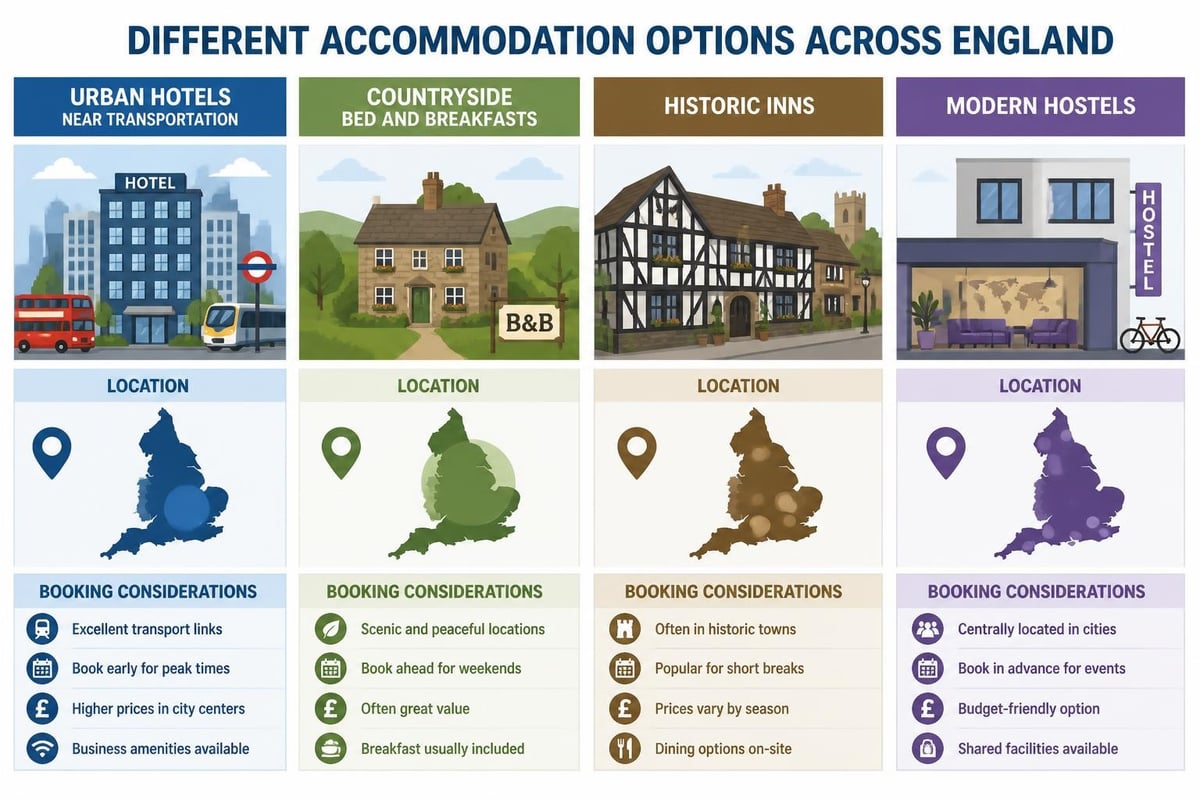
Choosing the right accommodation is crucial among tips England travelers should consider early in planning. Options range from historic coaching inns to modern boutique hotels, each offering distinct experiences.
Accommodation Types and Expectations
Hotels in England vary dramatically in quality and price. Chain hotels provide consistency, while independent properties offer character and local flavor. Book directly with hotels for potential upgrades and better cancellation policies.
Bed and Breakfasts (B&Bs) offer personal touches and hearty breakfasts, perfect for travelers seeking local insights. Hosts often provide excellent tips England visitors won't find in guidebooks.
Hostels aren't just for backpackers anymore. Modern hostels in cities like London, Manchester, and Edinburgh offer private rooms alongside dorms, combining affordability with social atmosphere.
| Accommodation Type | Average Nightly Cost | Best For | Booking Tip |
|---|---|---|---|
| Budget Hotel/Hostel | £25-60 | Solo travelers, backpackers | Book far in advance for London |
| Mid-Range Hotel | £80-150 | Couples, families | Compare prices across platforms |
| Boutique Hotel | £150-250 | Special occasions, luxury seekers | Check for package deals |
| Country B&B | £70-120 | Rural exploration, authentic experiences | Contact directly for best rates |
Location Considerations
In London, staying near a Tube station in zones 1-3 provides convenience without excessive costs. King's Cross, Paddington, and Victoria areas offer excellent transport links. Outside London, city-center locations minimize transportation needs and maximize exploration time.
Food and Dining Experiences
English cuisine has evolved far beyond its outdated reputation, and exploring the food scene is among the most rewarding tips England food enthusiasts can follow. From traditional pub fare to innovative restaurants, the culinary landscape is diverse and exciting.
Traditional Dishes to Try
Full English breakfast includes eggs, bacon, sausages, baked beans, mushrooms, tomatoes, and toast. It's substantial enough to fuel a morning of exploration. Many hotels include this in their room rate, offering excellent value.
Fish and chips remains England's most iconic dish. Coastal towns serve the freshest versions, though quality chippies exist throughout the country. Expect to pay £8-12 for a generous portion.
Sunday roast features roasted meat (beef, lamb, chicken, or pork) with Yorkshire pudding, roast potatoes, vegetables, and gravy. Pubs serve these from noon until early evening on Sundays, typically priced £12-18.
Navigating Dietary Requirements
England accommodates dietary restrictions well in 2026. Most restaurants clearly mark vegetarian, vegan, and gluten-free options. Major cities offer extensive plant-based dining, while rural areas may have limited choices.
Dietary tips include:
- Use apps like Happy Cow for vegan/vegetarian restaurants
- Learn key phrases: "I'm coeliac" or "I have a nut allergy"
- Call ahead to restaurants in rural areas
- Supermarkets offer extensive free-from ranges
- Chain restaurants publish allergen information online
Connectivity and Technology
Staying connected while traveling is essential, and these tips England visitors use ensure seamless communication and navigation throughout your journey.
Mobile Phone and Internet Access
UK networks use different frequencies than some countries, so verify your phone's compatibility. Most modern smartphones work without issues. Purchasing a UK SIM card upon arrival offers the best rates for data and calls.
Connectivity options:
- UK SIM card - Best value for stays over one week (£10-20 for 5-15GB)
- International roaming - Check your carrier's UK rates (often expensive)
- Portable WiFi device - Good for groups sharing data (£5-8 daily)
- Free WiFi only - Budget option but limiting (available in cafes, hotels, stations)
Most cities offer extensive free WiFi in public spaces, cafes, and restaurants. However, having mobile data ensures you can access maps, transportation apps, and booking platforms anywhere.
Essential Apps for England Travel
Navigation apps like Google Maps and Citymapper work excellently in England. Transportation apps including Trainline, National Rail Enquiries, and local bus apps provide real-time updates and mobile tickets. For comprehensive planning resources, check our England travel blog for regularly updated digital tools.
Health and Safety Considerations
England is generally safe for travelers, but taking sensible precautions is among the fundamental tips England visitors should follow. Healthcare, emergency services, and personal safety all require some understanding.
Healthcare and Insurance
England's National Health Service (NHS) provides emergency care to visitors, but non-emergency treatment may incur charges. Travel insurance with medical coverage is strongly recommended and often required for visa applications.
Health essentials:
- Carry prescription medications in original packaging with doctor's note
- Pharmacies (chemists) widely available for minor ailments
- NHS 111 provides free health advice by phone
- European Health Insurance Card (EHIC) still valid for EU citizens
- Private travel insurance covers repatriation and non-emergency care
Personal Safety Tips
England has low violent crime rates, but pickpocketing occurs in tourist areas and on public transport. Keep valuables secure, remain aware of surroundings, and avoid displaying expensive electronics unnecessarily.
Emergency services (police, fire, ambulance) use the number 999 or 112. Both work from any phone, including mobiles without credit. Save these numbers before traveling, though hopefully, you'll never need them.
Maximizing Museum and Attraction Visits
England's museums and historic sites offer incredible value, with many major institutions offering free admission. These tips England culture enthusiasts appreciate help you make the most of these opportunities.
Free Museum Strategy
London's major museums-the British Museum, National Gallery, Natural History Museum, Tate Modern, and Victoria & Albert Museum-charge no admission for permanent collections. Special exhibitions may require tickets, but thousands of artifacts and artworks are freely accessible.
Museum visiting tips:
- Visit weekday mornings to avoid crowds
- Book free entry slots in advance when required
- Allow 2-3 hours minimum for major museums
- Use museum apps for self-guided tours
- Check for late-night openings (often Fridays)
The top activities guide from Rough Guides highlights must-see attractions alongside lesser-known gems worth exploring.
Historic Sites and Heritage Passes
English Heritage and National Trust memberships provide unlimited access to hundreds of historic sites, gardens, and properties. If visiting multiple sites, membership often pays for itself. Day passes for individual sites cost £8-25 depending on the property.
Exploring England successfully combines practical planning with cultural awareness and flexibility to embrace unexpected discoveries. From mastering the transportation network to understanding local customs, these essential insights help travelers navigate with confidence and create authentic, memorable experiences. Whether you're planning your first visit or returning to explore new regions, Awesome Travel Guides provides comprehensive digital resources packed with insider tips, detailed itineraries, and hidden gems that transform ordinary trips into extraordinary adventures.