

Tour Scotland and England: The Ultimate Travel Guide
Planning to tour Scotland and England offers travelers an extraordinary opportunity to experience the best of Britain in one comprehensive journey. These neighboring nations deliver contrasting yet complementary experiences, from Scotland's rugged Highlands and historic castles to England's charming villages and world-class cities. With recent data showing that Scotland has experienced remarkable tourism growth, reporting over seven million overnight trips and nearly £3 billion in visitor spending in 2025, the appeal of combining both destinations has never been stronger. Whether you're drawn to ancient history, stunning landscapes, vibrant cities, or authentic cultural experiences, a well-planned tour provides the framework for an unforgettable British adventure.
Understanding the Geography and Travel Logistics
When you tour Scotland and England, understanding the geographical relationship between these two countries becomes essential for efficient planning. Scotland occupies the northern third of the British mainland, while England comprises the southern and central regions, creating a natural north-south travel corridor.
Transportation Between Regions
The transportation infrastructure connecting Scotland and England offers travelers multiple options suited to different budgets and timeframes. The East Coast Main Line railway provides direct high-speed connections between Edinburgh and London in approximately four and a half hours, while the West Coast Main Line links Glasgow to major English cities like Manchester and London.
Key transportation options include:
- Direct train services with ScotRail and LNER connecting major cities
- Domestic flights between Edinburgh/Glasgow and London, Manchester, Birmingham
- Coach services offering budget-friendly alternatives
- Car rentals providing flexibility for rural exploration
- Organized tour buses for hassle-free multi-destination experiences
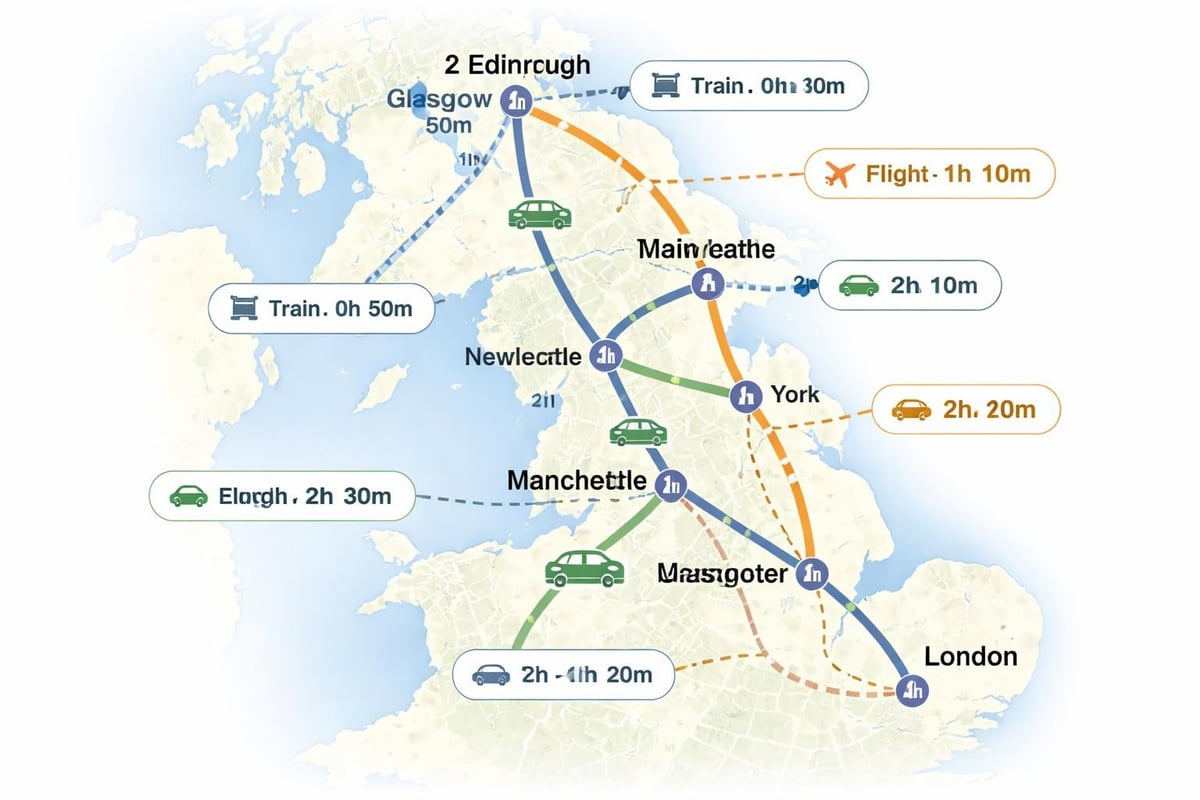
Road trips between the two countries allow for scenic detours through the Lake District, Northumberland, or the Yorkshire Dales. The A1 and M6 motorways serve as primary arteries, while smaller routes reveal hidden countryside gems that enhance any journey.
Essential Destinations in Scotland
Scotland's diverse landscape ranges from cosmopolitan cities to remote island communities, each offering distinct experiences. When planning your itinerary to tour Scotland and England, allocating sufficient time for Scotland's highlights ensures you capture the essence of this remarkable nation.
Edinburgh: The Capital City
Edinburgh stands as Scotland's cultural and political heart, where medieval history meets contemporary sophistication. The Royal Mile connects Edinburgh Castle to the Palace of Holyroodhouse, creating a historic corridor packed with museums, shops, and restaurants.
| Attraction | Duration | Best For |
|---|---|---|
| Edinburgh Castle | 2-3 hours | History enthusiasts |
| Arthur's Seat | 2-4 hours | Hiking and views |
| Royal Yacht Britannia | 2 hours | Maritime history |
| National Museum of Scotland | 3-4 hours | Families and culture lovers |
The city's annual festivals, including the world-famous Edinburgh Fringe, transform the streets into performance spaces each August. Beyond festival season, Edinburgh's year-round attractions include the Scottish National Gallery, vibrant neighborhoods like Stockbridge and Leith, and countless traditional pubs serving authentic Scottish cuisine.
The Scottish Highlands
No trip would be complete without experiencing the Highlands, where dramatic mountains, pristine lochs, and ancient castles define the landscape. Popular routes include the North Coast 500, often called Scotland's answer to Route 66, which circumnavigates the northern Highlands across 516 miles of spectacular scenery.
Highland highlights:
- Loch Ness and Urquhart Castle
- Isle of Skye's otherworldly landscapes
- Glen Coe's dramatic mountain passes
- Cairngorms National Park for outdoor activities
- Inverness as the Highland capital
The region's growing appeal to international visitors has been particularly notable among North American tourists, who appreciate the combination of natural beauty and cultural heritage.
Glasgow and Surrounding Areas
Glasgow offers a grittier, more industrial counterpoint to Edinburgh's refinement. The city's Victorian architecture, world-class museums (many free), and thriving music scene create an energetic urban atmosphere. Day trips from Glasgow reach Loch Lomond, the Trossachs National Park, and Scotland's whisky trail.
Must-See English Destinations
England's remarkable diversity spans from London's metropolitan grandeur to Cornwall's coastal villages, medieval university towns, and pastoral countryside. When you tour Scotland and England together, England's southern position makes it ideal for either beginning or concluding your journey.
London: The Metropolitan Hub
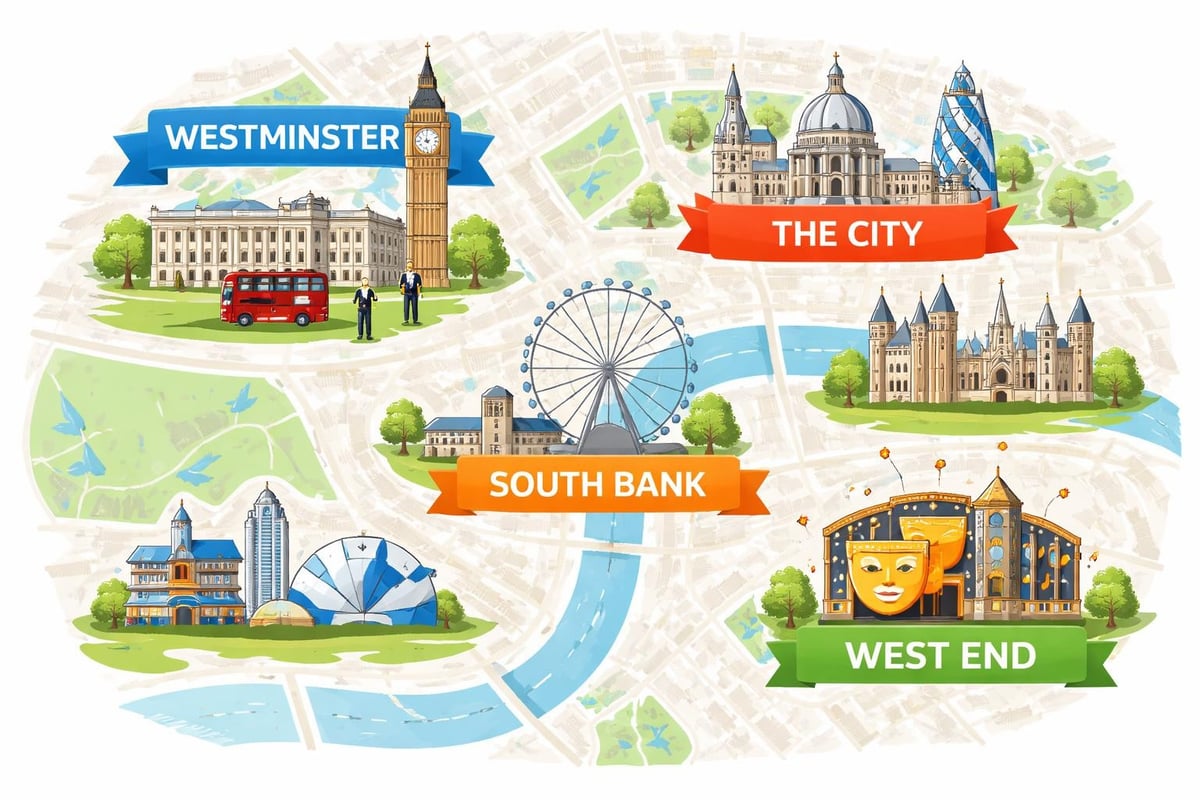
London requires no introduction as one of the world's great cities, yet its depth continually surprises even repeat visitors. The city divides into distinct neighborhoods, each with unique character and attractions.
| Area | Character | Key Attractions |
|---|---|---|
| Westminster | Political and royal | Big Ben, Westminster Abbey, Buckingham Palace |
| South Bank | Cultural and entertainment | London Eye, Tate Modern, Shakespeare's Globe |
| The City | Financial and historic | Tower of London, St. Paul's Cathedral |
| West End | Shopping and theater | Oxford Street, Covent Garden, Leicester Square |
Beyond the iconic landmarks, London's neighborhoods reveal authentic local life. Explore Borough Market for artisanal foods, wander through Notting Hill's colorful streets, or discover contemporary art in Shoreditch galleries.
The Cotswolds and English Countryside
The Cotswolds exemplify quintessential English countryside with honey-colored stone villages, rolling hills, and traditional manor houses. Villages like Bourton-on-the-Water, Bibury, and Castle Combe appear frozen in time, offering peaceful retreats from urban intensity.
Countryside experiences include:
- Walking the Cotswold Way National Trail
- Visiting Blenheim Palace, Winston Churchill's birthplace
- Exploring market towns like Stow-on-the-Wold
- Afternoon tea in historic coaching inns
- Shopping for local crafts and antiques
The Lake District provides another countryside option, particularly for those who tour Scotland and England via the western route. This UNESCO World Heritage site inspired poets like William Wordsworth and continues to draw nature enthusiasts with its dramatic fells and shimmering lakes.
Historic Cities and Cultural Centers
England's historic cities warrant dedicated exploration time. York preserves its Roman and Viking heritage within intact medieval walls, while Bath showcases elegant Georgian architecture surrounding ancient Roman baths. Oxford and Cambridge offer collegiate atmospheres with world-renowned universities dating back centuries.
Each city presents distinct historical narratives and architectural styles. York Minster dominates its city's skyline as one of Europe's finest Gothic cathedrals, while Bath's Royal Crescent represents Georgian urban planning at its zenith. University towns blend academic tradition with youthful energy, creating vibrant cultural scenes.
Planning Your Combined Itinerary
Successfully combining both countries requires strategic planning that balances transportation time, regional diversity, and personal interests. Most travelers allocate between ten days and three weeks to tour Scotland and England comprehensively.
Sample Two-Week Itinerary
A fourteen-day journey allows for meaningful exploration without excessive rushing:
Days 1-3: Edinburgh Begin in Scotland's capital, exploring the Royal Mile, Edinburgh Castle, and Arthur's Seat. Use one day for a day trip to Stirling Castle or the coastal village of North Berwick.
Days 4-6: Scottish Highlands Drive or join a tour to Inverness, stopping at Loch Ness and Glen Coe. Consider adding a day on the Isle of Skye for spectacular scenery.
Day 7: Glasgow Return south through Glasgow, spending an afternoon in Scotland's largest city before continuing to England.
Days 8-9: Lake District or York Break your journey south with either Lake District hiking or York's historic attractions, depending on your route preference.
Days 10-12: London Dedicate three full days to London's museums, landmarks, and neighborhoods. Consider adding a day trip to Windsor Castle or Greenwich.
Days 13-14: Cotswolds or Bath Conclude with countryside relaxation in the Cotswolds or cultural exploration in Bath before departing.
Seasonal Considerations
Britain's temperate maritime climate means you can tour Scotland and England year-round, though each season offers distinct advantages and challenges.
| Season | Advantages | Considerations |
|---|---|---|
| Spring (March-May) | Blooming gardens, fewer crowds | Variable weather, some attractions closed |
| Summer (June-August) | Longest days, warmest weather | Peak crowds, higher prices |
| Autumn (September-November) | Fall colors, moderate temperatures | Shorter days, unpredictable weather |
| Winter (December-February) | Festive atmosphere, off-season rates | Cold temperatures, limited daylight |
Summer provides optimal weather and extended daylight hours, particularly valuable in Scotland where midsummer days stretch past 10 PM. However, popular attractions experience peak crowding, and accommodation prices reach annual highs. Autumn offers a sweet spot with manageable crowds, pleasant temperatures, and stunning fall foliage, particularly in Scotland's Highlands and England's countryside.
Practical Tips for a Successful Journey
Accommodation Strategies
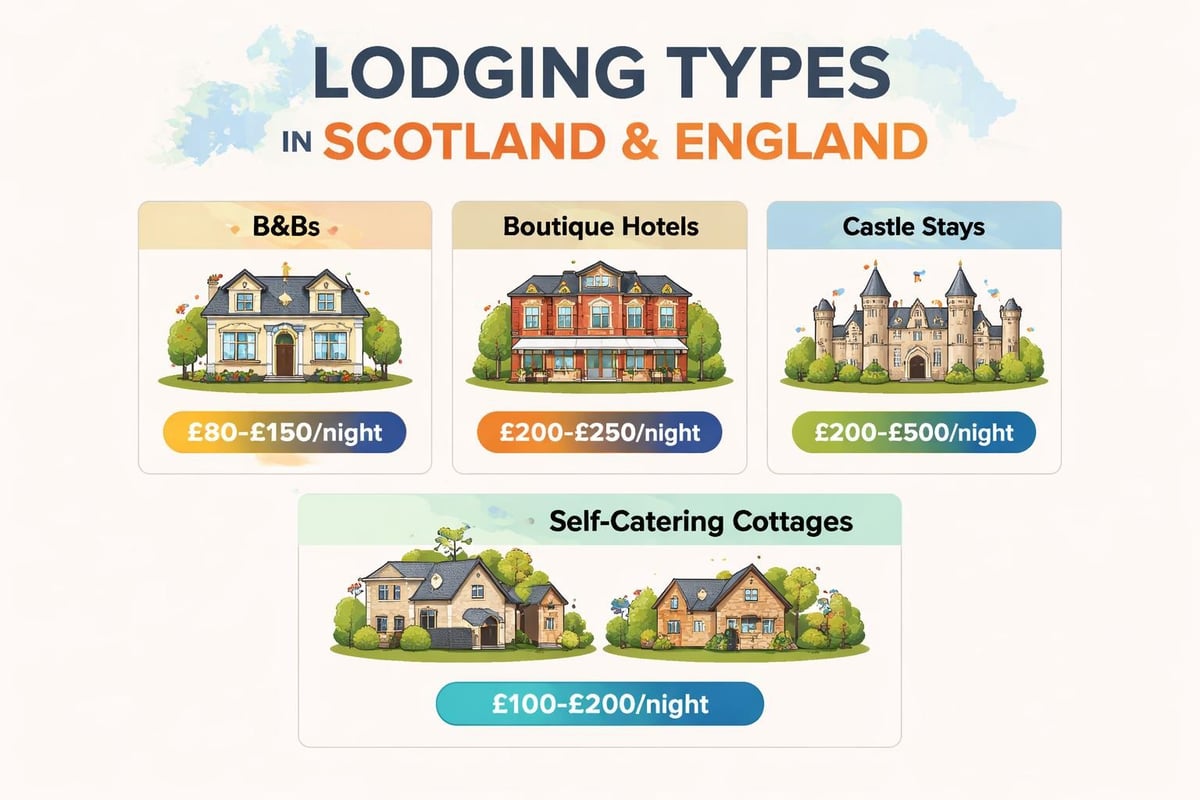
Accommodation options span from budget hostels to luxury hotels, with mid-range B&Bs offering particularly good value and local hospitality. Book major city accommodations well in advance, especially for Edinburgh during festival season (August) and London year-round.
Accommodation types to consider:
- Traditional B&Bs for personal service and local insights
- Chain hotels for consistency and loyalty points
- Boutique hotels in converted historic buildings
- Self-catering apartments for longer stays
- Historic castle hotels for special occasions
Rural areas often require advance booking during summer weekends, while cities offer more last-minute availability during off-peak periods. The Awesome Guide to Scotland and Awesome Guide to England provide detailed accommodation recommendations suited to various budgets and travel styles.
Budget Planning
Daily costs vary significantly between cities and countryside, with London commanding premium prices across all categories. A moderate daily budget including accommodation, meals, local transportation, and admission fees typically ranges from £100-200 per person, excluding long-distance transportation.
Cost-saving strategies include:
- Purchasing rail passes for multiple journeys
- Visiting free museums and galleries (common in both countries)
- Shopping at supermarkets for picnic supplies
- Booking accommodations with breakfast included
- Taking advantage of combination attraction tickets
Many of Scotland's most visited paid attractions offer family tickets or annual passes that provide value for extended visits. English Heritage and National Trust memberships grant access to hundreds of historic properties across both countries.
Cultural Insights and Etiquette
Understanding local customs enhances your experience when you tour Scotland and England. While both share similarities, regional differences exist in dialect, cuisine, and cultural attitudes.
The Scottish take pride in their distinct national identity, separate from broader British culture. Avoid referring to Scotland as England or assuming they're interchangeable. Scottish hospitality runs deep, particularly in rural areas where locals often go out of their way to assist visitors.
English reserve sometimes manifests as formality, though this stereotype varies by region. Queueing culture remains sacred, particularly in London, where cutting in line constitutes a serious social transgression. Pub culture provides social lubrication, with traditional pubs serving as community gathering spaces throughout both countries.
Food and Drink Experiences
Culinary exploration adds another dimension to touring both countries. Scotland's traditional dishes include haggis, smoked salmon, Cullen skink (seafood soup), and shortbread, while England offers fish and chips, Sunday roasts, cream teas, and regional specialties like Yorkshire pudding.
Whisky and Pub Culture
Scotland's whisky distilleries welcome visitors throughout Speyside, Islay, and the Highlands. Many offer tours explaining the distillation process followed by tastings of their signature expressions. The whisky trail provides an alternative touring focus for spirits enthusiasts.
English pubs range from ancient coaching inns to modern gastropubs serving elevated cuisine. Traditional pub etiquette involves ordering at the bar rather than waiting for table service, and buying rounds when drinking in groups. Real ale enthusiasts find Britain's pub culture particularly rewarding, with cask-conditioned beers unavailable elsewhere.
Maximizing Your Experience with Digital Resources
Modern digital travel guides transform how visitors tour Scotland and England by providing instant access to updated information, insider tips, and detailed itineraries. Unlike traditional guidebooks that quickly become outdated, comprehensive digital resources adapt to changing circumstances and offer interactive features.
Quality digital guides include detailed maps, transportation instructions, accommodation recommendations across various budgets, and lesser-known attractions that escape mainstream tourism guides. They serve as portable reference libraries accessible whenever questions arise during your journey.
The resources available through Awesome Travel Guides provide exactly this type of comprehensive, regularly updated information packaged for easy mobile access. Their expert-curated content helps travelers discover hidden gems while ensuring they don't miss essential highlights.
Making the Most of Day Trips and Excursions
Both Scotland and England reward travelers who venture beyond primary cities. Day trips and short excursions add variety while providing insights into regional character.
Top day trips from major cities:
From Edinburgh: St. Andrews (golf's birthplace), Stirling Castle, Rosslyn Chapel From Glasgow: Loch Lomond, Isle of Arran, Burns Country in Ayrshire From London: Stonehenge and Bath, Oxford, Cambridge, Brighton From York: Castle Howard, Yorkshire Dales, North York Moors
Many excursions combine easily, such as pairing Stonehenge with Bath or visiting multiple Cotswolds villages in a single day. Organized tours provide convenience for complex logistics, while independent travelers gain flexibility with rental cars.
Understanding Regional Differences
Despite sharing the island of Great Britain, Scotland and England maintain distinct identities shaped by separate historical trajectories, legal systems, and cultural traditions. Recognizing these differences demonstrates respect and enhances cultural understanding.
Scotland's education and legal systems differ from England's, operating under separate frameworks established before and maintained after the 1707 Acts of Union. The Scottish Parliament, reconvened in 1999, exercises devolved powers over many domestic policy areas. These institutional differences reflect and reinforce Scotland's national consciousness.
Regional accents and dialects vary dramatically across both countries. Glasgow's working-class accent differs markedly from Edinburgh's more refined tones, while England's regional accents distinguish Geordie (Newcastle) from Scouse (Liverpool), Yorkshire, and Cockney dialects. Don't worry if you occasionally struggle to understand local speech, as even native Britons sometimes face comprehension challenges with strong regional accents.
Touring Scotland and England together creates a comprehensive British experience that showcases the island's remarkable diversity, from Highland wilderness to metropolitan sophistication. With proper planning, efficient logistics, and quality resources, you can craft an itinerary that balances iconic landmarks with authentic local experiences. Whether you're drawn to ancient castles, dramatic landscapes, world-class museums, or vibrant cities, both countries deliver unforgettable moments that justify the journey. Let Awesome Travel Guides serve as your digital companion, providing the detailed insights and practical tips that transform a good trip into an extraordinary adventure across Britain's most captivating destinations.