

Tourist Guide to Italy: Your Essential 2026 Handbook
Imagine wandering through sun-drenched vineyards in Tuscany, marveling at the ancient ruins of Rome, and savoring espresso in bustling Milan piazzas. Italy in 2026 promises even more wonders for curious travelers.
This tourist guide to italy is your essential companion for the coming year. Packed with expert insights, practical tips, and local secrets, it will help you experience Italy beyond the ordinary. Whether you dream of exploring iconic cities, discovering hidden villages, or tasting the best regional cuisine, this handbook covers it all.
Inside, you’ll find step-by-step planning advice, cultural etiquette, unmissable destinations, and the latest travel trends. Ready to plan your unforgettable Italian adventure?
Must-See Destinations in Italy for 2026
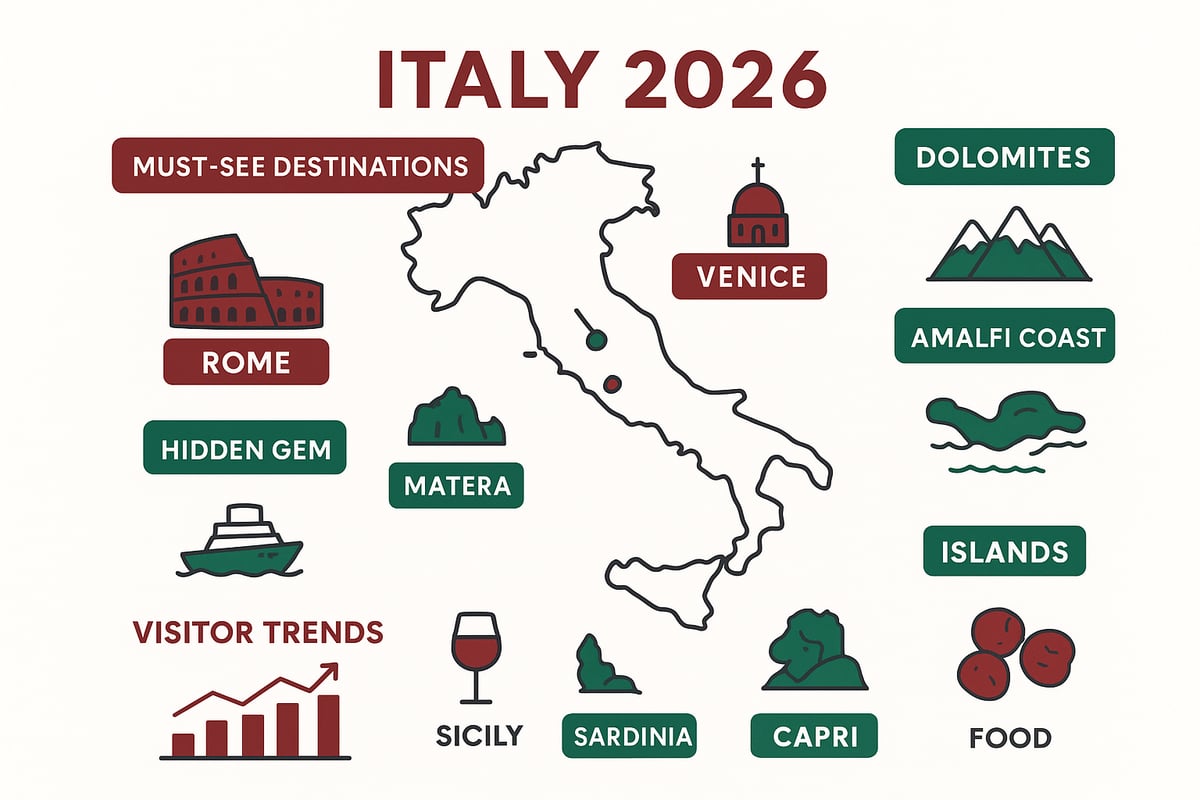
Italy’s landscapes are as varied as its history, from bustling cities to tranquil coastlines. Planning your dream trip with the right tourist guide to italy ensures you experience both timeless icons and hidden treasures. Below, explore the essential destinations that will shape your 2026 adventure.
Classic Italian Cities: Rome, Florence, Venice, Milan
No tourist guide to italy is complete without the legendary cities that define la dolce vita. Rome’s Colosseum and Vatican draw millions, while Florence’s Uffizi Gallery and Duomo showcase Renaissance brilliance. Venice enchants with St. Mark’s Basilica and winding canals, and Milan dazzles with La Scala and modern fashion.
In 2026, major exhibitions and cultural events will animate these cities. Each city has a distinct character: Rome is timeless, Florence is artistic, Venice is romantic, and Milan is cosmopolitan. Recent statistics highlight their enduring appeal, with Rome alone welcoming over 10 million visitors yearly. According to Italy's tourism record in 2025, Italy is set to break new records in international arrivals and spending.
Visiting in spring or autumn helps you avoid peak crowds. Early morning entries and pre-booked tickets are invaluable for a smooth journey.
Hidden Gems and Off-the-Beaten-Path Towns
A well-rounded tourist guide to italy encourages travelers to venture beyond the usual routes. Regions like Umbria, Le Marche, Abruzzo, and Puglia offer peaceful escapes and authentic charm. Medieval villages such as Civita di Bagnoregio, Matera, and Alberobello let you step back in time.
Local festivals—like the Infiorata flower carpets or Matera’s lantern-lit processions—immerse you in tradition. Data shows small-town tourism has surged by 30 percent since 2022, revealing the growing appeal of lesser-known destinations. Matera, after its role as a European Capital of Culture, now welcomes more visitors seeking its unique cave dwellings and artisan shops.
Exploring these areas rewards you with fewer crowds, lower costs, and truly memorable encounters with local culture.
Italy’s Breathtaking Natural Wonders
For nature lovers, the tourist guide to italy highlights landscapes that inspire awe. Marvel at the jagged peaks of the Dolomites, the dramatic cliffs and turquoise waters of the Amalfi Coast, and the serene beauty of Lake Como. Sardinia’s beaches and crystal-clear seas invite relaxation and adventure.
Outdoor enthusiasts can hike, cycle, or kayak amidst some of Europe’s most stunning scenery. Italy’s national parks and UNESCO sites, like the Cinque Terre, are committed to sustainable tourism, limiting daily visitors and promoting conservation.
Seasonal highlights abound: ski the Alps in winter, witness wildflower blooms in spring, or bask on the coasts in summer. Ecotourism is on the rise, so consider responsible travel choices to help preserve these wonders.
Italy’s Islands: Sicily, Sardinia, and More
No tourist guide to italy would be complete without Italy’s islands, each with its own identity. Sicily’s ancient ruins, lively markets, and street food scenes are legendary. Sardinia offers rugged landscapes and unique traditions, while smaller islands like Capri, Ischia, Elba, and Lampedusa promise a slower pace.
Ferry networks are expanding for 2026, making island hopping more convenient than ever. Sample arancini in Palermo, explore Greek temples in Agrigento, or unwind on Sardinia’s Costa Smeralda.
Craft your itinerary to mix cultural heritage with beach escapes. Island exploration reveals a side of Italy that feels worlds away from the mainland.
Regional Food and Wine Destinations
A tourist guide to italy must spotlight the country’s culinary heartlands. Emilia-Romagna tempts with Parmigiano and balsamic vinegar, Tuscany’s rolling hills are famed for Chianti, and Piedmont is home to truffles and Barolo wines. Food festivals and bustling markets let you taste regional specialties at their freshest.
Truffle hunting in Alba and vinegar tours in Modena are unforgettable experiences. Prosecco Hills offer sparkling tastings, while farmers’ markets reveal authentic flavors. Food tourism is booming, with travelers seeking hands-on classes and vineyard visits.
Indulge in local cuisine and wine, and you’ll soon understand why Italy’s food culture is as celebrated as its art and history.
With this comprehensive tourist guide to italy, you’re ready to design a 2026 journey that blends classic icons with new discoveries, ensuring every moment is unforgettable.
Step-by-Step Planning for Your 2026 Italy Trip
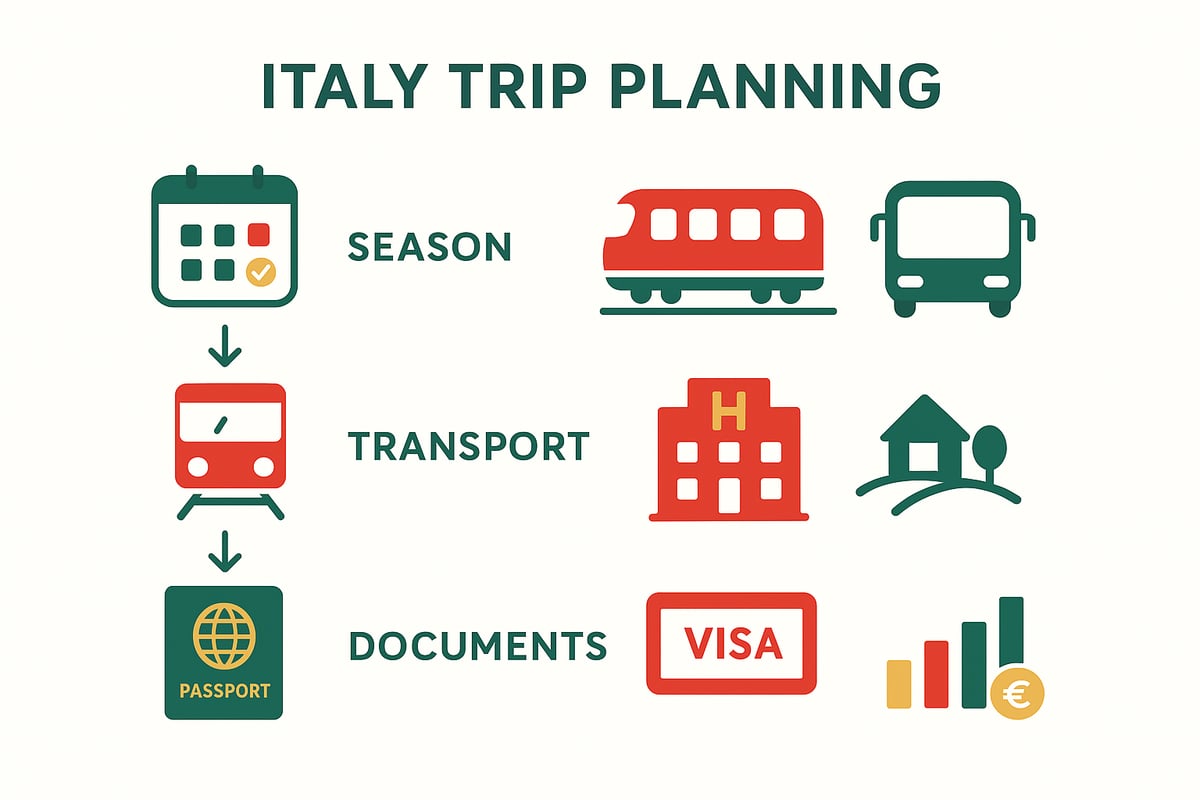
Planning your Italian adventure in 2026 requires careful consideration of timing, transport, lodging, paperwork, and finances. This section of the tourist guide to italy breaks down each step so you can travel with confidence, avoid common mistakes, and make the most of your journey. Whether you are a first-time visitor or a returning explorer, following these essential steps will help ensure a smooth, memorable experience.
When to Visit: Seasonal Guide
Choosing the best time to explore Italy is a vital first step in any tourist guide to italy. Spring (April to June) and autumn (September to October) offer pleasant weather, blooming landscapes, and fewer crowds. Summer brings bustling cities, lively festivals like the Venice Carnival, and packed coastal resorts. Winter reveals a quieter side, perfect for skiing in the Alps or enjoying festive markets.
Review these seasonal highlights:
- Spring: Wildflowers, mild temperatures, fewer lines at attractions.
- Summer: Long days, music festivals, but higher prices and crowds.
- Autumn: Harvest festivals, wine events, beautiful foliage.
- Winter: Holiday celebrations, lower costs, snowy mountain escapes.
Check local event calendars for 2026 to align your visit with unique festivals or avoid national holidays when services may be limited.
Getting Around: Transportation in Italy
An efficient transportation plan is essential in any tourist guide to italy. Italy’s public transport network is extensive, connecting cities and regions with high-speed trains, buses, and flights. Trenitalia and Italo offer frequent, fast rail service, with new routes and reduced times expected in 2026, such as Milan to Rome in under three hours.
Consider these options:
- Trains: Best for intercity travel; book early for savings.
- Buses: Reach smaller towns not served by rail.
- Domestic flights: Useful for long distances or island connections.
- Rental cars: Ideal for rural regions; beware of ZTL zones in cities.
Plan routes in advance, especially during peak seasons, and check for 2026 updates on high-speed rail and regional connections.
Booking Accommodation: Hotels, Agriturismos, and More
Selecting the right place to stay is a cornerstone of every tourist guide to italy. Options range from luxury hotels and charming B&Bs to rustic agriturismos and modern vacation rentals. Agriturismos, or countryside farm stays, offer authentic local experiences and have gained popularity for their hospitality and cuisine.
Accommodation types:
| Type | Features |
|---|---|
| Hotel | Full service, amenities |
| B&B | Cozy, personal touch |
| Agriturismo | Rural, farm-to-table |
| Vacation rental | Space, flexibility |
Trends for 2026 include a rise in boutique and eco-friendly properties. Average nightly rates vary, with major cities commanding higher prices, so book early for the best selection and value.
Essential Documents and Entry Requirements
No tourist guide to italy is complete without a checklist for travel documents. Ensure your passport is valid for at least six months beyond your stay. Most non-EU travelers will need to register through the new ETIAS system, launching for US and UK citizens in 2026. Schengen visa rules may apply depending on your nationality.
Remember:
- Passport: Check expiration date.
- Visa/ETIAS: Apply online before arrival if required.
- Insurance: Health and travel coverage is strongly recommended.
- Health protocols: Confirm any ongoing requirements for COVID-19 or other health measures.
Check official government resources ahead of your trip for the latest entry requirements and updates.
Budgeting and Money Matters
Managing your finances is central to the tourist guide to italy. Average daily costs vary: budget travelers might spend €70–€100, while mid-range and luxury options can reach €200–€400 per day. Use ATMs for best exchange rates, and note that contactless payments are widely accepted, especially in cities.
Key budgeting tips:
- Plan for regional price differences: Northern cities tend to be pricier.
- Tipping: Service is usually included, but small tips are appreciated.
- Cash vs. card: Many places accept cards, but carry cash for small towns.
For more in-depth budgeting strategies, check out How to Plan a Budget-Friendly Adventure for digital guide tips and saving advice. Track expenses, set a daily budget, and enjoy Italy without financial stress.
Cultural Insights and Italian Etiquette
Understanding Italy’s rich cultural traditions is key to an authentic experience. This section of our tourist guide to italy uncovers local etiquette, language tips, and the customs that make each visit memorable.
Navigating Italian Customs and Social Norms
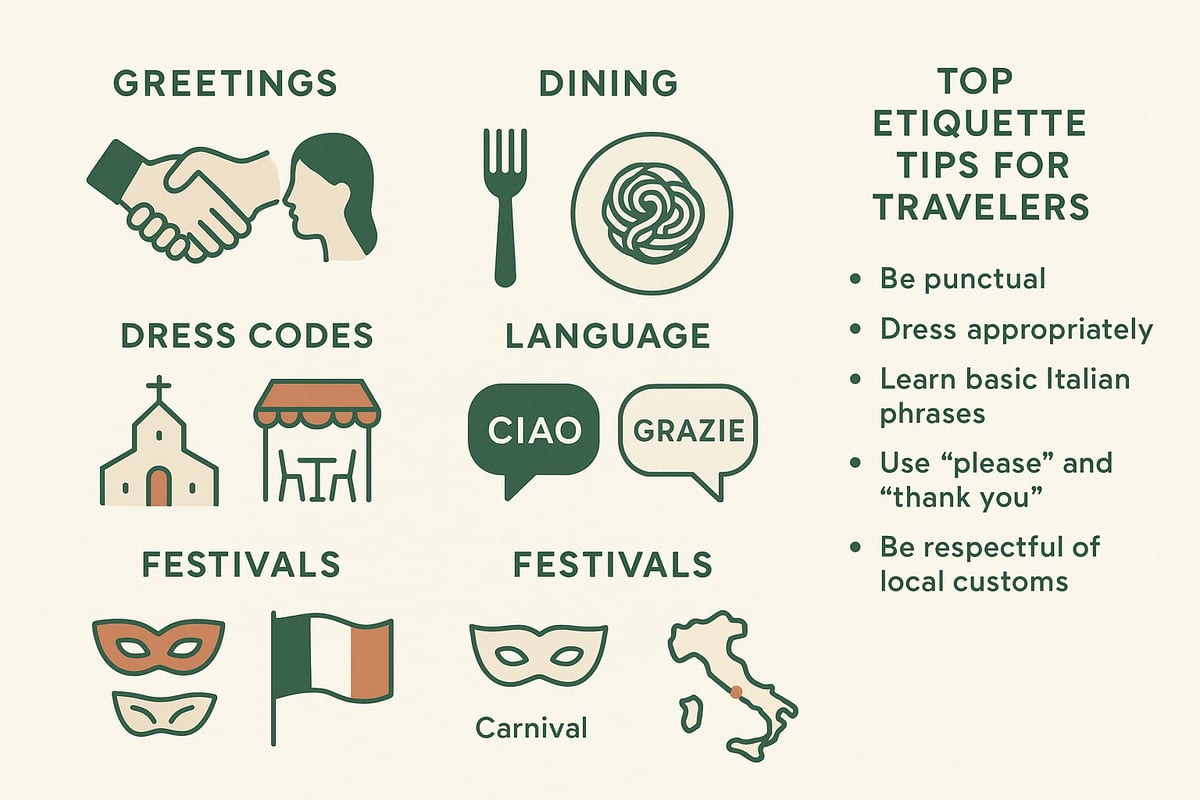
Italians value warmth, respect, and tradition in daily life. When meeting someone, formal greetings such as a handshake or “Buongiorno” are the norm, while close friends might exchange a light cheek kiss. Dining etiquette is important—wait to be seated, keep elbows off the table, and never ask for cheese on seafood pasta.
Dress codes are observed, especially when visiting churches or upscale restaurants. Shoulders and knees should be covered in religious sites, and smart attire is preferred for evening dining. Avoiding faux pas in local trattorias means following the flow of the meal and not rushing. For a deeper dive into cultural etiquette, consult The Awesome Guide to Italy, which offers in-depth advice for any tourist guide to italy.
Language Tips: Communicating in Italy
While many Italians in tourist areas speak English, learning a few Italian phrases will enrich your journey. Try simple greetings like “Ciao” (hello/goodbye), “Per favore” (please), and “Grazie” (thank you). In rural regions, English is less common, so translation apps or a phrasebook are helpful.
Using even basic Italian phrases shows respect and often leads to warmer interactions. Travelers relying on a tourist guide to italy should practice key expressions for ordering food, asking directions, and showing gratitude. A little effort goes a long way in building connections.
Do’s and Don’ts for Respectful Tourism
Italy’s heritage sites and traditions are precious. Always follow posted rules at monuments, avoid touching artifacts, and respect “no photo” signs. When photographing people, ask permission—especially during festivals or in small towns.
Be mindful of environmental guidelines, such as recycling and beach rules, to support sustainable travel. Some places, like Venice, have implemented fines for inappropriate behavior, including sitting on church steps or swimming in canals. A tourist guide to italy encourages visitors to be aware, courteous, and responsible in every region.
Festivals, Holidays, and Local Celebrations
Italy’s calendar is filled with vibrant festivals, from the masked magic of Carnevale in Venice to the historic Palio di Siena horse race. Regional differences mean each celebration has unique customs, foods, and costumes. Participating respectfully means observing local traditions and joining with curiosity.
During Holy Week in Rome, visitors can witness solemn processions and special masses. Many festivals are open to travelers, and a tourist guide to italy will help you find the best ways to join in authentically and respectfully.
Top Experiences and Unique Activities in Italy
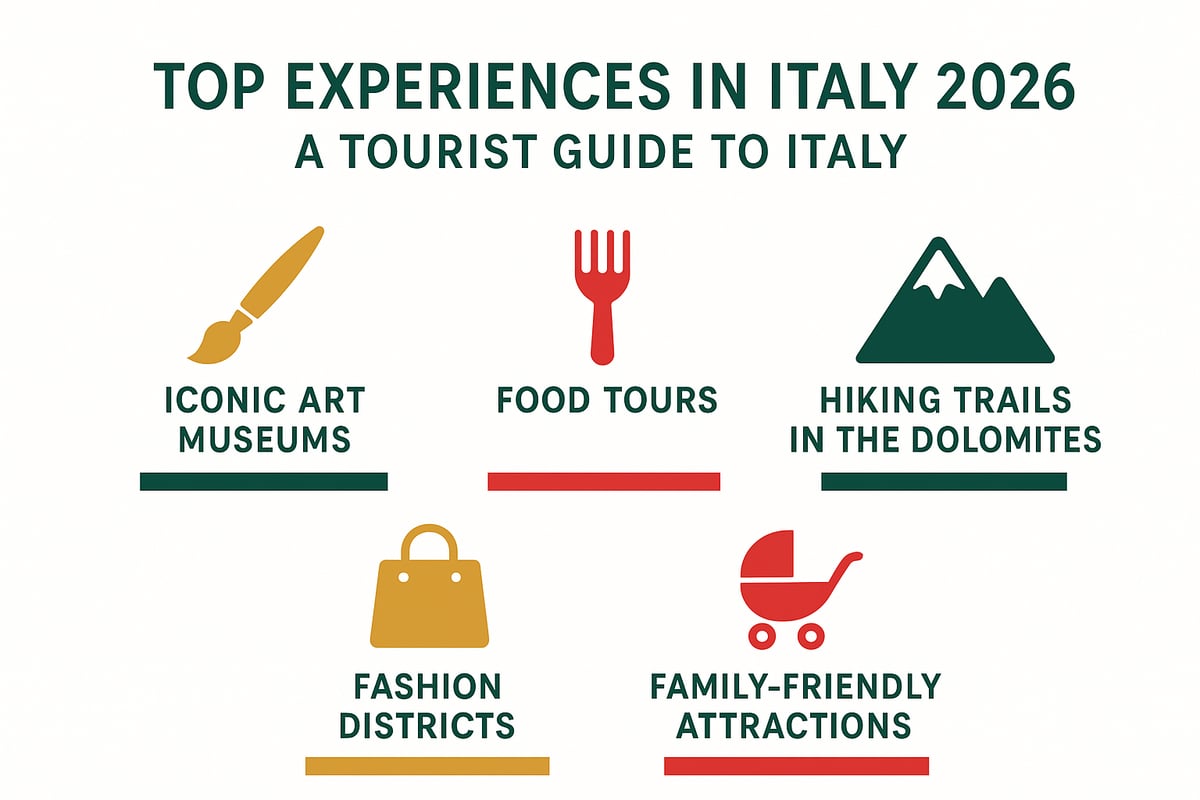
Italy is a country where every traveler finds something extraordinary. The tourist guide to italy promises a wealth of experiences, from world-class museums to lively markets and breathtaking outdoor adventures. Whether you are a history buff, a foodie, or traveling with family, there is a unique activity waiting for you.
Art, History, and Architecture
Italy’s legendary art and architecture draw millions each year. The tourist guide to italy would not be complete without a visit to the Uffizi Gallery in Florence, home to Botticelli’s masterpieces, or the Accademia, where Michelangelo’s David stands. Wander through the ruins of Pompeii or Herculaneum for a glimpse into ancient Roman life.
Rome’s Colosseum and the Roman Forum anchor the capital’s historic core, while Venice offers the splendor of St. Mark’s Basilica and intricate palazzos. Recent statistics confirm Italy’s enduring appeal, with Italy's 2024 tourism statistics showing millions of visitors exploring these treasures annually.
For architecture lovers, UNESCO World Heritage sites abound. From Renaissance churches to Baroque piazzas, Italy’s artistry is on display in every region.
Culinary Adventures: Cooking Classes, Food Tours, Markets
No tourist guide to italy is complete without diving into the country’s vibrant food scene. Join a street food tour in Palermo and savor arancini and cannoli, or sign up for a pasta-making class in Bologna, where you can learn to craft tagliatelle by hand.
Visit bustling markets, like Florence’s Mercato Centrale, for fresh produce, cheeses, and regional specialties. Wine enthusiasts can enjoy tastings in the rolling hills of Tuscany or Piedmont. Hands-on culinary experiences are growing in popularity, with more travelers seeking to learn from local chefs.
Culinary adventures not only delight your taste buds but also offer insight into Italy’s rich traditions and regional diversity.
Outdoor and Adventure Activities
For those seeking adventure, the tourist guide to italy highlights some of Europe’s most stunning landscapes. The Dolomites invite hikers and climbers to explore dramatic peaks and scenic trails, while Tuscany’s gentle hills are perfect for cycling.
On the Amalfi Coast, sailing trips reveal hidden coves and turquoise waters. Winter brings skiing in the Alps, while Sardinia’s crystal-clear seas attract divers from around the world. Via Ferrata routes, especially in the north, offer safe yet exhilarating mountain experiences.
Guided excursions are widely available, making outdoor adventures accessible for all skill levels. Italy’s natural beauty is an essential part of any journey.
Shopping in Italy: Fashion, Crafts, and Souvenirs
Shopping is a highlight in any tourist guide to italy. Milan is the epicenter of high fashion, boasting flagship stores and designer boutiques. Florence’s artisan markets are perfect for finding handmade leather goods, jewelry, and ceramics.
Elsewhere, Venice’s Murano glass and Burano lace make memorable souvenirs. For authentic finds, explore local markets or independent shops in historic districts like Navigli in Milan.
Tax-free shopping is available for non-EU residents, and many retailers offer assistance with paperwork. Bring home a piece of Italian craftsmanship as a memento of your travels.
Family-Friendly and Accessible Travel
Italy welcomes families with a range of attractions designed for all ages. The tourist guide to italy covers stroller-friendly sites in Rome, interactive museums in Florence, and beach resorts along the Adriatic. Accessibility has improved, with many museums and public spaces now accommodating visitors with mobility needs.
Recent reports, such as Italy's tourism growth in 2024, highlight a rise in family and accessible tourism. Parks, aquariums, and cultural workshops ensure that children and adults alike are engaged and entertained.
Plan ahead for smooth experiences, and embrace Italy’s warm, inclusive hospitality.
Practical Tips for a Smooth Italian Journey
Traveling through Italy in 2026 can be effortless and enjoyable when you come prepared with the right information. This practical section of the tourist guide to italy ensures you have actionable tips for safety, packing, staying connected, and traveling responsibly. Let’s equip you for a seamless Italian adventure.
Staying Safe and Healthy in Italy
Safety is a top priority for any traveler. Italy is generally safe, but petty theft, especially pickpocketing, can occur in crowded tourist spots like Rome’s Termini Station or Florence’s Duomo. Always keep an eye on your belongings and use anti-theft bags.
Here are essential safety tips from the tourist guide to italy:
- Save the emergency number 112 in your phone.
- Be cautious with street vendors and unofficial taxis.
- Avoid displaying expensive items in public.
Health care in Italy is high quality, but travel insurance is recommended for peace of mind. For more in-depth advice, consult the Travel Safety Handbook before your trip.
Packing Essentials and What to Wear
Packing smartly makes your journey smoother and helps you blend in with locals. The tourist guide to italy suggests packing layers, as weather can vary between regions and seasons. Modest attire is required for churches, so a scarf or shawl is handy.
Essentials to include:
- Comfortable walking shoes
- A universal adapter
- Lightweight rain jacket
- Reusable water bottle
For a comprehensive checklist tailored to Italy’s climate and culture, use the Packing Guide for Travelers. Planning ahead means you’re prepared for both city strolls and countryside adventures.
Connectivity: Internet, SIM Cards, and Apps
Staying connected is vital for navigation, communication, and bookings. Wi-Fi is widely available in hotels and cafés, though speeds may vary. The tourist guide to italy recommends purchasing an Italian SIM card for reliable mobile data, with options from TIM, Vodafone, and WindTre.
Must-have travel apps include:
- Trenitalia for train schedules and tickets
- Google Maps for navigation
- Duolingo for language basics
- WhatsApp for messaging
Download offline maps and key apps before arrival to avoid roaming charges. Digital connectivity will make your Italian trip stress-free.
Sustainable and Responsible Travel in Italy
Responsible tourism is more important than ever. The tourist guide to italy encourages travelers to choose eco-friendly accommodations and support local businesses. Many Italian destinations, like Cinque Terre, have introduced sustainability initiatives to protect their unique environments.
Sustainable travel tips:
- Use public transport or bikes when possible
- Refill a reusable bottle at public fountains
- Dispose of waste properly and recycle
- Respect local customs and natural spaces
By making mindful choices, you help preserve Italy’s heritage and contribute positively to the communities you visit.
As you start planning your Italian adventure for 2026, having practical insights and up to date tips can make all the difference. From the vibrant streets of Rome and Florence to the quiet charm of hidden villages and the breathtaking coastlines, this guide aims to help you experience Italy authentically and seamlessly. If you want even more insider advice, curated itineraries, and local secrets at your fingertips, you might enjoy exploring our digital travel guides. They’re designed to help you travel with confidence and uncover the best of every destination.
Explore Guides