

Travel Through Germany: Your Essential Planning Guide
Germany stands as one of Europe's most captivating destinations, offering travelers a perfect blend of historical significance, cultural richness, and modern efficiency. From the fairy-tale castles of Bavaria to the vibrant streets of Berlin, when you travel through Germany, you'll discover a nation that masterfully balances tradition with innovation. Whether you're drawn to medieval towns, world-class museums, stunning natural landscapes, or authentic culinary experiences, Germany delivers unforgettable moments at every turn. This comprehensive guide will help you navigate Germany's diverse regions, understand transportation options, and uncover experiences that go beyond typical tourist attractions.
Planning Your German Adventure
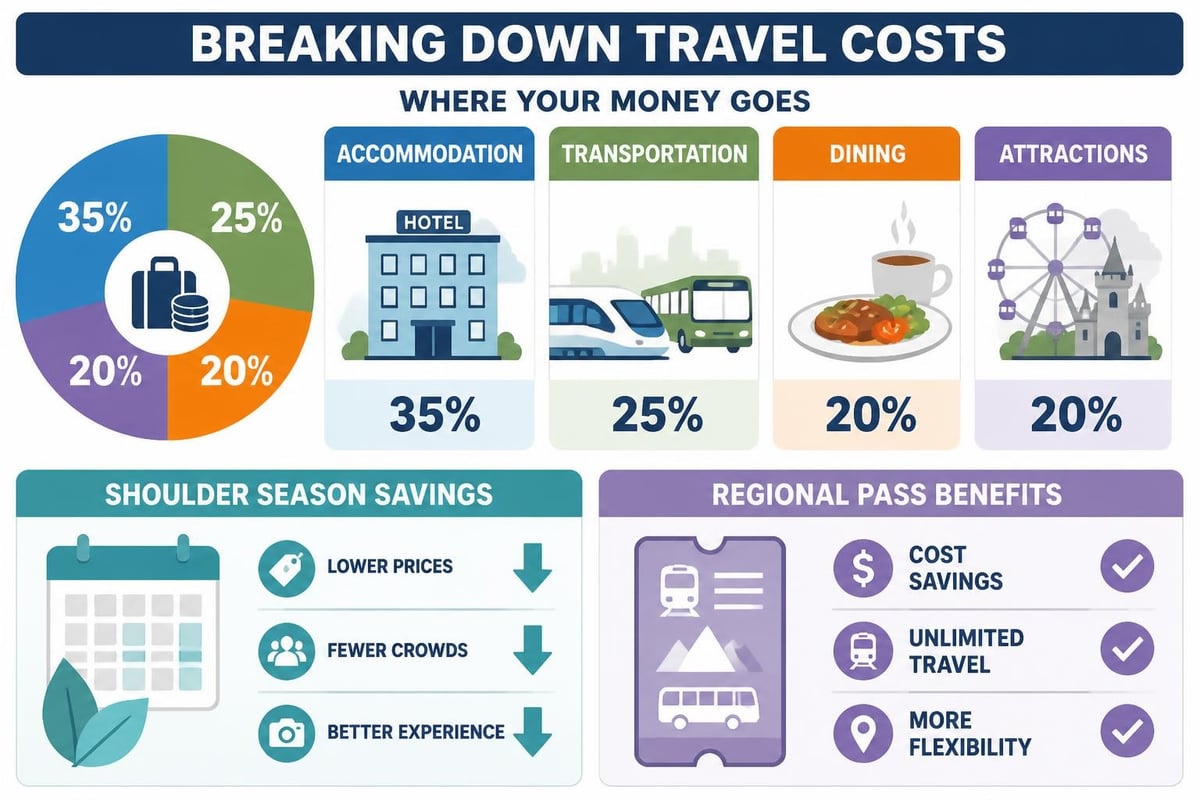
Timing plays a crucial role when you travel through Germany, as each season offers distinct advantages. The shoulder seasons of April to May and September to October provide ideal conditions with pleasant weather, fewer crowds, and more affordable accommodation rates. Summer months bring festivals and outdoor activities but also peak tourist numbers and higher prices.
Budget Considerations and Cost Management
Understanding the financial aspects of your trip ensures you can enjoy Germany without overspending. Daily costs vary significantly depending on your travel style and chosen destinations.
| Expense Category | Budget Range | Mid-Range | Luxury |
|---|---|---|---|
| Accommodation | €25-50 | €80-120 | €200+ |
| Meals | €15-25 | €40-60 | €100+ |
| Transportation | €10-20 | €30-50 | €80+ |
| Attractions | €5-15 | €20-40 | €60+ |
Those seeking to travel in Germany on a budget should consider staying in hostels, using regional train passes, and dining at local bakeries and cafeterias. Many museums offer free admission on specific days, and city walking tours provide excellent value for money.
Essential Documentation and Practical Preparations
Before embarking on your journey, ensure you have all necessary documentation in order. EU citizens require only a valid ID card, while most other nationalities need a passport valid for at least six months beyond their planned departure date. Citizens from the United States, Canada, Australia, and many other countries can enter Germany visa-free for stays up to 90 days.
Critical items to pack include:
- Universal power adapter (Germany uses Type F plugs with 230V)
- Comfortable walking shoes for cobblestone streets
- Weather-appropriate layered clothing
- Digital copies of important documents
- Reusable water bottle
Navigating Transportation Networks
Germany's transportation infrastructure ranks among the world's finest, making it remarkably easy to travel through Germany efficiently. The country's integrated network of trains, buses, and regional connections ensures you can reach virtually any destination with ease.
Deutsche Bahn and Rail Travel
The Deutsche Bahn (DB) operates Germany's extensive railway system, connecting major cities with high-speed ICE trains and regional destinations with comfortable regional services. Understanding the various transportation options within Germany helps you plan efficient routes and save money.
Key rail pass options:
- German Rail Pass: Unlimited travel for 3, 4, 5, 7, 10, or 15 days within one month
- Regional Day Tickets: Cost-effective for groups exploring specific states
- Länder-Tickets: Valid for unlimited regional travel within federal states
- Deutschland-Ticket: Monthly subscription offering nationwide regional travel
Booking tickets in advance through the DB app or website often yields significant savings, particularly for long-distance travel. The app provides real-time updates, platform information, and seamless connection planning.
Alternative Transportation Methods
Beyond trains, Germany offers diverse transportation options that enhance your journey. Rental cars provide flexibility for exploring rural areas and the Romantic Road, though urban centers often have restricted parking and environmental zones requiring special permits.
Long-distance buses operated by FlixBus and others offer budget-friendly alternatives for intercity travel. River cruises along the Rhine and Danube provide scenic transportation while serving as attractions themselves. Many cities also feature excellent bike-sharing programs and dedicated cycling infrastructure.
Regional Highlights and Must-Visit Destinations
Germany's federal structure creates distinct regional identities, each offering unique cultural experiences, architectural styles, and culinary traditions. Strategic planning allows you to travel through Germany while experiencing this remarkable diversity.
Bavaria and Southern Charm
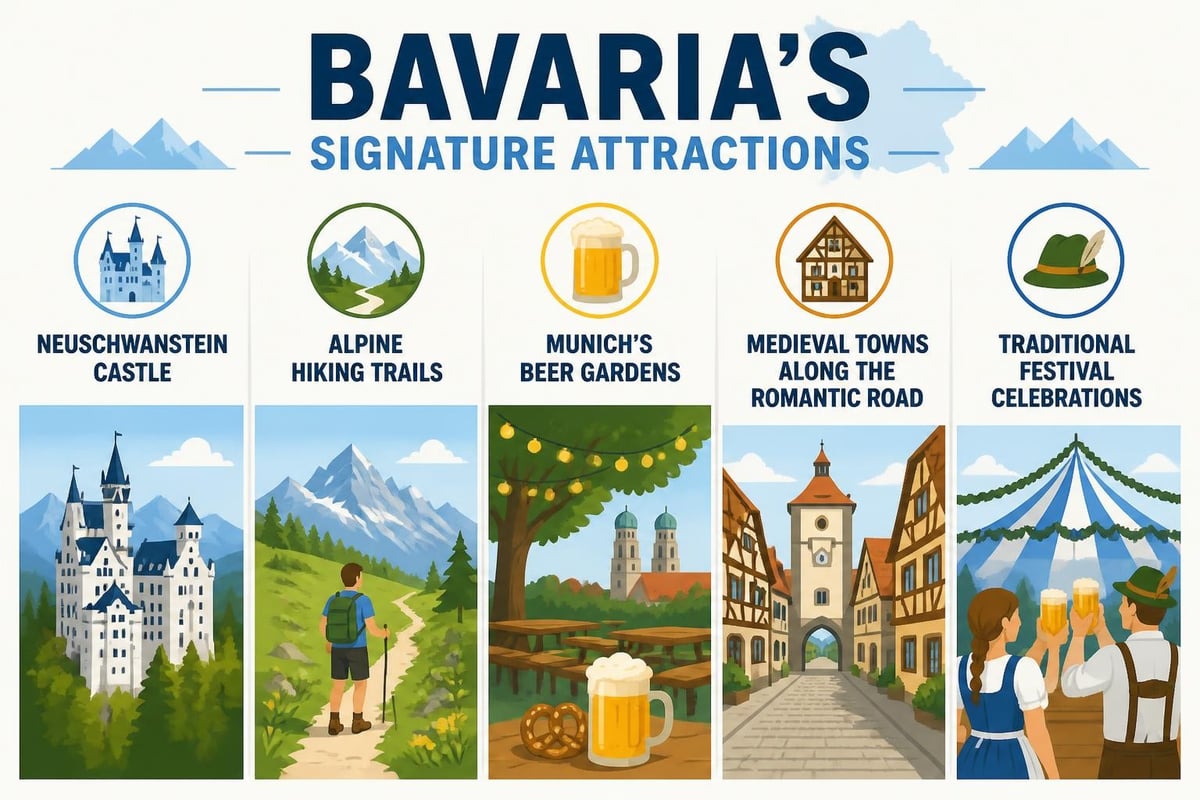
Bavaria captures the imagination with its Alpine scenery, baroque churches, and legendary beer culture. Munich serves as the regional capital, combining world-class museums with traditional beer gardens and the annual Oktoberfest celebration.
Essential Bavarian experiences:
- Neuschwanstein Castle and the Romantic Road
- Rothenburg ob der Tauber's medieval old town
- Nuremberg's Christmas markets and historical sites
- Berchtesgaden National Park and Königssee
- Regensburg's UNESCO-listed city center
The Bavarian Alps offer year-round activities, from skiing and snowboarding in winter to hiking and mountain biking during warmer months. Traditional festivals celebrate local customs, with lederhosen, dirndls, and brass bands creating authentic cultural experiences.
Berlin and Eastern Germany
Germany's capital embodies transformation and creativity, where Cold War history meets cutting-edge contemporary culture. The Berlin Wall's remnants, Museum Island's treasures, and vibrant neighborhoods like Kreuzberg and Prenzlauer Berg showcase the city's multifaceted character.
| Attraction | Highlights | Time Needed |
|---|---|---|
| Museum Island | Five world-class museums | Full day |
| Brandenburg Gate | Iconic symbol, historic significance | 30 minutes |
| East Side Gallery | Longest Wall section, street art | 1-2 hours |
| Reichstag Building | Glass dome, city views | 2 hours |
| Memorial to Murdered Jews | Holocaust memorial | 45 minutes |
Dresden, Leipzig, and Potsdam complement Berlin with baroque architecture, musical heritage, and Prussian palaces. The region's transformation since reunification creates compelling narratives about resilience and renewal.
Rhine Valley and Western Regions
The Rhine Valley presents Germany's most romantic landscapes, with vineyard-covered hillsides, medieval castles, and charming riverside villages. River cruises between Mainz and Koblenz reveal castle after castle perched on dramatic cliffs.
Cologne's towering cathedral dominates the skyline, while the adjacent old town buzzes with traditional breweries serving Kölsch beer. The region's wine culture centers on Riesling production, with vintners offering tastings and tours throughout the valley.
Northern Coast and Harbor Cities
Hamburg's maritime heritage shapes its cosmopolitan character, from the historic Speicherstadt warehouse district to the modern Elbphilharmonie concert hall. The city's harbor, Europe's third-largest, offers boat tours revealing the scale of global commerce.
Bremen's fairy-tale Town Musicians statue and medieval market square create storybook settings. The North and Baltic Sea coasts feature sandy beaches, historic lighthouse towns, and the unique Wadden Sea mudflats ecosystem.
Cultural Immersion and Authentic Experiences
To truly travel through Germany means engaging with local customs, traditions, and daily life beyond standard tourist attractions. Regional festivals, culinary specialties, and cultural practices offer windows into German identity.
Culinary Traditions and Regional Specialties
German cuisine extends far beyond sausages and sauerkraut, though these staples remain delicious when prepared traditionally. Each region boasts distinctive dishes reflecting local ingredients and historical influences.
Regional specialties to seek out:
- Spätzle and Maultaschen in Baden-Württemberg
- Sauerbraten and Himmel un Ääd in the Rhineland
- Currywurst and Döner Kebab in Berlin
- Labskaus and fish sandwiches in Hamburg
- Königsberger Klopse and Thuringian bratwurst
Markets provide authentic food experiences, from daily fresh markets to seasonal Christmas markets. Bakeries offer incredible variety beyond pretzel expectations, with regional bread traditions reflecting centuries of craft mastery.
Festival Calendar and Seasonal Events
Germany's festival culture creates memorable experiences throughout the year. Beyond Oktoberfest's global fame, countless regional celebrations honor local traditions, harvests, and historical events.
Notable festivals by season:
- Spring: May Day celebrations, wine festivals along the Moselle
- Summer: Open-air concerts, city festivals, Kiel Week sailing regatta
- Fall: Wine harvest festivals, Oktoberfest, Cannstatter Volksfest
- Winter: Christmas markets in every city, Carnival (Fasching) season
These gatherings welcome visitors warmly, offering opportunities to connect with locals while experiencing authentic traditions. For more insights on maximizing cultural experiences, explore our travel tips collection.
Hidden Gems Beyond Tourist Trails
While major cities deserve their acclaim, Germany's lesser-known destinations reward curious travelers with authentic experiences and fewer crowds. When you travel through Germany with adventurous spirit, these hidden gems reveal the country's depth.
Underrated Cities and Towns
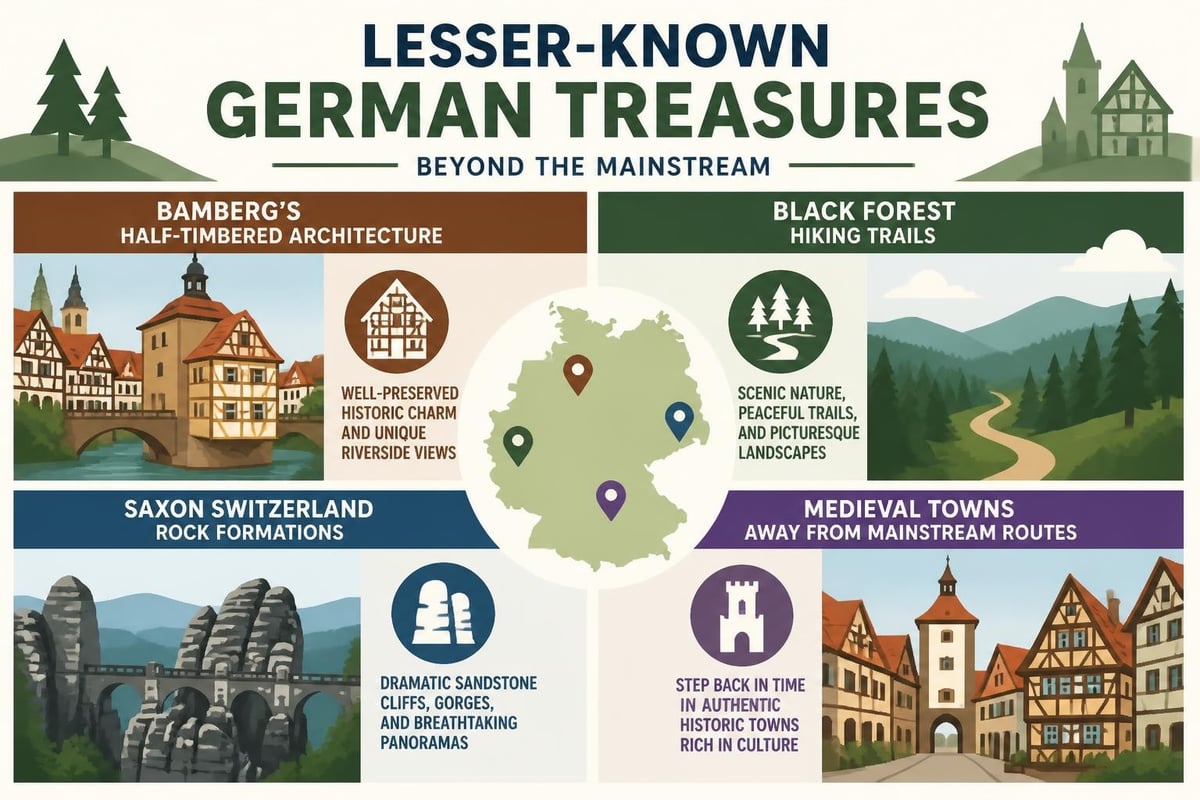
Bamberg's UNESCO-listed old town spreads across seven hills, earning it the nickname "Franconian Rome." The city's rauchbier (smoked beer) tradition and intact medieval architecture create stepping-back-in-time experiences.
Quedlinburg preserves over 1,300 half-timbered houses spanning six centuries, making it Germany's largest collection. The Saxon-Anhalt town feels frozen in time yet vibrant with cafés and artisan workshops.
Görlitz, on the Polish border, survived World War II intact, preserving architectural styles from Gothic to Art Nouveau. Film crews regularly use the city as a historic backdrop, and visitors can explore its layers freely.
Natural Wonders and Outdoor Adventures
The Black Forest region offers more than cuckoo clocks and cake, with vast hiking trail networks, spa towns, and pristine nature reserves. The Westweg trail stretches 285 kilometers from Pforzheim to Basel, showcasing the region's diversity.
Saxon Switzerland National Park features sandstone formations creating dramatic landscapes near Dresden. Rock climbing, hiking, and cycling routes wind through this unique geological wonderland.
The Bavarian Forest, Germany's first national park, protects ancient woodland ecosystems along the Czech border. Tree-top walkways, wildlife watching, and cross-country skiing attract nature enthusiasts year-round.
Practical Tips for Seamless Travel
Success when you travel through Germany depends on understanding local customs, communication practices, and practical considerations that smooth daily interactions.
Language and Communication
While English proficiency is widespread in tourist areas and among younger Germans, learning basic German phrases demonstrates respect and often opens doors. Older generations and rural residents may speak limited English, making phrase books or translation apps valuable tools.
Essential German phrases:
- "Guten Tag" (Good day)
- "Bitte" (Please) and "Danke" (Thank you)
- "Entschuldigung" (Excuse me)
- "Sprechen Sie Englisch?" (Do you speak English?)
- "Wo ist...?" (Where is...?)
Germans value directness and punctuality. Arriving late for reservations or scheduled tours without notification is considered disrespectful. Store hours tend to be more limited than in some countries, with many shops closed on Sundays.
Money Matters and Payment Methods
Germany operates primarily as a cash society despite being economically advanced. Many restaurants, small shops, and even some hotels only accept cash, making ATM access important. Credit cards work at larger establishments and hotels, but always carry sufficient euros for daily expenses.
Tipping practices differ from American standards. Restaurant bills typically round up or add 5-10% for good service, with tips given directly to servers rather than left on tables. The phrase "Stimmt so" (keep the change) signals that no change is needed.
Safety and Health Considerations
Germany ranks among Europe's safest countries, though standard precautions apply in crowded tourist areas and public transportation. Pickpocketing occurs in major cities, particularly at train stations and tourist attractions.
Healthcare standards are excellent, with pharmacies (Apotheken) offering professional advice for minor ailments. EU citizens should carry European Health Insurance Cards, while others need comprehensive travel insurance. For comprehensive guidance on preparing for European adventures, research specific requirements for your situation.
Sustainable and Responsible Tourism
Modern travelers recognize their environmental and cultural impact, seeking ways to travel through Germany responsibly while supporting local communities and preserving resources for future generations.
Environmental Considerations
Germany's commitment to environmental protection creates infrastructure supporting sustainable travel choices. Extensive public transportation networks, recycling systems, and renewable energy initiatives make eco-conscious travel practical.
Sustainable travel practices:
- Choose trains over flights for domestic travel
- Stay in eco-certified accommodations
- Use refillable water bottles (tap water is excellent)
- Support local businesses and regional products
- Respect nature conservation areas and hiking regulations
Digital travel guides reduce environmental impact compared to printed materials, allowing you to access comprehensive information without paper waste.
Supporting Local Communities
Authentic experiences benefit both travelers and communities when approached with respect and mindfulness. Seek out family-run guesthouses, traditional restaurants, and local artisans rather than international chains.
Many regions face challenges balancing tourism benefits with preserving local character. Visiting during shoulder seasons, exploring beyond hotspots, and engaging meaningfully with cultural offerings helps distribute tourism's benefits while reducing strain on popular destinations.
Digital Resources and Modern Travel Tools
Technology transforms how we travel through Germany, offering real-time information, navigation assistance, and insider knowledge at our fingertips. Leveraging digital tools enhances experiences while providing flexibility and independence.
Essential Apps and Digital Services
The DB Navigator app remains indispensable for train travel, offering ticket purchases, real-time updates, and platform information. Google Maps works excellently for navigation, though downloading offline maps ensures functionality without data connections.
Translation apps like DeepL (a German company) provide superior German-English translations compared to alternatives. Restaurant reservation platforms like OpenTable and TheFork secure tables at popular dining spots.
Germany's widespread WiFi availability in cafés, hotels, and public spaces, combined with affordable prepaid SIM cards from providers like O2 and Vodafone, keeps travelers connected affordably.
Maximizing Digital Travel Guides
Comprehensive digital guides offer advantages traditional guidebooks cannot match. Digital travel guides provide updated information reflecting current conditions, new attractions, and changing regulations.
Interactive features, bookmark capabilities, and search functions help you quickly find relevant information for your location and interests. The convenience of carrying guides in your pocket rather than heavy books makes spontaneous exploration effortless.
Regional Transportation Deep Dive
Understanding regional transportation nuances helps you travel through Germany efficiently while discovering areas beyond major cities. Each federal state offers unique ticket options and transportation systems worth exploring.
Federal State Tickets and Regional Passes
Länder-Tickets provide exceptional value for day trips within federal states. Valid on regional trains, S-Bahns, and most local transportation from 9 AM weekdays (all day weekends), these tickets accommodate up to five people traveling together.
Bavaria's ticket covers extensive territory from Munich to the Austrian border, perfect for castle visits and Alpine adventures. The Baden-Württemberg ticket opens access to the Black Forest, Stuttgart, and Heidelberg for budget-conscious travelers.
Urban Transportation Systems
Major cities operate integrated networks combining U-Bahn (subway), S-Bahn (suburban rail), trams, and buses under single ticketing systems. Munich, Berlin, Hamburg, and Frankfurt feature comprehensive networks making car rental unnecessary for urban exploration.
Validation requirements vary by city, with some requiring ticket stamping before boarding and others using honor systems with random inspections. Significant fines apply for riding without valid tickets, making understanding local systems important.
Planning to travel through Germany requires balancing iconic attractions with authentic local experiences, efficient transportation with spontaneous exploration, and popular destinations with hidden gems. Germany's diversity ensures every traveler discovers their perfect journey, whether seeking history, nature, culture, or culinary delights. Awesome Travel Guides provides comprehensive digital resources to help you navigate Germany confidently, access insider tips, and uncover experiences that transform your trip from ordinary to extraordinary. Let our expertly crafted guides become your trusted companion for creating unforgettable German adventures.