

Travel Through Scotland: Your Complete 2026 Guide
Scotland captivates travelers with its dramatic landscapes, ancient castles, vibrant cities, and warm hospitality. When you travel through Scotland, you encounter a destination that seamlessly blends medieval history with modern culture, offering experiences that range from exploring bustling urban centers to hiking through remote Highland wilderness. This guide provides comprehensive insights into planning your Scottish adventure, ensuring you make the most of every moment in this remarkable country.
Planning Your Scottish Journey
Creating a well-structured itinerary forms the foundation of any successful trip. When preparing to travel through Scotland, consider the diverse regions and their unique characteristics. The country divides into several distinct areas: the Central Belt containing Edinburgh and Glasgow, the Highlands and Islands offering rugged beauty, the Northeast with its whisky trails and coastal villages, and the Borders featuring rolling hills and historic abbeys.
Key Planning Considerations:
- Duration: Minimum one week for a comprehensive tour, two weeks for in-depth exploration
- Season: Each season offers unique advantages and challenges
- Budget: Accommodation and dining costs vary significantly between cities and rural areas
- Transportation: Choosing between rental cars, public transit, or guided tours
- Advance Bookings: Popular attractions and accommodations require early reservations
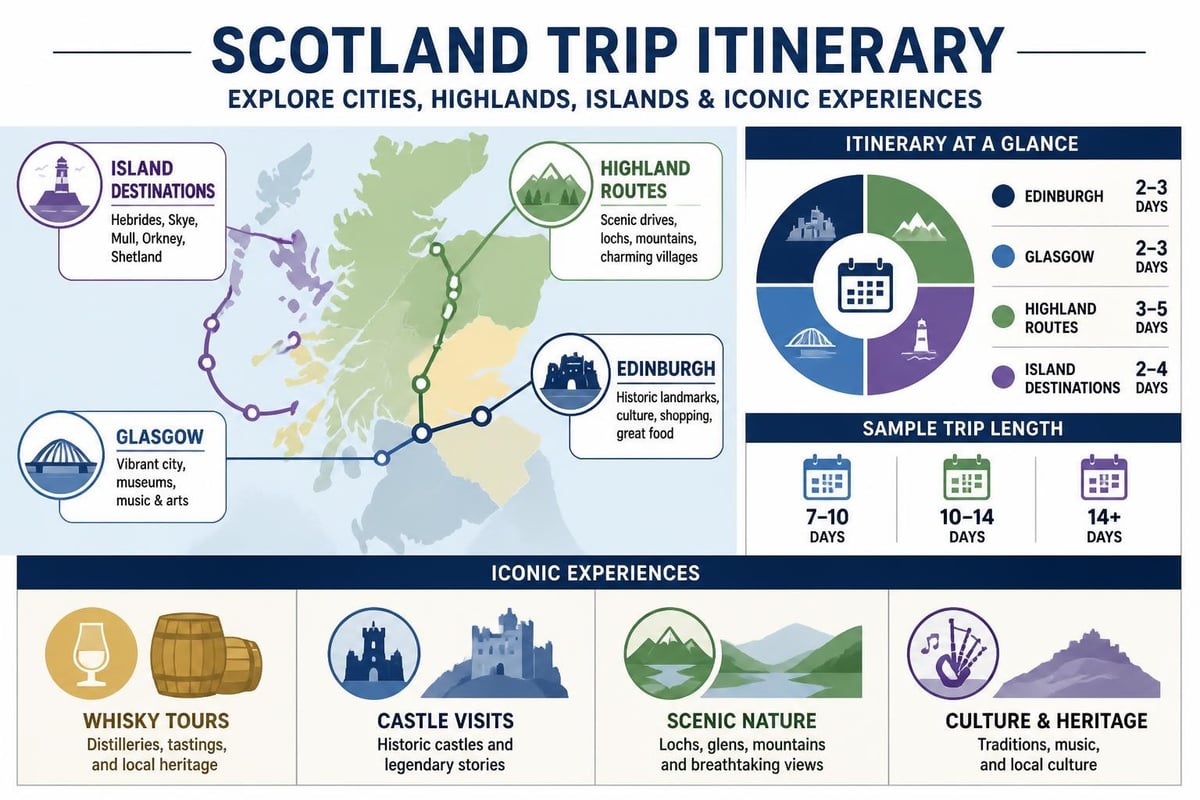
The comprehensive planning guide from Rough Guides offers detailed steps for creating a tailored itinerary that matches your travel preferences. Additionally, our Awesome Guide to Scotland provides insider tips and hidden gems that elevate your experience beyond typical tourist routes.
Understanding Scotland's Regions
Scotland's geographical diversity means each region delivers distinct experiences. Edinburgh, the capital city, combines UNESCO World Heritage sites with contemporary culture, while Glasgow showcases industrial heritage transformed into creative spaces. The Highlands stretch across the northern reaches, offering mountains, lochs, and sparse populations that create an atmosphere of untouched wilderness.
| Region | Best For | Travel Time from Edinburgh | Key Attractions |
|---|---|---|---|
| Central Belt | Culture, dining, nightlife | 0-1 hour | Edinburgh Castle, Glasgow museums |
| Highlands | Nature, hiking, scenery | 3-4 hours | Ben Nevis, Loch Ness, Glencoe |
| Islands | Remote beauty, wildlife | 5-8 hours (ferry included) | Skye, Orkney, Hebrides |
| Northeast | Whisky, coastal villages | 2-3 hours | Speyside distilleries, Aberdeen |
Transportation Options Across Scotland
Navigating Scotland efficiently requires understanding the various transportation methods available. The choice between driving, taking trains, or using buses depends on your comfort level, budget, and desired flexibility. Many travelers who travel through Scotland discover that combining multiple transportation modes yields the best results.
Driving Through Scotland
Renting a car provides maximum flexibility, particularly when exploring remote Highland areas and islands accessible by bridge. Scotland's roads range from modern motorways to single-track Highland roads with passing places. Driving occurs on the left side of the road, which requires adjustment for visitors from countries with right-hand traffic.
Driving Advantages:
- Freedom to explore off-the-beaten-path locations
- Ability to modify your schedule spontaneously
- Access to remote castles, distilleries, and natural sites
- Convenient luggage storage and weather protection
Driving Challenges:
- Single-track roads require patience and courtesy
- Parking can be expensive or limited in city centers
- Fuel costs add up, especially in remote areas
- Navigation through unfamiliar terrain demands attention
The detailed transportation overview from Rough Guides covers all aspects of moving around Scotland, including practical advice for international visitors.
Public Transportation Networks
Scotland's public transportation infrastructure connects major cities and tourist destinations efficiently. The rail network, operated primarily by ScotRail, links Edinburgh and Glasgow with Inverness, Aberdeen, and other cities. Bus services fill gaps in the rail network, reaching smaller towns and villages throughout the country.
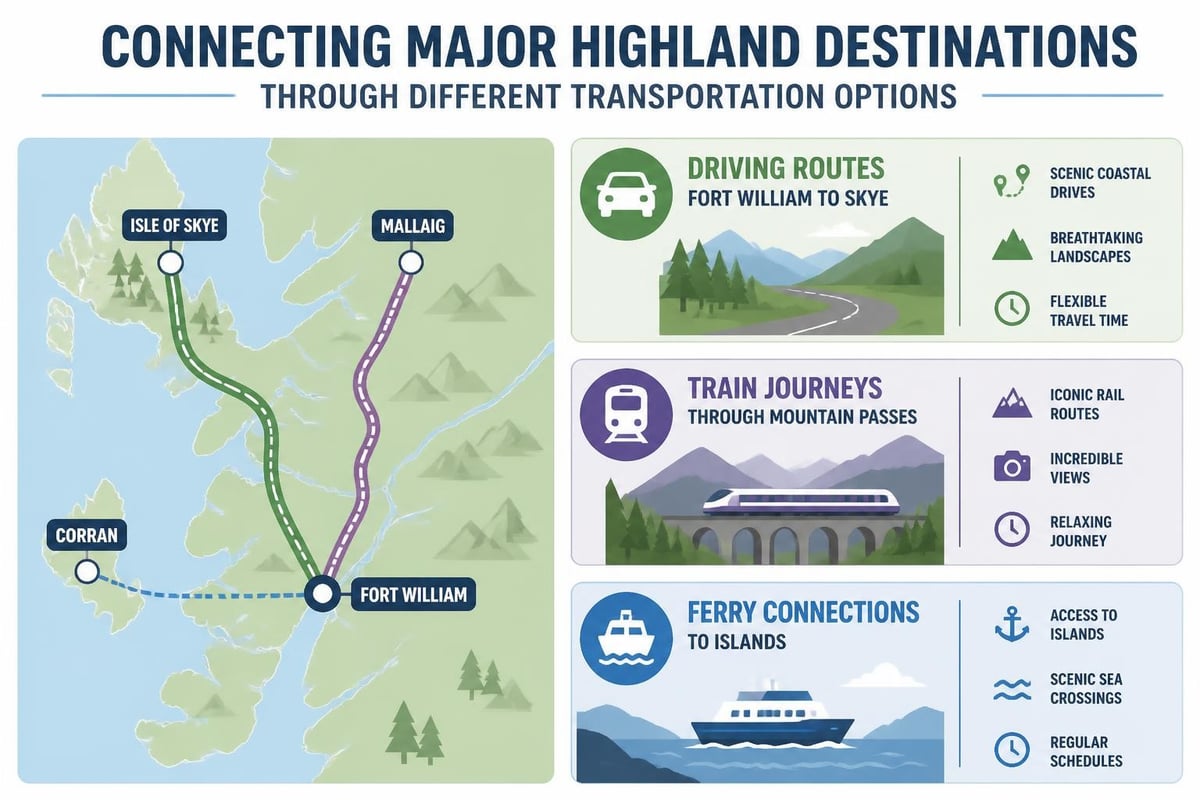
Train travel offers scenic routes, particularly the West Highland Line from Glasgow to Mallaig, which passes through dramatic mountain landscapes. Scotland's official travel information provides current details about transportation options, schedules, and booking procedures.
Essential Scottish Cities and Urban Experiences
Edinburgh and Glasgow anchor Scotland's urban landscape, each offering distinct character and attractions. When you travel through Scotland, spending time in both cities provides a balanced perspective on Scottish culture, history, and contemporary life.
Edinburgh: Historic Capital
Edinburgh's compact city center makes walking the primary mode of exploration. The Royal Mile connects Edinburgh Castle with the Palace of Holyroodhouse, passing through the Old Town's medieval streets. The New Town, built in the 18th century, showcases Georgian architecture and elegant squares.
Must-Visit Edinburgh Attractions:
- Edinburgh Castle: Perched on volcanic rock, housing the Crown Jewels
- Arthur's Seat: Extinct volcano offering panoramic city views
- National Museum of Scotland: Free admission to comprehensive collections
- Holyrood Palace: Official Scottish residence of the British monarch
- Calton Hill: Multiple monuments and sunset viewing location
The city transforms during August when the Edinburgh Festival Fringe becomes the world's largest arts festival, attracting performers and audiences from across the globe.
Glasgow: Creative Hub
Glasgow presents a different urban experience, with industrial heritage converted into cultural venues. The city's music scene, museums, and Victorian architecture create an energetic atmosphere that contrasts with Edinburgh's more formal character.
The Kelvingrove Art Gallery and Museum, housed in a stunning red sandstone building, offers free admission to world-class collections. Glasgow's West End neighborhood features bohemian cafes, vintage shops, and the University of Glasgow's Gothic campus.
Highland Adventures and Natural Wonders
The Scottish Highlands represent the romantic Scotland of popular imagination: rugged mountains, mysterious lochs, and ancient legends. This vast region rewards those who travel through Scotland with patience and time to explore beyond main roads.
Iconic Highland Destinations
Fort William serves as the outdoor activity capital, positioned at the base of Ben Nevis, Britain's highest mountain. The town provides access to hiking trails, mountain biking routes, and the Nevis Range ski resort. Nearby Glencoe valley offers dramatic scenery where mountains rise steeply from the valley floor, creating one of Scotland's most photographed landscapes.
Loch Ness stretches 23 miles through the Great Glen, famous for alleged monster sightings but impressive for its sheer scale and surrounding landscapes. Urquhart Castle ruins on the loch's shore provide excellent viewpoints and historical context.
Highland Activity Options:
- Munro bagging (climbing Scotland's 282 mountains over 3,000 feet)
- Wildlife watching for red deer, golden eagles, and otters
- Whisky distillery tours in Speyside region
- Coastal walks along dramatic clifftops
- Photography expeditions capturing changing light conditions
The Isle of Skye Experience
Skye stands out among Scotland's islands for accessibility and concentrated attractions. The Skye Bridge connects the island to the mainland, eliminating ferry requirements for vehicle access. The island's landscapes include the jagged Cuillin mountains, the distinctive rock formations of the Old Man of Storr and Quiraing, and the fairy pools with crystal-clear water.
Portree, the main town, provides accommodation, dining, and supply options. However, Skye's popularity means advance bookings are essential during summer months, and some attractions face overcrowding issues.
Cultural Experiences and Scottish Traditions
Understanding Scottish culture enhances any journey through the country. From traditional music sessions in village pubs to formal Highland games competitions, cultural experiences provide insight into Scottish identity and values.
Whisky Heritage and Distillery Tours
Scotland produces whisky in five main regions, each with characteristic flavor profiles. Speyside contains the highest concentration of distilleries, producing elegant, complex whiskies. Islay specializes in peaty, smoky expressions that divide opinions dramatically. Highland, Lowland, and Campbeltown regions each contribute distinct styles to Scotland's whisky landscape.
Distillery tours range from basic production overviews to in-depth experiences including cask tastings and blending sessions. Many distilleries require advance booking, especially for premium experiences. The AFAR travel guide highlights whisky experiences alongside other cultural attractions throughout Scotland.
Traditional Music and Entertainment
Scottish traditional music thrives in pubs, concert halls, and informal gatherings across the country. Fiddles, bagpipes, accordions, and Celtic harps create the distinctive sound that accompanies ceilidh dances and listening sessions. Glasgow and Edinburgh host numerous venues featuring both traditional and contemporary Scottish music.
| Cultural Experience | Best Locations | Typical Cost | Booking Requirements |
|---|---|---|---|
| Whisky distillery tours | Speyside, Islay | £15-75 | Advance recommended |
| Traditional music sessions | Edinburgh, Glasgow pubs | Free-£20 | Walk-in usually available |
| Highland games | Various towns (summer) | £5-15 | Tickets at gate |
| Castle tours | Throughout Scotland | £8-20 | Online booking advised |
Practical Information for Scotland Travel
Successful travel through Scotland requires attention to practical details that affect daily comfort and budget management. Weather variability, currency considerations, and accommodation standards all influence your experience.
Weather Preparedness and Packing
Scotland's maritime climate produces unpredictable weather patterns. Rain can arrive suddenly even on sunny days, and temperatures fluctuate throughout the day. The essential travel tips from Scottish Tours emphasize packing strategies for variable conditions.
Essential Packing Items:
- Waterproof jacket with hood (non-negotiable year-round)
- Layered clothing for temperature adjustments
- Comfortable waterproof walking shoes or boots
- Adapter plugs for UK electrical outlets (Type G)
- Power bank for device charging during long travel days
Our comprehensive packing guide provides detailed checklists tailored to different travel styles and seasons, ensuring you bring appropriate items without overpacking.
Financial Considerations
The British pound sterling (GBP) serves as Scotland's currency. While major credit and debit cards are widely accepted in cities and towns, some remote areas, small businesses, and rural bed-and-breakfasts operate cash-only. ATMs are common in urban areas but scarce in the Highlands and islands.
Contactless payment systems work throughout Scotland, with many establishments accepting smartphone payment apps. However, carrying some cash provides backup options and enables transactions at unstaffed honesty boxes common at rural attractions.
Accommodation Strategies
Scotland offers accommodation options ranging from luxury hotels to budget hostels and camping facilities. When you travel through Scotland, booking accommodation in advance becomes increasingly important, especially during summer months and festival periods.
Accommodation Types:
- Hotels: Standard amenities, predictable quality, higher costs
- Bed and Breakfasts: Personal service, local knowledge, hearty breakfasts
- Self-catering cottages: Kitchen facilities, space for groups, weekly bookings
- Hostels: Budget-friendly, social atmosphere, shared facilities
- Camping: Closest to nature, weather-dependent, requires equipment
The quality of budget accommodations in Scotland generally exceeds expectations, with even modest B&Bs maintaining high cleanliness and comfort standards.
Seasonal Considerations for Scotland Visits
Each season transforms Scotland's landscapes and affects travel logistics. Understanding seasonal variations helps align your visit with preferred activities and experiences.
Summer Season Advantages
June through August brings the longest daylight hours, with sunset occurring after 10 PM in the northern regions. This extended daylight enables more sightseeing and outdoor activities within each day. However, summer also attracts peak tourist numbers, resulting in crowded attractions, higher prices, and fully booked accommodations.
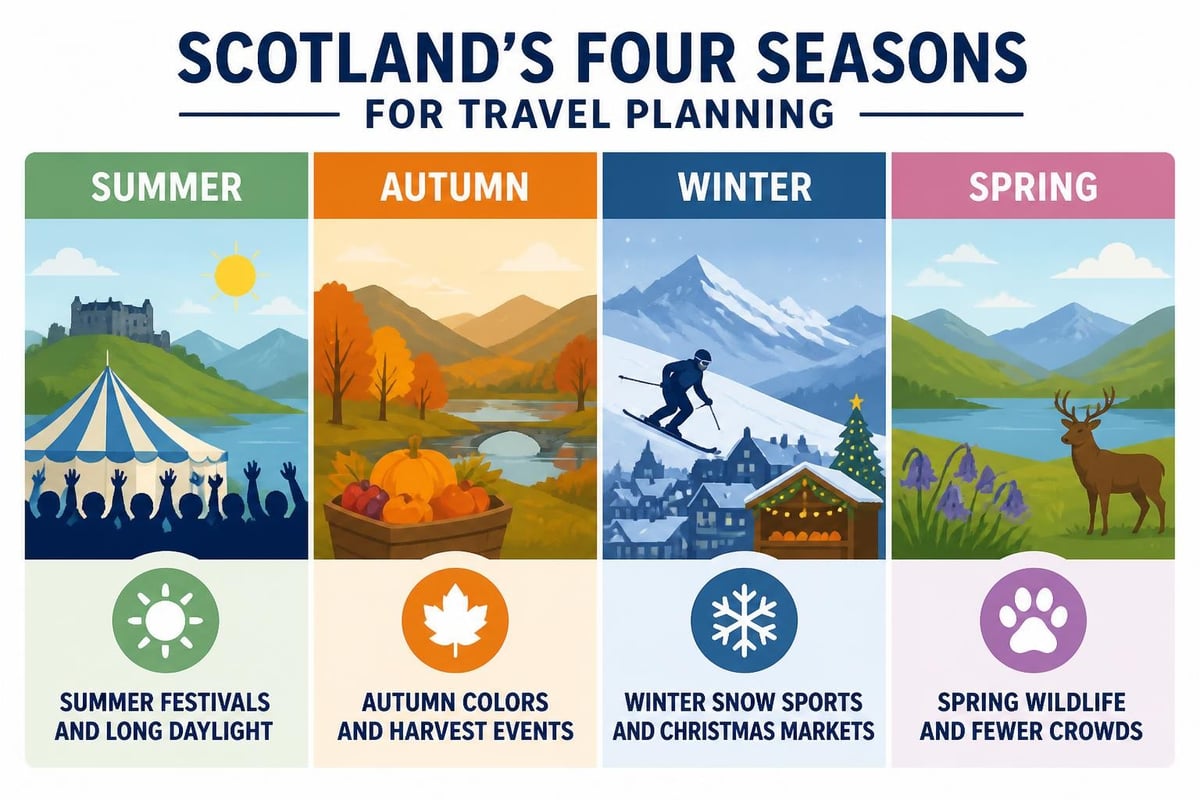
Wildlife enthusiasts find summer ideal for spotting puffins, seals, and dolphins along coastal areas. Highland games occur throughout summer in various towns, offering authentic cultural experiences with athletic competitions, dancing, and music.
Off-Season Benefits
September through May reduces crowds significantly while maintaining access to most attractions. Autumn (September-November) showcases spectacular foliage colors, particularly in Perthshire's woodlands. The National Geographic Scotland guide discusses optimal timing for different travel priorities and interests.
Winter (December-February) brings challenges including limited daylight, unpredictable weather, and some attraction closures. However, it also offers opportunities for winter sports, dramatic storm-watching, and experiencing Scotland's festive Hogmanay (New Year) celebrations. Spring (March-May) delivers mild weather, lambing season in rural areas, and increasingly long days as summer approaches.
Hidden Gems and Off-the-Beaten-Path Destinations
Beyond major tourist attractions, Scotland conceals numerous lesser-known locations that reward curious explorers. These hidden gems provide authentic experiences and often feature fewer crowds than famous destinations.
Lesser-Known Castle Discoveries
While Edinburgh Castle dominates tourist itineraries, Scotland contains over 1,500 castles in various states of preservation. Dunnottar Castle, perched on a clifftop near Stonehaven, offers dramatic coastal views and fascinating history without Edinburgh's crowds. Eilean Donan Castle, though increasingly popular, still provides a more intimate experience than urban fortress attractions.
Smaller fortified houses like Craigievar Castle showcase architectural details more clearly than massive fortress complexes. Many Historic Scotland and National Trust properties offer annual memberships that quickly pay for themselves when visiting multiple sites.
Remote Coastal Villages
Scotland's extensive coastline features fishing villages that maintain traditional character despite modern tourism. Plockton on the west coast provides sheltered waters lined with palm trees (warmed by the Gulf Stream), colorful houses, and seafood restaurants serving fresh catches. Pittenweem in Fife combines working harbor activity with art galleries and historic architecture.
These smaller communities often provide more authentic interactions with local residents and insights into contemporary Scottish life beyond tourism-oriented experiences.
Food and Dining Experiences
Scottish cuisine has evolved beyond stereotypical haggis and deep-fried foods to embrace local ingredients, sustainable practices, and creative presentations. When you travel through Scotland, dining opportunities range from Michelin-starred restaurants to casual fish and chip shops.
Traditional Scottish Dishes
Haggis, Scotland's national dish, combines sheep's pluck with oatmeal and spices, traditionally served with neeps and tatties (turnips and potatoes). Quality haggis from reputable producers surprises many visitors with its rich, savory flavor. Cullen skink, a thick soup made with smoked haddock, potatoes, and onions, provides warming comfort on cold days.
Must-Try Scottish Foods:
- Fresh seafood including langoustines, scallops, and oysters
- Aberdeen Angus beef from native cattle breeds
- Venison from wild red deer populations
- Cranachan: traditional dessert with raspberries, cream, whisky, and oats
- Scottish tablet: sweeter and grainier than fudge
Dining Budget Strategies
Restaurant prices vary considerably between cities and rural areas. Urban centers offer diverse options from budget ethnic restaurants to expensive fine dining. Rural areas may have limited choices, making self-catering cottages attractive for extended stays.
Supermarkets throughout Scotland stock excellent prepared foods, local specialties, and ingredients for picnics. Many scenic locations provide perfect settings for outdoor meals, combining budget savings with memorable experiences.
Creating Your Perfect Scottish Itinerary
Combining the elements discussed throughout this guide enables creation of personalized itineraries matching individual interests, travel styles, and time constraints. Whether you travel through Scotland seeking outdoor adventures, cultural immersion, historical exploration, or culinary experiences, strategic planning maximizes satisfaction.
Sample One-Week Itinerary Framework
A balanced week-long journey might allocate three days to Edinburgh, two days exploring Highland attractions, and two days on Skye or another island destination. This distribution provides sufficient time in each area without excessive rushing while accommodating travel time between regions.
Alternatively, travelers might prefer deeper exploration of fewer areas, spending the full week in the Highlands and islands while skipping cities entirely. The Scotland.com overview presents the full range of regional attractions, helping travelers make informed choices about time allocation.
Building Flexibility Into Plans
While advance planning ensures accommodation availability and activity reservations, maintaining some schedule flexibility allows spontaneous discoveries. Weather conditions might make coastal walks impossible but perfect for museum visits, or locals might recommend festivals occurring during your visit.
Digital travel guides from Awesome Travel Guides provide on-the-go information accessible through smartphones, enabling real-time itinerary adjustments based on circumstances and opportunities encountered during travels.
Traveling through Scotland offers endless opportunities for discovery, whether exploring ancient castles, hiking Highland trails, savoring local cuisine, or engaging with vibrant cultural traditions. The key to a successful Scottish journey lies in thoughtful planning balanced with openness to unexpected experiences that make travel memorable. Our comprehensive Awesome Guide to Scotland equips you with detailed information, insider tips, and practical tools to transform your Scottish adventure from ordinary tourism into an unforgettable journey of authentic discovery and personal connection with this remarkable destination.