

10 Essential Travel Tips For Italy: 2026 Guide
Italy’s timeless beauty, from rolling Tuscan hills to ancient Roman streets, has enchanted travelers for centuries. Its vibrant culture, renowned cuisine, and artistic treasures offer endless discovery for every visitor.
Planning your journey can be overwhelming, especially with new travel regulations and changing trends. This ultimate 2026 guide delivers travel tips for italy, ensuring your adventure is both smooth and unforgettable.
Whether you’re a first-time explorer or a seasoned visitor, discover the top 10 essential tips that will help you navigate Italy’s wonders with confidence. Use these insights to unlock authentic experiences and create memories that last a lifetime.
Planning Your Italian Adventure
Planning an Italian getaway in 2026 requires careful attention to detail, especially as travel requirements continue to evolve. To ensure a seamless journey, follow these five foundational travel tips for italy. Each step will help you avoid common pitfalls and maximize your experience from the moment you start planning.
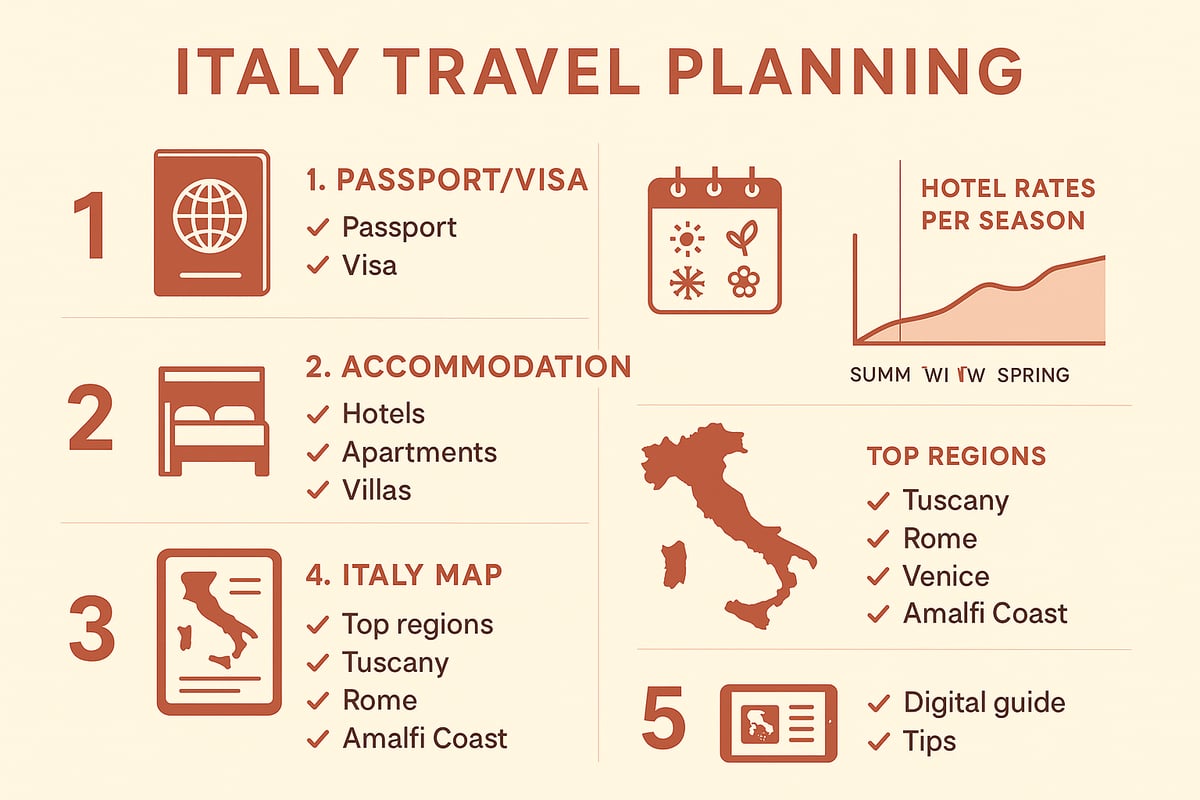
Research Entry Requirements and Visas
Understanding entry regulations is vital for all travelers. By 2026, non-EU visitors must comply with updated Schengen visa rules, including the implementation of ETIAS (European Travel Information and Authorization System). This digital pre-authorization is mandatory and should be obtained before departure.
Ensure your passport is valid for at least six months beyond your return date. Many travelers overlook this and face denied boarding. Travel insurance is strongly recommended, as healthcare costs can be high without coverage. Common mistakes include missing ETIAS registration or lacking proof of insurance. To avoid delays, double-check health documentation and check for updated vaccination requirements. According to competitor data, average visa processing times are 15–20 days, but approval rates remain high for well-prepared applicants. These travel tips for italy can save you time and stress at the border.
Choose the Best Time to Visit
Italy’s charm shifts with the seasons. High season (June to August) offers lively festivals and sunny weather but brings crowds and higher prices. Shoulder seasons (April–May, September–October) balance pleasant weather with fewer tourists, while the low season (November–March) provides tranquility and budget-friendly options.
| Season | Average Hotel Rate | Crowd Level | Weather |
|---|---|---|---|
| High | €180+ | High | Hot/Sunny |
| Shoulder | €120–€160 | Moderate | Mild |
| Low | €80–€100 | Low | Cool/Rainy |
For example, visiting Venice in November means fewer tourists and lower accommodation rates. Researching local festivals, such as Florence’s Scoppio del Carro in spring, can further enhance your trip. Consider these travel tips for italy to find the perfect balance between weather, events, and costs.
Book Accommodations Strategically
Italy offers diverse lodging options, from luxury hotels to rustic agriturismos and cozy B&Bs. Vacation rentals are ideal for longer stays or families. Booking early is essential for hotspots like Rome and Florence, where availability drops quickly during peak periods.
Consider location carefully: city center stays offer convenience but often at a premium, while outskirts provide value and a quieter atmosphere. Review cancellation policies and opt for flexible bookings when possible. Average nightly rates in major cities range from €120 in Milan to €200+ in Venice during high season. These travel tips for italy will help you secure the best accommodation for your needs and budget.
Plan Your Itinerary with Regional Diversity in Mind
Italy’s regions each offer unique experiences. Balance iconic cities such as Rome and Florence with hidden gems like Matera or the Dolomites. A sample itinerary might include Milan in the north, Tuscany’s countryside in the center, and Sicily’s beaches in the south.
Travel times between regions can be significant. For example, Rome to Naples by train takes about 70 minutes, while reaching Sicily requires a flight or overnight ferry. Avoid cramming too much into your schedule; instead, savor each location. Competitor guides often highlight popular spots, but these travel tips for italy encourage you to explore lesser-known destinations for a richer adventure.
Leverage Digital Travel Guides for Insider Tips
Modern travelers benefit from curated digital resources. Up-to-date guides provide local insights, reveal hidden gems, and offer practical advice for everything from dining to transportation. With instant access and regular updates, digital guides are now a top choice for independent explorers.
Using digital travel guides can make your trip more authentic and efficient. For more detailed digital travel planning tips, consider how these resources streamline research and help you avoid common mistakes. Adopting these travel tips for italy ensures every aspect of your journey is informed by local expertise.
10 Essential Travel Tips for Italy: 2026 Guide
Planning a trip to Italy in 2026? With over 146 million tourists visiting in 2025 alone, according to Italy's 2025 tourism statistics, navigating this beloved destination requires practical know-how. These travel tips for italy will help you avoid common pitfalls, connect with local culture, and create unforgettable memories, whether it's your first or tenth visit.
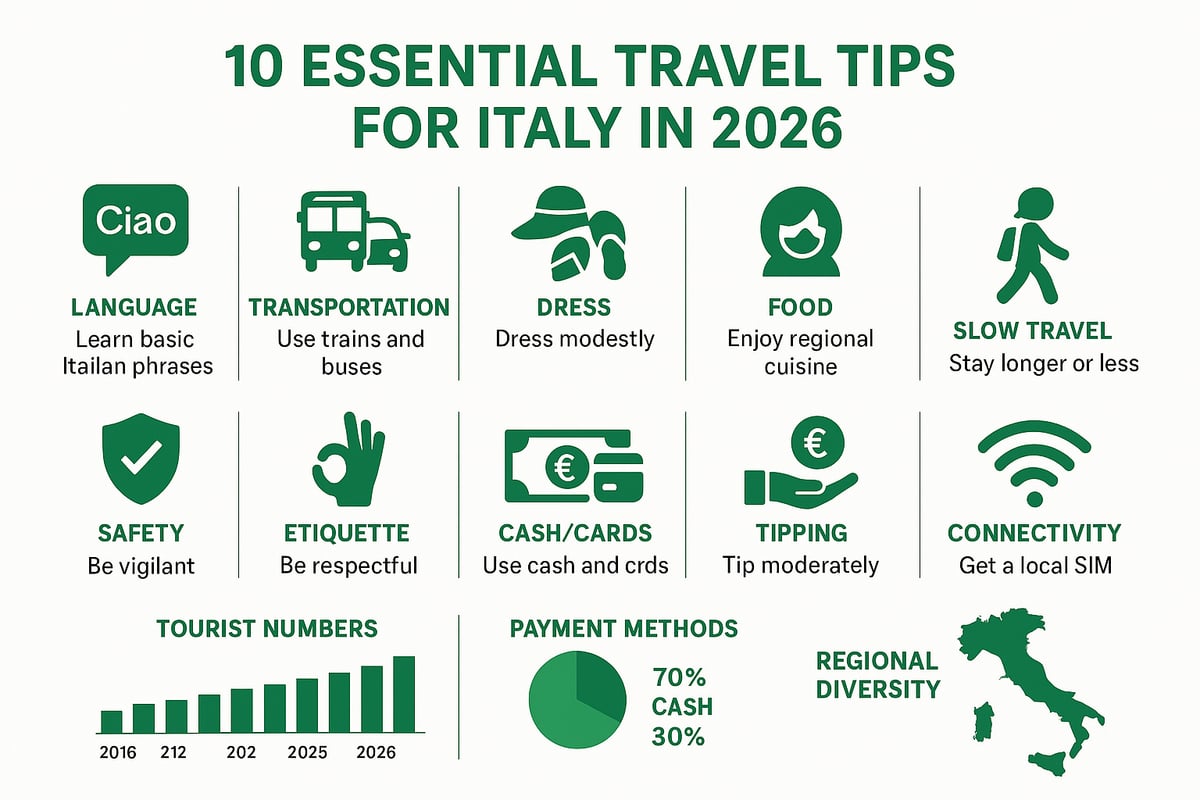
1. Learn Basic Italian Phrases
One of the most valuable travel tips for italy is familiarizing yourself with essential Italian phrases. Basic greetings like "Buongiorno" (good morning), "Per favore" (please), and "Grazie" (thank you) go a long way in daily interactions. Ordering food or asking for directions becomes smoother when you can say "Vorrei un caffè" (I'd like a coffee) or "Dove si trova la stazione?" (Where is the station?).
Pronunciation is key. Use language apps such as Duolingo or Babbel to practice before you leave. Simple efforts to speak Italian are genuinely appreciated by locals and can help you in emergencies or on public transport.
Statistics show that nearly 40% of tourists experience language barriers in Italy. Start practicing at home, label household items in Italian, and try short conversations with native speakers online. These travel tips for italy will boost your confidence and enrich your journey.
2. Embrace Public Transportation
Among the top travel tips for italy is mastering the country's efficient public transportation. Italy boasts extensive train, bus, and metro networks connecting cities and charming villages. Always purchase tickets in advance and validate them at station machines to avoid fines.
High-speed trains like Frecciarossa connect major cities, while regional trains reach off-the-beaten-path towns. Average travel times are impressive: Rome to Florence in 1.5 hours, Milan to Venice in 2.5 hours. Scenic routes, such as those through Cinque Terre or along the Amalfi Coast, offer breathtaking views.
Tickets for regional transport are affordable, and apps like Trenitalia or Italo make planning simple. These travel tips for italy ensure you explore more while saving time and money.
3. Dress Appropriately for Culture and Climate
Respecting Italian dress codes is one of the essential travel tips for italy, especially when visiting urban centers, rural villages, or religious sites. Cities like Milan and Florence favor smart-casual attire, while rural areas are more relaxed but still neat.
Weather varies widely. Pack layers for spring and autumn, lighter clothes for summer, and warm jackets for winter. Modest clothing is required in churches and Vatican City, with covered shoulders and knees. Comfortable footwear is a must for cobblestone streets.
Avoid common mistakes like wearing flip-flops in city centers or shorts in sacred places. Following these travel tips for italy helps you blend in and show respect for local customs.
4. Savor Local Cuisine Beyond Pizza and Pasta
Italy is a culinary paradise, and one of the most rewarding travel tips for italy is to sample authentic regional dishes. Try Sicilian arancini, Neapolitan pizza, Florentine steak, or Venetian cicchetti. Menus often reflect local specialties, so ask staff for recommendations.
Meal times are later than in many countries, with lunch around 1 pm and dinner after 8 pm. Coffee etiquette is unique: cappuccino is a morning drink, and espresso is enjoyed quickly at the bar. Explore food markets, street vendors, and local festivals for genuine flavors.
Culinary tourism is booming, with nearly 60% of visitors seeking food experiences. Research trattorias favored by locals to avoid tourist traps. These travel tips for italy will elevate your dining adventures.
5. Master the Art of Slow Travel
One of the most transformative travel tips for italy is embracing slow travel. Rather than rushing between cities, spend more time discovering fewer places. This approach deepens your connection with local culture and reduces travel fatigue.
Join cooking classes in Tuscany, take vineyard tours in Piedmont, or participate in artisan workshops in small villages. Studies show travelers who slow down report higher satisfaction and more meaningful memories.
Schedule downtime, leave room for spontaneous exploration, and avoid overpacking your itinerary. These travel tips for italy will help you savor every moment and experience authentic Italian life.
6. Be Mindful of Pickpockets and Tourist Scams
Safety is paramount, making this one of the critical travel tips for italy. In busy areas like Rome, Florence, and Naples, pickpockets often target distracted tourists. Use anti-theft bags and keep valuables close in crowded places.
Common scams include fake petitions, friendship bracelets, or overpriced taxis. Always use official taxi stands and agree on fares beforehand. Watch for people offering unsolicited help at ATMs or train stations.
If you fall victim to theft, report it to local police and your embassy. Staying vigilant and following these travel tips for italy will protect your belongings and ensure a stress-free trip.
7. Respect Local Customs and Etiquette
Understanding etiquette is among the most important travel tips for italy. Italians greet with a handshake or cheek kiss among friends. Punctuality is appreciated for business, while social gatherings are more relaxed.
Dress modestly in churches and avoid loud conversations in public spaces. Tipping is not obligatory, but rounding up the bill in restaurants is polite. Avoid gestures like the "OK" sign, which may be misunderstood.
Showing appreciation, such as saying "Grazie mille," helps build rapport with locals. By following these travel tips for italy, you'll leave a positive impression and foster genuine connections.
8. Use Cash and Cards Wisely
Money management is an essential part of travel tips for italy. While cards are accepted in most hotels and larger restaurants, many small shops, markets, and public toilets prefer cash. Always carry small denominations for convenience.
ATMs, or "bancomat," are widely available, but check fees with your bank before departure. Contactless payments are growing in popularity, especially in urban areas. Notify your bank of travel plans to avoid card blocks.
Some places, especially in rural regions, may not accept cards. Following these travel tips for italy ensures smooth transactions and avoids unexpected surprises.
9. Understand Tipping and Service Charges
Clarifying tipping customs is a must among travel tips for italy. Restaurants often include a "coperto" (cover charge) or "servizio incluso" (service included) on the bill. Additional tipping is not required but appreciated for exceptional service.
In taxis, rounding up the fare is customary. Hotel staff may receive a small tip for extra help. For group dining, ask if service is already included before splitting the bill.
Misunderstandings about tipping are common among travelers. These travel tips for italy help you navigate local customs with confidence and avoid overpaying.
10. Stay Connected with Local SIMs and Wi-Fi
Staying online is one of the practical travel tips for italy. Local SIM cards, eSIMs, and pocket Wi-Fi devices offer affordable data for navigation and translation apps. Major providers like TIM, Vodafone, and Iliad have shops in airports and city centers.
Wi-Fi is widely available in hotels, cafes, and public areas, but speeds may vary. Purchasing a SIM or eSIM ensures reliable access for maps and bookings on the go.
Prepare by researching the best options for your needs. Following these travel tips for italy keeps you connected, informed, and ready for any adventure.
Leveraging Digital Travel Guides for an Enhanced Italian Experience
Planning an Italian adventure in 2026 can feel overwhelming, given the endless possibilities and ever-changing travel landscape. Travelers seek reliable, up-to-date resources to make the most of their journey. That is why digital travel guides are quickly becoming an essential companion for anyone searching for actionable travel tips for italy, whether you are a first-timer or a seasoned explorer.
What Makes Digital Travel Guides Essential?
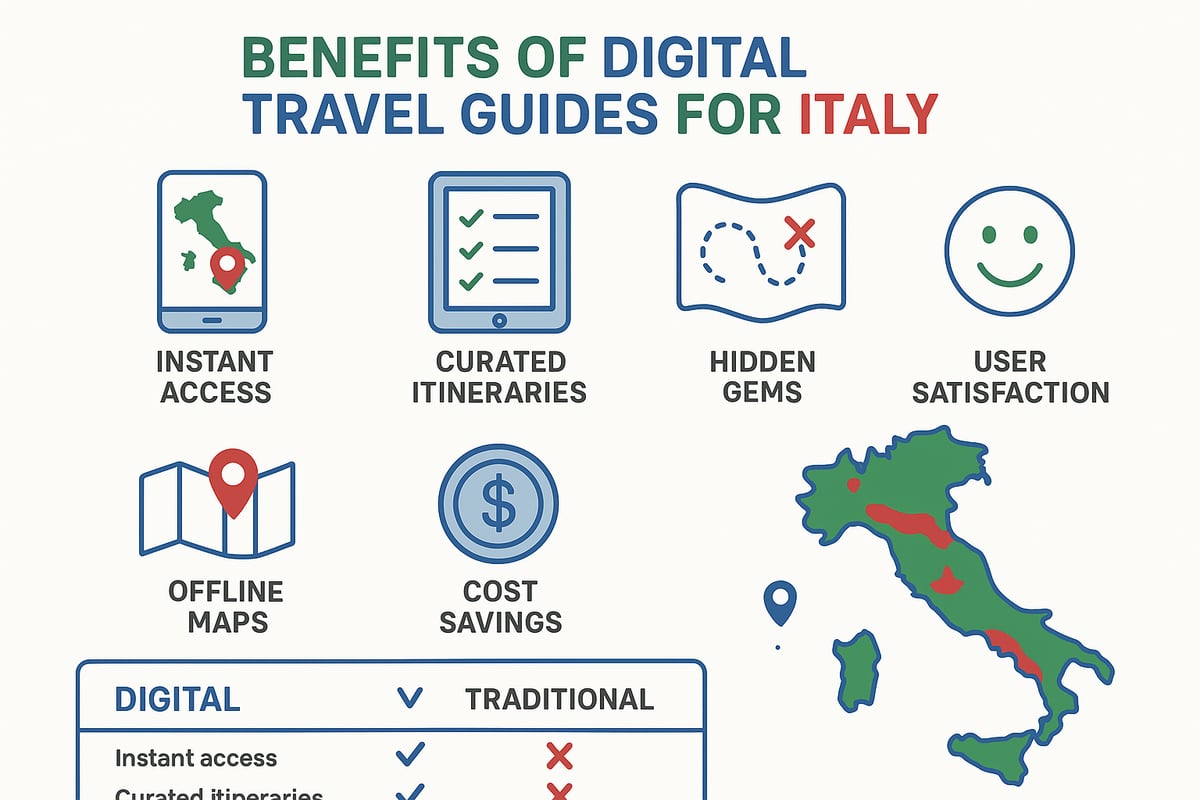
Modern digital guides are designed for today’s travelers who demand flexibility and real-time information. Unlike traditional books, digital resources provide curated itineraries, local secrets, and practical travel tips for italy, all updated regularly to reflect the latest trends and regulations. With features like offline maps, neighborhood insights, and restaurant recommendations, these guides help you navigate Italy’s cities and countryside with confidence.
Notably, guides such as The Awesome Travel Guide overview offer unbiased content, transparent reviews, and expert suggestions tailored to your travel style. This ensures you do not miss out on authentic experiences or fall into common tourist traps.
How Digital Guides Enhance Your Journey
Digital travel guides streamline your planning process, from booking accommodations to discovering hidden trattorias. Many guides include interactive maps, sample itineraries, and region-specific travel tips for italy, making trip customization easy and efficient. Their instant access means you can update your plans on the go, even offline, which is invaluable when navigating rural villages or busy city centers.
Affordability is another advantage. As discussed in Budget-friendly travel with guides, digital guides often cost less than printed books, and updates are frequently included at no extra charge.
User Experiences and Growing Popularity
Travelers increasingly report high satisfaction rates with digital travel guides. User testimonials highlight the convenience of having all travel tips for italy at their fingertips, as well as the ability to access local advice that is both current and trustworthy. According to industry data, digital-first resources are now a top choice for independent travelers, families, and couples alike.
Leveraging a digital guide is one of the smartest moves for a smooth, authentic, and memorable Italian adventure in 2026.
Navigating Italy’s Regions: North, Center, and South
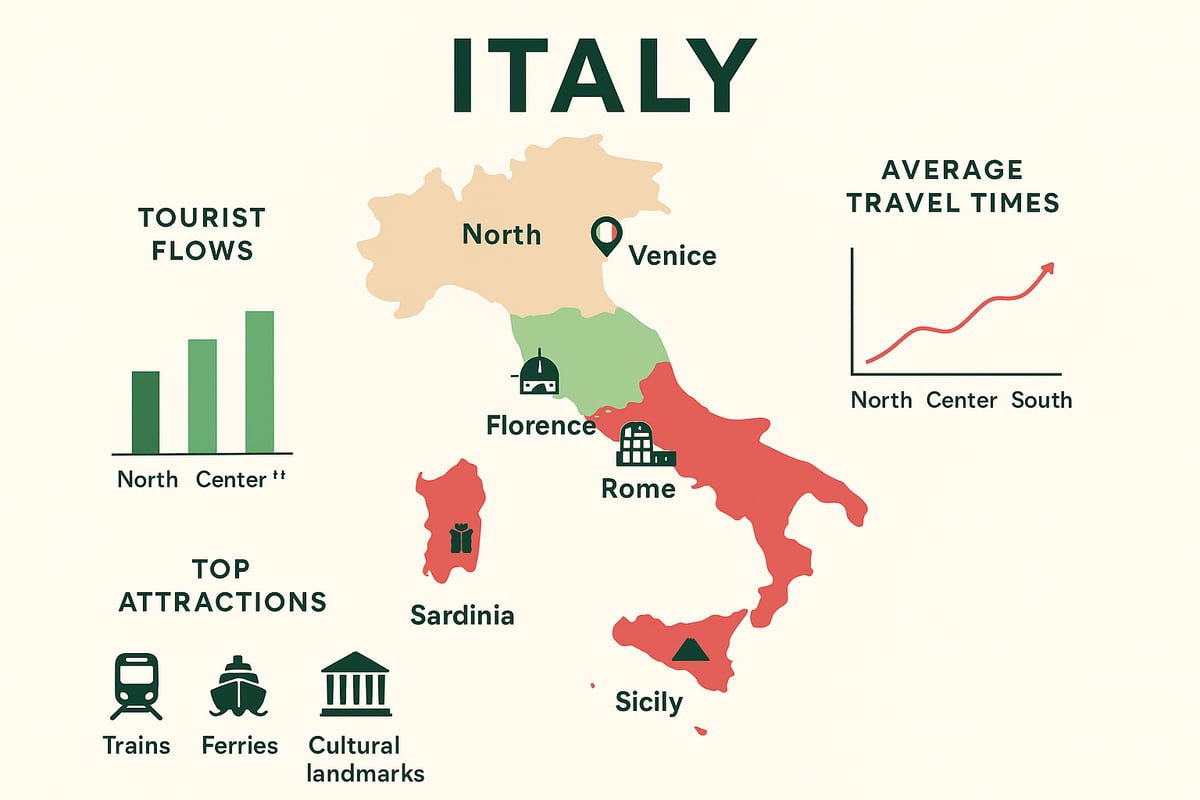
Italy’s diverse regions offer travelers a captivating array of landscapes, cultures, and experiences. Whether you crave the sophistication of the north, the historic heart of the center, or the sun-soaked charm of the south, each region holds its own unique treasures. Understanding the differences between these areas is essential for making the most of your journey and applying the best travel tips for italy.
Exploring Northern Italy: Lakes, Mountains, and Cities
Northern Italy is renowned for its cosmopolitan cities, breathtaking lakes, and dramatic mountain ranges. Milan dazzles with fashion and design, while Venice enchants with its canals and timeless architecture. Lake Como and the Dolomites offer serene escapes for nature lovers. The region’s efficient train network and well-maintained roads make exploring easy, a crucial consideration when researching travel tips for italy.
Northern Italy’s tourism continues to surge, with official Italy's tourism statistics 2024 showing strong growth in overnight stays. Festivals, such as Carnevale in Venice, provide cultural highlights, while regional cuisine—from risotto to alpine cheeses—adds flavor to every visit.
Discovering Central Italy: Art, History, and Countryside
Central Italy is the cradle of Renaissance art, ancient ruins, and rolling hills. Rome’s Colosseum and Vatican City draw millions each year, while Florence’s art galleries and architectural wonders inspire culture lovers. Tuscany and Umbria offer picturesque countryside dotted with vineyards and medieval towns, making them ideal stops when following travel tips for italy.
The region boasts UNESCO sites and world-class museums. Lesser-known gems like Orvieto and Montepulciano provide authentic experiences away from the crowds. Central Italy’s train connections allow for easy day trips, and local food markets offer a taste of traditional cuisine.
Experiencing Southern Italy and the Islands
Southern Italy beckons with its vibrant traditions, stunning coastlines, and ancient heritage. Naples, the birthplace of pizza, opens the door to the Amalfi Coast’s dramatic cliffs and pastel villages. Sicily and Sardinia entice travelers with their unique dialects, archaeological sites, and pristine beaches. For anyone seeking travel tips for italy, exploring the south’s growing popularity is a must.
Ferry travel and local trains connect islands and coastal towns. According to recent Italy's tourism growth in 2025, southern regions are experiencing record visitor numbers. Local festivals, such as Sicily’s almond blossom celebration, showcase the area’s rich culture.
Tips for Seamless Regional Travel
Transitioning between Italy’s regions is straightforward with the right planning. High-speed trains link Milan, Florence, and Rome in just a few hours, while car rentals provide flexibility for rural exploration. For longer distances or island visits, domestic flights and ferries are efficient options—a core aspect of smart travel tips for italy.
When crafting multi-region itineraries, allow time for each area’s unique pace and customs. Pay attention to regional dialects, as language and traditions can shift noticeably. Always check travel times and book tickets in advance, especially during peak seasons, to ensure a smooth journey.
As you get ready to explore the timeless charm of Italy using these essential travel tips, remember that having the right resources can truly transform your journey. With so many regions to discover, local customs to embrace, and hidden gems waiting around every corner, staying informed makes all the difference. That’s where comprehensive, digital travel guides come in—they provide up to date advice, insider recommendations, and practical details for every kind of traveler. If you want to travel with confidence and discover Italy’s authentic side, I recommend you Explore Guides designed for unforgettable adventures.