

Trips in Germany: Your Complete Travel Planning Guide
Germany stands as one of Europe's most rewarding destinations, offering travelers an extraordinary blend of historic cities, fairytale castles, scenic valleys, and vibrant cultural experiences. Whether you're drawn to the cosmopolitan energy of Berlin, the alpine beauty of Bavaria, or the wine regions along the Rhine, trips in Germany deliver unforgettable memories at every turn. Planning your German adventure requires understanding the country's regional diversity, efficient transportation systems, and seasonal variations to maximize your travel experience. This comprehensive guide provides the essential information needed to craft memorable trips in Germany that align with your interests, timeline, and travel style.
Understanding Germany's Regional Diversity
Germany comprises 16 federal states, each offering distinctive cultural traditions, landscapes, and attractions. This regional variety means trips in Germany can feel like exploring multiple countries within a single nation.
Bavaria in the southeast captures imaginations with its alpine scenery, ornate baroque churches, and world-famous beer culture. Munich serves as the gateway to this region, while smaller towns like Rothenburg ob der Tauber showcase medieval architecture frozen in time. The Romantic Road connects charming villages and culminates at Neuschwanstein Castle, Germany's most photographed landmark.
Northern Germany's Maritime Character
The northern states present a completely different atmosphere. Hamburg, Germany's second-largest city, thrives as a maritime hub with its historic port and warehouse district. The Baltic and North Sea coasts offer beach resorts, historic Hanseatic cities like Lübeck, and unique island getaways.
- Berlin: The capital blends cutting-edge contemporary culture with sobering historical sites
- Saxony: Dresden and Leipzig offer baroque splendor and classical music heritage
- Rhine Valley: UNESCO-listed river landscapes dotted with castle ruins and vineyards
- Black Forest: Dense woodlands, cuckoo clocks, and scenic hiking trails
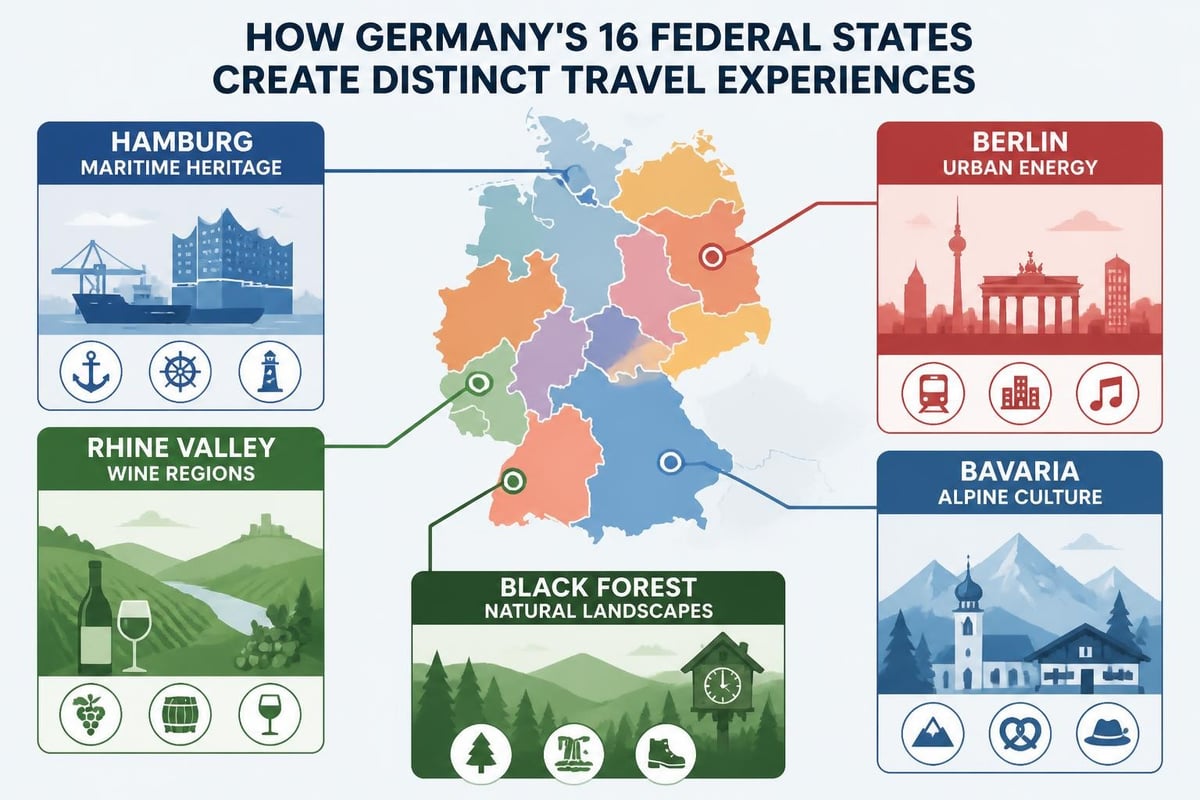
Understanding these regional differences helps travelers design trips in Germany that match their preferences. History enthusiasts gravitate toward Berlin and Dresden, outdoor adventurers head to Bavaria or the Black Forest, while wine lovers explore the Mosel and Rhine valleys.
Planning Your German Itinerary
Successful trips in Germany start with realistic itinerary planning that accounts for travel distances and regional priorities. The comprehensive planning resources available help travelers structure their time effectively across this diverse nation.
Recommended Trip Durations
| Trip Length | Coverage | Best For |
|---|---|---|
| 7 days | 2-3 cities or 1 region | First-time visitors, focused exploration |
| 10 days | 3-4 regions | Balanced mix of cities and countryside |
| 14+ days | Multi-region tour | Comprehensive exploration, slower pace |
A one-week itinerary might focus on Bavaria, combining Munich's urban attractions with day trips to Neuschwanstein Castle and the Alpine foothills. Alternatively, concentrate on northern highlights by pairing Berlin with Hamburg and Potsdam.
Ten-day trips in Germany allow more regional variety. Consider a route connecting Berlin, Dresden, and Prague, or explore the Romantic Road from Würzburg to Füssen. This duration provides sufficient time to experience both major cities and smaller towns without constant rushing.
Extended trips enable deeper regional immersion. Spend several days in each location, take scenic train journeys through the Rhine Valley, and venture into lesser-known areas like the Saxon Switzerland National Park or the Moselle wine region. The curated itineraries offer proven routes that balance efficiency with thorough exploration.
Seasonal Considerations
Germany's climate varies significantly throughout the year, influencing travel experiences:
Spring (April-May) brings mild temperatures, blooming gardens, and fewer crowds. Beer gardens reopen, outdoor festivals begin, and hiking trails become accessible after winter.
Summer (June-August) represents peak season with long daylight hours, warm weather, and maximum festival activity. Expect higher prices and advance booking requirements for popular destinations.
Autumn (September-October) delivers spectacular fall foliage, wine harvest celebrations, and comfortable temperatures. This shoulder season combines good weather with reduced tourist numbers.
Winter (November-March) transforms Germany into a Christmas market wonderland. While some attractions have limited hours, winter trips in Germany offer magical holiday experiences and excellent skiing in Bavaria.
Navigating Germany's Transportation Network
Germany's legendary efficiency extends to its transportation infrastructure, making multi-city trips remarkably straightforward. The extensive transportation options available connect virtually every corner of the country.
Deutsche Bahn and Train Travel
The Deutsche Bahn (DB) railway network forms the backbone of domestic travel. High-speed ICE trains link major cities at speeds exceeding 300 km/h, while regional trains serve smaller towns and scenic routes.
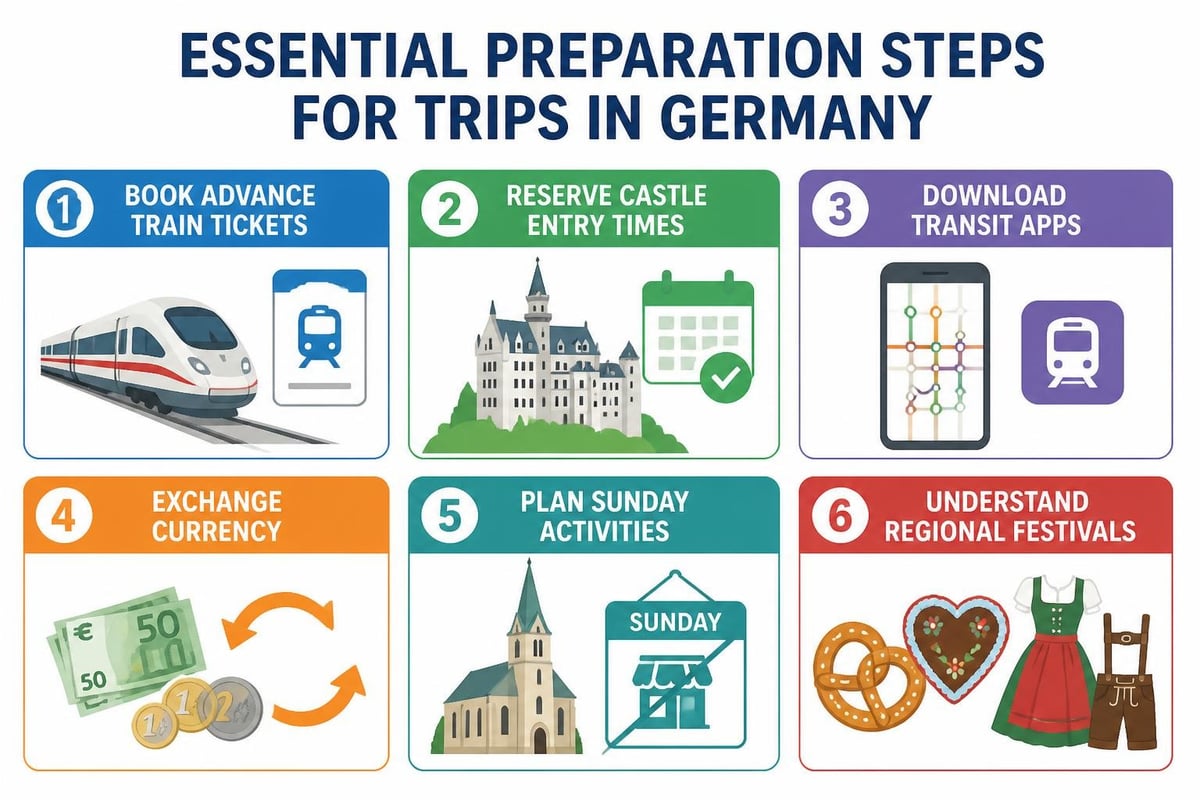
Rail passes offer excellent value for travelers making multiple journeys. The German Rail Pass provides unlimited travel on DB trains for consecutive days, while the Eurail Germany Pass suits flexible itineraries with non-consecutive travel days.
- Book ICE tickets in advance for Sparpreis (saver fares) at significant discounts
- Regional day passes (Länder-Tickets) allow unlimited travel within federal states
- Night trains connect distant cities while saving accommodation costs
- Station facilities include luggage storage, restaurants, and tourist information
Alternative Transportation Methods
Rental cars provide freedom for exploring rural areas, the Romantic Road, and mountain regions where public transit proves less convenient. Germany's autobahn network includes sections without speed limits, though responsible driving remains essential. Major rental companies operate at airports and city centers, with automatic transmission vehicles requiring advance reservation.
Long-distance buses operated by FlixBus and similar providers offer budget-friendly alternatives to trains, particularly for backpackers and budget-conscious travelers. Journey times exceed train travel but prices run significantly lower.
For Rhine and Moselle exploration, river cruises combine transportation with sightseeing. Day cruises between riverside towns allow hop-on, hop-off flexibility, while multi-day cruises provide all-inclusive travel experiences.
Urban transportation networks in German cities rank among Europe's best. Comprehensive subway (U-Bahn), tram, and bus systems operate efficiently with integrated ticketing. Purchase day passes or multi-day cards for unlimited travel within city zones.
Essential Cultural Insights for Travelers
Understanding German cultural norms enhances trips in Germany by fostering positive local interactions and avoiding common mistakes. The practical travel tips cover essential etiquette and customs that travelers should observe.
Daily Life and Business Hours
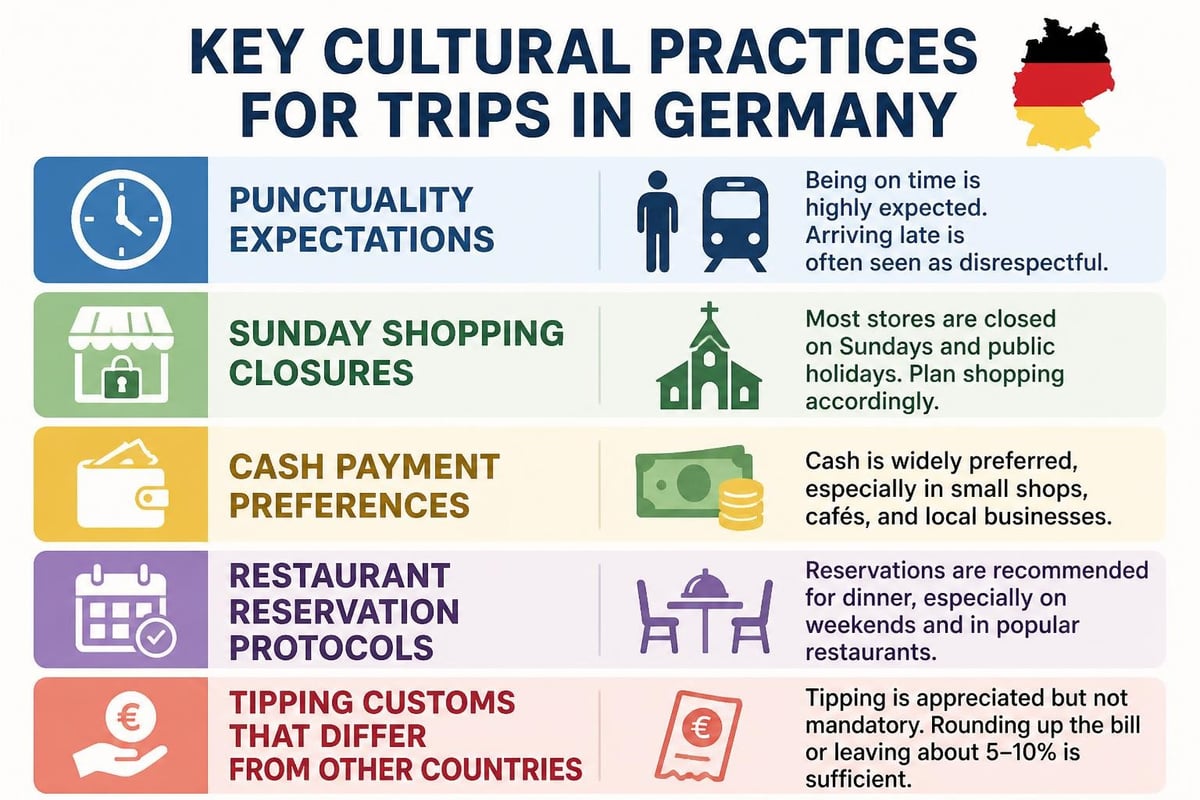
German punctuality isn't a stereotype but a cultural reality. Trains depart precisely on schedule, restaurant reservations hold for limited windows, and tour groups leave exactly at stated times. Arriving late may result in missed connections or forfeited bookings.
Sunday closures catch many visitors unprepared. Most shops, supermarkets, and businesses close on Sundays, with limited exceptions for bakeries and tourist areas. Plan grocery shopping and essential purchases for weekdays or Saturdays.
| Establishment Type | Typical Hours | Sunday Status |
|---|---|---|
| Shops/Supermarkets | 9:00-20:00 Mon-Sat | Closed |
| Restaurants | 11:30-22:00 daily | Open (limited menus) |
| Museums | 10:00-18:00 Tue-Sun | Open (many) |
| Banks | 9:00-16:00 Mon-Fri | Closed |
Social Customs and Dining Etiquette
Germans value direct communication and appreciate straightforward requests. Service staff won't hover but respond promptly when signaled. In restaurants, seat yourself only if signs indicate "Freie Platzwahl" (free seating choice); otherwise, wait for staff direction.
Tipping practices differ from American customs. Round up bills or add 5-10% for good service, handing cash directly to servers rather than leaving it on tables. State the total amount including tip when paying.
Cash remains king despite Germany's technological advancement. Many smaller establishments, restaurants, and shops don't accept credit cards. ATMs are widespread, but carrying sufficient euros prevents payment complications.
Must-Visit Destinations for German Trips
Certain destinations consistently rank as highlights for trips in Germany, offering experiences that capture the country's essence. For travelers seeking inspiration, Awesome Travel Guides provides detailed destination coverage that goes beyond surface-level attractions.
Berlin: The Capital's Layered History
Berlin stands apart from other European capitals with its raw energy, creative spirit, and visible historical layers. The Brandenburg Gate symbolizes German reunification, while remnants of the Berlin Wall serve as sobering reminders of Cold War division.
Museum Island concentrates five world-class museums in a UNESCO World Heritage site. The Pergamon Museum showcases ancient architecture, while the Neues Museum houses Egyptian artifacts including Nefertiti's bust. Advance ticket purchases avoid lengthy queues.
Contemporary culture thrives in neighborhoods like Kreuzberg and Friedrichshain, where street art, independent galleries, and multicultural dining scenes attract creative communities. The East Side Gallery transforms a remaining Wall section into the world's longest open-air gallery.
Munich and Bavarian Highlights
Munich balances cosmopolitan sophistication with traditional Bavarian culture. The Marienplatz anchors the city center, where the Glockenspiel performs daily. Beer gardens like the Hofbräuhaus deliver authentic experiences, though locals prefer quieter establishments in the Englischer Garten.
Day trips extend Munich's appeal. Neuschwanstein Castle draws millions annually to its fairytale turrets perched above the Alps. King Ludwig II's romantic vision inspired Disney's Sleeping Beauty Castle, though the interior reveals a tragic royal obsession. Book timed-entry tickets weeks in advance during summer.
The Zugspitze, Germany's highest peak at 2,962 meters, offers year-round alpine experiences. Cable cars ascend to viewing platforms spanning German and Austrian territory, while winter brings excellent skiing.
Rhine Valley Wine Region
The Middle Rhine Valley between Koblenz and Mainz represents Germany's most scenic stretch. Steep vineyard slopes rise above the river, crowned by medieval castle ruins that once controlled river traffic and collected tolls.
Wine tasting opportunities abound in villages like Rüdesheim, Bacharach, and St. Goar. Riesling dominates local production, ranging from bone-dry to lusciously sweet dessert wines. Many wineries offer tastings and tours explaining traditional viticulture on steep hillsides.
River cruises provide the most relaxing Rhine Valley exploration method. Full-day journeys pass dozens of castles, the legendary Loreley Rock, and charming wine villages. Alternatively, drive the scenic routes on either riverbank, stopping spontaneously at viewpoints and wine estates.
Rothenburg ob der Tauber
This perfectly preserved medieval town appears unchanged since the Middle Ages. Complete defensive walls encircle half-timbered houses, cobblestone squares, and Gothic churches. The Plönlein corner creates Germany's most photographed street scene.
Walk the wall circuit for rooftop views across red-tiled houses and surrounding countryside. The Medieval Crime Museum presents fascinating insights into historical justice systems, while the Christmas Museum celebrates holiday traditions year-round.
Timing matters significantly for Rothenburg visits. Tour buses flood the town mid-morning through late afternoon during peak season. Staying overnight or arriving early morning reveals the town's authentic medieval atmosphere before crowds arrive.
Practical Tips for Seamless German Travel
Optimizing logistics transforms good trips in Germany into exceptional experiences. Attention to practical details prevents common frustrations and maximizes enjoyment.
Accommodation Strategies
Germany offers accommodation spanning hostels to luxury hotels, with excellent mid-range options in every city. Booking platforms show extensive selections, but direct hotel bookings occasionally secure better rates or added perks.
Consider location carefully. Central locations reduce transportation time but command premium prices. Neighborhoods slightly removed from tourist centers often provide better value while remaining well-connected via public transit.
Apartments suit longer stays or travelers desiring kitchen facilities. Platforms offering vacation rentals enable grocery shopping at local markets and preparing meals, significantly reducing dining costs while providing cultural immersion through neighborhood exploration.
Language and Communication
English proficiency varies considerably across Germany. Major cities, tourist areas, and younger Germans generally speak English well. Rural areas and older generations may have limited English ability.
Learning basic German phrases demonstrates respect and often receives warm responses:
- Guten Tag (Good day)
- Danke schön (Thank you very much)
- Sprechen Sie Englisch? (Do you speak English?)
- Entschuldigung (Excuse me)
- Die Rechnung, bitte (The bill, please)
Translation apps bridge communication gaps when language barriers arise. Download offline language packs before departure for use without cellular data.
Money and Budgeting
Germany ranks as a moderately expensive European destination. Daily budgets vary based on travel style, accommodation choices, and dining preferences.
| Budget Level | Daily Cost | Includes |
|---|---|---|
| Budget | €50-80 | Hostels, self-catering, public transit |
| Mid-range | €100-150 | Hotels, restaurant meals, attractions |
| Luxury | €200+ | Premium hotels, fine dining, private tours |
Museum passes provide substantial savings in major cities. The Berlin WelcomeCard combines unlimited public transportation with discounted admission to numerous attractions. Similar passes exist for Munich, Hamburg, and other destinations.
Free experiences abound throughout Germany. Walking tours (tip-based), public parks, church visits, and architectural appreciation cost nothing. Many museums offer free admission one evening weekly.
Food and Drink Experiences
German cuisine extends far beyond sausages and beer, though both certainly merit attention. Regional specialties reflect local traditions and available ingredients, creating diverse culinary landscapes across trips in Germany.
Regional Specialties Worth Seeking
Bavaria champions hearty fare like Schweinshaxe (roasted pork knuckle), Weisswurst (white sausage served before noon), and Obatzda (spiced cheese spread). Pretzels reach their apex here, served warm and generously salted alongside beer.
Northern coastal regions specialize in seafood. Labskaus, a sailor's dish combining corned beef, potatoes, and beetroot, represents Hamburg's maritime heritage. Fish sandwiches from harbor stalls provide quick, delicious meals.
The Rhineland favors Sauerbraten (marinated pot roast) and Himmel und Erde (apples and potatoes with blood sausage). Spätzle, egg noodles prevalent in southern Germany, accompany many dishes.
Beer Culture and Wine Regions
Germany's beer purity law (Reinheitsgebot) dating to 1516 ensures quality brewing using only water, hops, and barley. Regional styles vary dramatically from Munich's Helles to Cologne's Kölsch to Berlin's Weissbier.
Beer gardens provide quintessential German social experiences. Order at counters, share communal tables, and enjoy relaxed outdoor atmospheres. Many allow bringing your own food while purchasing beverages.
German wine production centers on the Rhine, Mosel, and Franconia regions. Riesling dominates white wine production, expressing terroir through mineral-driven flavors. Wine taverns (Weinstuben) offer tastings and local specialties in intimate settings.
For travelers exploring European travel content, Germany's culinary diversity rivals its cultural attractions, providing sensory experiences that complement sightseeing.
Festivals and Cultural Events
Germany's festival calendar spans traditional celebrations and contemporary cultural events. Timing trips in Germany around festivals adds special dimension to travel experiences.
Oktoberfest and Beer Festivals
Munich's Oktoberfest ranks as the world's largest beer festival, attracting over six million visitors annually. Despite its name, the festival runs from mid-September through early October. Traditional tents serve special Oktoberfest beers, roasted meats, and pretzels while brass bands perform drinking songs.
Table reservations in major tents require booking months in advance. Smaller tents and weekday visits offer easier access. Traditional Bavarian clothing (Dirndls for women, Lederhosen for men) enhances the experience though isn't mandatory.
Numerous regional beer festivals throughout Germany provide authentic experiences without Oktoberfest's overwhelming crowds. Stuttgart's Cannstatter Volksfest, Nuremberg's Volksfest, and Munich's Frühlingsfest offer similar atmospheres with local character.
Christmas Markets
German Christmas markets (Weihnachtsmärkte) create magical winter atmospheres from late November through Christmas Eve. Wooden stalls sell handcrafted ornaments, seasonal foods, and Glühwein (mulled wine) in festive town squares.
Nuremberg's Christkindlesmarkt claims status as Germany's most famous market, though Dresden, Cologne, and Rothenburg offer equally enchanting experiences. Each market features regional specialties and local traditions, from Stollen fruitcake to roasted almonds.
Markets typically operate daily from late afternoon through evening during Advent weeks. Arrive early evening for optimal atmosphere before crowds peak.
Music and Arts Festivals
Bayreuth Festival presents Richard Wagner's operas in the composer's purpose-built theater each summer. Tickets require advance planning due to multi-year waiting lists, but experiencing Wagner in this setting provides unmatched musical experiences.
Berlin's cultural calendar includes countless events from gallery openings to electronic music festivals. The Berlin International Film Festival (Berlinale) in February ranks among the world's premier cinema events.
Regional wine festivals celebrate harvest seasons with tastings, vineyard tours, and folk traditions. The German Wine Route hosts numerous festivals from May through October, combining wine appreciation with regional culture.
Maximizing Your German Adventure
Smart travelers recognize that successful trips in Germany balance planning with flexibility. While advance reservations secure desired accommodations and timed-entry attractions, leaving room for spontaneous discoveries often yields the most memorable experiences.
Off-the-Beaten-Path Destinations
While Berlin, Munich, and the Rhine Valley rightfully attract visitors, lesser-known destinations reward adventurous travelers. Bamberg's UNESCO-listed old town combines baroque architecture with unique smoked beer traditions. Quedlinburg preserves over 1,300 half-timbered houses in a compact medieval center.
The Saxon Switzerland region near Dresden offers dramatic sandstone formations, hiking trails, and the Bastei Bridge viewpoint overlooking the Elbe River. This natural wonderland sees far fewer visitors than Bavaria's mountains while delivering equally spectacular scenery.
Heidelberg combines castle ruins, baroque old town charm, and vibrant university culture along the Neckar River. The Philosophers' Way hiking trail provides stunning viewpoints across the city and surrounding hills.
Sustainable Travel Practices
Germany's excellent public transportation reduces the need for car rental on most trips. Trains run on increasing percentages of renewable energy, making rail travel an environmentally responsible choice.
Many German cities promote cycling with extensive bike lane networks and rental systems. Exploring cities by bicycle reveals neighborhoods and details missed from bus or subway windows while minimizing environmental impact.
Supporting local businesses, markets, and restaurants over international chains contributes to community sustainability. Regional specialties showcase local agriculture and traditional practices worth preserving through tourist support.
Digital Tools and Resources
Essential apps streamline trips in Germany considerably. The DB Navigator app manages all German rail bookings, shows real-time platform information, and provides journey planning across the entire network.
Google Maps functions reliably for navigation, though downloading offline maps prevents data usage concerns. Rome2rio compares transportation options between destinations, revealing optimal routes combining trains, buses, and ferries.
City-specific apps often provide public transit planning, attraction information, and event calendars. Download relevant apps before arrival to familiarize yourself with features and offline capabilities.
For comprehensive planning support, digital travel resources offer structured information that complements individual research, helping travelers organize complex itineraries efficiently.
Health, Safety, and Emergency Information
Germany ranks among Europe's safest destinations, with low crime rates and excellent healthcare infrastructure. Standard precautions suffice for most situations.
Healthcare and Insurance
Travel insurance covering medical emergencies provides peace of mind, though Germany's healthcare system delivers high-quality care. EU citizens with European Health Insurance Cards receive necessary treatment, while others should verify coverage before departure.
Pharmacies (Apotheken) identified by red "A" signs provide professional advice for minor health concerns. Staff often speak English and recommend appropriate over-the-counter medications.
Emergency numbers include 112 for ambulance and fire services, and 110 for police. English-speaking operators assist foreign visitors in emergencies.
Safety Considerations
Pickpocketing represents the primary concern in crowded tourist areas and public transportation. Secure valuables in inside pockets or bags worn in front. Avoid displaying expensive jewelry, cameras, or phones unnecessarily.
Cycling safety requires attention, as bike lanes carry fast-moving traffic. Pedestrians should avoid standing in marked bike lanes and look both ways before crossing them.
Germany's drinking culture is responsible despite high consumption rates. Public intoxication draws disapproval, and disruptive behavior on trains or in public spaces may result in fines.
Practical Emergency Preparation
Photograph important documents (passport, insurance cards, credit cards) and store copies separately from originals. Email copies to yourself for access from any internet connection.
Note your embassy's contact information and location in major cities. While rarely needed, knowing how to reach consular services provides reassurance during international travel.
Register valuable items like cameras or laptops with customs when departing your home country to avoid import duty complications when returning.
Planning trips in Germany rewards thorough preparation while remaining flexible enough to embrace unexpected discoveries. From Munich's beer gardens to Berlin's museums, Rhine Valley castles to Black Forest trails, Germany delivers diverse experiences that appeal to every type of traveler. Whether you're crafting a focused one-week exploration or an extended multi-region journey, having reliable resources makes all the difference in creating seamless travel experiences. Awesome Travel Guides provides the comprehensive digital resources needed to navigate Germany's regions with confidence, uncovering both famous landmarks and hidden local favorites that transform ordinary trips into extraordinary adventures.