

Trips to Ireland: Your Complete Planning Guide for 2026
Ireland has long captivated travelers with its dramatic coastlines, rich history, and warm hospitality. Whether you're drawn to the literary streets of Dublin, the wild beauty of the Atlantic coast, or the mystical landscapes of ancient Celtic sites, trips to Ireland offer experiences that resonate long after you return home. Planning your Irish adventure requires understanding the country's unique characteristics, from its unpredictable weather patterns to its compact geography that makes exploring multiple regions surprisingly accessible. This guide provides everything you need to transform your Ireland travel dreams into a well-organized reality.
Understanding the Best Time for Your Irish Adventure
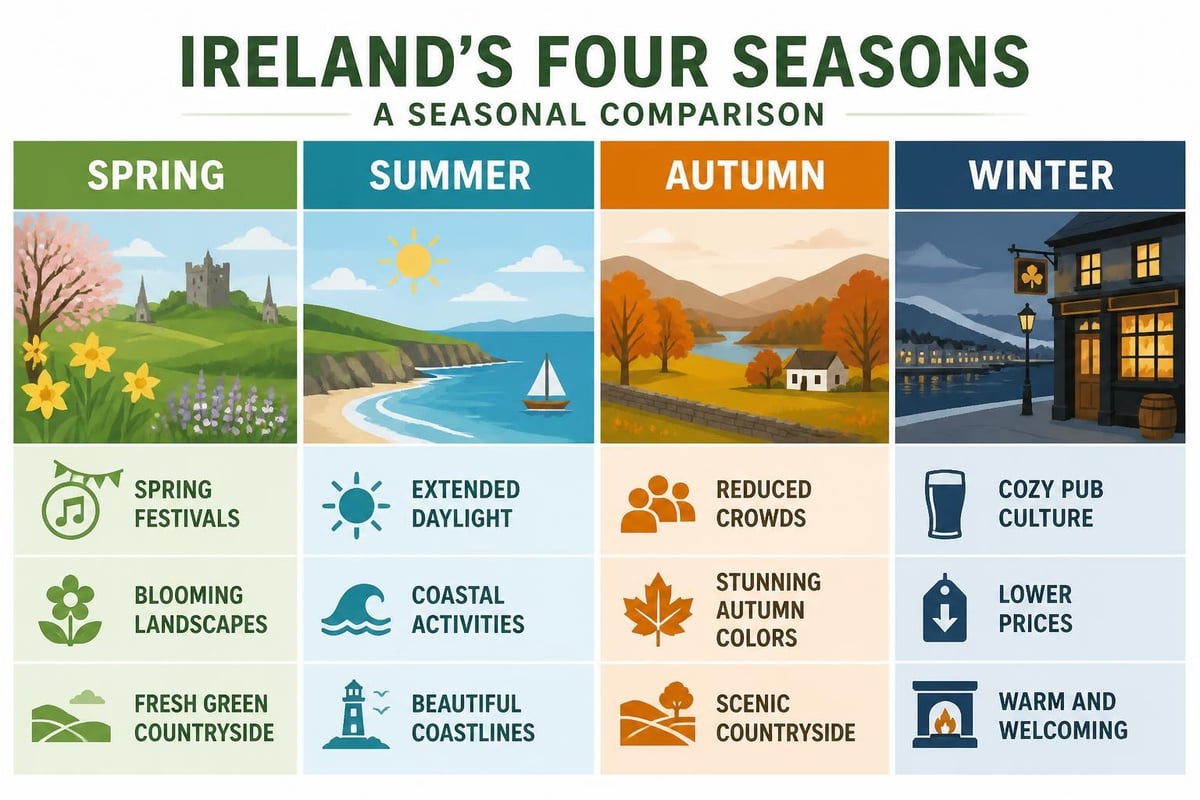
Timing significantly impacts your experience when planning trips to Ireland. The island experiences a temperate maritime climate, which translates to mild temperatures year-round but also means rain can arrive at any moment.
Spring and Summer Travel
May through September represents peak tourist season for excellent reasons. Temperatures range from 50°F to 65°F, daylight extends until 10 PM in June, and festivals fill the calendar. St. Patrick's Festival in March kicks off the season with parades and cultural celebrations nationwide.
Summer brings several advantages:
- Longest daylight hours for sightseeing
- Warmest temperatures for outdoor activities
- Full operation of all tourist attractions
- Vibrant festival scene throughout the country
However, planning your visit during peak season requires booking accommodations well in advance and accepting higher prices and larger crowds at popular sites.
Fall and Winter Opportunities
September through November offers a sweet spot for many travelers. The landscape transforms into autumn colors, crowds thin considerably, and prices drop while most attractions remain open. Winter trips to Ireland appeal to those seeking authentic local experiences without tourist masses, though shorter days and frequent rain require flexibility in your itinerary.
Essential Regions to Include in Your Itinerary
Ireland's compact size makes multi-region trips to Ireland entirely feasible, even with limited time. Each area offers distinct characteristics that appeal to different traveler interests.
Dublin and the East Coast
The capital city combines cosmopolitan energy with medieval history. Trinity College houses the Book of Kells, while Temple Bar buzzes with traditional music sessions. Beyond Dublin, County Wicklow's mountains and the ancient sites of the Boyne Valley create compelling day trips. Our travel blog explores these eastern attractions in greater depth.
The Wild Atlantic Way
This 1,600-mile coastal route stretches from Donegal to Cork, showcasing Ireland's most dramatic scenery. The Cliffs of Moher rise 700 feet above the Atlantic, while the Ring of Kerry winds through mountains, lakes, and coastal villages. Galway serves as the cultural heart of the west, blending artistic energy with traditional Irish culture.
| Region | Highlights | Ideal Duration |
|---|---|---|
| Dublin & East | Trinity College, Wicklow Mountains, Newgrange | 2-3 days |
| Wild Atlantic Way | Cliffs of Moher, Connemara, Ring of Kerry | 5-7 days |
| Southwest | Cork, Blarney Castle, Dingle Peninsula | 3-4 days |
| Northern Ireland | Giant's Causeway, Belfast, Antrim Coast | 2-3 days |
Northern Ireland and the Causeway Coast
The Giant's Causeway's hexagonal basalt columns create one of the world's most distinctive geological wonders. Belfast has transformed into a vibrant city with compelling museums documenting the Titanic and the region's complex history. The Antrim Coast Road rivals any scenic drive globally.
Practical Planning Considerations
Successful trips to Ireland require attention to several logistical elements that differ from other European destinations.
Transportation Strategies
Driving offers maximum flexibility for exploring rural areas and coastal routes. However, navigating narrow roads on the left side requires adjustment for American drivers. Essential driving tips for Ireland help first-time visitors prepare for this challenge.
Public transportation connects major cities effectively:
- Irish Rail links Dublin with Cork, Galway, and other urban centers
- Bus Éireann serves smaller towns and rural areas
- City buses and the LUAS tram system navigate Dublin
- Private tour companies offer guided excursions to major attractions
Booking a rental car provides freedom but comes with considerations. Automatic transmissions cost significantly more than manual, parking in city centers presents challenges, and fuel prices exceed American levels substantially.
Accommodation Options
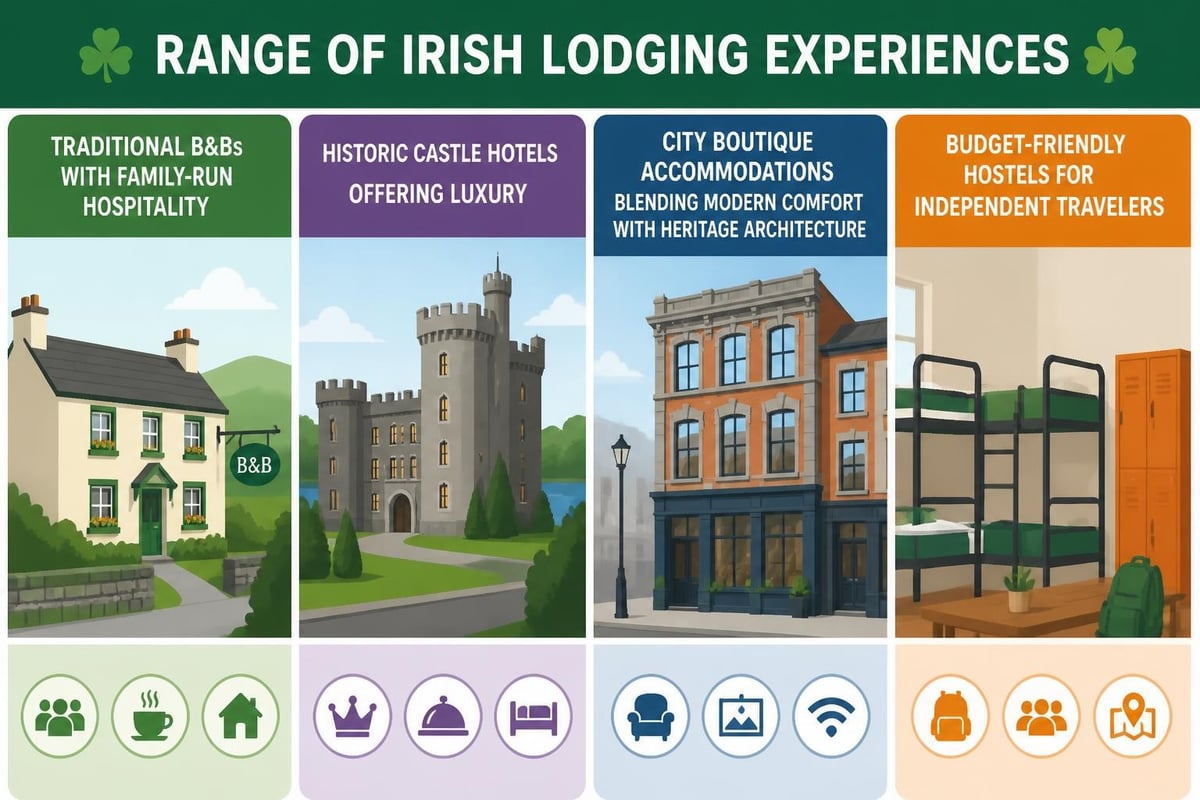
Ireland offers diverse lodging from luxury castle hotels to budget hostels. Bed and breakfasts provide authentic experiences and hearty Irish breakfasts, while boutique hotels in cities combine modern amenities with historic charm. Accommodation choices across Ireland range dramatically in price and style, matching various traveler preferences and budgets.
Booking strategies matter. Summer months require reservations several weeks ahead, particularly in popular areas like Galway and Killarney. Shoulder season offers more flexibility, though confirming availability before arriving in smaller towns prevents disappointment.
Cultural Experiences and Hidden Gems
Beyond famous landmarks, trips to Ireland reveal their true magic in cultural encounters and lesser-known destinations that Awesome Travel Guides specializes in highlighting.
Traditional Music and Pub Culture
Live traditional music sessions occur nightly in pubs across Ireland, particularly in Galway, Doolin, and Dingle. These aren't performances for tourists but genuine gatherings where musicians play for love of the tradition. Arriving early secures seating, and buying musicians a drink shows appreciation.
Irish pubs function as community centers where conversation flows as freely as Guinness. The "round" system means buying drinks for your group in turns, creating social bonds. Understanding these customs enriches your experience beyond simple sightseeing.
Literary and Historical Sites
Ireland's literary heritage permeates the landscape. James Joyce's Dublin, W.B. Yeats' Sligo, and Oscar Wilde's connections to the capital create pilgrimage opportunities for book lovers. Historical sites like the Rock of Cashel, Glendalough's monastic settlement, and Kilmainham Gaol illuminate Ireland's complex past.
Off-the-Beaten-Path Destinations
While tour buses crowd the Cliffs of Moher, equally stunning locations receive fraction of the visitors:
- Achill Island offers wild beauty and artistic communities
- The Burren presents a lunar-like limestone landscape
- Skellig Michael requires advance booking but rewards with dramatic island monastery
- Inishowen Peninsula showcases Donegal's rugged northern coast
Similar to experiences you might find in our Scotland travel guides, these lesser-known Irish destinations provide authentic encounters without crowds.
Budgeting for Your Irish Journey
Understanding costs helps create realistic expectations when planning trips to Ireland. The country ranks among Europe's more expensive destinations, though strategic choices control spending.
Daily Cost Breakdown
| Expense Category | Budget Range | Mid-Range | Luxury |
|---|---|---|---|
| Accommodation | $30-50 | $100-150 | $250+ |
| Meals | $25-35 | $50-75 | $100+ |
| Transportation | $20-40 | $50-80 | $100+ |
| Activities | $15-30 | $40-60 | $100+ |
| Daily Total | $90-155 | $240-365 | $550+ |
The financial considerations for visiting Ireland include understanding currency exchange, tipping customs, and seasonal price variations that affect your total investment.
Money-Saving Strategies
Smart travelers reduce costs without sacrificing experiences. Purchasing a Heritage Card ($40) grants access to numerous historical sites operated by the Office of Public Works. Eating lunch as your main meal capitalizes on better-value lunch menus, while self-catering occasionally in accommodations with kitchens stretches budgets further.
Free experiences abound. Hiking trails crisscross the country, many beaches rival tropical destinations for beauty (despite colder water), and simply wandering neighborhoods reveals architectural gems and local life. Our comprehensive digital guides highlight these budget-friendly opportunities alongside premium experiences.
Packing and Practical Preparations
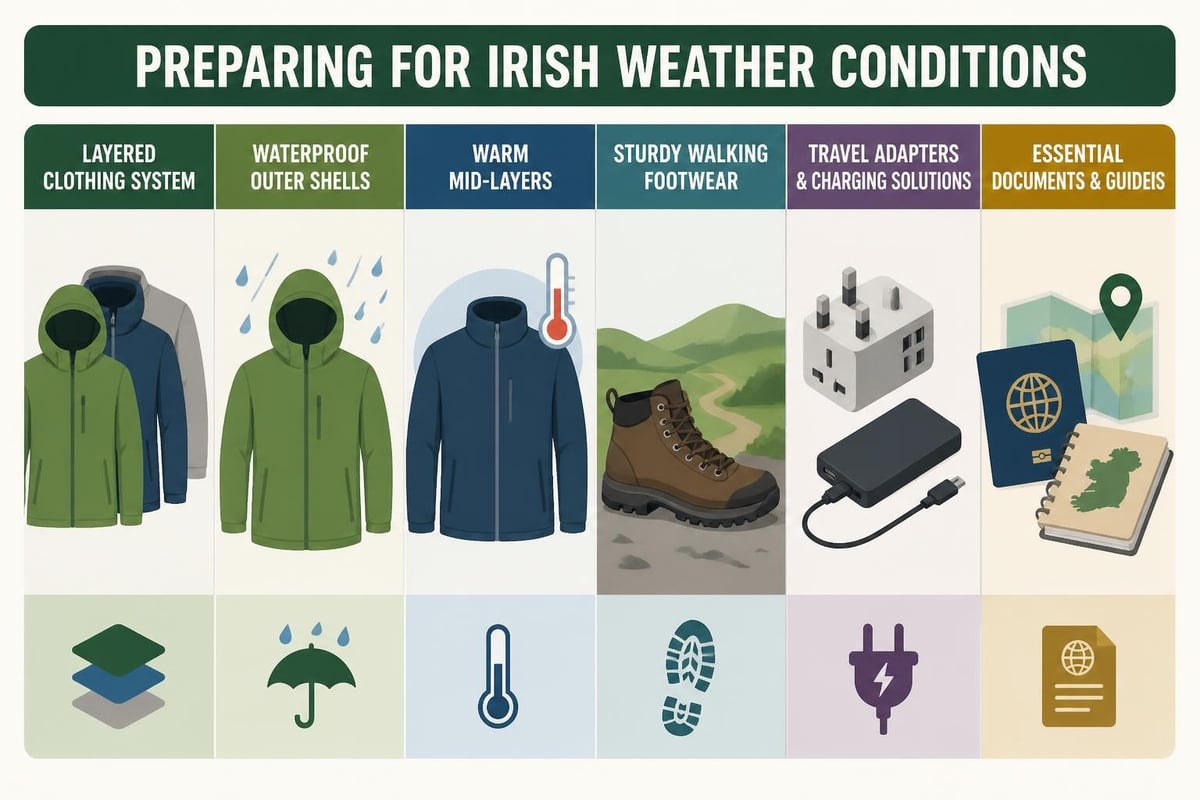
The Irish saying "there's no such thing as bad weather, only unsuitable clothing" applies perfectly when preparing for trips to Ireland. Weather variability demands strategic packing regardless of season.
Essential Items
Layering proves crucial for Ireland's changeable conditions. A waterproof jacket ranks as your most important item, followed by comfortable walking shoes with good traction for uneven surfaces. Even summer visits require a warm sweater for cool evenings and air-conditioned spaces.
The Ireland travel checklist covers practical matters like electrical adapters (Type G plugs with three rectangular pins), though most modern accommodations provide USB charging ports. Ireland uses the Euro in the Republic and Pound Sterling in Northern Ireland, requiring currency awareness if crossing the border.
Technology and Connectivity
International phone plans or local SIM cards keep you connected, though Wi-Fi availability in accommodations and cafes has improved dramatically. Downloading offline maps prevents navigation issues in rural areas with spotty coverage. Digital travel guides from sources like Awesome Travel Guides work without internet connectivity, ensuring access to information regardless of signal strength.
Crafting Your Perfect Itinerary
Successful trips to Ireland balance popular attractions with relaxed exploration. Over-scheduling creates stress and prevents spontaneous discoveries that often become trip highlights.
Sample Seven-Day Framework
Days 1-2: Dublin - Explore Trinity College, Temple Bar, and Georgian architecture. Take a day trip to Glendalough or the Boyne Valley.
Days 3-4: Galway and Connemara - Experience the city's bohemian atmosphere, then venture into Connemara's mountains and coastal villages.
Days 5-6: Western Highlights - Visit the Cliffs of Moher, drive the Ring of Kerry or Dingle Peninsula, based in Killarney or Dingle town.
Day 7: Return Journey - Cork offers an alternative to backtracking to Dublin, with direct flights to North America from certain airlines.
This framework allows flexibility based on interests. History enthusiasts might add more time in the east, while nature lovers extend stays along the Wild Atlantic Way. Planning resources provide additional itinerary variations matching different trip lengths and priorities.
Building in Flexibility
Irish weather and the country's relaxed pace deserve schedule buffer. Planning only one major activity daily prevents rushing and allows adjustment when you discover a charming village worth extra time. Some travelers find their best memories come from unplanned pub conversations or stumbling upon a traditional music session rather than ticking off famous sites.
Embracing Irish Culture and Etiquette
Understanding cultural nuances enriches trips to Ireland beyond surface-level tourism. Irish people are renowned for friendliness, though certain customs deserve attention.
Social Interactions
Irish conversation often includes self-deprecating humor and gentle teasing as forms of friendliness. Taking yourself too seriously marks you as an outsider, while laughing at yourself gains instant rapport. The phrase "grand" means anything from actually good to barely acceptable, depending on context and tone.
Queuing (waiting in line) follows strict protocols. Jumping the queue or appearing impatient violates serious social norms. Patience and politeness open doors that aggression never will.
Dining and Drinking Customs
Tipping practices differ from American norms. Restaurant service typically receives 10-12% for good service, while bar staff receive no tips for poured drinks. Buying a round demonstrates generosity, though pace yourself as Irish measures for spirits exceed American pours significantly.
Traditional Irish cuisine has evolved beyond stereotypes. Seafood along the coast matches any global standard, while the farm-to-table movement thrives in cities and countryside alike. Trying local specialties like proper Irish stew, fresh oysters, or artisan cheeses from the Burren adds culinary dimension to your journey.
Sustainable and Responsible Travel
Modern trips to Ireland increasingly consider environmental and community impact. Mass tourism affects fragile ecosystems and small communities, making conscious choices important.
Environmental Considerations
Several practices minimize your footprint:
- Use reusable water bottles and coffee cups
- Support accommodations with sustainability certifications
- Choose public transportation or walking when feasible
- Respect wildlife and maintain distance from animals
- Leave no trace when hiking or visiting natural areas
Popular sites like the Cliffs of Moher and Giant's Causeway suffer from overtourism. Visiting early morning or late afternoon reduces your contribution to crowding while improving your experience.
Supporting Local Communities
Choosing locally-owned accommodations, restaurants, and tour operators keeps tourism revenue within communities. Shopping at craft markets and independent stores supports artisans directly. Engaging respectfully with locals, learning basic Irish phrases, and showing genuine interest in culture demonstrates appreciation beyond transactional tourism.
Making the Most of Digital Resources
Contemporary trips to Ireland benefit enormously from quality digital planning tools. Smartphone apps, online guides, and digital maps enhance navigation and discovery while reducing paper waste.
Comprehensive digital guides offer several advantages over traditional guidebooks. They update regularly with current information, weigh nothing in your luggage, and work offline once downloaded. For travelers seeking deeper insights beyond basic tourist information, specialized resources like those available through our FAQ section answer specific questions about downloading and using digital guides effectively.
Combining digital resources with spontaneity creates the ideal balance. Use guides for foundational planning and practical information, but remain open to local recommendations and unexpected discoveries that make trips to Ireland memorable beyond any itinerary.
Planning trips to Ireland requires balancing practical logistics with openness to spontaneous adventure, understanding that weather, culture, and landscape create experiences unlike anywhere else in Europe. Whether you're captivated by ancient history, dramatic coastlines, or vibrant cities, Ireland delivers authentic travel moments that digital guides help you discover and appreciate fully. Ready to transform your Irish dreams into reality? Awesome Travel Guides provides the comprehensive digital resources you need to explore Ireland with confidence, uncovering hidden gems and local insights that turn good trips into unforgettable journeys.