

Trips to Ireland and England: Your Complete Guide
Planning trips to Ireland and England presents travelers with an extraordinary opportunity to experience two distinct cultures, landscapes, and histories in a single journey. These neighboring nations offer everything from bustling cosmopolitan cities to serene countryside vistas, medieval castles to modern museums, and traditional pubs to innovative culinary scenes. Whether you're drawn to the rugged Cliffs of Moher, the historic streets of London, or the literary heritage of Dublin, combining these destinations creates a rich tapestry of experiences that showcase the best of the British Isles.
Understanding the Geography and Logistics
When organizing trips to Ireland and England, understanding the geographical relationship between these two countries significantly impacts your planning decisions. England occupies the southern and central portions of Great Britain, while Ireland sits to the west across the Irish Sea. The proximity makes multi-country itineraries highly feasible, with numerous transportation options connecting major cities.
The distance between Dublin and London spans approximately 290 miles by air, with flight times averaging just over an hour. Ferry services provide alternative routes, particularly between Dublin and Holyhead or Rosslare and Fishguard, offering scenic journeys for those who prefer sea travel. Northern Ireland shares a land border with the Republic of Ireland, creating seamless overland travel opportunities for comprehensive road trips across the UK and Ireland.
Entry Requirements and Documentation
Both countries maintain specific entry requirements that travelers must address before departure. US citizens can enter both Ireland and England without visas for tourism stays up to 90 days, though valid passports remain mandatory. Post-Brexit regulations mean that Ireland (an EU member) and England (part of the UK) now have separate entry protocols, requiring attention to documentation when crossing between them.
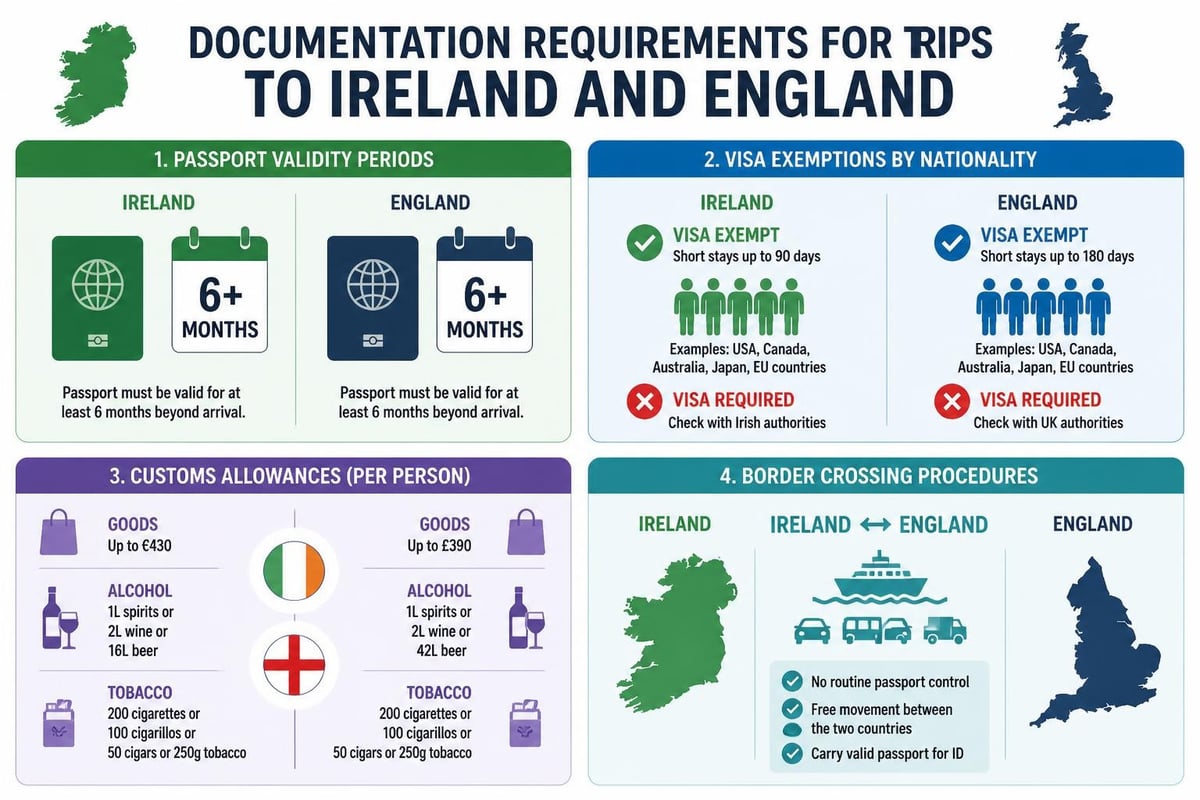
Travel insurance proves essential for medical coverage, as healthcare costs can accumulate quickly without proper protection. The Awesome Travel Guides pre-trip checklist helps ensure all necessary documents and preparations are completed before departure.
Crafting Your Itinerary
Successful trips to Ireland and England require thoughtful itinerary planning that balances time between destinations while accounting for travel days and personal interests. Most travelers allocate 10 to 14 days for combined trips, though shorter and longer durations each offer unique advantages.
A ten-day itinerary might dedicate five days to each country, allowing exploration of one or two major cities plus surrounding regions. Fourteen-day trips provide breathing room for smaller towns, countryside excursions, and spontaneous discoveries. Consider your travel pace preference when determining duration.
Sample Two-Week Itinerary Structure
| Days | Location | Highlights |
|---|---|---|
| 1-3 | London, England | British Museum, Tower of London, West End theaters |
| 4-5 | Cotswolds, England | Picturesque villages, countryside walks, historic estates |
| 6-7 | Bath & Stonehenge | Roman baths, Georgian architecture, prehistoric monument |
| 8-10 | Dublin, Ireland | Trinity College, Temple Bar, Guinness Storehouse |
| 11-12 | Galway & Cliffs of Moher | Traditional music, coastal scenery, Irish culture |
| 13-14 | Cork & Blarney Castle | Food scene, castle visits, southern Ireland charm |
This framework provides structure while remaining flexible enough for personal customization. The Awesome Guide to England and Awesome Guide to Ireland offer detailed recommendations for maximizing time in each destination.
Regional Considerations
England's diversity spans from cosmopolitan London to the Lake District's natural beauty, with distinct regions offering varied experiences. The Southeast features historic Canterbury and coastal Brighton, while the North showcases York's medieval walls and Manchester's industrial heritage. Understanding how to plan a trip to England helps prioritize regions aligned with your interests.
Ireland divides into four provinces, each with distinctive character. Leinster contains Dublin and ancient historical sites, Munster offers dramatic coastal landscapes, Connacht presents wild beauty and traditional culture, while Ulster combines Northern Ireland with the Republic's northernmost counties. Strategic planning ensures trips to Ireland and England capture each country's essence without feeling rushed.
Transportation Between and Within Countries
Moving efficiently between Ireland and England, and navigating within each country, requires understanding available transportation modes and their respective advantages.
International Connections
Air travel remains the fastest option for trips between Ireland and England, with multiple daily flights connecting Dublin, Cork, and Shannon to London, Manchester, Birmingham, and other English cities. Budget carriers like Ryanair and Aer Lingus offer competitive fares, particularly when booked in advance. Flight time rarely exceeds 90 minutes, making same-day transfers feasible.
Ferry services provide alternatives for travelers with vehicles or those preferring maritime journeys. Routes include:
- Dublin to Holyhead (Wales, providing England access)
- Rosslare to Fishguard or Pembroke (Wales)
- Belfast to Liverpool or Cairnryan (Scotland, connecting to England)
Ferry crossings typically take 2 to 8 hours depending on route and vessel type, with both passenger and vehicle accommodations available.
Ground Transportation Options
Once arrived, both countries offer extensive ground transportation networks. England's rail system connects major cities efficiently, with services like the London Underground, regional trains, and long-distance intercity routes operated by various companies. Advance booking through Trainline or individual operators often yields significant savings. Understanding travel tips for England helps navigate the system confidently.
Ireland's rail network, operated primarily by Irish Rail (Iarnród Éireann), connects Dublin with Cork, Galway, Limerick, and other major towns. Bus Éireann provides comprehensive bus services reaching areas without rail access. Car rentals offer maximum flexibility, particularly for exploring countryside regions, though remember that both countries drive on the left side of the road.
| Transportation Type | England Advantages | Ireland Advantages |
|---|---|---|
| Train | Extensive network, frequent service | Scenic routes, connects major cities |
| Bus | Budget-friendly, wide coverage | Reaches remote villages |
| Car Rental | Countryside access, flexible schedule | Essential for west coast exploration |
| City Public Transit | London Tube, local buses | Dublin DART, Luas tram |
Accommodation Strategies
Accommodation choices significantly impact both budget and experience quality during trips to Ireland and England. Strategic selection balances location convenience, authentic atmosphere, and financial considerations.
Urban Accommodation
London's accommodation ranges from budget hostels in King's Cross to luxury hotels in Mayfair, with mid-range options concentrated in neighborhoods like Bloomsbury, South Bank, and Paddington. Booking platforms show prices varying dramatically by location and season, with advance reservations essential during peak summer months and major events.
Dublin similarly offers diverse lodging, with Temple Bar providing central access despite higher prices and street noise. Neighborhoods like Smithfield and the Docklands present quieter alternatives with easy public transit connections to attractions. Both cities feature boutique hotels in converted Georgian townhouses, offering character absent from chain establishments.
Countryside and Small Town Stays
Rural accommodations provide authentic experiences unavailable in cities. Irish B&Bs offer legendary hospitality, with hosts providing insider recommendations and hearty breakfasts. England's countryside features charming coaching inns, farm stays, and manor house hotels, particularly throughout the Cotswolds, Yorkshire Dales, and Devon.
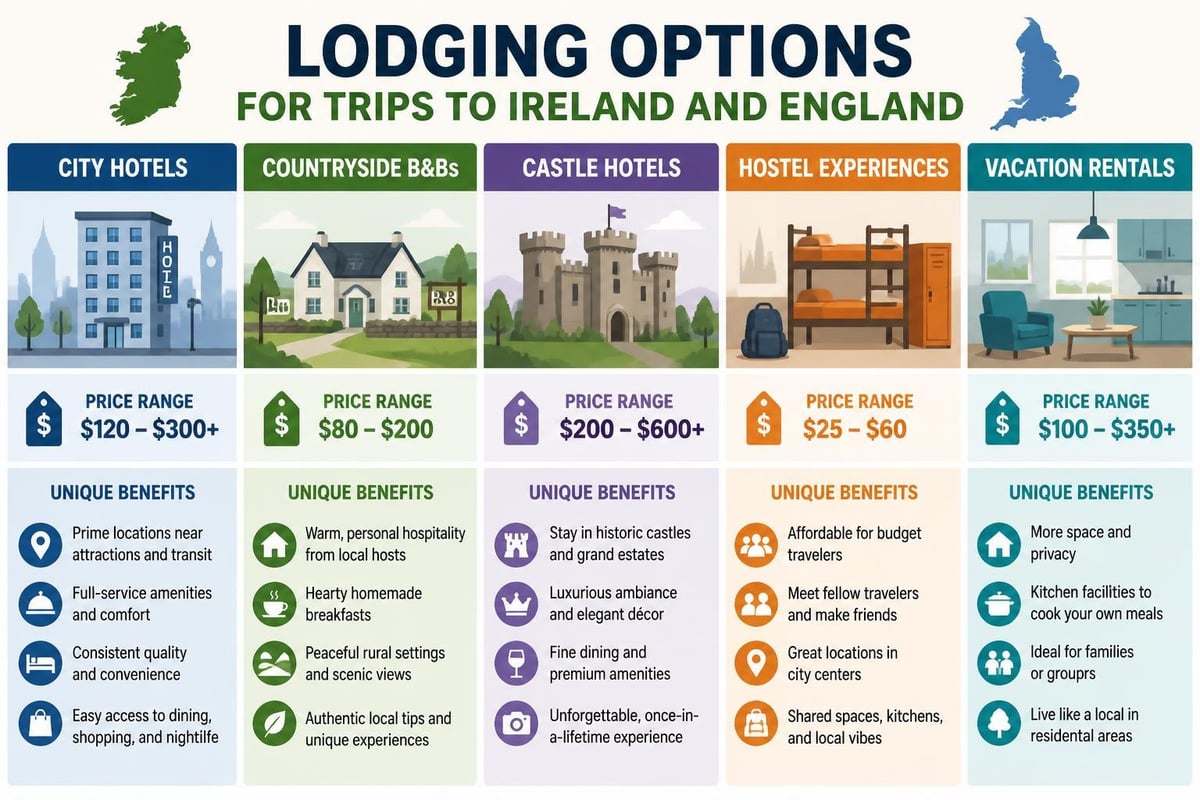
Consider these accommodation booking strategies:
- Book city hotels 2-3 months ahead for best rates and selection
- Reserve rural B&Bs directly to support local businesses and negotiate rates
- Mix accommodation types for varied experiences and budget balance
- Check cancellation policies given unpredictable travel circumstances
- Read recent reviews focusing on cleanliness, location accuracy, and host responsiveness
Seasonal Considerations and Weather Patterns
Timing trips to Ireland and England significantly affects weather conditions, crowd levels, and available activities. Both countries experience temperate maritime climates with relatively mild temperatures but considerable rainfall throughout the year.
Best Travel Seasons
Summer (June through August) brings warmest temperatures, longest daylight hours, and peak tourist crowds. Temperatures average 60-70°F in both countries, with occasional heat waves pushing into the 80s. Popular attractions require advance booking, and accommodation prices reach annual highs. However, outdoor festivals, garden displays, and extended opening hours offset these challenges.
Spring (April-May) and fall (September-October) offer compelling alternatives. These shoulder seasons provide pleasant weather, smaller crowds, and moderate prices. Spring showcases blooming gardens and countryside greenery, while autumn delivers stunning foliage and harvest festivals. Rain remains frequent but manageable with proper preparation.
Winter (November-March) presents the quietest, most affordable travel period. Temperatures hover around 40-50°F, with shorter days limiting sightseeing hours. Christmas markets and festive decorations create magical December atmospheres, particularly in London, Bath, and Dublin. Museums and indoor attractions face minimal crowds, allowing leisurely exploration.
Weather Preparation
| Season | England Weather | Ireland Weather | Packing Essentials |
|---|---|---|---|
| Spring | 50-60°F, showers | 48-57°F, windy | Layered clothing, rain jacket |
| Summer | 65-75°F, occasional sun | 60-68°F, rain likely | Light layers, sunscreen, umbrella |
| Fall | 55-65°F, variable | 52-61°F, wet periods | Sweaters, waterproof shoes |
| Winter | 40-50°F, damp | 42-48°F, storms | Warm coat, gloves, weatherproof gear |
The packing guide from Awesome Travel Guides helps ensure appropriate clothing and gear for any season.
Cultural Experiences and Local Traditions
Trips to Ireland and England offer immersion in rich cultural traditions spanning centuries. Understanding and respecting local customs enhances interactions and creates more meaningful experiences.
English Cultural Nuances
English culture values politeness, queuing etiquette, and understated communication. Saying "please," "thank you," and "sorry" frequently demonstrates proper manners. Queuing (standing in orderly lines) is taken seriously, with queue-jumping considered highly offensive. The British sense of humor tends toward dry, self-deprecating wit that may initially perplex visitors.
Pub culture forms a cornerstone of English social life. Traditional pubs serve as community gathering spaces where locals socialize over pints. Ordering at the bar rather than waiting for table service represents standard practice. Tipping around 10-15% applies in restaurants, while rounding up taxi fares shows appreciation.
Irish Cultural Traditions
Irish hospitality and warmth characterize visitor interactions, with locals often striking up friendly conversations. Traditional music sessions in pubs create authentic cultural experiences, particularly in Galway, Doolin, and Dingle. Visitors are welcome to listen and enjoy, though photographing or recording requires polite permission.
Language nuances include Irish (Gaeilge) signage in Gaeltacht regions and unique colloquialisms throughout the country. While English predominates, showing interest in Irish language basics demonstrates cultural respect. Pub etiquette mirrors England with bar ordering, though round-buying (taking turns purchasing drinks for groups) follows different social expectations.
Culinary Journeys
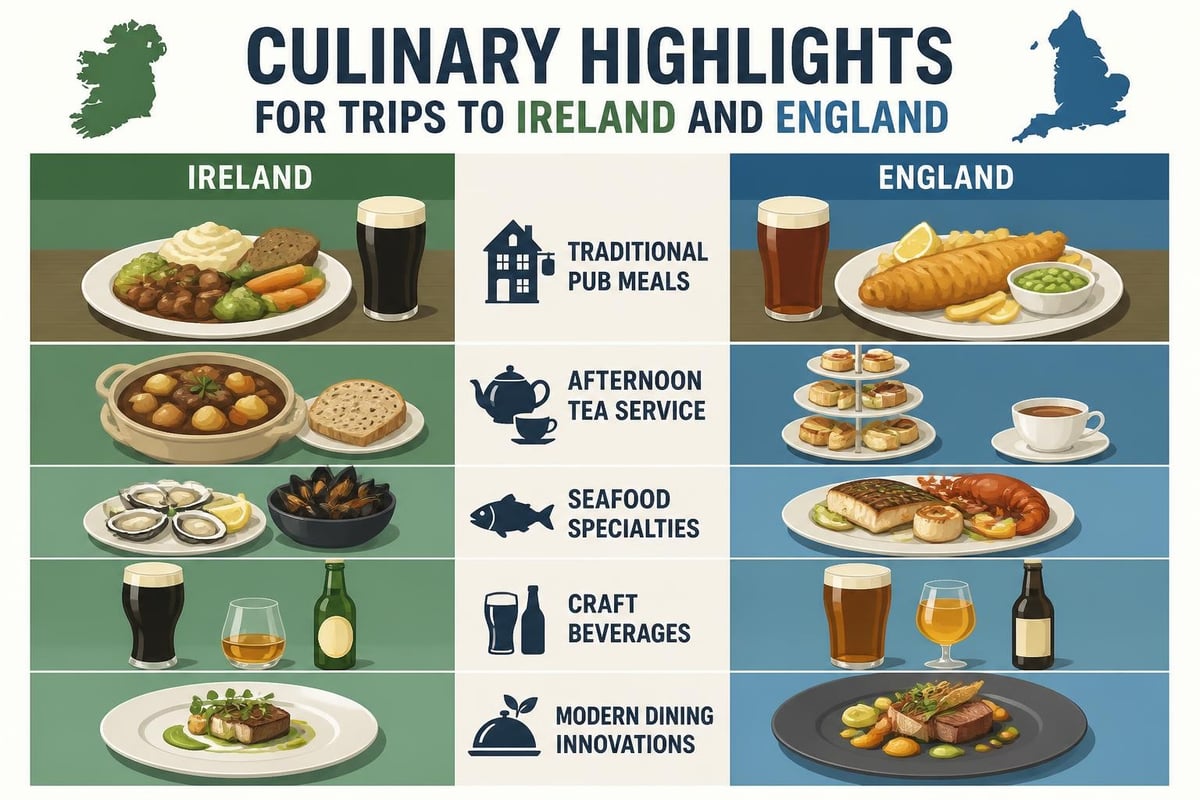
Food experiences during trips to Ireland and England have evolved dramatically, with both countries now offering diverse, high-quality dining options alongside traditional favorites.
Traditional English Fare
English cuisine centers on hearty, comforting dishes. Full English breakfasts feature eggs, bacon, sausages, beans, tomatoes, mushrooms, and toast, providing substantial morning fuel. Afternoon tea, a quintessentially English tradition, pairs delicate sandwiches, scones with clotted cream, and pastries with proper tea service.
Fish and chips remains the iconic English dish, best enjoyed at seaside towns or quality local chippies. Sunday roasts feature slow-cooked meats with Yorkshire pudding, roasted vegetables, and gravy. Modern English cuisine incorporates international influences, with London hosting world-class restaurants representing global flavors.
Irish Culinary Traditions
Irish food emphasizes fresh, local ingredients prepared simply. Traditional Irish breakfast resembles its English counterpart with additions like black and white pudding. Seafood excels, particularly in coastal regions, with oysters, mussels, and fresh fish featuring prominently.
Irish stew, colcannon, boxty, and soda bread represent classic dishes worth sampling. The craft beer and whiskey scenes have flourished, with distillery tours offering tastings and historical insights. Dublin, Cork, and Galway showcase innovative restaurants elevating Irish ingredients through contemporary techniques.
Must-Visit Attractions and Hidden Gems
Balancing famous landmarks with lesser-known treasures creates well-rounded trips to Ireland and England that capture both countries' essence.
England's Iconic Sites
London demands multiple days for proper exploration. The British Museum, Tower of London, Westminster Abbey, and Buckingham Palace rank among world-famous attractions deserving their reputations. However, lesser-known London gems include Dennis Severs' House, Leighton House Museum, and the atmospheric canals of Little Venice.
Beyond London, Stonehenge captivates with prehistoric mystery, while Bath showcases stunning Georgian architecture and ancient Roman baths. The Cotswolds villages offer picture-perfect countryside, with Bibury, Castle Combe, and Bourton-on-the-Water providing quintessentially English scenes. The Lake District combines natural beauty with literary heritage connected to William Wordsworth and Beatrix Potter.
Ireland's Treasures
Dublin blends historic and modern attractions seamlessly. Trinity College's Book of Kells, Kilmainham Gaol's historical significance, and the lively Temple Bar district create diverse experiences. St. Patrick's Cathedral and Christ Church Cathedral showcase medieval architecture and religious history.
The Wild Atlantic Way stretches along Ireland's west coast, presenting dramatic scenery including the Cliffs of Moher, Ring of Kerry, and Connemara National Park. Smaller towns like Kilkenny, Kinsale, and Westport offer authentic Irish experiences without overwhelming crowds. The ancient site of Newgrange predates the Egyptian pyramids, while the Rock of Cashel provides medieval castle ruins with panoramic views.
Planning detailed England itineraries alongside Irish routes ensures comprehensive coverage of both countries' highlights.
Practical Budget Planning
Financial planning for trips to Ireland and England requires understanding cost structures and implementing strategic spending approaches. Both countries rank among Europe's more expensive destinations, though budget-conscious strategies enable affordable travel.
Daily Budget Estimates
Budget travelers can manage on £60-80 ($75-100) daily by staying in hostels, preparing some meals, using public transportation, and selecting free attractions. Mid-range travelers should budget £120-180 ($150-225) for comfortable hotels, restaurant meals, attraction entries, and occasional taxis. Luxury experiences easily exceed £250+ ($310+) with upscale accommodations, fine dining, and private transportation.
Major expenses include:
- Accommodation: £20-40 hostels, £80-150 mid-range hotels, £200+ luxury
- Meals: £8-12 casual lunch, £20-40 dinner, £5-8 pub pints
- Transportation: £3-5 local transit, £30-100 intercity trains, £40-60 daily car rental
- Attractions: £15-30 major sites, many museums free
Money-Saving Strategies
Advanced planning yields significant savings. Booking flights, trains, and accommodations 2-3 months ahead often cuts costs by 30-50%. Rail passes like the BritRail Pass offer unlimited train travel for set periods, providing value for extensive England exploration.
Many London museums including the British Museum, National Gallery, and Tate Modern offer free admission. City tourist passes bundle attractions with transportation, sometimes saving money for intensive sightseeing itineraries. Lunch specials and pre-theater menus provide restaurant experiences at lower prices than dinner service.
Safety and Health Considerations
Both Ireland and England rank among the world's safest travel destinations, though standard precautions ensure trouble-free trips. Violent crime against tourists remains rare, with petty theft representing the primary concern in crowded tourist areas and public transportation.
Health Preparations
No vaccinations are required for travel to Ireland or England from the United States. Travel health insurance provides essential coverage, as medical treatment can be expensive for non-residents. The European Health Insurance Card (EHIC) offers some coverage for EU citizens, though comprehensive travel insurance remains advisable for all visitors.
Pharmacies (chemists) widely available in both countries stock common medications, though bringing adequate prescription supplies prevents complications. Tap water is safe to drink throughout both countries. Understanding essential travel information for the UK helps prepare for health and safety considerations.
Emergency Services and Communications
Both countries use 999 or 112 for emergency services (police, fire, ambulance). English serves as the primary language, though regional accents may challenge comprehension initially. Mobile phone coverage spans most areas, with roaming charges varying by carrier. SIM cards purchased locally often provide more economical data and calling options for extended stays.
Extending Your Journey
Many travelers use trips to Ireland and England as foundations for broader British Isles exploration. Scotland and Wales border England, offering easy extensions that showcase additional Celtic cultures and landscapes.
Scotland presents highlands, lochs, Edinburgh's historic capital, and whisky distilleries. Wales features dramatic Snowdonia National Park, coastal paths, and castle-dotted landscapes. The Awesome Guide to Scotland and Awesome Guide to Wales provide comprehensive coverage of these destinations.
Northern Ireland, part of the UK sharing an island with the Republic of Ireland, combines both nations' elements. The Giant's Causeway, Belfast's Titanic Quarter, and the Causeway Coastal Route rank among Ireland's top attractions while maintaining British administrative systems. Understanding how to plan UK and Ireland trips helps coordinate multi-country itineraries efficiently.
Technology and Connectivity
Staying connected during trips to Ireland and England enhances navigation, communication, and spontaneous planning. Both countries offer extensive WiFi availability in hotels, cafes, restaurants, and many public spaces.
International phone plans vary widely in coverage and cost. Checking with your carrier about international rates prevents bill shock, with many providers offering temporary international plans. Purchasing local SIM cards from providers like Vodafone, O2, or Three provides economical data access, though requires an unlocked phone.
Navigation apps including Google Maps, Citymapper (for London and Dublin), and Maps.me work effectively for finding destinations and planning routes. Translation apps remain largely unnecessary given English prevalence, though Irish language apps add cultural context in Gaeltacht regions. The travel photography guide helps capture memorable moments throughout your journey.
Sustainable and Responsible Travel
Minimizing environmental impact while supporting local communities creates more sustainable trips to Ireland and England. Both countries face challenges from over-tourism in popular areas, making responsible choices increasingly important.
Choosing public transportation over rental cars reduces carbon footprints while supporting efficient systems. When driving proves necessary, fuel-efficient vehicles and ride-sharing minimize environmental impact. Train travel produces significantly lower emissions than flying, making cross-country rail journeys environmentally preferable when time permits.
Supporting local businesses rather than international chains keeps money within communities. Eating at independent restaurants, shopping at local markets, and staying in family-run accommodations contributes more directly to regional economies. Respecting natural areas by staying on marked paths, carrying out all trash, and following wildlife viewing guidelines preserves environments for future visitors.
Visiting during shoulder seasons distributes tourist impacts more evenly throughout the year, relieving pressure on peak-season infrastructure while providing more authentic experiences. Exploring lesser-known destinations beyond primary tourist circuits spreads economic benefits while revealing hidden treasures that major guidebooks overlook.
Planning trips to Ireland and England rewards thorough preparation with unforgettable experiences spanning vibrant cities, stunning landscapes, and rich cultural heritage. Both countries offer distinct yet complementary attractions that create comprehensive British Isles adventures. Whether you're drawn to London's cosmopolitan energy, Ireland's warm hospitality, England's historic countryside, or Dublin's literary legacy, these destinations promise memories lasting far beyond your return home. Awesome Travel Guides provides the detailed, insider information you need to explore both countries with confidence, discovering hidden gems and authentic experiences that transform good trips into extraordinary journeys.