

Scotland Ireland: Twin Treasures of Celtic Heritage
Exploring the relationship between Scotland and Ireland reveals a tapestry of shared heritage, intertwined histories, and cultural exchanges that have shaped both nations for millennia. These two Celtic neighbors, separated by just thirteen miles of water at the narrowest point, have maintained profound connections through language, music, religion, and social traditions. For travelers seeking authentic experiences in the British Isles, understanding the Scotland Ireland connection enriches every journey and opens doors to discovering hidden gems that showcase their remarkable bond. Whether you're planning to visit one destination or combining both in a comprehensive itinerary, recognizing their shared roots transforms your adventure from simple sightseeing into a meaningful cultural exploration.
The Geographic Connection Between Scotland and Ireland
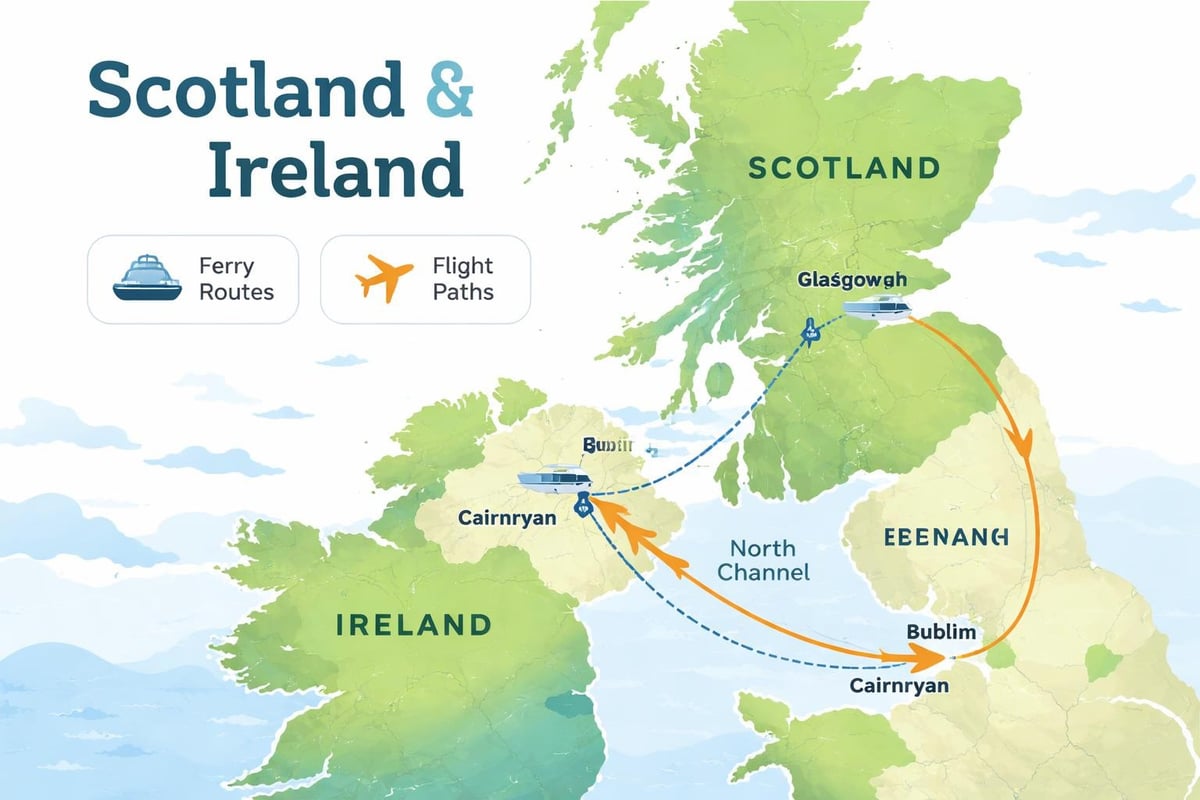
The Scotland Ireland relationship begins with geography. The North Channel, stretching between northeastern Ireland and southwestern Scotland, has served as both barrier and bridge throughout history. On clear days, the Mull of Kintyre in Scotland and the Antrim coast in Northern Ireland are visible to each other, creating a visual reminder of how close these lands truly are.
This proximity facilitated constant movement between the regions for thousands of years. Ancient peoples crossed these waters in small boats, establishing settlements and trade routes that laid the foundation for lasting cultural connections. The Scottish islands of Islay, Jura, and Arran sit particularly close to the Irish coast, serving as stepping stones for migration and exchange.
Travel Planning Across Both Nations
Modern travelers can easily experience both destinations in a single trip. Ferry services connect Belfast to Cairnryan and Larne to Cairnryan, offering practical transportation options for those combining Scotland Ireland adventures. The journey itself becomes part of the experience, retracing ancient maritime routes while enjoying contemporary comfort.
Flight connections between Dublin, Belfast, Edinburgh, and Glasgow provide additional flexibility. Budget airlines operate frequent services, making multi-destination itineraries both practical and affordable. When planning your Scotland Ireland journey, consider spending at least four to five days in each country to appreciate their distinct characteristics while recognizing their shared heritage.
Shared Celtic Heritage and Cultural Bonds
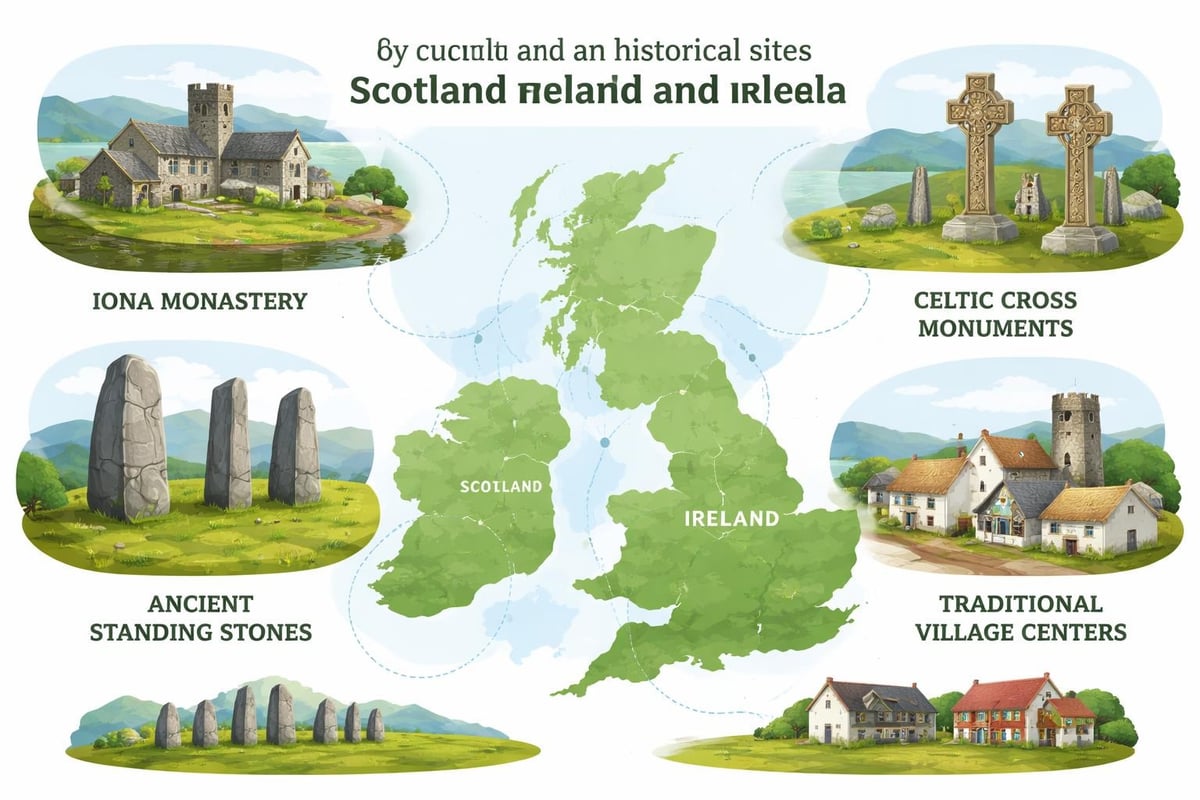
The cultural connections between Scotland Ireland run deep through their Celtic roots. Both nations speak variations of Gaelic, maintain traditional music styles with remarkable similarities, and share folklore traditions that speak to common ancestry. The Hiberno-Scottish mission represents one of the most significant historical connections, as Irish and Scottish missionaries spread Celtic Christianity throughout Europe during the early medieval period.
Saint Columba, born in Ireland in 521 CE, established the monastery on Iona in Scotland, creating a spiritual bridge that influenced both nations for centuries. This monastic tradition fostered learning, art, and religious devotion that shaped medieval European culture. Travelers visiting Iona today walk in the footsteps of these ancient monks, experiencing landscapes that remain largely unchanged since those formative years.
Music and Dance Traditions
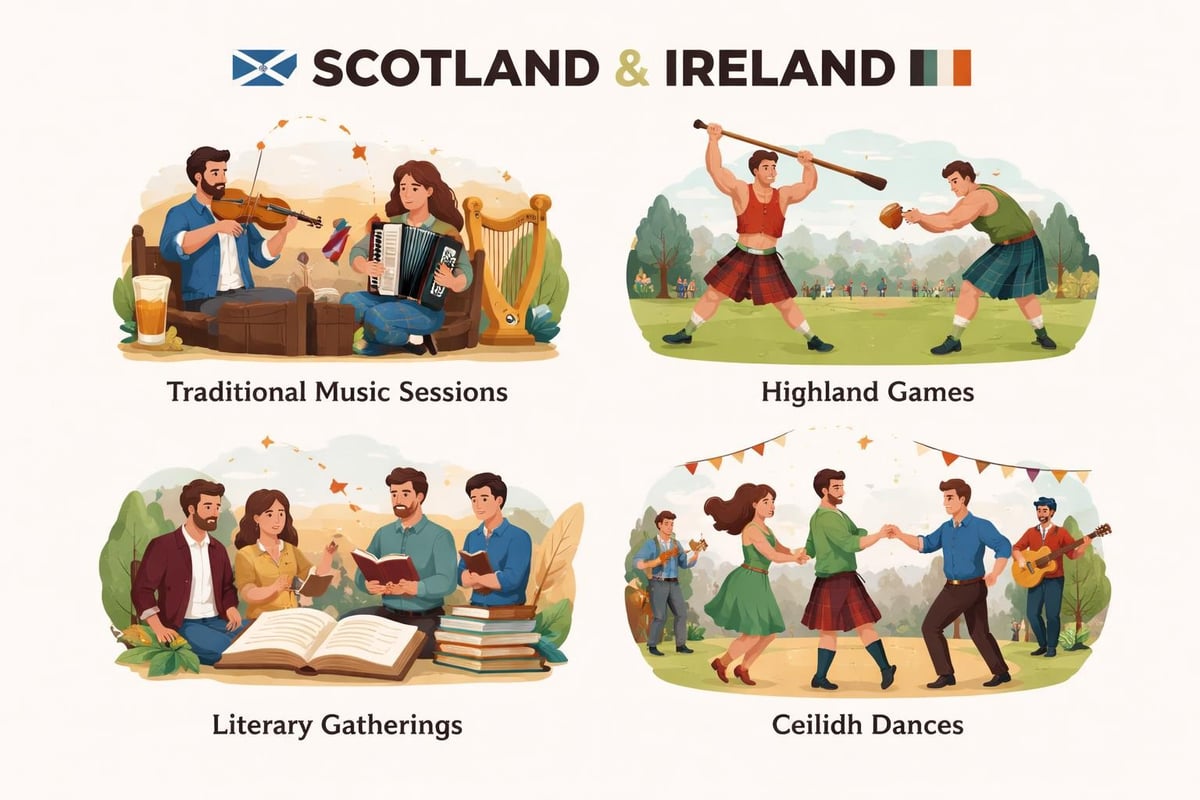
Musical traditions provide some of the most vibrant expressions of Scotland Ireland cultural connections. The Donegal fiddle tradition demonstrates clear Scottish influences, particularly from the Cape Breton style. Both nations cherish the fiddle, bagpipes, tin whistle, and bodhrán, creating soundscapes that feel simultaneously distinct and familiar.
Traditional sessions in pubs throughout both countries offer travelers authentic encounters with living culture. In Ireland, you might experience a spontaneous session in a Galway pub, while in Scotland, ceilidh dancing brings communities together in celebration. These musical traditions represent shared cultural and societal interactions that evolved over centuries of exchange.
| Musical Element | Irish Tradition | Scottish Tradition | Shared Characteristics |
|---|---|---|---|
| Primary Instruments | Fiddle, tin whistle, bodhrán, uilleann pipes | Fiddle, bagpipes, Scottish smallpipes, whistle | Celtic melodic structure, ornamentation styles |
| Dance Forms | Set dancing, sean-nós | Ceilidh, Highland dancing | Group formations, similar step patterns |
| Song Traditions | Sean-nós singing, ballads | Gaelic psalms, border ballads | Unaccompanied vocals, storytelling emphasis |
| Contemporary Influence | Folk rock fusion, traditional revival | Celtic fusion, pibroch preservation | Modern interpretations of ancient forms |
Historical Migrations and Political Connections
Understanding Scotland Ireland requires examining the complex migrations that shaped both populations. The Gaels of Ireland established the kingdom of Dál Riata, which spanned both northeastern Ireland and western Scotland during the early medieval period. This political entity created lasting connections between the regions, with families and clans maintaining ties across the water.
Later migrations included the Plantation of Ulster in the 17th century, when Scottish Presbyterians settled in northern Ireland. This movement created the Ulster Scots community, whose descendants later emigrated to America in significant numbers. The Irish Confederate expedition to Scotland during the 1640s demonstrates military cooperation during the tumultuous Wars of the Three Kingdoms.
Modern Diplomatic Relations
Contemporary Scotland Ireland relationships continue to strengthen through cultural and political cooperation. Recent developments in Irish-Scottish relations highlight diplomatic visits, educational exchanges, and cultural initiatives that build upon historical foundations. The Columba Project exemplifies modern efforts to preserve and promote Gaelic language and culture in both nations.
For travelers, these connections manifest in shared festivals, artistic collaborations, and tourism initiatives that celebrate common heritage. Both countries participate in Pan-Celtic movements that emphasize connections among Celtic nations, creating networks of cultural exchange that enrich visitor experiences.
Essential Destinations for Scotland Ireland Travelers
Planning a Scotland Ireland journey requires prioritizing destinations that showcase both unique characteristics and shared heritage. The following locations offer exceptional opportunities for cultural immersion and natural beauty.
Top Scottish Destinations
Edinburgh serves as Scotland's cultural capital, offering world-class museums, historic castles, and vibrant festivals. The Royal Mile connects Edinburgh Castle to Holyrood Palace, providing concentrated history in walkable format. During August, the Edinburgh Festival transforms the city into a global arts celebration.
The Highlands deliver dramatic landscapes, ancient castles, and outdoor adventures. Glencoe's haunting beauty, Loch Ness's mysterious waters, and the Isle of Skye's rugged coastlines create unforgettable experiences. These regions showcase Scotland's wild character and natural grandeur.
Glasgow combines industrial heritage with contemporary arts scenes, offering museums, galleries, and music venues that rival any European city. The city's Victorian architecture and friendly locals make it an essential stop for understanding modern Scottish culture.
Essential Irish Destinations
Dublin provides Ireland's cosmopolitan heart, blending Georgian elegance with modern vitality. Trinity College, Temple Bar, and the Guinness Storehouse offer varied experiences, while literary history permeates every street corner. The city serves as an excellent starting point for exploring Irish culture.
The Wild Atlantic Way stretches along Ireland's western coast, offering dramatic cliffs, traditional villages, and stunning seascapes. The Cliffs of Moher, Connemara's rugged beauty, and Dingle Peninsula's charm create lasting memories for adventurous travelers.
Belfast has transformed into a vibrant city that acknowledges its complex past while embracing a dynamic future. The Titanic Museum, political murals, and Cathedral Quarter demonstrate how the city honors history while building contemporary culture.
Practical Tips for Combined Scotland Ireland Itineraries
Successfully combining Scotland Ireland travel requires thoughtful planning and realistic expectations. Consider the following strategies for maximizing your experience across both destinations.
Timing and Duration
Allow minimum ten to fourteen days for a meaningful Scotland Ireland journey. This timeframe permits exploring major cities, experiencing countryside beauty, and absorbing cultural offerings without constant rushing. Spring (April-May) and autumn (September-October) offer pleasant weather, fewer crowds, and competitive pricing.
Summer provides long daylight hours and festival opportunities, though tourist numbers peak during July and August. Winter travel suits those seeking solitude and atmospheric landscapes, though weather can challenge outdoor activities and some attractions operate on reduced schedules.
Transportation Strategies
- Rent vehicles for maximum flexibility in rural areas and countryside exploration
- Book ferries well in advance during peak seasons to secure preferred crossing times
- Utilize rail passes for intercity travel between major urban centers
- Consider domestic flights for time-efficient connections between distant regions
- Download offline maps before departing cellular service areas in remote locations
Budget Considerations
Both Scotland Ireland destinations offer options across all budget ranges. Accommodation varies from budget hostels to luxury hotels, with mid-range B&Bs providing excellent value and authentic local interactions. Self-catering accommodations help control food costs while enabling meal preparation with local ingredients from farmers' markets.
Entrance fees for major attractions can accumulate quickly. Purchasing heritage passes or city cards often provides savings when visiting multiple sites. Many natural attractions, coastal walks, and historic sites remain free to explore, offering budget-conscious travelers abundant opportunities for memorable experiences.
Cultural Etiquette and Local Customs
Understanding local customs enhances Scotland Ireland travel experiences and demonstrates respect for host communities. Both nations value politeness, humor, and genuine conversation, though regional variations exist in communication styles and social expectations.
Social Interactions
Pub culture remains central to social life in both countries. These establishments serve as community gathering places where locals relax, socialize, and enjoy live music. Visitors should order drinks at the bar rather than expecting table service, and buying rounds for companions represents standard practice in group settings.
Engaging in conversation with locals often leads to unexpected recommendations and enriching encounters. Both Scots and Irish appreciate authentic interest in their culture, though political discussions require sensitivity, particularly regarding historical conflicts and contemporary issues.
Respecting Heritage Sites
Ancient monuments, religious sites, and historical locations deserve careful respect. Many archaeological sites lack formal supervision, relying on visitor integrity for preservation. Stay on marked paths, avoid touching delicate stonework, and never remove artifacts or natural elements from protected areas.
When visiting active religious sites, observe appropriate behavior regardless of personal beliefs. Many churches and abbeys welcome respectful visitors while requesting quiet contemplation and modest dress. Photography restrictions sometimes apply, particularly during services or in sacred spaces.
Culinary Traditions Worth Experiencing
Scotland Ireland food scenes combine traditional dishes with contemporary culinary innovation. Both nations have experienced remarkable gastronomic evolution in recent years, elevating local ingredients and traditional recipes into sophisticated dining experiences.
Traditional Scottish Fare
Haggis remains Scotland's most famous dish, combining sheep's heart, liver, and lungs with oatmeal, onions, and spices. Served with "neeps and tatties" (turnips and potatoes), it offers hearty sustenance and cultural significance. Modern chefs create innovative variations while respecting traditional preparations.
Scottish salmon ranks among the world's finest, whether smoked, grilled, or prepared as gravlax. Fresh seafood from Scottish waters includes langoustines, scallops, and oysters that grace restaurant menus throughout the country.
Irish Culinary Highlights
Irish stew exemplifies comfort food at its finest, slow-cooking lamb or mutton with potatoes, carrots, and onions. Each family maintains preferred variations, creating regional differences throughout the country.
Soda bread accompanies most meals, its simple combination of flour, buttermilk, and baking soda producing satisfying sustenance. Farmhouse cheese, particularly Cashel Blue and Dubliner, demonstrates Ireland's dairy excellence.
| Dish Category | Scottish Specialties | Irish Specialties | Best Seasons to Enjoy |
|---|---|---|---|
| Breakfast | Full Scottish with black pudding, lorne sausage | Full Irish with white pudding, potato farls | Year-round, especially winter |
| Seafood | Cullen skink, Arbroath smokies | Dublin Bay prawns, oysters | September-April for oysters |
| Meat Dishes | Venison, Aberdeen Angus beef | Beef and Guinness stew, bacon and cabbage | Autumn and winter |
| Desserts | Cranachan, shortbread | Apple tart, bread pudding | Year-round |
Festivals and Events Celebrating Shared Culture
Annual festivals throughout Scotland Ireland celebrate artistic expression, traditional culture, and contemporary creativity. Timing your visit to coincide with these events provides enhanced cultural immersion and memorable experiences.
Major Scottish Festivals
Edinburgh Fringe Festival transforms the city each August into the world's largest arts festival. Thousands of performances across hundreds of venues create unprecedented artistic diversity, though accommodation prices increase significantly during this period.
Hogmanay celebrations ring in the New Year with distinctive Scottish enthusiasm, featuring torchlight processions, street parties, and traditional customs. Edinburgh's celebrations attract global visitors, while smaller communities offer intimate alternatives.
Irish Cultural Celebrations
St. Patrick's Day festivities extend beyond a single day, with week-long celebrations in Dublin and cities throughout Ireland. Parades, concerts, and special events celebrate Irish culture while welcoming international visitors.
Galway International Arts Festival showcases contemporary and traditional arts each July, filling the city with performances, exhibitions, and theatrical productions. The atmosphere combines artistic excellence with Ireland's renowned hospitality.
Language and Communication Considerations
While English predominates in both Scotland Ireland destinations, understanding linguistic diversity enhances cultural appreciation. Gaelic languages maintain importance in certain regions, appearing on road signs, official documents, and cultural contexts.
Scottish Gaelic survives primarily in the Highlands and Islands, particularly the Outer Hebrides. An estimated 60,000 speakers maintain this ancient language, supported by educational programs and cultural initiatives. Many place names derive from Gaelic, providing insights into landscape and history.
Irish Gaelic holds official language status in the Republic of Ireland, with concentrated speaker populations in Gaeltacht regions along the western coast. Road signs throughout Ireland display both English and Irish, though English suffices for travelers in most situations.
Learning basic phrases demonstrates cultural respect and often delights locals. Simple greetings like "Dia dhuit" (hello in Irish) or "Madainn mhath" (good morning in Scottish Gaelic) open conversational doors and show genuine interest in preserving linguistic heritage.
Planning Resources for Scotland Ireland Adventures
Successful travel requires reliable information sources and practical planning tools. The Awesome Guide to Scotland and The Awesome Guide to Ireland provide comprehensive destination coverage, insider tips, and detailed itinerary suggestions for exploring these remarkable countries.
Digital resources offer advantages for modern travelers, providing instant updates, interactive maps, and portable access throughout your journey. Electronic travel guides eliminate the weight of traditional guidebooks while offering enhanced functionality and real-time information.
Before departing, consult the Pre-Trip Checklist to ensure proper preparation across all travel categories. This systematic approach reduces stress and helps avoid common oversights that complicate international journeys.
Essential Packing Considerations
Weather variability characterizes both Scotland Ireland climates, requiring versatile clothing and rain protection regardless of season. Layering systems accommodate temperature fluctuations, while waterproof outerwear proves essential for outdoor activities and urban exploration.
Comfortable walking shoes support extensive exploration on varied terrain. Cobblestone streets, countryside trails, and historic site visits demand footwear that combines support with durability. Breaking in new shoes before departure prevents painful blisters during critical sightseeing days.
The heritage in common between these nations creates unique opportunities for travelers seeking authentic Celtic experiences. Understanding their connections while appreciating their distinctions transforms surface-level tourism into meaningful cultural engagement.
Sustainable and Responsible Travel Practices
Protecting Scotland Ireland natural beauty and cultural heritage requires conscious traveler decisions. Both nations face pressures from increasing tourism, making sustainable practices essential for preserving destinations for future generations.
Environmental Stewardship
- Stick to marked trails when hiking to prevent erosion and protect fragile ecosystems
- Pack out all waste including organic materials that disrupt natural environments
- Choose eco-certified accommodations that demonstrate environmental commitment
- Support local businesses to distribute tourism benefits throughout communities
- Use public transportation when feasible to reduce carbon footprint
Cultural Sensitivity
Respecting local communities and their ways of life ensures tourism benefits residents rather than disrupting daily routines. Avoid treating people as photo subjects without permission, respect private property boundaries, and recognize that remote communities balance tourism income with maintaining authentic lifestyles.
Supporting traditional craftspeople, musicians, and artisans helps preserve cultural practices while providing economic sustainability. Purchase directly from creators when possible, avoiding mass-produced souvenirs that offer minimal community benefit.
Regional Variations Within Each Country
While Scotland Ireland share numerous connections, internal diversity within each nation deserves recognition. Regional variations in dialect, cuisine, landscape, and cultural expression create distinct experiences across different areas.
Scottish Regional Diversity
The Lowlands, Highlands, and Islands each possess unique characteristics. Lowland areas around Edinburgh and Glasgow blend urban sophistication with agricultural heritage. Highland regions deliver dramatic landscapes and Gaelic cultural preservation. Island communities maintain distinctive traditions shaped by maritime isolation and natural beauty.
Scotland's culture encompasses legal systems distinct from English law, sporting traditions like shinty and Highland games, and literary contributions from Burns to contemporary authors. These elements combine creating complex national identity beyond simple stereotypes.
Irish Regional Character
Ireland's provinces each contribute distinct flavors to national culture. Munster in the south offers musical traditions and dramatic coastlines. Leinster includes Dublin's cosmopolitan energy alongside rural agricultural communities. Connacht presents wild Atlantic beauty and strong Gaelic traditions. Ulster's complex history creates unique cultural dynamics, particularly in Northern Ireland.
These regional variations reward travelers who venture beyond capital cities, discovering authentic local expressions of culture, cuisine, and community life that mass tourism often overlooks.
Exploring the deep connections between Scotland and Ireland opens windows into Celtic heritage that has shaped European culture for millennia, offering travelers rich opportunities for authentic experiences across stunning landscapes and vibrant communities. Whether you're discovering ancient monastic sites, enjoying traditional music sessions, or hiking coastal trails, understanding their shared history enhances every moment of your journey. Let Awesome Travel Guides help you plan unforgettable adventures with comprehensive digital resources designed to reveal hidden gems and insider knowledge that transform ordinary trips into extraordinary cultural explorations.