

Italy Travelogue: A Practical Travel Guide to Italy
An Italy travelogue is a first-person account of a trip through the country, and the most useful ones double as a plan: where to go, how long to stay, how to move between cities and what to skip. This guide takes that approach. It turns the typical two-week journey into a clear sequence you can follow without spending dozens of hours on research.
Italy rewards planning more than most destinations. Distances look short on a map, but trains, ferries and museum timed-entry slots shape every day. Get the structure right and the rest falls into place.
What Should an Italy Travelogue Tell You Before You Go?
A good Italy travelogue answers four questions before anything else: when to travel, how long to stay, which regions to include and how much it will cost. Everything else, from restaurants to day trips, follows from those decisions.
Start with entry rules. For U.S. citizens, the U.S. Department of State advises that no visa is required for stays of up to 90 days in any 180-day period in the Schengen area. Check your passport validity and any updated entry requirements before booking flights.
Then consider the scale of Italian tourism. In 2025, Italy's tourism surplus reached €22.7 billion, equal to 1.0% of GDP, and foreign travelers' spending rose 4.6%, according to Banca d'Italia's 2025 international tourism survey. The same survey attributed nearly two-thirds of that increase to travelers attending Jubilee celebrations. The practical takeaway is that demand is high and popular sites sell out, so booking timed entries early is part of the plan, not an optional extra.
When Is the Best Time to Visit Italy?
The best time to visit Italy is April to early June or September to October, when weather is pleasant, daylight is long and crowds are manageable. These shoulder seasons suit travelers who want to walk cities comfortably and still find reasonable hotel rates.
Here is how the seasons compare:
- Spring (April to June): Mild temperatures, blooming countryside in Tuscany and Umbria, and good conditions for the Amalfi Coast. Easter week is busy everywhere.
- Summer (July to August): Hot in Rome, Florence and the south. Many Italians vacation in August, so some small restaurants close while beach towns and the Dolomites peak.
- Autumn (September to October): Warm sea, harvest festivals, truffle season in Piedmont and softer light for photography.
- Winter (November to March): The lowest prices and the shortest queues in major museums. Pair Rome, Florence and Venice with the ski valleys or Sicily's milder climate.
If your dates are fixed, build the route around them. A July trip works better with lakes, mountains and coastal stops than with a heavy inland city schedule.
How Many Days Do You Need, and Which Route Works?
Ten to fourteen days covers Italy's classic highlights without constant packing, and the proven structure is Rome, Florence and Venice joined by the fast train line, with one regional add-on. Fewer than seven days is best spent on a single region.
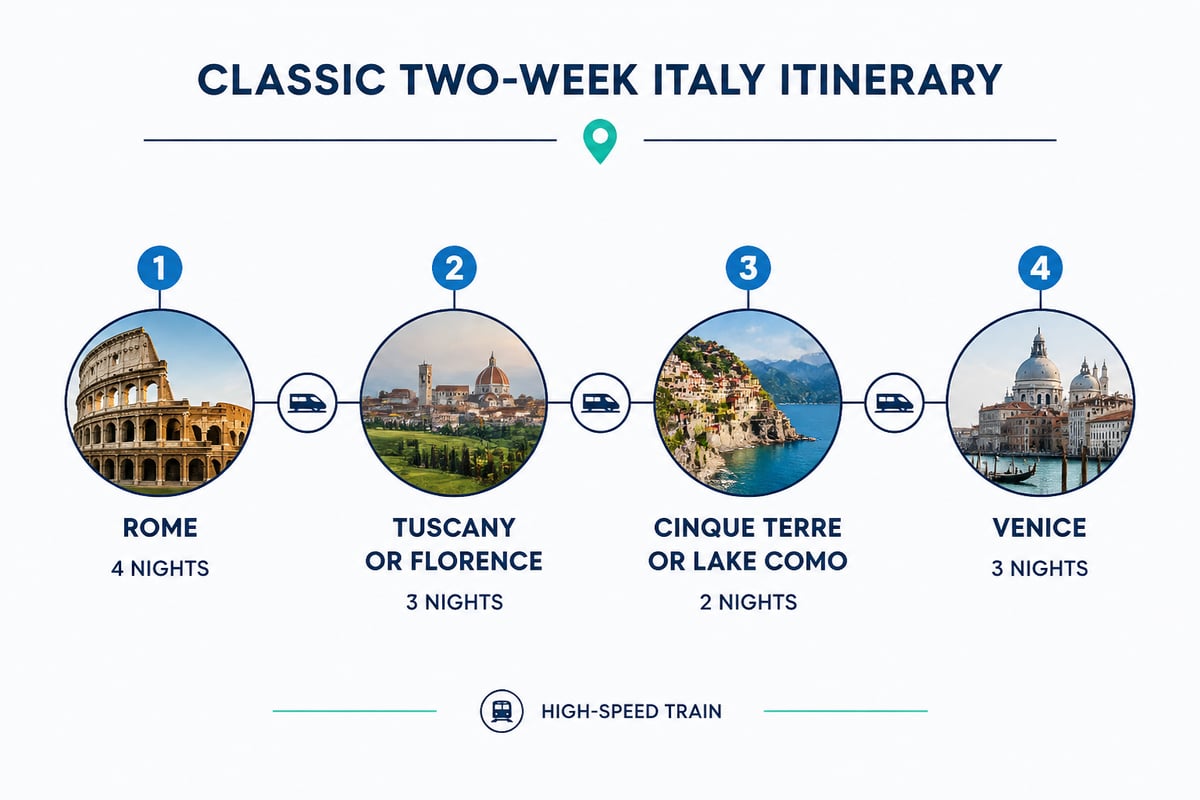
A balanced 14-day sequence looks like this:
- Rome (4 nights): The Colosseum, Roman Forum, Vatican Museums and the neighborhoods of Trastevere and Monti.
- Florence and Tuscany (4 nights): Renaissance art in the city, then a day in Siena, San Gimignano or a countryside estate.
- Cinque Terre or Lake Como (2 nights): A coastal or lakeside break between the big cities.
- Venice (3 nights): Stay overnight so you see the lagoon after day-trippers leave.
For a longer trip, add the south: Naples, Pompeii, the Amalfi Coast and Puglia. Sicily and Sardinia deserve their own week. Resist the urge to add one more city. Two nights per stop is the practical minimum, and three nights lets you see a place rather than pass through it.
More route ideas are covered in this Italy vacation guide.
How Do You Get Around Italy?
Trains are the best way to travel between major Italian cities, while a rental car makes sense only for rural Tuscany, Umbria, Puglia and the Dolomites. Most travelers do better combining the two than choosing one for the whole trip.
Trains
High-speed services run by Trenitalia and Italo connect Rome, Florence, Bologna, Milan, Venice, Naples and Turin. Rome to Florence is one of the fastest high-speed routes in the country. Book in advance for the lowest fares, and validate regional tickets before boarding if they are not date-specific. Regional trains are cheaper but slower and can be crowded on weekends.
Rental cars
Driving in historic centers is restricted. Most have a ZTL (limited traffic zone), and entering one without a permit triggers fines mailed to you months later. Pick up a car on the edge of a city, park outside the walls and book hotels that confirm parking. An international driving permit is required alongside your home license.
Ferries and local transport
Ferries connect the Amalfi Coast, the Aeolian Islands, Sicily and Sardinia. Boat schedules shift with weather and season, which is true across the Mediterranean and in other regions with heavy ferry use, such as the Thai islands where services like Thailand Boat Tickets exist for the same reason. Check departure times the day before and keep a flexible afternoon.
What Are the Must-See Places, Region by Region?
Italy's highlights cluster into four areas: Rome and Lazio, Tuscany and the center, the north (Venice, lakes, Dolomites) and the south and islands. Pick two or three clusters for a first trip.
| Region | Highlights | Best for |
|---|---|---|
| Rome and Lazio | Colosseum, Vatican, Pantheon, Ostia Antica | Ancient history and art |
| Tuscany and Umbria | Florence, Siena, Val d'Orcia, Assisi | Hill towns, wine, scenery |
| Northern Italy | Venice, Lake Como, Verona, Dolomites | Canals, lakes, mountain hiking |
| Southern Italy | Naples, Pompeii, Amalfi Coast, Puglia | Coastline, pizza, trulli villages |
| Islands | Sicily, Sardinia, Aeolian Islands | Beaches, volcanic landscapes |
For deeper regional notes, this guide to Italy breaks the country into manageable pieces.
How Do You Plan Without Drowning in Research?
The fastest way to plan an Italy trip is to work from one filtered source rather than collecting dozens of conflicting blog posts. Choose a base route, lock in your timed-entry bookings and leave the rest flexible.
A planning order that saves hours:
- Fix your dates and flight arrival city (Rome and Milan are the main gateways).
- Book hotels in each base city, favoring walkable neighborhoods near stations.
- Reserve timed tickets for the Vatican Museums, the Colosseum, the Uffizi and the Last Supper in Milan.
- Book high-speed trains once the schedule opens.
- Leave two or three open afternoons for wandering and long lunches.
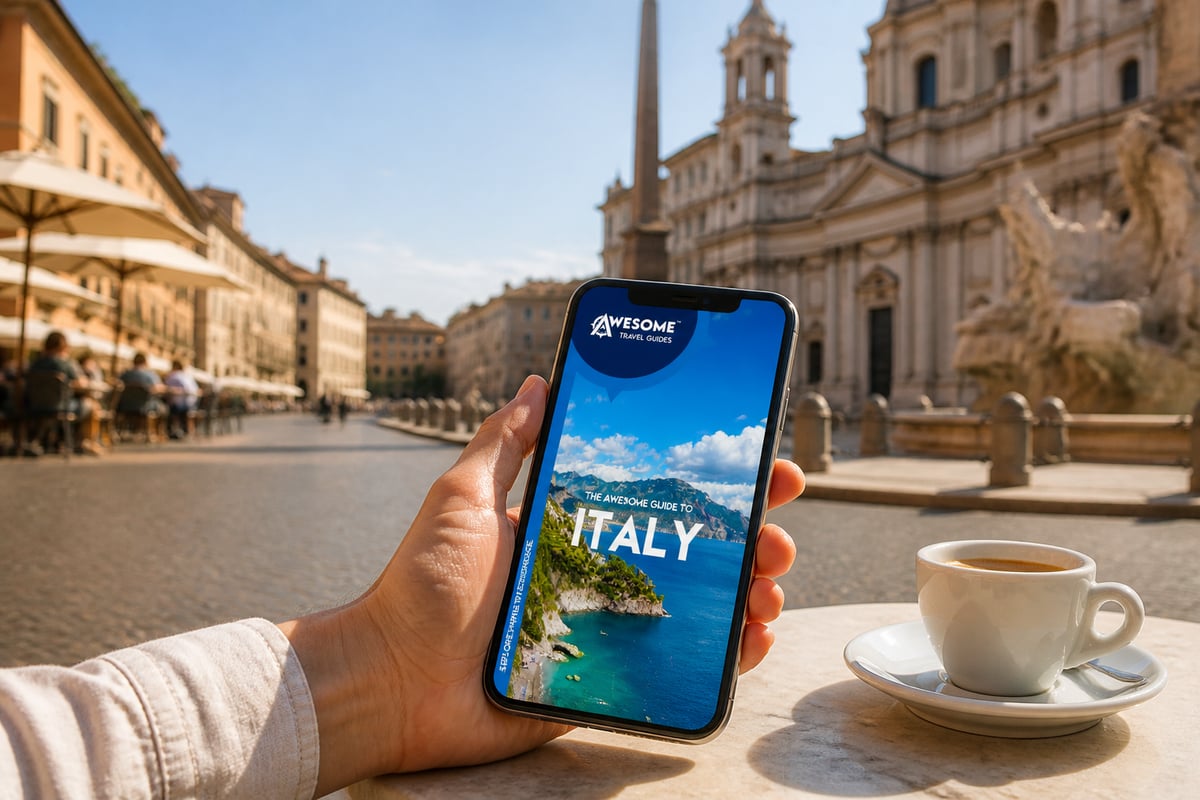
If you want the research done for you, The Awesome Guide to Italy is built to be scanned quickly on a phone, tablet or laptop, with clickable links and layouts designed for screens. It is independent, with no tourism boards, hotels or local businesses paying to be recommended, and each guide is the product of over 200 hours of research. Purchases include free updates for one year.
What Should You Eat, and How Do You Eat Well Without Tourist Traps?
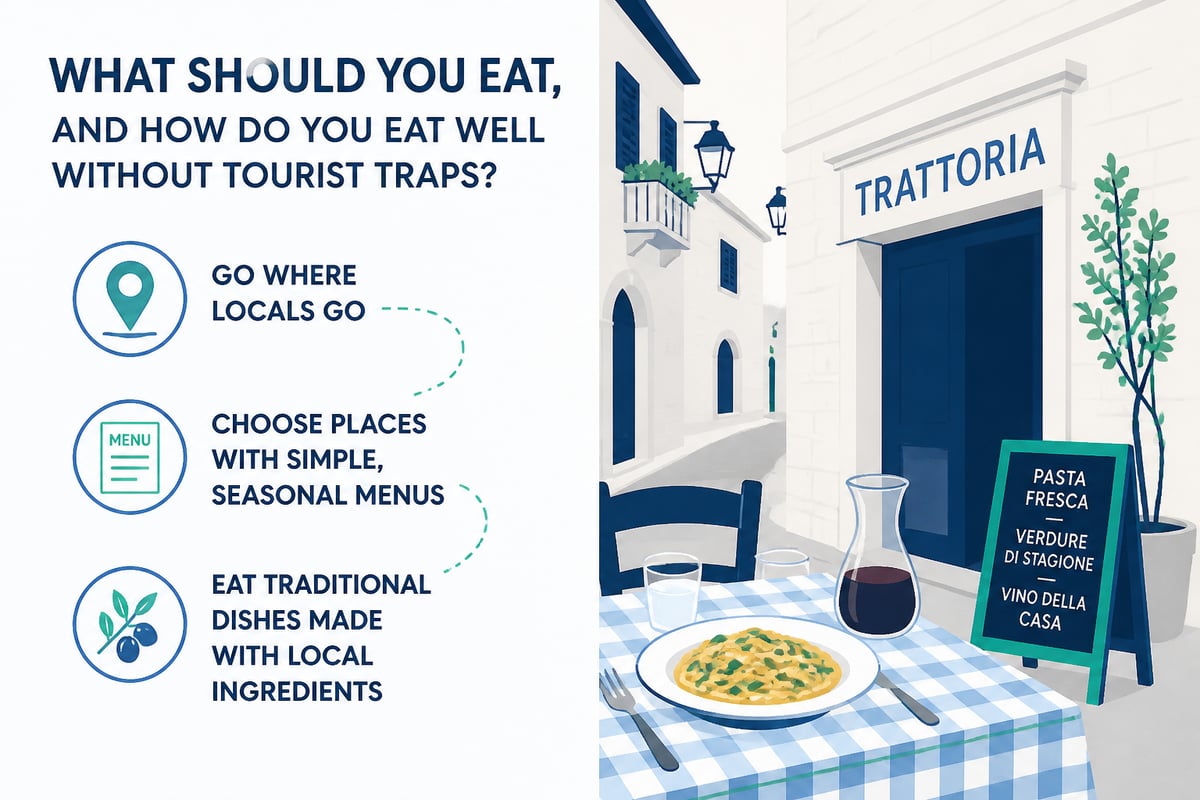
Eat regionally, eat where Italians eat and avoid restaurants with photo menus on the main piazza. Italian cuisine changes markedly from region to region, so the best meal in Bologna is not the best meal in Naples.
- Rome: Cacio e pepe, carbonara and supplì from a neighborhood trattoria.
- Florence: Bistecca alla fiorentina, ribollita and lampredotto from a market stall.
- Bologna and Emilia-Romagna: Tortellini, tagliatelle al ragù and aged Parmigiano Reggiano.
- Naples: Pizza at a historic pizzeria, then sfogliatella for dessert.
- Sicily: Arancini, pasta alla Norma and cannoli made with fresh ricotta.
Practical habits help. Breakfast is a quick cappuccino and cornetto at the bar, and standing at the counter costs less than sitting. Lunch menus (pranzo) are often the best value. Dinner rarely starts before 7:30 p.m. A coperto (cover charge) appears on many bills and is normal, not a scam.
How Much Does a Trip to Italy Cost?
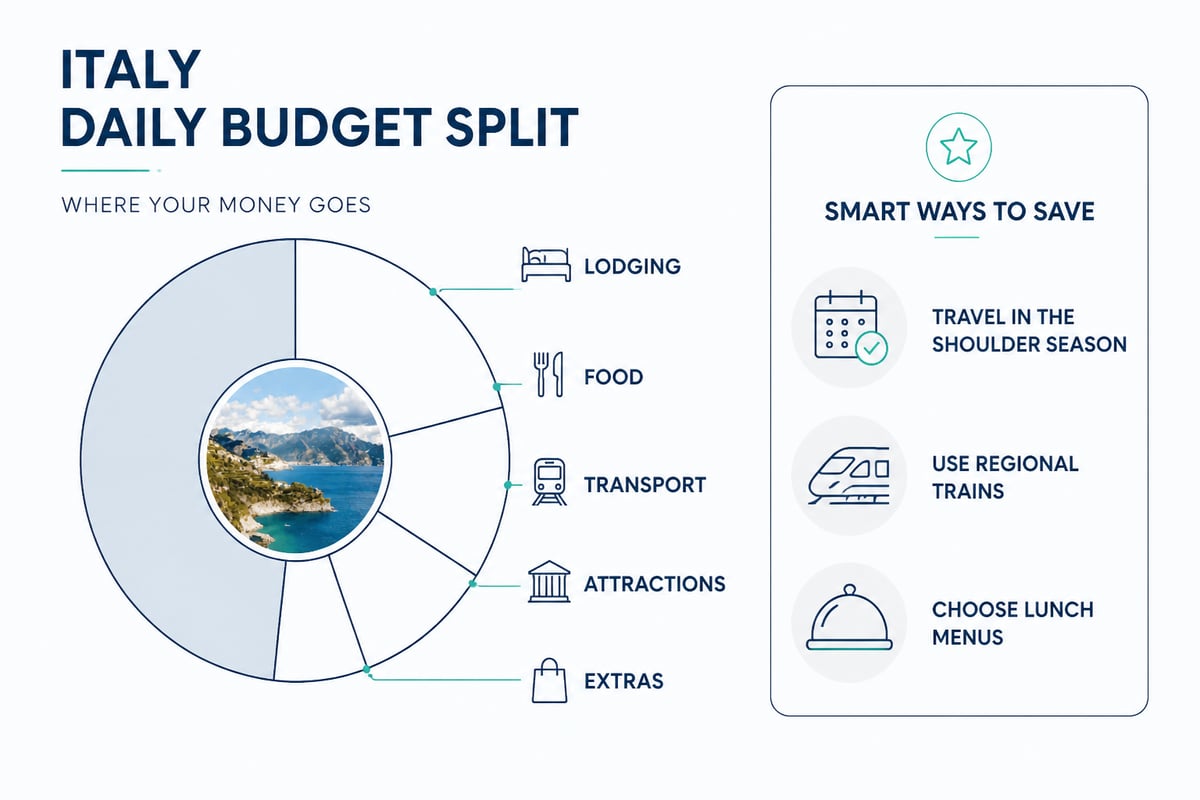
Plan on a comfortable mid-range budget per person per day, with accommodation and city choice driving most of the variation. Rome, Venice and the Amalfi Coast cost more than Bologna, Puglia or Sicily.
Where the money goes:
- Lodging: The largest cost. Book early for spring and fall, and consider smaller towns as bases.
- Transport: High-speed train fares range widely, so book ahead. Add fuel, tolls and parking if renting a car.
- Attractions: Major sites charge entrance fees, and timed tickets sell out in peak months.
- Food: A trattoria dinner is modest, while tasting menus and waterfront tables add up fast.
For tracking visitor and spending trends over time, Banca d'Italia's tourism statistics offer the underlying data. Treat any budget figure as a starting estimate and check current prices when you book.
What Should You Pack, and What Etiquette Matters?
Pack light, wear comfortable walking shoes and bring layers and a scarf or shawl for church visits. Cobblestones, stairs and train platforms punish heavy luggage.
Dress and behavior rules:
- Churches: Shoulders and knees covered. St. Peter's Basilica enforces this strictly.
- Walking shoes: Broken-in and supportive. Expect to walk a great deal every day.
- Power adapter: Italy uses Type L and Type F plugs.
- Luggage: A soft duffle is easier on trains and narrow stairs than a hard suitcase. A sturdy option like the duffle bag works well for flexible packing.
Etiquette is simple. Greet shopkeepers with "buongiorno," do not order cappuccino after a meal, and expect a slower pace at dinner. Tipping is modest: rounding up or leaving a few euros is plenty.
What Mistakes Do First-Time Visitors Make?
The most common errors are overpacking the itinerary, skipping advance bookings and misreading how Italian travel logistics work. Each is easy to avoid.
- Too many stops: Seven cities in seven days means six hotel checkouts and little time to enjoy any of them.
- No timed tickets: The Vatican, Colosseum and Uffizi can sell out days or weeks ahead in busy months.
- Unvalidated tickets: Regional paper tickets without fixed dates must be validated in the green machines before boarding.
- ZTL fines: Driving into restricted historic zones brings fines weeks later.
- Visiting in August without checking closures: Some family-run restaurants and shops shut for holiday.
For more practical advice, these travel tips for Italy cover the details that save money and stress on the ground.
How Do You Turn an Italy Travelogue Into Your Own Itinerary?
Turn an Italy travelogue into an itinerary by keeping its structure and replacing its details with your own priorities: your dates, your interests and your pace. Copy the sequence, not the schedule.
Start by listing three experiences you refuse to miss, such as the Sistine Chapel, a Tuscan farm lunch or a sunset on the Amalfi Coast. Build the route around them, then add flexible days around each. Keep a short list of backup options for rain, strikes or sold-out venues.
Because accounts of trips age quickly, check current hours, ticket rules and transport schedules before you finalize anything. A guide that is reviewed and refreshed regularly keeps that work manageable, and an extra layer of local insight, such as a favorite family-run trattoria or a quiet viewpoint away from the crowds, turns a good itinerary into a memorable one. Travel planners in other specialties, from Garmany Golf's luxury golf trips to regional tourism boards like The Maine Highlands, follow the same principle: a clear plan, local knowledge and room to adapt.